optical module
CN → US| HS编码 | 关税税率 | 原产国 | 目的国 | 文档 |
|---|---|---|---|---|
| 8517620090 | 35.0% | CN | US | 官方文档 |
| 8517620010 | 35.0% | CN | US | 官方文档 |
| 8542390010 | 60.0% | CN | US | 官方文档 |
| 9013809100 | 22.0% | CN | US | 官方文档 |
| 8541498000 | 60.0% | CN | US | 官方文档 |
商品图片
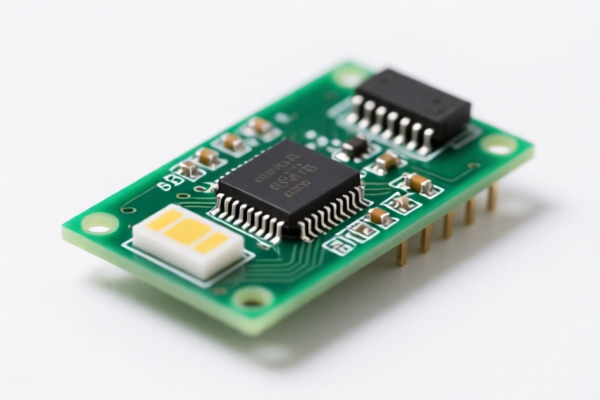
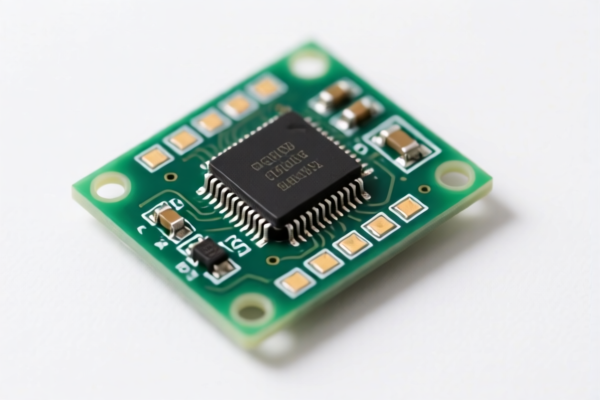
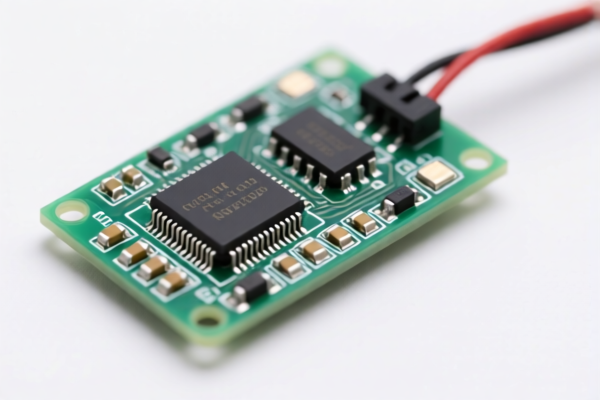
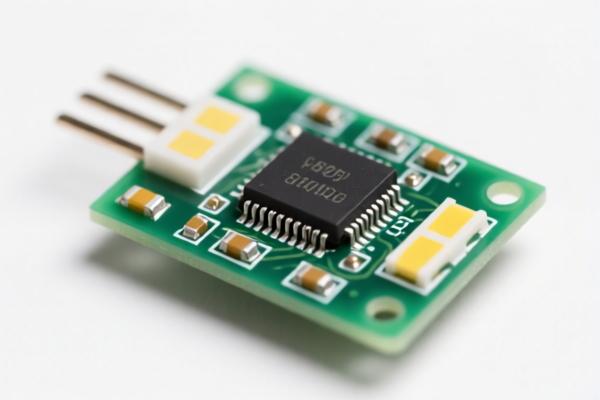
AI分析
🔌 Optical Modules (Transceivers)
🌐 HS Code Reference & Customs Clearance Guide | 2026 Latest Tariff Analysis | Professional Compliance Strategy
📌 I. Product Definition & Classification: What Exactly is an "Optical Module"?
Optical modules (also known as SFP, SFP+, QSFP, etc.) are the core components of modern optical communication networks. Their primary function is data reception, conversion, and transmission, converting electrical signals into optical signals (and vice versa) for high-speed data exchange.
In international trade, classification depends on whether the module is viewed as a telecommunications transmission device, a semiconductor/optical component, or a complex electronic integrated circuit. This distinction drastically affects the tariff burden.
⚠️ Key Classification Distinction:
- If viewed as a Telecom Transmission Device (Data Transmission/Reception) → HS 8517.62 (Lower Risk)
- If viewed as a Semiconductor/Optical Component (IC or Optical Device) → HS 8541, 8542, or 9013 (Higher Risk/Higher Duty)
- Critical Note: The US imposes significant "Section 301" and "Section 122" tariffs on Chinese-origin optical modules, regardless of the specific subheading, but the base tariff varies.
📦 II. HS Code Classification Matrix (2026 Latest Tariff Authority)
| HS Code | Product Description | Rationale for Classification | Total Tax Rate (CN Origin) |
|---|---|---|---|
8517.62.00.90 |
Optical Modules (Telecom/Data) | Core function is data reception/conversion/transmission; fits "Data Transmission Equipment" definition. | 35.0% |
8517.62.00.10 |
Optical Modules (Telecom/Data) | Core function aligns with "Data Transmission/Reception" specified under 8517.62. | 35.0% |
8542.39.00.10 |
Integrated Circuits (Signal Conversion) | Internal signal conversion/transmission ICs; classified as electronic integrated circuits. | 60.0% |
9013.80.91.00 |
Other Optical Instruments | Classified as optical apparatus/instruments due to optical lens/prism components. | 22.0% |
8541.49.80.00 |
Optical Couplers/Semiconductors | High functional consistency with optical couplers; considered a form of integrated semiconductor device. | 60.0% |
🔍 Strategic Insight:
-8517.62is the most common and defensible classification for functional optical transceivers.
-8542and8541carry much higher total duties (60%) and are riskier if the module is a complete assembly rather than a bare chip.
-9013offers the lowest duty (22%) but requires strong justification that the product is an "optical instrument" rather than a "telecom device."
💰 III. 2026 Detailed Tariff Breakdown (Including Surcharges & Policy Add-ons)
✅ Applicable Country: United States (US)
✅ Origin: China (CN)
✅ Effective Date: Current trade restrictions apply (Section 301 & Section 122)
🎯 1. 8517.62.00.90 & 8517.62.00.10 —— Optical Modules (Data Transmission)
| Item | Details |
|---|---|
| Base Tariff | 0.0% (Most Favored Nation rate for this heading) |
| Section 301 Surcharge | +25.0% (Added by USITC under Trade Act of 1974, Section 301) |
| Section 122 Tariff | +10.0% (Additional tariff for certain electronic components from China) |
| Total Tax Rate | 35.0% |
| Tax Calculation | CIF Value × 35% |
| De Minimis Exemption | ❌ Not Eligible (Section 301 goods are excluded from de minimis relief) |
| Legal Basis Path | USITC:8517.62.00.90 → FOOTNOTE:301.03.01 → IEEPA:9903.01.25 |
📌 Explanation:
- Section 301 (25%): The standard punitive tariff on Chinese electronics.
- Section 122 (10%): A specific additional duty applied to certain computer and telecom accessories.
- Total 35%: This is the standard "penalty rate" for standard optical transceivers classified as telecom gear.
🎯 2. 8542.39.00.10 —— Integrated Circuits (Signal Processing)
| Item | Details |
|---|---|
| Base Tariff | 0.0% |
| Section 301 Surcharge | +50.0% (Higher tier for semiconductors/ICs) |
| Section 122 Tariff | +10.0% |
| Total Tax Rate | 60.0% |
| Tax Calculation | CIF Value × 60% |
| De Minimis Exemption | ❌ Not Eligible |
| Legal Basis Path | USITC:8542.39.00.10 → FOOTNOTE:301.03.02 → IEEPA:9903.01.25 |
📌 Warning:
- Misclassifying a complete optical module as an "Integrated Circuit" (HS 8542) is high-risk. Customs may view this as tariff evasion if the module contains casing, connectors, and firmware, not just a bare die.
- The 60% rate makes this classification economically unviable unless you are shipping bare laser diodes or DSP chips, not complete modules.
🎯 3. 9013.80.91.00 —— Other Optical Instruments
| Item | Details |
|---|---|
| Base Tariff | 4.5% |
| Section 301 Surcharge | +7.5% (Lower surcharge for optical goods) |
| Section 122 Tariff | +10.0% |
| Total Tax Rate | 22.0% |
| Tax Calculation | CIF Value × 22% |
| De Minimis Exemption | ❌ Not Eligible (Subject to Section 301) |
| Legal Basis Path | USITC:9013.80.91.00 → FOOTNOTE:301.03.05 → IEEPA:9903.01.25 |
📌 Opportunity:
- 22% is the lowest total duty among the options.
- However, to use9013, you must prove the module is primarily an "optical instrument" (e.g., specialized test equipment) rather than a standard data transceiver.
- Risk: High scrutiny from Customs if used for standard telecom/data center applications.
🎯 4. 8541.49.80.00 —— Optical Couplers/Semiconductors
| Item | Details |
|---|---|
| Base Tariff | 0.0% |
| Section 301 Surcharge | +50.0% |
| Section 122 Tariff | +10.0% |
| Total Tax Rate | 60.0% |
| Tax Calculation | CIF Value × 60% |
| De Minimis Exemption | ❌ Not Eligible |
| Legal Basis Path | USITC:8541.49.80.00 → FOOTNOTE:301.03.02 |
📌 Note:
- Similar to8542, this category is for semiconductor optical devices (like laser diodes, photodiodes).
- Using this for a complete SFP module is incorrect and leads to the highest tax burden (60%).
🛠️ IV. Customs Clearance Practical Advice (Pitfall Avoidance)
✅ 1. Document Checklist (Non-Negotiable)
| Document | Required? | Purpose |
|---|---|---|
| ✅ Product Spec Sheet | ✔️ | Must detail: Interface (SFP/QSFP), Speed (10G/40G/100G), Wavelength, Fiber Type (Single/Multi). |
| ✅ Circuit Diagram/Block Diagram | ✔️ | Proves it is a "data transmission device" (HS 8517) vs. a "bare IC" (HS 8542). |
| ✅ Product Photos (Labeled) | ✔️ | Show connectors, housing, and laser label (Class 1M/1). |
| ✅ FCC Certification | ✔️ | Mandatory for electronics in the US. |
| ✅ Commercial Invoice | ✔️ | Description: "Optical Transceiver Module, for Data Transmission, Model XYZ." Avoid vague terms like "Optical Component." |
| ✅ Country of Origin Cert | ✔️ | Essential for applying Section 301/122 rates. |
✅ 2. Declaration Strategy (Key Tips)
🔥 "Declare Function, Not Just Parts: Telecom vs. Component"
| Scenario | Recommended HS Code | Why? |
|---|---|---|
| Standard SFP/QSFP for Data Centers | 8517.62.00.90 |
Best balance of accuracy and cost (35%). Clearly defined as data transmission equipment. |
| Specialized Optical Test Equipment | 9013.80.91.00 |
Only if the module is part of a larger diagnostic device. Lowest tax (22%) but hardest to justify. |
| Bare Laser Diodes/Photodiodes | 8541.49.80.00 |
Only for chips without housing/connectors. Avoids "module" classification. |
| Complete Module with Firmware | 8517.62.00.10 |
Emphasize "Firmware-controlled data reception." |
⚠️ Do NOT classify a complete optical module as
8542or8541unless it is a bare die. Customs will reject it and apply the higher duty + penalties.
✅ 3. Special Considerations
| Situation | Action |
|---|---|
| OEM/Private Label Modules | Provide original manufacturer’s spec sheet. Ensure the description matches the technical capability, not just the brand. |
| Firmware Updates | If the module contains complex routing logic, emphasize HS 8517 (Telecom) over HS 8528 (Display/Other). |
| Mixed Containers | If mixing optical modules with other electronics, declare separately. Do not lump under "Miscellaneous Electronics." |
| Section 122 Compliance | Ensure all documentation clearly states the product is subject to Section 122 (10%) to avoid surprise audits. |
🌍 V. Global Market Comparison (2026)
| Region | Recommended HS Code | Estimated Duty (CN Origin) | Notes |
|---|---|---|---|
| 🇺🇸 USA | 8517.62.00.90 |
35% | Includes 25% (Sec 301) + 10% (Sec 122). No de minimis. |
| 🇨🇳 China | 8517.62.00.90 |
0% - 5% | Low import duty. No punitive surcharges. |
| 🇪🇺 EU | 8517.62.00.00 |
0% | Standard MFN rate is 0%. No US-style surcharges. |
| 🇯🇵 Japan | 8517.62.00.00 |
0% | Free trade agreement benefits may apply. |
| 🇻🇳 Vietnam | 8517.62.00.00 |
0% - 5% | Potential supply chain relocation hub. |
📌 Conclusion:
- The US market is the most expensive due to layered punitive tariffs (35% total).
- EU and Asia offer near-zero duty, making them more attractive for Asian manufacturers exporting to non-US markets.
- Supply Chain Strategy: Many companies are sourcing optical modules from Vietnam or Malaysia to avoid Section 301 tariffs. Ensure substantial transformation occurs overseas to qualify for new origin rules.
📌 VI. Common Errors & Pitfalls (Learn from Mistakes)
❌ Error 1: Classifying a complete SFP module as an "IC" (8542) to claim lower base duty.
👉 Result: Customs reclassifies to 8517, charges 35%, and imposes penalties for misdeclaration.
❌ Error 2: Ignoring Section 122 (10%) on invoices.
👉 Result: Underpayment of duties, leading to audits and back-taxes + interest.
❌ Error 3: Vague descriptions like "Optical Parts" or "Light Converter."
👉 Result: Customs delays for classification review. Always use "Optical Transceiver Module for Data Transmission."
❌ Error 4: Assuming de minimis ($800) applies.
👉 Result: Section 301 and 122 goods are excluded from de minimis relief. Every shipment is dutiable.
✅ Correct Approach:
"SFP+ 10G Optical Transceiver Module, LC Connector, 1310nm, Single Mode, Data Center Class, Model XYZ, FCC Certified, Origin: China"
🎯 VII. Conclusion: Strategic Sourcing & Compliance
🎯 Key Takeaways:
🔹 HS 8517.62 is the safest and most common classification for optical modules.
🔹 Total US Duty is 35% (0% Base + 25% Sec 301 + 10% Sec 122).
🔹 No De Minimis: All shipments are subject to duty, regardless of value.
🔹 Documentation is Critical: Spec sheets and FCC certs must align with the declared HS Code.
📌 Pro Tip:
If your optical modules are manufactured in Vietnam, Thailand, or Malaysia, you may avoid US punitive tariffs entirely. Ensure Certificate of Origin clearly reflects the non-China origin and that substantial transformation criteria are met.
📣 Immediate Action:
📞 Consult with a licensed US customs broker for Advance Rulings if dealing with high-volume shipments.
📄 Audit your supplier’s origin claims.
🚀 Optimize your supply chain to mitigate 35% duty exposure.
✨ Precision in Classification = Savings in Tariffs!
💼 Every percentage point counts in global trade compliance!
用户评价
关于 HS 编码归类
协调制度(HS)是由世界海关组织(WCO)制定的国际贸易商品分类标准。全球 200 多个国家采用 HS 系统作为海关关税、贸易统计和进出口监管的基础。
每个 HS 编码遵循以下层级结构:
- 章(2 位)——商品大类(例如:第 84 章:机器和机械设备)
- 品目(4 位)——章内的更具体分类
- 子目(6 位)——国际通用细分,所有 WCO 成员国统一使用
- 本国细分(8-10 位)——各国自行扩展的细分编码,如美国 HTSUS 10 位编码
正确的 HS 编码归类对于顺利通关、准确缴纳关税和遵守贸易法规至关重要。错误归类可能导致海关延误、多缴关税或罚款。
从CN进口到US时,适用的关税税率可能包括:
- 最惠国(MFN)税率——适用于 WTO 成员国的标准关税税率
- 普通税率——适用于无贸易协定国家
- 贸易救济关税——附加关税,如 301 条款(反倾销)、232 条款(国家安全)或反补贴税
本页内容仅供参考。如需正式归类,请咨询当地海关或持牌报关代理。