packaging composite board
CN → US| HS编码 | 关税税率 | 原产国 | 目的国 | 文档 |
|---|---|---|---|---|
| 4811512020 | 35.0% | CN | US | 官方文档 |
| 4811512040 | 35.0% | CN | US | 官方文档 |
| 4807009200 | 35.0% | CN | US | 官方文档 |
| 3920992000 | 39.2% | CN | US | 官方文档 |
| 3921905050 | 39.8% | CN | US | 官方文档 |
商品图片

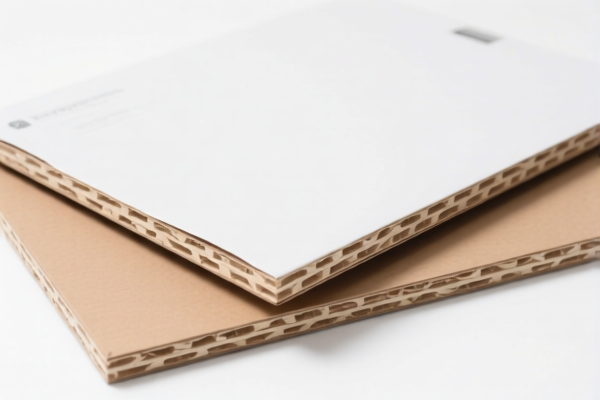
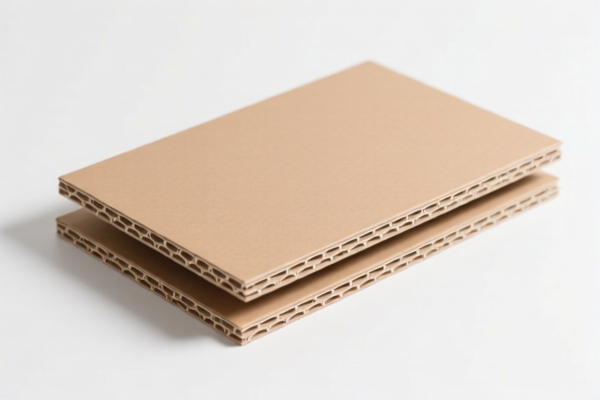
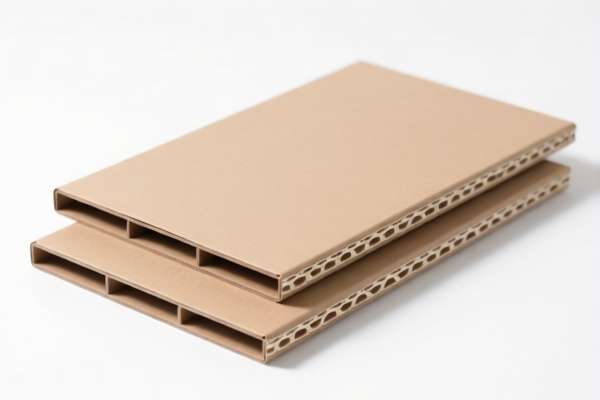
AI分析
📦 Packaging Composite Board (Industrial & Commercial Grade)
🌐 HS Code Reference & Customs Clearance Guide | 2026 Latest Tariff Analysis | Professional Entry Strategy for US Imports
📌 Part 1: Product Definition & Classification: Is it Paper or Plastic?
"Packaging Composite Board" is a generic term that causes significant confusion in customs classification because it spans two fundamentally different material categories: Paper-based and Plastic-based.
In international trade, the HS Code is determined not just by the name "Composite Board," but by: 1. Primary Material Composition: Is the base material paper/cardboard or plastic/polymer? 2. Manufacturing Process: Is it laminated, coated, or layered? 3. Specific Use: Is it for industrial structural use or packaging?
⚠️ Critical Distinction Point: - If the board is primarily Paper/Cardboard (even if coated or laminated) → It falls under Chapter 48. - If the board is primarily Plastic/Polymer (even if reinforced with paper) → It falls under Chapter 39. - Misclassification Risk: Declaring a plastic-composite board as paper can lead to severe penalties due to incorrect tariff assessment (and vice versa).
📋 Part 2: HS Code Classification Details (2026 Latest Tariff Authority)
Based on the provided data, here are the specific HS Codes and their logical justifications:
| HS Code | Material Category | Product Description & Logic | Primary Use |
|---|---|---|---|
| 4811.51.20.20 | Paper-Based | Composite Paperboard (Industrial): Material is paperboard, purpose is industrial. Fits attributes of coated/laminated paperboard. | Industrial |
| 4811.51.20.40 | Paper-Based | Composite Paperboard (Packaging): Material is paperboard, purpose is packaging. Fits the scope of original paper for packaging. | Packaging |
| 4807.00.92.00 | Paper-Based | Composite Paperboard: Material is composite paper/paperboard. Industrial use does not conflict with form or purpose. | Industrial |
| 3920.99.20.00 | Plastic-Based | Plastic Composite Board: Material is plastic, form is composite board. Fits characteristics of laminated or combined materials. | General/Industrial |
| 3921.90.50.50 | Plastic-Based | Plastic Composite Board (Plate): Material is plastic, form is plate. Fits requirements for plastic plates, sheets, films, foils, and strips. | General/Packaging |
🔍 Key Insight: - Codes 4811 and 4807 are for Paper/Cellulose based boards. - Codes 3920 and 3921 are for Plastic/Polymer based boards. - The choice depends entirely on the principal material exposed to the customs inspector.
💰 Part 3: 2026 Latest Tariff Rate Breakdown (Including Surtaxes & Policy Surcharges)
✅ Applicable Country: United States (US)
✅ Origin: China (CN)
✅ Effective Time: 2025 November 10 onwards (including subsequent imports)
🎯 1. Paper-Based Composite Boards (HS 4811.51.20.xx & 4807.00.92.00)
| Item | Content |
|---|---|
| Basic Tariff | 0.0% (ad valorem) |
| USITC Surcharge (Section 301) | +25.0% |
| IEEPA Surcharge (Section 122) | +10.0% |
| Total Tax Rate | 35.0% |
| Tax Calculation | CIF Value × 35% |
| De Minimis Eligibility | ❌ No (deny_de_minimis) |
| Legal Basis Path | Section 301: 4811/4807 → IEEPA: 122 → USITC: 25% |
📌 Explanation: - Although the base tariff for many paper products is 0%, Section 301 tariffs (25%) apply to Chinese-origin paper products. - Section 122 tariffs (10%) are an additional layer for specific strategic materials. - Total Burden: 35% is a significant cost. Ensure the "Paper" classification is defensible with material safety data sheets (MSDS).
🎯 2. Plastic-Based Composite Boards (HS 3920.99.20.00 & 3921.90.50.50)
| Item | Content |
|---|---|
| Basic Tariff | 4.2% - 4.8% (ad valorem) |
| USITC Surcharge (Section 301) | +25.0% |
| IEEPA Surcharge (Section 122) | +10.0% |
| Total Tax Rate | 39.2% - 39.8% |
| Tax Calculation | CIF Value × 39.2%~39.8% |
| De Minimis Eligibility | ❌ No (deny_de_minimis) |
| Legal Basis Path | Section 301: 3920/3921 → IEEPA: 122 → USITC: 25% |
📌 Explanation: - Plastic composite boards have a slightly higher base tariff (4.2%-4.8%) compared to paper (0%). - The 25% Section 301 and 10% Section 122 surcharges are mandatory for Chinese-origin plastic products. - Total Burden: ~39.2%-39.8%. This is one of the highest effective tax rates for packaging materials.
🛠️ Part 4: Customs Clearance Operational Advice (Practical Pitfall Avoidance)
✅ 1. Required Documentation Checklist (Non-negotiable)
| Document | Must Provide | Explanation |
|---|---|---|
| ✅ Product Specification Sheet | ✔️ | Must clearly state material composition (e.g., "70% Paper, 30% Polyethylene") |
| ✅ Material Safety Data Sheet (MSDS) | ✔️ | Critical to prove if the board is primarily paper or plastic |
| ✅ Product Photos | ✔️ | Clear images showing layers, cross-sections, and labels |
| ✅ Commercial Invoice | ✔️ | Must list HS Code, CIF value, and country of origin (China) |
| ✅ Packing List | ✔️ | Must match invoice details exactly |
| ✅ Certificate of Origin (CO) | ✔️ | Required to prove Chinese origin for surcharge calculation |
✅ 2. Declaration Strategy (Key Rules)
🔥 "Material First, Use Second. Name Accurate, Tax Avoidable!"
| Scenario | Correct Declaration | Wrong Practice |
|---|---|---|
| Paperboard with Plastic Coating | 4811.51.20.20 (Paper Chapter) | Declare as "Plastic Board" → 39.8% Tax |
| Plastic Laminated with Paper | 3920.99.20.00 (Plastic Chapter) | Declare as "Paper Board" → 35% Tax |
| Generic "Composite Board" | Specify Material in Description | Use vague name → High Risk of Audit/Reclassification |
| Mixed Shipment | Separate HS Codes for Paper vs. Plastic | Lump all under one code → Potential Penalty |
📌 Note: If the board is a sandwich structure (e.g., Paper-Plastic-Paper), the classification often depends on the principal material or the essential character of the product. Provide engineering drawings if possible.
✅ 3. Special Cases Handling
| Situation | Handling Advice |
|---|---|
| OEM Custom Board | Provide customer order + design specs. Avoid "Generic" descriptions. |
| Recycled Content | If high % of recycled material, check for any eco-credits (though unlikely to exempt from 301/122 tariffs). |
| Foam-Core Composite | If foam is plastic, use 3921. If paper-faced, use 4811. Be precise! |
| Corrugated vs. Solid | Corrugated boards may have different sub-headings; ensure the code matches the physical structure. |
🌍 Part 5: Global Market Comparison (2026 Latest)
| Country/Region | Recommended HS Code | Tariff (China Origin) | Certification Requirements | Notes |
|---|---|---|---|---|
| 🇺🇸 USA | See Codes Above | 35% - 39.8% | None specific for board, but FTC labeling required | Highest Surtax Burden |
| 🇨🇳 China | Same Codes | 0% - 5% | CCC (if electrical components present) | Domestic consumption |
| 🇪🇺 EU | 4811 / 3920 | 0% - 6.5% | CE (if applicable), REACH | No Section 301/122 |
| 🇬🇧 UK | 4811 / 3920 | 0% - 5% | UKCA | Post-Brexit standards |
| 🇨🇦 Canada | 4811 / 3920 | 0% | None | CUSMA benefits if Canadian origin |
📌 Conclusion: - The US market imposes a massive tax burden (35-40%) on these products due to Section 301 and Section 122. - EU, UK, Canada, and Asia do not have these specific US-style surcharges. - Strategic Advice: If your target market is the US, consider supply chain diversification (e.g., manufacturing in Vietnam or Mexico) to mitigate tariff risks, IF rules of origin are met.
📌 Part 6: Common Mistakes & Pitfall Guide (Lessons Learned)
❌ Mistake 1: Declaring "Plastic Board" when it is 90% Paper
👉 Consequence: Customs may reclassify to 4811 (35%) or impose penalties for under-declaration if plastic content is significant.
❌ Mistake 2: Using "Packaging Board" as the only description
👉 Consequence: Customs agent cannot determine Chapter 48 vs. 39. Delay in clearance + Storage fees.
❌ Mistake 3: Ignoring the 122-Clause Tariff (10%)
👉 Consequence: Underpayment of duties. Back-taxes + Interest.
❌ Mistake 4: Assuming "Composite" means "Exempt"
👉 Consequence: No exemption exists for Section 301/122 on these categories. Full tax applies.
✅ Correct Practice:
"Industrial Composite Paperboard, Coated, 70% Paper Content, 30% Plastic Coating, Model XYZ, CIF Value $10,000, Origin China"
🎯 Part 7: Conclusion: Precision in Classification Saves Money!
🎯 Remember the Mantra:
🔹 "Paper is 35%, Plastic is ~40%. Name it right, avoid the fight!"
🔹 "Section 301 + 122 = 35-40% Tax. No De Minimis for these goods!"
🔹 "Material Composition is King. Documents are Queen. No Docs, No Entry."
📌 Pro Tip:
- If your product is >50% Paper by weight, strongly consider Chapter 48 (4811/4807) to save ~4-5% in base tariff, but verify the "Essential Character" test.
- If >50% Plastic, you are stuck with Chapter 39 (3920/3921).
- Always request an Advance Ruling from US Customs (CBP) if the material mix is ambiguous.
📣 Immediate Action:
📞 Consult a Licensed Customs Broker + Provide Material Specs + Apply for HS Code Pre-Ruling
🚀 Let your Composite Board clear customs smoothly, efficiently, and profitably!
✨ Professional Clearance Starts with Accurate Classification!
💼 Every Percentage Point of Tax Matters!
用户评价
关于 HS 编码归类
协调制度(HS)是由世界海关组织(WCO)制定的国际贸易商品分类标准。全球 200 多个国家采用 HS 系统作为海关关税、贸易统计和进出口监管的基础。
每个 HS 编码遵循以下层级结构:
- 章(2 位)——商品大类(例如:第 84 章:机器和机械设备)
- 品目(4 位)——章内的更具体分类
- 子目(6 位)——国际通用细分,所有 WCO 成员国统一使用
- 本国细分(8-10 位)——各国自行扩展的细分编码,如美国 HTSUS 10 位编码
正确的 HS 编码归类对于顺利通关、准确缴纳关税和遵守贸易法规至关重要。错误归类可能导致海关延误、多缴关税或罚款。
从CN进口到US时,适用的关税税率可能包括:
- 最惠国(MFN)税率——适用于 WTO 成员国的标准关税税率
- 普通税率——适用于无贸易协定国家
- 贸易救济关税——附加关税,如 301 条款(反倾销)、232 条款(国家安全)或反补贴税
本页内容仅供参考。如需正式归类,请咨询当地海关或持牌报关代理。