paint roller brush
CN → US| HS编码 | 关税税率 | 原产国 | 目的国 | 文档 |
|---|---|---|---|---|
| 4417008090 | 40.1% | CN | US | 官方文档 |
| 9603402000 | 17.5% | CN | US | 官方文档 |
| 9603404020 | 14.0% | CN | US | 官方文档 |
| 4417004000 | 17.5% | CN | US | 官方文档 |
| 9603404040 | 14.0% | CN | US | 官方文档 |
| 9603404060 | 14.0% | CN | US | 官方文档 |
商品图片

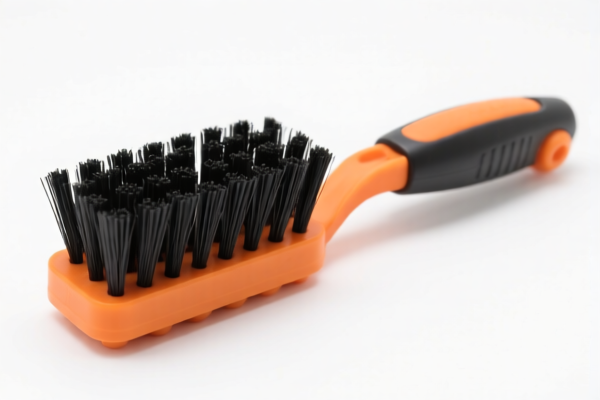
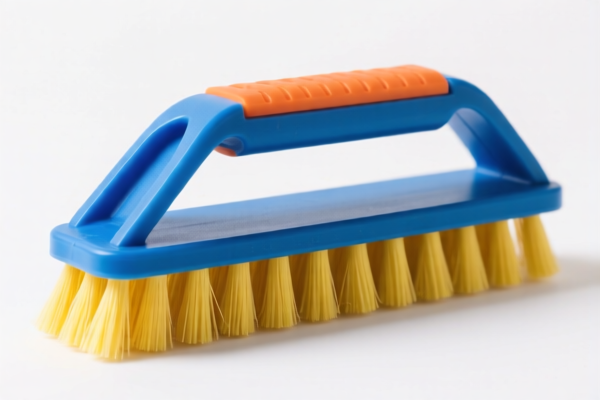

AI分析
🖌️ Paint Roller Brush (滚筒刷)
🌐 HS Code Reference & Customs Clearance Guide | 2026 Latest Tariff Analysis | Professional Clearance Strategy
📌 I. Product Definition & Classification: Understanding the "Paint Roller"
A paint roller brush is a critical tool in painting applications, designed for applying paint, varnish, or other liquids to surfaces. In international trade, its classification depends heavily on its material composition and specific intended use.
Two Main Classification Paths: 1. Wooden/Non-Textile Rollers: If the roller handle or core is primarily wood, it may be classified under Chapter 44 (Wood). 2. Textile/Fiber Rollers (The Standard): If the roller cover (the part that holds the paint) is made of fabric, foam, or fiber, it falls under Chapter 96 (Miscellaneous Manufactured Articles), specifically as "Brooms and Brushes."
⚠️ Key Distinction Point:
- If the item is essentially a wooden tool with minimal textile attachment → Look at HS 4417.
- If the item is a painting tool where the functional part is textile/fiber → Look at HS 9603.
📦 II. HS Code Classification Details (2026 Latest Tariff Authority Comparison)
Based on the provided data, here are the 6 possible HS codes for "Paint Roller Brush," ranging from high to low tax liability.
| HS Code | Product Description & Inference | Total Tax Rate | Tax Breakdown |
|---|---|---|---|
| 4417.00.80.90 | Roller Brush (Wooden): Inferred material is wood, categorized under "Other brushes." | 40.1% | Base: 5.1% + Section 301: 25.0% + Section 122: 10% |
| 9603.40.20.00 | Roller Brush (Paint/Varnish Type): Specifically for paint/varnish application, shaped as a paint roller. | 17.5% | Base: 7.5% + Section 301: 0.0% + Section 122: 10% |
| 4417.00.40.00 | Roller Brush (Wooden Accessory): Matches use/form, inferred wood material, fits paint roller accessory features. | 17.5% | Base: 0.0% + Section 301: 7.5% + Section 122: 10% |
| 9603.40.40.20 | Roller Brush (Brush Category): Belongs to brush category, fits roller form and use. | 14.0% | Base: 4.0% + Section 301: 0.0% + Section 122: 10% |
| 9603.40.40.40 | Fiber Roller Brush: Belongs to brush/roller category, form/use consistent with paint/varnish brushes. | 14.0% | Base: 4.0% + Section 301: 0.0% + Section 122: 10% |
| 9603.40.40.60 | Fiber Roller Brush (Paint/Varnish): Within the scope of paint, tinting, varnish brushes; form/use matches classification. | 14.0% | Base: 4.0% + Section 301: 0.0% + Section 122: 10% |
🔍 Critical Insight:
- Lowest Tax Bracket: 14.0% (HS 9603.40.40.20 / .40 / .60). These codes treat the product primarily as a brush/textile item, avoiding the highest Section 301 tariffs.
- Highest Tax Bracket: 40.1% (HS 4417.00.80.90). This treats the product as a wooden article, incurring full Section 301 (25%) + Section 122 (10%) tariffs.
- Middle Ground: 17.5%. Either a specific paint roller code (9603.40.20.00) or a wooden accessory code (4417.00.40.00) with lower Section 301 rates.
💰 III. 2026 Latest Tariff Rate Breakdown (Including Surcharges & Policy Add-ons)
✅ Applicable Country: USA (US)
✅ Origin: China (CN)
✅ Effective Time: Current US Trade Policy (Section 301 & 122)
🎯 1. The "Best Case" Scenario: HS 9603.40.40.x0 (14.0% Total)
| Item | Content |
|---|---|
| Base Duty | 4.0% (Ad Valorem) |
| USITC / Section 301 Surcharge | 0.0% (Exempt or not applicable for this specific subtype) |
| IEEPA / Section 122 Surcharge | +10% (Targeting Chinese goods) |
| Total Effective Tax Rate | 14.0% |
| Tax Calculation | CIF Value × 14.0% |
| De Minimis Eligibility | ❌ No (Deny de minimis for Section 301/122 goods) |
| Legal Pathway | USITC:9603.40.40.x0 → FOOTNOTE:122 |
📌 Explanation:
- This is the most cost-effective classification.
- It assumes the product is recognized as a paint brush (textile/fiber) rather than a general wooden tool.
- Key Advantage: Avoids the heavy 25% Section 301 tariff, paying only the 10% Section 122 surcharge on top of a low base rate.
🎯 2. The "Mid-Range" Scenario: HS 9603.40.20.00 or 4417.00.40.00 (17.5% Total)
| Item | Content |
|---|---|
| Base Duty | 7.5% (for 9603) or 0.0% (for 4417) |
| USITC / Section 301 Surcharge | 0.0% (for 9603) or 7.5% (for 4417) |
| IEEPA / Section 122 Surcharge | +10% |
| Total Effective Tax Rate | 17.5% |
| Tax Calculation | CIF Value × 17.5% |
📌 Explanation:
- 9603.40.20.00: Specific for paint rollers but with a higher base rate (7.5%) and no 301 surcharge.
- 4417.00.40.00: Wooden accessory with no base duty but a 7.5% 301 surcharge.
- Both are significantly cheaper than the "Wooden Brush" classification.
🎯 3. The "Worst Case" Scenario: HS 4417.00.80.90 (40.1% Total)
| Item | Content |
|---|---|
| Base Duty | 5.1% |
| USITC / Section 301 Surcharge | +25.0% (Full Section 301 tariff) |
| IEEPA / Section 122 Surcharge | +10.0% |
| Total Effective Tax Rate | 40.1% |
| Tax Calculation | CIF Value × 40.1% |
| Legal Pathway | USITC:4417.00.80.90 → FOOTNOTE:301 & 122 |
📌 Explanation:
- This classification views the product primarily as a wooden manufactured article.
- It incurs ALL surcharges: Base (5.1%) + 301 (25%) + 122 (10%).
- Result: Nearly double the cost of the optimal classification.
🛠️ IV. Customs Clearance Practical Advice (Real-World Pitfall Guide)
✅ 1. Documentation Checklist (Non-Negotiable)
| Document | Required? | Purpose |
|---|---|---|
| ✅ Product Specifications | ✔️ | Detail materials: Is the core wood? Is the cover foam/fabric? |
| ✅ Photos (Clear) | ✔️ | Show the brush head texture (fibers vs. wood grain) and handle. |
| ✅ Commercial Invoice | ✔️ | Clearly state: "Paint Roller Brush, Textile Cover, Wooden Handle" |
| ✅ Packing List | ✔️ | Weight and dimensions to verify CIF value accuracy. |
| ✅ Material Composition Statement | ✔️ | Explicitly state % of wood vs. textile/fiber. |
✅ 2. Classification Strategy (Key Mantras)
🔥 "Fiber is King, Wood is Pain. Specify the Head, Save Your Gain!"
| Scenario | Recommended HS Code | Why? |
|---|---|---|
| Standard Paint Roller (Foam/Fiber cover) | 9603.40.40.x0 |
Lowest tax (14%). Classifies as a brush. |
| Specific Paint Roller (Explicitly for paint) | 9603.40.20.00 |
Moderate tax (17.5%). High specificity. |
| All-Wooden Roller (Rare, e.g., polishing) | 4417.00.80.90 |
High tax (40.1%). Avoid if possible. |
| Wooden Handle + Accessory | 4417.00.40.00 |
Moderate tax (17.5%). If parts are shipped separately. |
✅ 3. Critical Warning
- Do NOT simply label the product as "Roller" or "Brush" without specifying the cover material.
- Do NOT assume all rollers are the same. If the cover is textile, foam, or sponge, you have a strong argument for Chapter 96 (9603).
- Avoid Chapter 44 (Wood) unless the product is predominantly wood and not primarily a painting tool. Misclassification here leads to the 40.1% penalty.
🌍 V. Global Market Comparison (2026)
| Country/Region | Recommended HS Code | Approx. Tax (China Origin) | Key Requirement | Note |
|---|---|---|---|---|
| 🇺🇸 USA | 9603.40.40.x0 |
14.0% | FCC/RoHS (if applicable) | Optimal Code. Avoids 301 tariff. |
| 🇪🇺 EU | 9603.40.x0 |
4.0% - 6.5% | CE | No Section 301/122 equivalents. |
| 🇨🇳 China | 9603.40.x0 |
6.5% | CCC (if applicable) | Standard export code. |
📌 Conclusion:
- USA is the only market where this specific tariff war (301 + 122) creates a 26% tax disparity between optimal (14%) and suboptimal (40.1%) classification.
- Strategy: Always classify paint rollers with textile/fiber covers under 9603.40 to maximize savings.
📌 VI. Common Errors & Pitfall Guide (Blood & Tears)
❌ Error 1: Classifying a standard paint roller (fabric cover) as a wooden brush (4417.00.80.90).
👉 Consequence: Tax jumps from 14% to 40.1%. You pay an extra 26.1% on every shipment.
❌ Error 2: Failing to specify the cover material in the invoice.
👉 Consequence: Customs may arbitrarily assign the highest duty code (4417.00.80.90) due to ambiguity.
❌ Error 3: Assuming "Brush" automatically means Chapter 96.
👉 Consequence: If the product is a wooden polishing roller with no textile, it belongs in Chapter 44. Verify material %!
✅ Correct Practice:
"Paint Roller Brush, 9-inch, with Polyester Fiber Cover and Wooden Handle. For application of interior/exterior paints."
🎯 VII. Conclusion: Professional Declaration, Lower Costs!
🎯 Remember the Mantra:
🔹 "Fiber Cover = 9603 (14%)! Wooden Body = 4417 (40%)!"
🔹 "Don't let 'Wood' cost you 26%. Specify the Brush!"
📌 Tip:
If you are importing large volumes, consider applying for a Binding Ruling from US Customs and Border Protection (CBP) for the 9603.40.40.x0 codes to guarantee the 14% rate and avoid post-clearance audits.
📣 Immediate Action:
📞 Contact your freight forwarder to verify the material composition of your roller covers.
🚀 Switch to 9603.40.40.20 / 40 / 60 for immediate tax savings!
✨ Professional Customs Clearance Starts with Precise Classification!
💼 Every percentage point saved is pure profit!
用户评价
关于 HS 编码归类
协调制度(HS)是由世界海关组织(WCO)制定的国际贸易商品分类标准。全球 200 多个国家采用 HS 系统作为海关关税、贸易统计和进出口监管的基础。
每个 HS 编码遵循以下层级结构:
- 章(2 位)——商品大类(例如:第 84 章:机器和机械设备)
- 品目(4 位)——章内的更具体分类
- 子目(6 位)——国际通用细分,所有 WCO 成员国统一使用
- 本国细分(8-10 位)——各国自行扩展的细分编码,如美国 HTSUS 10 位编码
正确的 HS 编码归类对于顺利通关、准确缴纳关税和遵守贸易法规至关重要。错误归类可能导致海关延误、多缴关税或罚款。
从CN进口到US时,适用的关税税率可能包括:
- 最惠国(MFN)税率——适用于 WTO 成员国的标准关税税率
- 普通税率——适用于无贸易协定国家
- 贸易救济关税——附加关税,如 301 条款(反倾销)、232 条款(国家安全)或反补贴税
本页内容仅供参考。如需正式归类,请咨询当地海关或持牌报关代理。