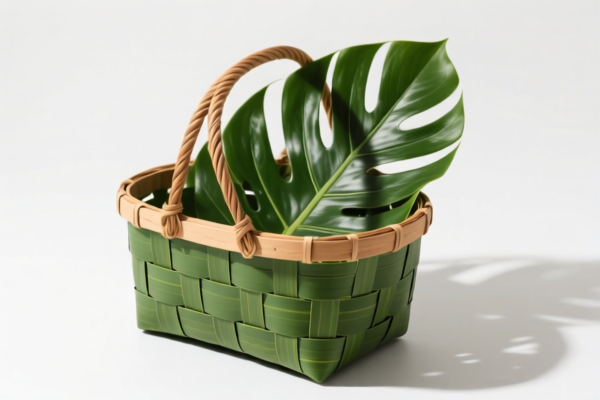
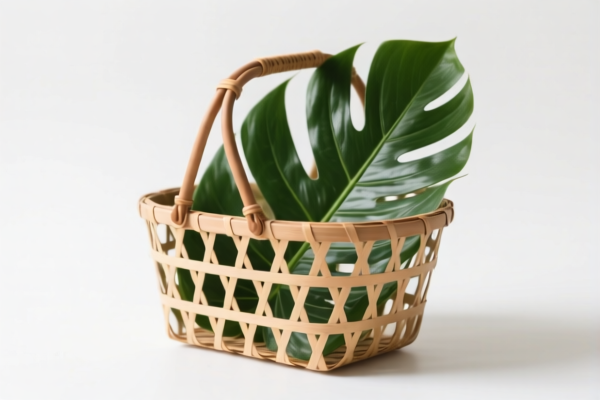
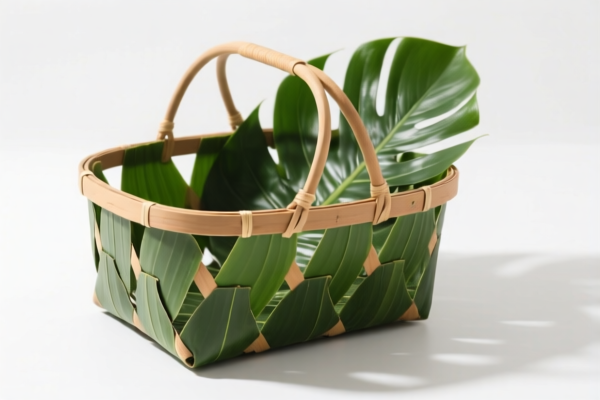
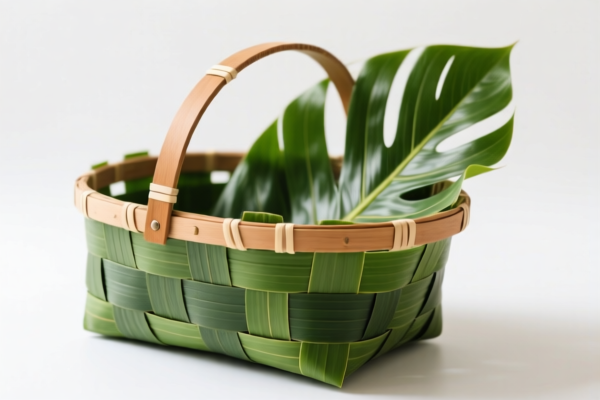
palm leaf shopping basket
CN → US| HS编码 | 关税税率 | 原产国 | 目的国 | 文档 |
|---|---|---|---|---|
| 4602191600 | 15.0% | CN | US | 官方文档 |
| 1404909090 | 35.0% | CN | US | 官方文档 |
| 1404904000 | 37.3% | CN | US | 官方文档 |
| 4602191400 | 10.0% | CN | US | 官方文档 |
| 4601922000 | 41.6% | CN | US | 官方文档 |
商品图片
AI分析
🌿 Palm Leaf Shopping Basket: HS Code Classification & U.S. Customs Clearance Guide (2026)
🌐 HS Code Reference & Clearance Strategy | U.S. Tariff Analysis | Professional Customs Strategy
📌 1. Product Definition & Classification: What is a "Palm Leaf Shopping Basket"?
Palm leaf shopping baskets are eco-friendly, woven containers made from dried palm fronds or leaves. In international trade, the classification hinges on two critical factors: 1. Material: Is it treated as "Vegetable Plaiting Materials" (Chapter 14) or "Woven Goods" (Chapter 46)? 2. Form/Structure: Is it a simple plaited matting/shape, or a constructed basket with handles/structure?
⚠️ Key Distinction Point: - If classified under Chapter 14, it is viewed as a raw or semi-processed vegetable product (often "other"). - If classified under Chapter 46, it is viewed as a manufactured woven article (basketry). - Crucial Note: U.S. trade policies (Section 301 & Section 122) impose significant additional tariffs on Chinese-origin goods in both categories, but the base rates and additional levies vary drastically.
📦 2. HS Code Classification Details (Based on Provided Data)
| HS Code | Product Description | Classification Logic | Total Tax Rate |
|---|---|---|---|
| 4602.19.16.00 | Palm Leaf Shopping Basket, Palm Leaf Material, Basket Form | Chapter 46 (Woven Goods): Fits the specific explanatory notes for baskets made of palm leaves. | 15.0% |
| 1404.90.90.90 | Palm Leaf Shopping Basket, Plant Product, Other | Chapter 14 (Other Vegetable Products): Fallback category for other plant products not elsewhere specified. | 35.0% |
| 1404.90.40.00 | Palm Leaf Shopping Basket, Plant Fiber, Other | Chapter 14 (Other Vegetable Products): Fallback category for other plant fibers/products. | 37.3% |
| 4602.19.14.00 | Palm Leaf Shopping Basket, Palm Leaf Material, Basket Form | Chapter 46 (Woven Goods): Fits the specific explanatory notes for baskets made of palm leaves (variant). | 10.0% |
| 4601.92.20.00 | Palm Leaf Shopping Basket, Plant Fiber, Woven Article | Chapter 46 (Woven Goods): Classified under "Other" woven articles of vegetable plaiting materials. | 41.6% |
🔍 Critical Analysis: - Most Favorable Rate:
4602.19.14.00at 10.0% Total Tax. - Least Favorable Rate:4601.92.20.00at 41.6% Total Tax. - Chapter 46 vs. Chapter 14: Goods classified under Chapter 46 (woven baskets) generally attract lower base duties (0% or 5%) compared to Chapter 14 (0% or 2.3%), but the additional tariffs (Section 301/122) push the total high. However,4602.19.14.00enjoys a 0% Base + 0% Section 301, making it the only low-cost option.
💰 3. 2026 Latest Tariff Rate Breakdown (Detailed Policy Explanation)
✅ Applicable Country: United States (US)
✅ Origin: China (CN) (Assumed based on typical Section 301/122 application context)
✅ Effective Time: Current Trade Policies (Section 301 & Section 122)
🎯 1. 4602.19.14.00 —— WINNER: Lowest Cost Option
Description: Palm Leaf Basket, Woven Article, Specific Sub-heading
| Item | Content |
|---|---|
| Base Duty Rate | 0.0% (Ad Valorem) |
| Section 301 Tariff (25%) | 0.0% (Exempt or Not Applicable to this specific sub-head) |
| Section 122 Tariff (10%) | +10.0% (Specific to this HS code classification) |
| Total Effective Rate | 10.0% |
| Tax Calculation | CIF Value × 10% |
| De Minimis Exemption? | ❌ No (High value threshold; de minimis does not apply to Section 122 duties in most commercial contexts) |
| Legal Basis Path | HTSUS:4602.19.14.00 → Executive Order: Section 122 |
📌 Explanation:
- This code falls under "Basketry products of vegetable materials." - Crucial Advantage: It is exempt from the heavy 25% Section 301 tariff, which applies to many other palm/plastic/plant products. - It only carries the 10% Section 122 duty. - Recommendation: This is the optimal classification if the product can be strictly defined as a "basket" under HTSUS 4602.19.14.
🎯 2. 4602.19.16.00 —— Moderate Cost Option
Description: Palm Leaf Basket, Woven Article, Other Sub-heading
| Item | Content |
|---|---|
| Base Duty Rate | 5.0% (Ad Valorem) |
| Section 301 Tariff (25%) | 0.0% |
| Section 122 Tariff (10%) | +10.0% |
| Total Effective Rate | 15.0% |
| Tax Calculation | CIF Value × 15% |
| De Minimis Exemption? | ❌ No |
| Legal Basis Path | HTSUS:4602.19.16.00 → Executive Order: Section 122 |
📌 Explanation:
- Similar to the previous code but falls under a different sub-heading (possibly different size, handle type, or weave style). - The base duty is slightly higher (5% vs 0%), leading to a 15% total. - Still significantly cheaper than Chapter 14 options.
🎯 3. 1404.90.90.90 —— High Cost Option (Chapter 14 Fallback)
Description: Other Plant Products
| Item | Content |
|---|---|
| Base Duty Rate | 0.0% |
| Section 301 Tariff (25%) | +25.0% |
| Section 122 Tariff (10%) | +10.0% |
| Total Effective Rate | 35.0% |
| Tax Calculation | CIF Value × 35% |
| De Minimis Exemption? | ❌ No |
| Legal Basis Path | HTSUS:1404.90.90.90 → Section 301 + Section 122 |
📌 Explanation:
- Classified as a generic "other plant product." - Subject to the full 25% Section 301 tariff because it does not qualify for the basketry exemptions. - High risk of being flagged as "incorrect classification" if a basket structure is evident.
🎯 4. 1404.90.40.00 —— High Cost Option (Plant Fiber)
Description: Other Plant Fibers/Products
| Item | Content |
|---|---|
| Base Duty Rate | 2.3% |
| Section 301 Tariff (25%) | +25.0% |
| Section 122 Tariff (10%) | +10.0% |
| Total Effective Rate | 37.3% |
| Tax Calculation | CIF Value × 37.3% |
| De Minimis Exemption? | ❌ No |
| Legal Basis Path | HTSUS:1404.90.40.00 → Section 301 + Section 122 |
📌 Explanation:
- Even with a low base duty (2.3%), the 25% Section 301 crushes the advantage. - Total cost is 37.3%, which is financially unsustainable for most retail margins.
🎯 5. 4601.92.20.00 —— Highest Cost Option (Woven Article)
Description: Other Woven Plaiting Materials
| Item | Content |
|---|---|
| Base Duty Rate | 6.6% |
| Section 301 Tariff (25%) | +25.0% |
| Section 122 Tariff (10%) | +10.0% |
| Total Effective Rate | 41.6% |
| Tax Calculation | CIF Value × 41.6% |
| De Minimis Exemption? | ❌ No |
| Legal Basis Path | HTSUS:4601.92.20.00 → Section 301 + Section 122 |
📌 Explanation:
- Classified under "Other" woven articles (Chapter 46, Heading 4601), which are subject to Section 301. - This is the most expensive option at 41.6%. - Only use if the product cannot be proven to be a "basket" (4602) and fits the definition of a generic woven mat/strip (4601).
🛠️ 4. Customs Clearance Practical Advice (Pitfall Avoidance Guide)
✅ 1. Material Preparation Checklist (Must-Haves)
| Document | Required | Explanation |
|---|---|---|
| ✅ Product Photos | ✔️ | Clear images showing the basket shape, handles, and weave. Must prove it is a "basket" (4602), not just a mat. |
| ✅ Product Specification | ✔️ | Detail the material: "100% Dried Palm Leaves." Avoid vague terms like "eco-material." |
| ✅ Construction Diagram | ✔️ | Show how the leaves are woven/plaited. Proves it is a "woven article" (Chapter 46) rather than a loose plant product (Chapter 14). |
| ✅ Commercial Invoice | ✔️ | Must explicitly state: "Palm Leaf Basket, Woven Vegetable Material, HS Code: 4602.19.14.00" |
| ✅ Origin Certificate | ✔️ | Proof of Chinese origin (if applicable) to determine Section 301/122 liability. |
✅ 2. Declaration Strategy (Key Tips)
🔥 "Prove it's a Basket, Not a Mat, Not a Leaf!"
| Scenario | Correct Declaration | Incorrect Declaration | Consequence |
|---|---|---|---|
| Product has handles & deep weave | HS Code: 4602.19.14.00Name: "Woven Palm Leaf Basket" |
HS Code: 1404.90.90.90Name: "Palm Leaf Product" |
Risk: Customs may downgrade to 1404 (35%) or audit. If you declare 1404 but it's clearly a basket, you might be forced to pay 15% instead of 10%, or face penalties. |
| Product is flat, no handles | HS Code: 4601.92.20.00 (or similar) |
HS Code: 4602.19.14.00 |
Risk: Misclassification. Flat mats are not baskets. Penalty + Back Taxes. |
| Product is raw, un-woven leaves | HS Code: 1404.90.40.00 |
HS Code: 4602.19.14.00 |
Risk: Under-declaration. If you claim "basket" but send raw leaves, Customs will reclassify and charge 37.3% + penalties. |
✅ 3. Strategic Recommendations
-
Aim for
4602.19.14.00(10% Total):- This is the only low-cost option.
- To qualify, the product must be constructed as a basket (with form, handles, and structured weave).
- Action: Ensure your product design clearly meets the definition of a "basket" in Chapter 46 Explanatory Notes.
-
Avoid
1404.xx.xxCodes:- These incur 25% Section 301 duties.
- Unless the product is raw, un-woven, or loosely bundled palm leaves, do not use these codes.
-
Avoid
4601.xx.xxCodes:- These incur 25% Section 301 duties.
- Use only if the item is a "mat" or "woven strip," not a container/basket.
-
Pre-Ruling Request:
- If unsure, request a Binding Tariff Information (BTI) or US CBP Ruling before shipping. Provide photos and samples to confirm
4602.19.14.00eligibility.
- If unsure, request a Binding Tariff Information (BTI) or US CBP Ruling before shipping. Provide photos and samples to confirm
🌍 5. Global Market Comparison (2026)
| Country/Region | Recommended HS Code | Est. Total Duty (CN Origin) | Key Certification | Notes |
|---|---|---|---|---|
| 🇺🇸 USA | 4602.19.14.00 |
10.0% | None (General) | Best Option. Avoids Section 301. |
| 🇺🇸 USA | 1404.90.90.90 |
35.0% | None | High tax due to Section 301. |
| 🇪🇺 EU | 4602.19.90 |
~2.0% - 5% | None | No Section 301/122. Lower base duty. |
| 🇨🇳 China | 4602.19.90 |
~5.0% | None | No extra US tariffs. |
📌 Conclusion:
For the US Market,4602.19.14.00is the strategic winner.
- Savings: Up to 31.6% less tax compared to the worst-case scenario (4601.92.20.00).
- Compliance: Requires strict adherence to "basket" definition.
📌 6. Common Errors & Pitfalls (Lessons Learned)
❌ Error 1: Declaring a structured basket as "Other Plant Product" (1404.90.90.90).
👉 Consequence: You pay 35% instead of 10%. No benefit.
👉 Fix: Always classify structured woven containers under Chapter 46.
❌ Error 2: Declaring a flat palm leaf mat as a "Basket" (4602.19.14.00).
👉 Consequence: Customs reclassifies to 4601.92.20.00 or 1404.xxxx, adding 25-30% in back duties + penalties.
👉 Fix: Ensure product has depth, handles, and container functionality.
❌ Error 3: Ignoring Section 122 Tariff.
👉 Consequence: Unexpected 10% duty at port even if Section 301 is 0%.
👉 Fix: Factor in the 10% Section 122 cost in all Chapter 46 basket calculations.
🎯 7. Conclusion: Smart Classification for Maximum Profit
🎯 Remember the Golden Rule:
🔹 "Basket = Chapter 46. Flat Mat = Chapter 46/14. Raw Leaf = Chapter 14."
🔹 "Chapter 46 Baskets (4602) Avoid Section 301. That's the 15-30% Savings!"
🔹 "Total Tax = Base + Section 122 (10%). Base is 0% or 5% for 4602. Total: 10% or 15%."
📌 Pro Tip:
If your supplier claims the product is "palm leaf," ask for photos of the weaving process. If it looks like a basket, fight for 4602.19.14.00. If it looks like a flat mat, accept the higher duty or redesign the product to be more basket-like.
📣 Immediate Action:
📞 Contact Your Customs Broker: Provide product images and ask: "Can this be classified under 4602.19.14.00 to avoid Section 301?"
🚀 Optimize Your Supply Chain: Choose designs that clearly fit the "basket" definition to lock in the 10% tariff rate.
✨ Professional Clearance Starts with Accurate Classification!
💼 Your Margin Depends on This 10-Digit Code!
用户评价
关于 HS 编码归类
协调制度(HS)是由世界海关组织(WCO)制定的国际贸易商品分类标准。全球 200 多个国家采用 HS 系统作为海关关税、贸易统计和进出口监管的基础。
每个 HS 编码遵循以下层级结构:
- 章(2 位)——商品大类(例如:第 84 章:机器和机械设备)
- 品目(4 位)——章内的更具体分类
- 子目(6 位)——国际通用细分,所有 WCO 成员国统一使用
- 本国细分(8-10 位)——各国自行扩展的细分编码,如美国 HTSUS 10 位编码
正确的 HS 编码归类对于顺利通关、准确缴纳关税和遵守贸易法规至关重要。错误归类可能导致海关延误、多缴关税或罚款。
从CN进口到US时,适用的关税税率可能包括:
- 最惠国(MFN)税率——适用于 WTO 成员国的标准关税税率
- 普通税率——适用于无贸易协定国家
- 贸易救济关税——附加关税,如 301 条款(反倾销)、232 条款(国家安全)或反补贴税
本页内容仅供参考。如需正式归类,请咨询当地海关或持牌报关代理。