paper envelopes
CN → US| HS编码 | 关税税率 | 原产国 | 目的国 | 文档 |
|---|---|---|---|---|
| 4823908680 | 35.0% | CN | US | 官方文档 |
| 3923109000 | 38.0% | CN | US | 官方文档 |
| 4823610040 | 35.0% | CN | US | 官方文档 |
| 4819504060 | 35.0% | CN | US | 官方文档 |
| 4819504020 | 35.0% | CN | US | 官方文档 |
商品图片


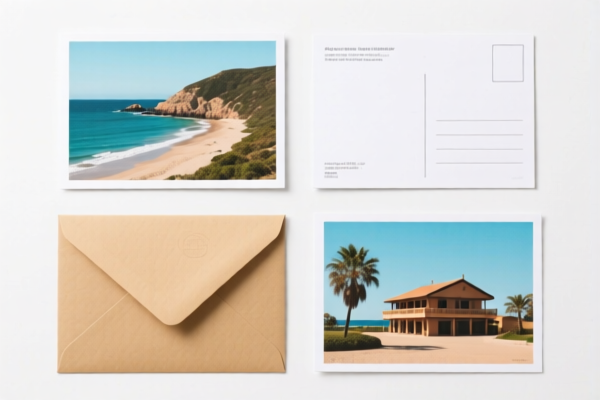

AI分析
📦 Paper Envelopes (Postal Envelopes & Packaging Bags)
🌐 HS Code Reference & Customs Clearance Guide | 2026 Latest Tariff Analysis | Professional Entry Strategy
📌 I. Product Definition: What Are "Paper Envelopes"?
Paper envelopes are versatile packaging items primarily used for mailing documents, photos, and lightweight goods. In international trade, they fall under Chapter 48 (Paper and Paperboard). The classification depends heavily on: 1. Material Composition: Pure paper vs. Plastic-coated/Laminated. 2. Structure: Folded bags vs. Rigid boxes. 3. Function: Mailing vs. General packaging.
⚠️ Key Distinction:
- Pure Paper Envelopes:归入 Chapter 48 (e.g., 4819, 4823).
- Plastic-Coated/Laminated Envelopes: May be classified under Chapter 39 (Plastics) if the plastic layer provides the essential character, or remain in Chapter 48 if paper remains dominant.
📊 II. HS Code Classification Matrix (2026 Data Analysis)
Based on the provided dataset, here are the 5 potential classifications for "Paper Envelopes" with their specific tax implications:
| HS Code | Summary Description | Tax Rate (US - CN Origin) | Key Classification Logic |
|---|---|---|---|
4823.90.86.80 |
Other paper articles | 35.0% | Generic "other paper products"; broad catch-all for non-specific paper items. |
3923.10.90.00 |
Plastic packaging supplies | 38.0% | ⚠️ Critical Risk: Classified as plastic if the envelope is heavily laminated/coated, treating it as plastic packaging. |
4823.61.00.40 |
Paper/paperboard bags & sacks | 35.0% | Specific to paper bags/sacks; fits envelopes that are folded into bag-like shapes. |
4819.50.40.60 |
Other packaging containers (excl. rigid boxes) | 35.0% | Fits envelopes used as packaging containers, excluding hard boxes/barrels. |
4819.50.40.20 |
Packaging containers (bags, boxes, shells) | 35.0% | Similar to above; covers bags, boxes, and shells made of paper. |
🔍 Data Insight:
- 4 out of 5 codes result in a 35% total tax rate.
- 1 code (3923.10.90.00) results in a 38% rate due to plastic classification.
- No code offers a 0% or low-tax advantage for this product from China to the US under current tariffs.
💰 III. Detailed Tax Breakdown (2026 US-China Trade Rules)
✅ Applicable Country: United States (US)
✅ Origin: China (CN)
✅ Base Tariff: Generally 0% - 3% depending on sub-category
✅ Section 301 Tariff: +25%
✅ 122 Clause Tariff: +10%
🎯 1. Paper-Based Envelopes (4823.90.86.80, 4823.61.00.40, 4819.50.40.60, 4819.50.40.20)
| Item | Value/Description |
|---|---|
| Base Tariff | 0.0% (for most paper articles under 4823/4819) |
| Section 301 Tariff | +25.0% (USITC Footnote 9903.88.01) |
| 122 Clause Tariff | +10.0% (Specific legislative add-on) |
| Total Effective Rate | 35.0% |
| Calculation | CIF Value × 35% |
| De Minimis Exemption? | ❌ NO (Deny De Minimis) |
📌 Explanation:
- The 0% base rate is standard for many paper articles.
- However, the +25% Section 301 and +10% 122 Clause tariffs are mandatory for Chinese-origin goods.
- Result: A flat 35% landed cost increase for duty alone.
🎯 2. Plastic-Coated/Laminated Envelopes (3923.10.90.00)
| Item | Value/Description |
|---|---|
| Base Tariff | 3.0% (Plastic packaging articles) |
| Section 301 Tariff | +25.0% |
| 122 Clause Tariff | +10.0% |
| Total Effective Rate | 38.0% |
| Calculation | CIF Value × 38% |
| De Minimis Exemption? | ❌ NO |
📌 Explanation:
- This code carries a higher base rate (3%) compared to pure paper (0%).
- Total tax is 3% higher than paper-only envelopes.
- Risk: If your "paper envelope" has a plastic window or heavy lamination, Customs may reclassify it here, increasing costs.
🛠️ IV. Customs Clearance Practical Advice (Avoid Pitfalls)
✅ 1. Documentation Checklist (Mandatory)
| Document | Required? | Notes |
|---|---|---|
| Product Specification | ✅ Yes | Specify material % (Paper vs. Plastic coating). |
| Material Composition | ✅ Yes | If >50% paper by weight/volume, argue for Chapter 48. |
| Commercial Invoice | ✅ Yes | Clearly state "Paper Envelope" or "Kraft Paper Bag". Avoid vague terms like "Packaging". |
| HS Code Declaration | ✅ Yes | Propose 4819.50.40.20 or 4823.90.86.80 as primary. |
| Origin Certificate | ✅ Yes | Prove CN origin for tariff calculation. |
✅ 2. Classification Strategy & Tips
🔥 Golden Rule:
"Paper Dominance = Chapter 48; Plastic Dominance = Chapter 39. Choose Chapter 48 for lower base rates (0% vs 3%)."
| Scenario | Recommended HS Code | Why? |
|---|---|---|
| Standard Kraft Envelope (Uncoated) | 4823.90.86.80 |
Broad, safe, 0% base rate. |
| Folded Paper Bag/Envelope | 4823.61.00.40 |
Specific to "bags/sacks" shape. |
| Envelopes with Plastic Window | 4819.50.40.20 |
Paper remains essential character; window is minor. |
| Heavily Laminated Plastic Envelope | 3923.10.90.00 |
Avoid if possible; 3% higher base tax. |
✅ 3. Critical Warnings
❌ Error 1: Misclassifying as "Plastic Packaging"
👉 Consequence: Higher base tariff (3% vs 0%) → +3% extra cost.
👉 Solution: Emphasize paper composition in specs.
❌ Error 2: Claiming De Minimis (Section 321)
👉 Consequence: Denied. Paper/plastic packaging from China does not qualify for $800 de minimis exemption under current enforcement.
👉 Solution: Prepare for full duty payment (35-38%).
❌ Error 3: Vague Description "Packaging Material"
👉 Consequence: Customs detention for reclassification.
👉 Solution: Use precise terms: "Paper Envelope, 9x12 inch, 70lb Kraft, Uncoated".
🌍 V. Global Market Comparison (2026)
| Market | Recommended HS Code | Total Tax Rate | Notes |
|---|---|---|---|
| 🇺🇸 USA | 4819.50.40.20 |
35.0% | High Section 301 + 122 Clause. No de minimis. |
| 🇨🇳 China | 4819.50.40.20 |
~0-5% | Import duty may be low; VAT applies. |
| 🇪🇺 EU | 4819.50.40.20 |
~0-6.5% | Depends on specific EU subheading; no Section 301. |
| 🇬🇧 UK | 4819.50.40.20 |
~0-6.5% | Post-Brexit tariffs; check UK Tariff Calculator. |
📌 Conclusion:
- The US market is the most expensive due to 35% total tariffs.
- No duty-free option exists for Chinese-origin paper envelopes.
- Supply Chain Strategy: Consider third-country assembly (e.g., Vietnam) to mitigate Section 301 tariffs, though 122 Clause may still apply if Chinese material is used.
📌 VI. Common Mistakes & Best Practices
❌ Mistake: Using "Plastic Bag" for a paper envelope with a clear window.
👉 Fix: Classify as Paper (4819 or 4823). The plastic window is an accessory.
❌ Mistake: Assuming small shipments are duty-free.
👉 Fix: No de minimis for these HS codes from China. Budget for 35% duty.
✅ Best Practice:
"Always declare 'Paper Envelope' with material breakdown. Prioritize HS codes under 4819/4823 with 0% base rates to minimize tax base before adding 35% duties."
🎯 VII. Conclusion: Cost-Effective Clearance Strategy
🎯 Key Takeaway:
🔹 Tariff Rate is Fixed at 35-38% for US imports from China.
🔹 Opt for Chapter 48 (Paper) to save the 3% base tariff difference.
🔹 Avoid Chapter 39 (Plastic) unless the product is >50% plastic by value/weight.
🔹 No De Minimis Exemption: Factor into pricing immediately.
📌 Action Item:
📞 Consult a Customs Broker: Get an Advance Ruling for your specific envelope type (coated vs. uncoated) to lock in the
4819or4823classification.
🚀 Profit Protection: Add 35-38% to your COGS when pricing for the US market.
✨ Precise Classification Saves Dollars!
💼 Don't let vague descriptions cost you 38% in taxes!
用户评价
关于 HS 编码归类
协调制度(HS)是由世界海关组织(WCO)制定的国际贸易商品分类标准。全球 200 多个国家采用 HS 系统作为海关关税、贸易统计和进出口监管的基础。
每个 HS 编码遵循以下层级结构:
- 章(2 位)——商品大类(例如:第 84 章:机器和机械设备)
- 品目(4 位)——章内的更具体分类
- 子目(6 位)——国际通用细分,所有 WCO 成员国统一使用
- 本国细分(8-10 位)——各国自行扩展的细分编码,如美国 HTSUS 10 位编码
正确的 HS 编码归类对于顺利通关、准确缴纳关税和遵守贸易法规至关重要。错误归类可能导致海关延误、多缴关税或罚款。
从CN进口到US时,适用的关税税率可能包括:
- 最惠国(MFN)税率——适用于 WTO 成员国的标准关税税率
- 普通税率——适用于无贸易协定国家
- 贸易救济关税——附加关税,如 301 条款(反倾销)、232 条款(国家安全)或反补贴税
本页内容仅供参考。如需正式归类,请咨询当地海关或持牌报关代理。