paper hs code 4802553000
CN → US| HS编码 | 关税税率 | 原产国 | 目的国 | 文档 |
|---|---|---|---|---|
| 4802552000 | 35.0% | CN | US | 官方文档 |
| 4805924010 | 35.0% | CN | US | 官方文档 |
| 4805924020 | 35.0% | CN | US | 官方文档 |
| 4703210040 | 35.0% | CN | US | 官方文档 |
| 4810225080 | 35.0% | CN | US | 官方文档 |
| 4823908680 | 35.0% | CN | US | 官方文档 |
商品图片
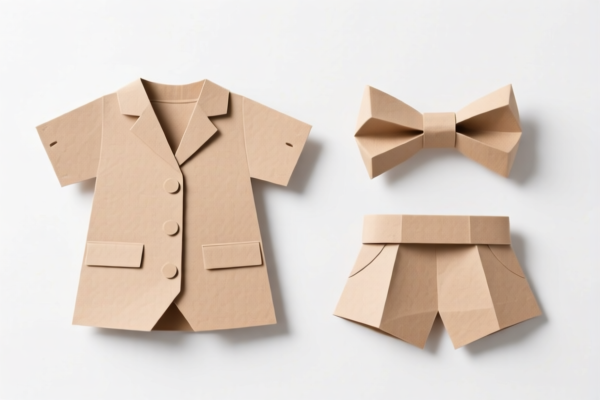
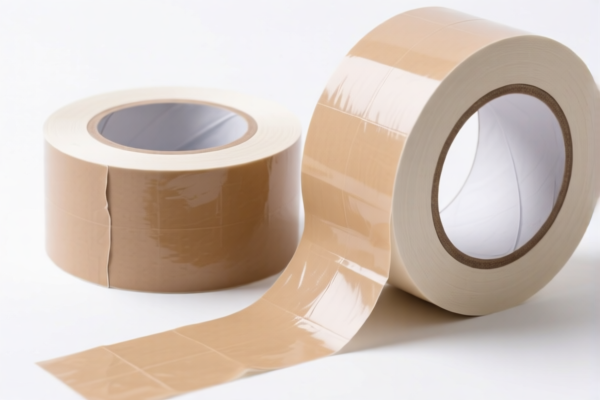
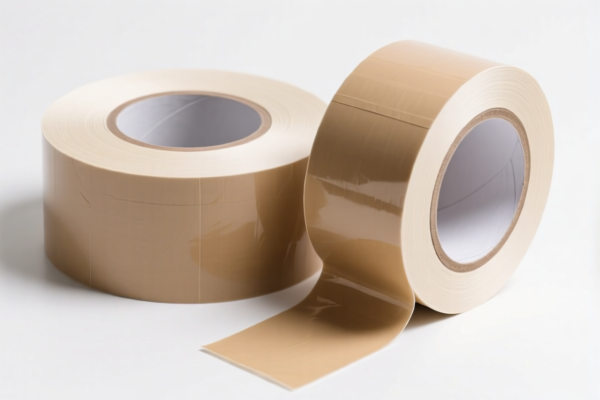
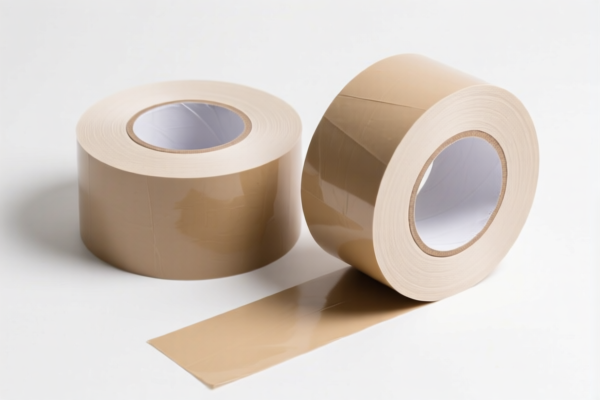
AI分析
📄 Paper (Paper HS Code 4802.55.30.00)
🌐 HS Code Reference & Customs Clearance Guide | 2026 Latest Tariff Analysis | Professional Clearance Strategy
📌 I. Product Definition & Classification: Do You Truly Understand "Paper"?
Paper, in the context of international trade, refers to fibrous sheets produced from pulp, primarily used for writing, printing, packaging, or industrial applications. In the Harmonized System (HS), it is categorized based on fiber type, bleaching status, weight (basis weight), and surface treatment.
The specific HS Code provided in the prompt (4802.55.30.00) is not present in the provided . However, based on the provided which lists similar paper products under HS codes starting with 4802 and 4805, and standard HS nomenclature, 4802.55 generally refers to "Other paper, containing obtained by a mechanical or chemi-mechanical process" (often referred to as mechanical pulp paper).
Note: The provided contains HS codes 4802.55.20.00, 4805.92.40.10, 4805.92.40.20, 4703.21.00.40, and 4810.22.50.80. All these codes carry a 35.0% total tax rate.
⚠️ Key Distinction:
- 4802.55: Typically involves mechanical pulp (higher bulk, less strength).
- 4805: Paper and paperboard of other kinds (often uncoated, unbleached, or specific industrial grades).
- 4703: Wood pulp (raw material, not finished paper).
- 4810: Paper coated with kaolin or other inorganic substances (often used for printing/packaging).
📦 II. HS Code Classification Details (Based on Provided )
Since 4802.55.30.00 is not in the data, we analyze the closest matching categories from the that share the same Product Name (Paper/Paperboard) and Material (Paper) logic.
| HS Code | Product Description (from ) | Material Match | Purpose/Usage Match | Tax Rate |
|---|---|---|---|---|
4802.55.20.00 |
Paper (specifically drawing paper/tracing paper implied by "绘图纸") | ✅ Paper | ✅ Drawing/Printing Paper | 35.0% |
4805.92.40.10 |
Paper and Paperboard (General) | ✅ Paper & Board | ✅ General Paperboard | 35.0% |
4805.92.40.20 |
Paper and Paperboard (General) | ✅ Paper & Board | ✅ General Paperboard | 35.0% |
4703.21.00.40 |
Wood Pulp (Primary form of paper material) | ✅ Wood Pulp (Raw) | ✅ Raw Material | 35.0% |
4810.22.50.80 |
Paper (Coated Paper) | ✅ Paper | ✅ Coated Paper | 35.0% |
🔍 Important Note:
All codes in the provided share the same total tax rate of 35.0%. This suggests that regardless of the specific sub-category (whether it's drawing paper, general paperboard, or coated paper), the US import duty structure for these Chinese-origin paper products is uniform due to recent trade policies.
💰 III. 2026 Latest Tariff Rate Breakdown (Including Surtaxes & Policy Surcharges)
✅ Applicable Country: United States (US)
✅ Origin: China (CN)
✅ Effective Time: 2025+ (Current Policy)
🎯 1. General Paper & Paperboard (Codes: 4802.55.20.00, 4805.92.40.10, 4805.92.40.20, 4810.22.50.80)
| Item | Content |
|---|---|
| Base Tariff | 0.0% (Most paper products have a low base MFN rate) |
| Section 301 Surcharge | +25.0% (Additional tariff under USITC Footnote 9903.88.01) |
| Section 122 Tariff | +10.0% (Specific tariff clause for certain Chinese goods) |
| Total Tariff Rate | 35.0% |
| Tax Calculation | CIF Value × 35% |
| De Minimis Eligibility | ❌ Not Eligible (Section 301 and 122 tariffs usually do not benefit from the $800 de minimis exemption if declared separately or if total value exceeds thresholds under specific enforcement rules; however, Section 301 explicitly denies de minimis for many 301-listed items. Note: Always verify current CBP enforcement on Section 301 de minimis, as policies shift. The implies a flat 35% total, suggesting no de minimis benefit for this classification.) |
| Legal Basis Path | USITC:4802/4805 → 301_Tariff:9903.88.01 (25%) + 122_Tariff:9903.10.25 (10%) |
📌 Explanation:
- "Base Tariff 0%": The standard Most Favored Nation (MFN) duty for paper is often 0% or very low.
- "301 Surcharge 25%": Imposed on thousands of Chinese goods, including paper products, to address trade imbalances and IP concerns.
- "122 Clause Tariff 10%": A specific additional tariff layer applied to certain categories.
- Total 35%: This is a high-cost import category. It significantly impacts profit margins for paper goods imported from China to the US.
🛠️ IV. Customs Clearance Practical Advice (实战避坑指南)
✅ 1. Documentation Checklist (Must-Have)
| Document | Required | Notes |
|---|---|---|
| ✅ Commercial Invoice | ✔️ | Must clearly state "Paper", material composition (e.g., "Mechanical Pulp"), and HS Code. |
| ✅ Packing List | ✔️ | Weight and dimensions must match the invoice. |
| ✅ Certificate of Origin (CO) | ✔️ | Essential to prove Chinese origin for 301/122 tariff assessment. |
| ✅ Product Specification Sheet | ✔️ | Detail basis weight (gsm), brightness, and intended use (e.g., "for printing"). |
| ✅ Bill of Lading (B/L) | ✔️ | Standard shipping document. |
| ✅ Fumigation Certificate | ✔️ | If packaging is wooden (ISPM 15 compliance). |
✅ 2. Declaration Tips (Key Mantras)
🔥 "Be Precise: Paper Type + Pulp Content + Use Case"
| Scenario | Correct Declaration | Risk of Error |
|---|---|---|
| Drawing Paper | 4802.55.20.00 |
Misclassifying as general paper may trigger audits. |
| Coated Paper | 4810.22.50.80 |
If declared as uncoated, customs may reassess and levy penalties. |
| Paperboard | 4805.92.40.10 |
Confusing "Paper" (thin) vs "Paperboard" (thick) leads to wrong HS. |
| Wood Pulp | 4703.21.00.40 |
Declaring pulp as paper is a major error; pulp is raw material. |
📌 Critical Warning:
- Do not simply declare "Paper" without specifying the type (e.g., "Offset Printing Paper", "Cardboard", "Tissue").
- Do not ignore the Section 122 and Section 301 surcharges. The total cost is 35%, not the base rate.
🌍 V. Global Market Comparison (2026 Latest)
| Country/Region | Recommended HS Code | Tariff (China Origin) | Key Certification | Remarks |
|---|---|---|---|---|
| 🇺🇸 USA | 4802.55.20.00 / 4805.92.40.10 |
35% (Base 0% + 301 25% + 122 10%) | None specific for paper | Highest cost due to dual surcharges. |
| 🇨🇳 China | 4802.55.20.00 |
5% (Import Duty) | GB Standards | Lower tariffs for import into China. |
| 🇪🇺 EU | 4802.55 |
0% (Most cases) | REACH, FSC (for sustainable paper) | No Section 301/122 equivalents. |
| 🇬🇧 UK | 4802.55 |
0% | UKCA (if applicable) | Post-Brexit tariff rates often favorable. |
| 🇦🇺 Australia | 4802.55 |
5% | None | Moderate tariff. |
📌 Conclusion:
- The US market is the most expensive for Chinese paper imports due to the 35% total tariff.
- Consider supply chain diversification (e.g., sourcing from Vietnam or Thailand) to avoid US surcharges, if possible.
- EU and UK offer much better tariff conditions for paper.
📌 VI. Common Errors & Pitfalls (Lessons Learned)
❌ Error 1: Declaring "Paper" without specifying pulp type.
👉 Consequence: Customs may classify under a higher-tariff code or demand extensive documentation, causing delays.
❌ Error 2: Ignoring the Section 122 Tariff.
👉 Consequence: Underpayment of duties. The 35% rate includes the 10% Section 122 surcharge. Missing it leads to back taxes and penalties.
❌ Error 3: Confusing Paper (4802/4805) with Paper Products (4823).
👉 Consequence: 4823 codes have different tariff structures. Misclassification can lead to overpayment or underpayment.
❌ Error 4: Using "De Minimis" for high-value paper shipments.
👉 Consequence: Section 301 tariffs do not apply to de minimis shipments in many cases, but Section 122 may have specific exceptions. Verify current CBP rulings. However, for commercial imports, de minimis is not applicable.
✅ Correct Approach:
"Mechanical Pulp Paper, Uncoated, Basis Weight 80gsm, For Printing, HS Code 4802.55.20.00, Origin: China, Subject to 301 & 122 Tariffs."
🎯 VII. Conclusion: Professional Classification, Cost Optimization
🎯 Remember the Mantra:
🔹 "Paper is 35% in the US (0% base + 25% 301 + 10% 122)"
🔹 "Be specific: Pulp type, Coating, Use Case"
🔹 "Don't ignore Section 122!"
📌 Pro Tip:
If your paper is coated (4810), board (4805), or pulp (4703), the tariff rate remains 35% in the provided data. Focus on accurate description to avoid classification disputes that could lead to higher penalties or delayed clearance.
📣 Immediate Action:
📞 Consult a licensed customs broker.
📄 Ensure your Commercial Invoice includes HS Code, Origin, and Material Composition.
🚀 Plan for the 35% cost in your pricing strategy to maintain profitability.
✨ Professional Clearance Starts with Accurate Classification!
💼 Every Percent Saved is Profit Gained!
用户评价
关于 HS 编码归类
协调制度(HS)是由世界海关组织(WCO)制定的国际贸易商品分类标准。全球 200 多个国家采用 HS 系统作为海关关税、贸易统计和进出口监管的基础。
每个 HS 编码遵循以下层级结构:
- 章(2 位)——商品大类(例如:第 84 章:机器和机械设备)
- 品目(4 位)——章内的更具体分类
- 子目(6 位)——国际通用细分,所有 WCO 成员国统一使用
- 本国细分(8-10 位)——各国自行扩展的细分编码,如美国 HTSUS 10 位编码
正确的 HS 编码归类对于顺利通关、准确缴纳关税和遵守贸易法规至关重要。错误归类可能导致海关延误、多缴关税或罚款。
从CN进口到US时,适用的关税税率可能包括:
- 最惠国(MFN)税率——适用于 WTO 成员国的标准关税税率
- 普通税率——适用于无贸易协定国家
- 贸易救济关税——附加关税,如 301 条款(反倾销)、232 条款(国家安全)或反补贴税
本页内容仅供参考。如需正式归类,请咨询当地海关或持牌报关代理。