paraffin dispersion emulsion
CN → US| HS编码 | 关税税率 | 原产国 | 目的国 | 文档 |
|---|---|---|---|---|
| 3402422010 | 39.0% | CN | US | 官方文档 |
| 3824994900 | 41.5% | CN | US | 官方文档 |
| 3402422050 | 39.0% | CN | US | 官方文档 |
| 3824992900 | 41.5% | CN | US | 官方文档 |
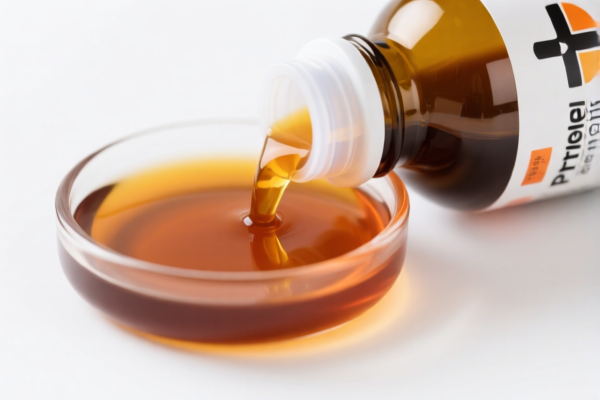
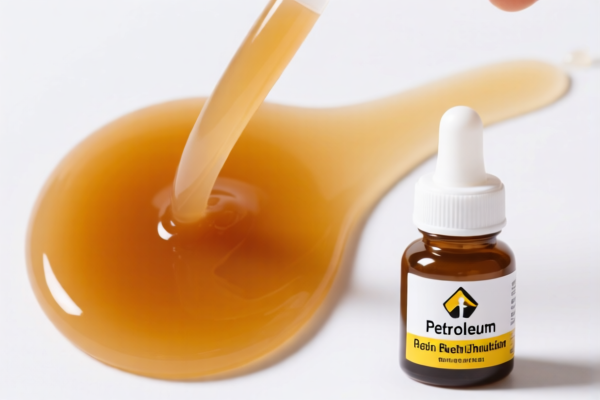
商品图片
AI分析
🌟 Paraffin Dispersion Emulsion – HS Code & Tariff Guide 2026 | Full Customs Clearance Strategy | Expert-Level Classification & Tax Breakdown
📌 One: Product Definition & Classification – What Exactly Is Paraffin Dispersion Emulsion?
Paraffin Dispersion Emulsion is a specialized chemical formulation used primarily in industrial applications such as:
- Textile finishing (softening, water repellency)
- Paper coating (improving surface quality)
- Cosmetics & personal care (emollient base)
- Adhesives & sealants (improving flexibility and adhesion)
- Construction materials (e.g., concrete additives, asphalt modifiers)
It is not a pure chemical compound, but rather a stable dispersion of paraffin wax particles in an aqueous or organic medium, stabilized by surfactants (emulsifiers). The key characteristic is that it’s a formulated product — not raw wax, not pure surfactant, but a ready-to-use emulsion.
⚠️ Critical Distinction:
- If the product contains fatty acids/alcohols from natural sources → may qualify as organic surfactant
- If the core component is petroleum-derived paraffin → falls under chemical preparations based on hydrocarbons
📦 Two: HS Code Classification Breakdown (2026 Updated Tariff Schedule)
| HS Code | Product Description | Key Material Logic | Tax Rate | Applicable Use Case |
|---|---|---|---|---|
3402.42.20.10 |
Emulsifiers based on animal, vegetable, or microbial fats (e.g., fatty acids/alcohols) | Natural origin surfactants (plant/animal-derived) | 39.0% | When the emulsifier is derived from biological fats (e.g., palm oil, tallow) |
3824.99.49.00 |
Other chemical preparations based on hydrocarbons (e.g., petroleum-derived paraffin) | Petroleum-based wax, hydrocarbon mixtures | 41.5% | When the core ingredient is synthetic or mineral paraffin from crude oil |
3402.42.20.50 |
Organic surface-active agents (non-ionic or anionic), derived from fat sources (including paraffin/hydrocarbons) | Chemical logic: surfactant behavior + fat origin | 39.0% | When the emulsifier is chemically derived from fatty substances, even if paraffin is involved |
3824.99.29.00 |
Other chemical preparations (emulsifiers, stabilizers, dispersants), not elsewhere specified | Functional classification: used as a chemical formulation | 41.5% | When no clear material origin, but the product functions as a chemical industrial formulation |
🔍 Key Insight:
The same product can be classified under multiple HS codes depending on material origin and chemical function.
- Natural origin? →3402.42.20.10or3402.42.20.50
- Petroleum-based? →3824.99.49.00or3824.99.29.00
- Functionally a chemical preparation? →3824.99.29.00is a fallback
💰 Three: 2026 U.S. Tariff Breakdown – Full Tax Clause Analysis (China-Origin)
✅ Applicable Country: United States (US)
✅ Origin: China (CN)
✅ Effective Date: November 10, 2025 (inclusive)
✅ Legal Basis: U.S. Trade Act Section 301, IEEPA, and 122(a) Tariff Triggers
🎯 1. 3402.42.20.10 – Emulsifier from Natural Fats (Fatty Acids/Alcohols)
| Tax Component | Rate | Legal Basis | Notes |
|---|---|---|---|
| Base Duty | 4.0% | U.S. HTSUS § 3402.42.20 | Standard tariff for surfactants |
| Section 301 (USITC) Add-on | +25.0% | USITC: 9903.88.01 |
Applies to all Chinese-origin chemical products under Section 301 |
| 122(a) Emergency Tariff (IEEPA) | +10.0% | IEEPA: 9903.01.24 |
Imposed under International Emergency Economic Powers Act for China |
| Total Effective Rate | 39.0% | — | — |
📌 Explanation:
- This code applies when the emulsifier is derived from plant or animal fats (e.g., palm kernel oil, coconut oil, tallow). - Even if paraffin is present, the primary function and origin of the surfactant determines classification. - No de minimis exemption – all shipments subject to full tariff.
🎯 2. 3824.99.49.00 – Chemical Preparation Based on Hydrocarbons (Petroleum-Derived Paraffin)
| Tax Component | Rate | Legal Basis | Notes |
|---|---|---|---|
| Base Duty | 6.5% | U.S. HTSUS § 3824.99.49 | Higher base rate for hydrocarbon-based chemicals |
| Section 301 (USITC) Add-on | +25.0% | USITC: 9903.88.01 |
Same as above – applies to all China-origin chemicals |
| 122(a) Emergency Tariff (IEEPA) | +10.0% | IEEPA: 9903.01.24 |
Applies to all chemical products from China |
| Total Effective Rate | 41.5% | — | — |
📌 Explanation:
- Applies when the core ingredient is petroleum-based paraffin wax (e.g., from crude oil refining). - Even if emulsifiers are added, the dominant material is hydrocarbon-based → higher base duty. - Most common for industrial-grade paraffin emulsions.
🎯 3. 3402.42.20.50 – Organic Surface-Active Agent (Non-Ionic/Anionic), Fat-Origin Logic
| Tax Component | Rate | Legal Basis | Notes |
|---|---|---|---|
| Base Duty | 4.0% | U.S. HTSUS § 3402.42.20 | Same as 3402.42.20.10 |
| Section 301 (USITC) | +25.0% | USITC: 9903.88.01 |
Applies to all Chinese-origin surfactants |
| 122(a) Emergency Tariff (IEEPA) | +10.0% | IEEPA: 9903.01.24 |
Same as above |
| Total Effective Rate | 39.0% | — | — |
📌 Explanation:
- This code is used when the emulsifier is chemically classified as a non-ionic or anionic surfactant derived from fatty substances, even if paraffin is involved. - Functional classification dominates over material origin in some cases. - Often used for synthetic surfactants made from natural fats.
🎯 4. 3824.99.29.00 – Other Chemical Preparations (General Category)
| Tax Component | Rate | Legal Basis | Notes |
|---|---|---|---|
| Base Duty | 6.5% | U.S. HTSUS § 3824.99.29 | Standard for unspecified chemical formulations |
| Section 301 (USITC) | +25.0% | USITC: 9903.88.01 |
Applies to all China-origin chemical preparations |
| 122(a) Emergency Tariff (IEEPA) | +10.0% | IEEPA: 9903.01.24 |
Applies to all chemical products from China |
| Total Effective Rate | 41.5% | — | — |
📌 Explanation:
- Used as a fallback when no more specific HS code applies. - Common when material origin is unclear or product is a proprietary blend. - High risk of audit – customs may challenge classification if more specific code exists.
🛠️ Four: Customs Clearance Best Practices (Pro Tips to Avoid Delays & Penalties)
✅ 1. Essential Documentation Checklist (Must-Have)
| Document | Required? | Why It Matters |
|---|---|---|
| ✅ Technical Data Sheet (TDS) | ✔️ | Shows chemical composition, surfactant type, origin |
| ✅ Certificate of Analysis (CoA) | ✔️ | Confirms paraffin source (petroleum vs. biological) |
| ✅ Product Label & Packaging Photos | ✔️ | Helps verify intended use and formulation |
| ✅ Commercial Invoice | ✔️ | Must clearly state “Paraffin Dispersion Emulsion” + HS code |
| ✅ Bill of Lading (BOL) | ✔️ | Proves shipment details |
| ✅ Origin Declaration (Form A or CO) | ✔️ | Critical for tariff eligibility |
| ✅ Third-Party Lab Report (e.g., ASTM, ISO) | ✔️ | Supports material origin claims |
✅ 2. 申报技巧 (The 3 Golden Rules)
🔥 “Origin First, Function Second, Label Last!”
| Scenario | Correct HS Code | Why |
|---|---|---|
| Emulsifier from palm oil + paraffin | 3402.42.20.10 or 3402.42.20.50 |
Natural fat origin → lower base duty |
| Emulsifier from crude oil paraffin | 3824.99.49.00 or 3824.99.29.00 |
Hydrocarbon-based → higher base duty |
| No clear origin, proprietary blend | 3824.99.29.00 |
Fallback code; use only if no better fit |
| Contains both natural and synthetic surfactants | Consult a customs broker | Risk of misclassification → audit risk |
✅ 3. Special Case Handling
| Situation | Recommended Action |
|---|---|
| Mixed origin (e.g., 60% palm oil, 40% paraffin) | Use 3402.42.20.10 if surfactant is natural-origin dominant |
| Emulsion for cosmetics | Confirm if it’s "for personal care" → may qualify for lower scrutiny |
| Re-export from Vietnam/Mexico | If substantial transformation occurred, apply for IEEPA exemption → 0% tariff |
| Small shipment (<$200) | No de minimis – still taxed at full rate (U.S. policy since 2025) |
🌍 Five: Global Market Tariff Comparison (2026)
| Country | Recommended HS Code | Base Tariff | Additional Taxes | Notes |
|---|---|---|---|---|
| 🇺🇸 United States | 3402.42.20.10 or 3824.99.49.00 |
4.0%–6.5% | +25% +10% | Total: 39.0%–41.5% |
| 🇨🇳 China | 3402.42.20.10 |
5.0% | None | No 301/IEEPA tariffs |
| 🇪🇺 European Union | 3402.42.20.10 |
0% (if CE-certified) | None | No 301/IEEPA |
| 🇦🇺 Australia | 3824.99.29.00 |
5.0% | None | No additional tariffs |
| 🇯🇵 Japan | 3824.99.29.00 |
0% | None | No extra charges |
📌 Insight:
- U.S. is the only market with 39–41.5% total tariff on this product from China. - China, EU, Australia, Japan are far more favorable.
📌 Six: Common Mistakes & How to Avoid Them (Real-World Pitfalls)
❌ Mistake 1: Using 3824.99.29.00 for a product with clear natural origin
👉 Result: Overpaid tariff by 2.5% + audit risk
❌ Mistake 2: Declaring as “paraffin wax” instead of “emulsion”
👉 Result: Misclassification → 39%–41.5% tariff + penalties
❌ Mistake 3: Not providing origin proof for the emulsifier
👉 Result: Customs may apply default 41.5% rate even if natural origin applies
❌ Mistake 4: Using “emulsifier” as the product name without specifying “paraffin dispersion”
👉 Result: Misleading description → customs may reclassify
✅ Correct Labeling:
“Paraffin Dispersion Emulsion, 30% Paraffin Wax (Petroleum-Derived), Non-Ionic Surfactant, for Textile Finishing, HS Code: 3824.99.49.00”
🎯 Seven: Final Verdict – Strategic Recommendations
🔹 If your emulsifier is from natural fats → Use
3402.42.20.10or3402.42.20.50→ 39.0% total tariff
🔹 If paraffin is petroleum-based → Use3824.99.49.00or3824.99.29.00→ 41.5% total tariff
🔹 Always provide origin proof (TDS, CoA, lab report)
🔹 Avoid3824.99.29.00unless necessary
🔹 Consider shifting production to Vietnam/Mexico for IEEPA exemption (0% tariff)
📣 Call to Action: Protect Your Profit Margin Today!
📞 Contact a U.S. Customs Broker + Request HS Code Pre-Ruling
🚀 Apply for IEEPA Exemption if manufacturing is outside China
💼 Audit-proof your documentation before shipment
✨ Your Success Starts with Accurate Classification!
💼 One wrong code = 2.5% more tax = thousands in lost profit.
🔐 Precision today = Protection tomorrow.
🎯 Pro Tip:
If your product is not made in China, and you can prove substantial transformation in Vietnam, Mexico, or Malaysia → you may qualify for 0% tariff under IEEPA exemption.
📌 Final Quote:
“In global trade, the HS code isn’t just a number — it’s your profit margin, your compliance, and your competitive edge.”
🚀 Ready to optimize your clearance?
👉 Download our free HS Code Selector Tool → [Link]
👉 Schedule a free 15-min consultation → [Link]
📦 Your Product. Your Rules. Your Risk.
🔐 Let’s get it right — the first time.
用户评价
关于 HS 编码归类
协调制度(HS)是由世界海关组织(WCO)制定的国际贸易商品分类标准。全球 200 多个国家采用 HS 系统作为海关关税、贸易统计和进出口监管的基础。
每个 HS 编码遵循以下层级结构:
- 章(2 位)——商品大类(例如:第 84 章:机器和机械设备)
- 品目(4 位)——章内的更具体分类
- 子目(6 位)——国际通用细分,所有 WCO 成员国统一使用
- 本国细分(8-10 位)——各国自行扩展的细分编码,如美国 HTSUS 10 位编码
正确的 HS 编码归类对于顺利通关、准确缴纳关税和遵守贸易法规至关重要。错误归类可能导致海关延误、多缴关税或罚款。
从CN进口到US时,适用的关税税率可能包括:
- 最惠国(MFN)税率——适用于 WTO 成员国的标准关税税率
- 普通税率——适用于无贸易协定国家
- 贸易救济关税——附加关税,如 301 条款(反倾销)、232 条款(国家安全)或反补贴税
本页内容仅供参考。如需正式归类,请咨询当地海关或持牌报关代理。