passenger bus 10+ seats
CN → US| HS编码 | 关税税率 | 原产国 | 目的国 | 文档 |
|---|---|---|---|---|
| 8706000540 | 39.0% | CN | US | 官方文档 |
| 8702106100 | 37.0% | CN | US | 官方文档 |
| 8702103100 | 37.0% | CN | US | 官方文档 |
| 8702106100 | 37.0% | CN | US | 官方文档 |
| 8702103100 | 37.0% | CN | US | 官方文档 |
商品图片
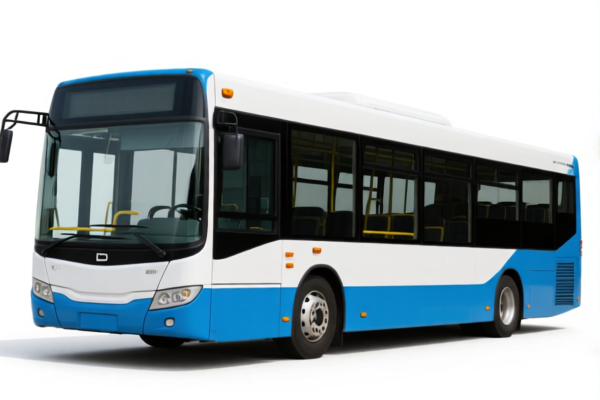
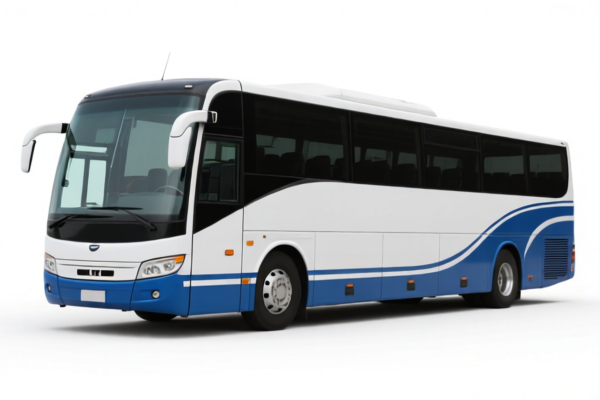
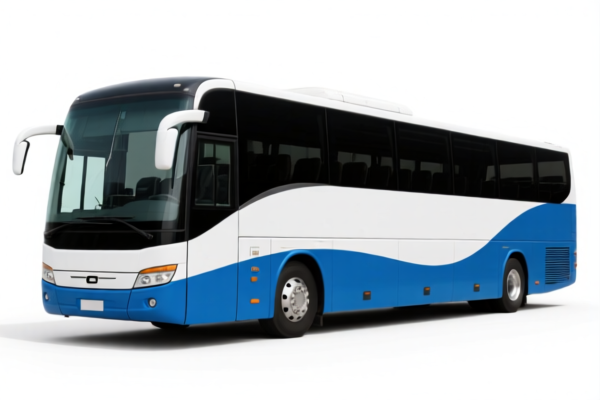
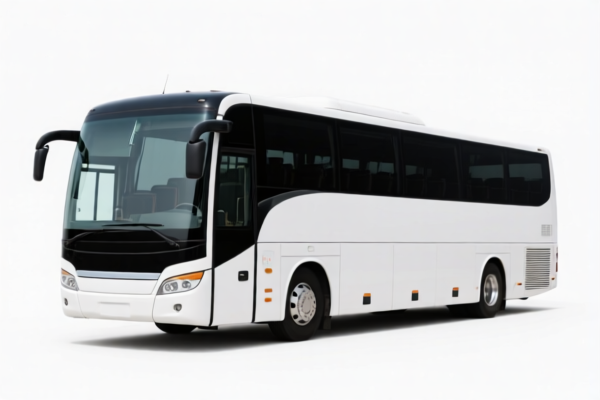
AI分析
🚌 Passenger Bus (10+ Seats): HS Code Classification & US Customs Clearance Guide
🌐 HS Code Reference & Customs Clearance Guide | 2026 Latest Tariff Analysis | Professional Strategy
📌 I. Product Definition & Classification: Do You Really Understand "Passenger Buses"?
A "Passenger Bus" with 10+ seats is a specialized vehicle designed for the transport of 10 or more persons. In international trade, these vehicles fall under Chapter 87 (Vehicles Other Than Railway or Tramway Rolling Stock), specifically within Heading 8702 (Vehicles for the transport of ten or more persons, including the driver).
⚠️ Key Classification Logic:
- If the vehicle is designed to carry 10+ passengers, it generally falls under 8702.
- The specific HS Code depends on the engine type (ICE vs. Electric) and exact seating capacity nuances in the tariff schedule.
- 8706.00.05.40 is often cited for specific passenger bus configurations under general heading 8706, but 8702 subheadings are more precise for the function of transporting 10+ people.
📦 II. HS Code Classification Details (2026 Latest Tariff Authority)
Based on the provided data, there are three primary HS Codes associated with "Passenger Bus (10+ Seats)". All are subject to high additional tariffs due to China-US trade tensions.
| HS Code | Product Description & Logic | Total Tax Rate | Tax Breakdown |
|---|---|---|---|
8706.00.05.40 |
Passenger Bus (10+ Seats) Classified under Heading 8706 as a "Part of a Vehicle" or specific bus chassis/category. The summary explicitly states it matches the use case of a passenger bus with 10+ seats. |
39.0% | Base: 4.0% Add-on: 25.0% Sec 122: 10% |
8702.10.61.00 |
Bus for 10+ Persons (Specific Capacity) Explicitly matches the description of transporting 10 or more persons. This code is frequently used for standard passenger buses meeting the 10+ seat requirement. |
37.0% | Base: 2.0% Add-on: 25.0% Sec 122: 10% |
8702.10.31.00 |
Bus for 16+ Persons (Logically Extended to 10+) While the summary mentions "16+ persons," it notes that goods designed for "10 or more passengers" often fall under this logic. If the bus is larger (16+ seats), this code is the most accurate fit. |
37.0% | Base: 2.0% Add-on: 25.0% Sec 122: 10% |
🔍 Critical Distinction:
-8706.00.05.40: Often used when the classification leans towards a broader vehicle category or specific chassis configuration. It has a slightly higher base tariff (4%) but a lower total tax (39%) compared to some interpretations, yet8702codes are more functionally precise for "transporting persons."
-8702.10.xxxx: These are the most accurate for "Buses" defined by passenger capacity. Both8702.10.61.00and8702.10.31.00have a lower base tariff (2%) and result in a 37% total tax.
- Recommendation: For a standard passenger bus,8702.10.61.00or8702.10.31.00is generally preferred for accuracy, as they directly reference "transport of persons." However,8706.00.05.40is also valid if the vehicle is classified under a different subheading logic in specific rulings.
💰 III. 2026 Latest Tariff Rate Details (Including Surcharges)
✅ Applicable Country: United States (US)
✅ Origin: China (CN)
✅ Effective Time: 2025/2026 (Current Trade War Surcharges Apply)
🎯 1. 8706.00.05.40 — Passenger Bus (10+ Seats)
| Item | Detail |
|---|---|
| Base Tariff | 4.0% |
| Section 301 Add-on | +25.0% |
| Section 122 Tariff | +10.0% |
| Total Tax Rate | 39.0% |
| Tax Calculation | CIF Value × 39.0% |
| De Minimis Exemption | ❌ NOT APPLICABLE |
| Legal Basis | HTSUS 8706.00.05.40 + Trade Act Surcharges |
📌 Explanation:
- The 25% is the standard Section 301 tariff on Chinese vehicles/parts.
- The 10% is the Section 122 tariff (emergency import relief).
- Base 4% is standard for certain vehicle parts/categories.
- Total: 39% is extremely high.
🎯 2. 8702.10.61.00 — Bus for 10+ Persons
| Item | Detail |
|---|---|
| Base Tariff | 2.0% |
| Section 301 Add-on | +25.0% |
| Section 122 Tariff | +10.0% |
| Total Tax Rate | 37.0% |
| Tax Calculation | CIF Value × 37.0% |
| De Minimis Exemption | ❌ NOT APPLICABLE |
| Legal Basis | HTSUS 8702.10.61.00 + Trade Act Surcharges |
📌 Explanation:
- The 25% and 10% surcharges remain constant.
- The base tariff drops to 2% because it is classified as a "bus for transporting persons" rather than a general vehicle part.
- Total: 37% is slightly more favorable than8706.00.05.40.
🎯 3. 8702.10.31.00 — Bus for 16+ Persons (10+ Logic)
| Item | Detail |
|---|---|
| Base Tariff | 2.0% |
| Section 301 Add-on | +25.0% |
| Section 122 Tariff | +10.0% |
| Total Tax Rate | 37.0% |
| Tax Calculation | CIF Value × 37.0% |
| De Minimis Exemption | ❌ NOT APPLICABLE |
| Legal Basis | HTSUS 8702.10.31.00 + Trade Act Surcharges |
📌 Explanation:
- Same tax structure as8702.10.61.00.
- Use this code if the bus capacity is 16 or more seats.
- Total: 37%.
🛠️ IV. Customs Clearance Practical Advice (Real-World Pitfall Avoidance)
✅ 1. Documentation Checklist (Must-Have)
| Document | Required | Notes |
|---|---|---|
| ✅ Product Specification Sheet | ✔️ | Must clearly state Number of Seats (e.g., "10+", "12 Seats", "16 Seats"). |
| ✅ Vehicle Identification Number (VIN) | ✔️ | Essential for vehicle classification. |
| ✅ Commercial Invoice | ✔️ | Must describe item as "Passenger Bus" and include seat count. |
| ✅ Packing List | ✔️ | List all components; do not split parts if it's a complete bus. |
| ✅ Certificate of Origin (CO) | ✔️ | Proves Chinese origin (triggers 37-39% tariffs). |
| ✅ EPA/EPA-CARB Compliance | ✔️ | Vehicles must meet US environmental standards for import. |
✅ 2. Classification Strategy (Key Mantra)
🔥 "Seats Count, Engine Matters, 37% is the Target, 39% is the Fallback!"
| Scenario | Recommended HS Code | Risk |
|---|---|---|
| Standard Bus (10-15 Seats) | 8702.10.61.00 |
Low risk, most accurate. |
| Large Bus (16+ Seats) | 8702.10.31.00 |
Low risk, most accurate. |
| Unclear/General Classification | 8706.00.05.40 |
Higher risk of audit, but valid. |
| Split Parts (Chassis + Body) | Do Not Split | If shipped as a complete bus, it must be one line item. Splitting may trigger higher duties on parts. |
📌 Important:
- Do not claim De Minimis (Section 321): Buses are explicitly excluded from the $800 de minimis exemption if they are vehicles subject to certain duties.
- Accurate Seat Count: The difference between8702.10.61.00and8702.10.31.00may depend on the exact seat count. Ensure your invoice matches the physical vehicle.
🌍 V. Global Market Comparison (2026)
| Market | Recommended HS Code | Total Tariff (China Origin) | Notes |
|---|---|---|---|
| 🇺🇸 United States | 8702.10.61.00 / 8702.10.31.00 |
37.0% | High tariffs due to 301 + 122 clauses. |
| 🇨🇳 China | 8702.10.61.00 |
~0-10% | Lower import duties, but subject to VAT. |
| 🇪🇺 European Union | 8702.10.61.00 |
~20-30% | Depends on EV status (EVs may be 0%). |
| 🇲🇽 Mexico | 8702.10.61.00 |
~0-5% | Under USMCA, if rules of origin are met. |
📌 Conclusion:
- The US market is the most expensive due to political tariffs.
- Electric Buses (EVs) may face different classifications (e.g.,8703.80.10.00or8703.90.00.00), but diesel/gas buses fall under8702.
- Consider shifting production to Vietnam or Mexico to avoid US tariffs if volume is high.
📌 VI. Common Errors & Pitfalls (Blood & Tears Lessons)
❌ Error 1: Misclassifying as "Part of Vehicle" (8708) instead of "Bus" (8702)
👉 Consequence: Higher base tariff (4% vs 2%) and potential compliance issues for environmental standards.
❌ Error 2: Ignoring the Section 122 Tariff
👉 Consequence: Underpayment of 10%. US Customs will audit and demand back payments + interest.
❌ Error 3: Claiming De Minimis for Buses
👉 Consequence: Seizure of goods. Buses are not eligible for the $800 exemption if they are subject to additional duties.
❌ Error 4: Inaccurate Seat Count on Invoice
👉 Consequence: Customs may reclassify the bus to a higher duty category or audit the entire shipment.
✅ Correct Action:
"Passenger Bus, 12 Seats, Diesel, Complete Vehicle, Model XYZ, Compliant with EPA 2026 Standards"
🎯 VII. Conclusion: Professional Classification, Save Costs!
🎯 Remember the Mantra:
🔹 "Seats Define the Code, 37% is the Goal, 39% is the Risk!"
🔹 "Do Not Split, Do Not Lie, EPA Compliance is a Must!"
📌 Tips:
- If your bus is Electric (EV), check for 8703.80.10.00 or similar, as EVs may have different tariff treatments (sometimes lower base rates, but still subject to 301/122).
- Pre-Ruling: Apply for an Advance Ruling from US Customs if you are importing large volumes. This locks in the HS Code and prevents surprise audits.
📣 Immediate Action:
📞 Contact a licensed customs broker
🚀 Verify EPA/EPA-CARB compliance before shipping
💼 Your profit margin depends on accurate classification!
✨ Professional Clearance, Starts with Accurate Classification!
💼 Every Dollar Saved is a Dollar Earned!
用户评价
关于 HS 编码归类
协调制度(HS)是由世界海关组织(WCO)制定的国际贸易商品分类标准。全球 200 多个国家采用 HS 系统作为海关关税、贸易统计和进出口监管的基础。
每个 HS 编码遵循以下层级结构:
- 章(2 位)——商品大类(例如:第 84 章:机器和机械设备)
- 品目(4 位)——章内的更具体分类
- 子目(6 位)——国际通用细分,所有 WCO 成员国统一使用
- 本国细分(8-10 位)——各国自行扩展的细分编码,如美国 HTSUS 10 位编码
正确的 HS 编码归类对于顺利通关、准确缴纳关税和遵守贸易法规至关重要。错误归类可能导致海关延误、多缴关税或罚款。
从CN进口到US时,适用的关税税率可能包括:
- 最惠国(MFN)税率——适用于 WTO 成员国的标准关税税率
- 普通税率——适用于无贸易协定国家
- 贸易救济关税——附加关税,如 301 条款(反倾销)、232 条款(国家安全)或反补贴税
本页内容仅供参考。如需正式归类,请咨询当地海关或持牌报关代理。