patchwork clothing
CN → US| HS编码 | 关税税率 | 原产国 | 目的国 | 文档 |
|---|---|---|---|---|
| 5810910020 | 0.0% | CN | US | 官方文档 |
| 5806393080 | 35.0% | CN | US | 官方文档 |
| 6307909891 | 24.5% | CN | US | 官方文档 |
| 5810929080 | 0.0% | CN | US | 官方文档 |
| 6307903020 | 25.4% | CN | US | 官方文档 |
商品图片
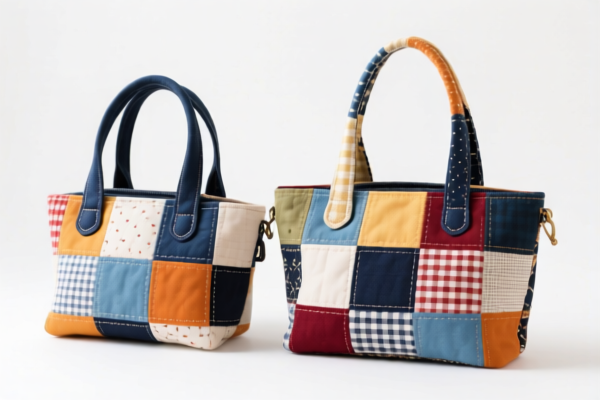
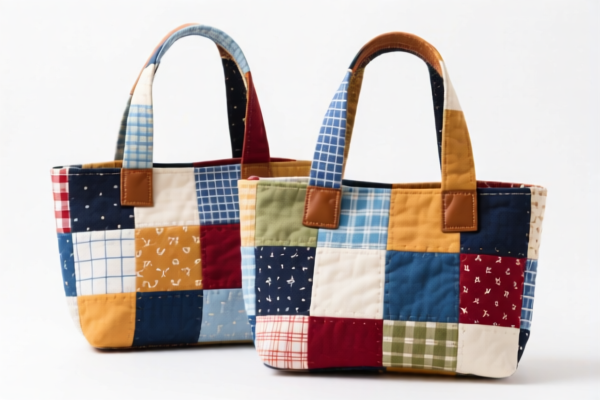
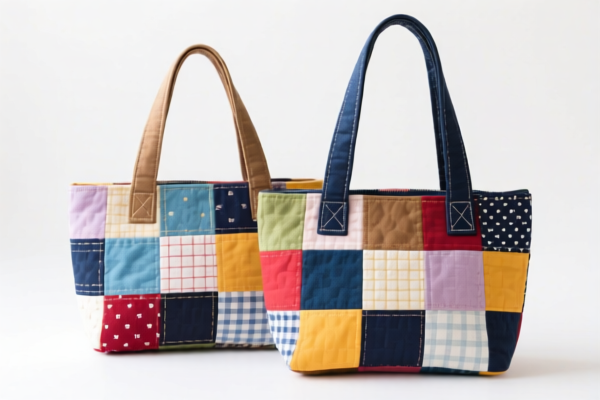
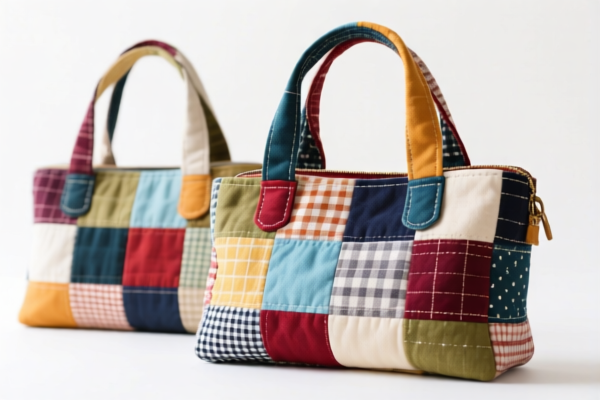
AI分析
🧵 Patchwork Clothing & Textiles: HS Code Classification & U.S. Customs Strategy (2026 Guide)
🌐 HS Code Reference & Customs Clearance Guide | 2026 Latest Tariff Analysis | Professional Entry Strategies
📌 I. Product Definition & Classification: What Exactly is "Patchwork"?
In international trade, "Patchwork Clothing" (拼接布料/服装) is not a single HS Code but a category defined by material composition, processing stage, and end-use. The term "patchwork" refers to a craftsmanship/technique (joining pieces of fabric), not a specific material. Therefore, classification depends on:
- The Base Fabric: Is it cotton, synthetic fiber, or knitted/woven?
- The Processing State: Is it raw material (fabrics), semi-finished goods (embroidery), or finished articles (garments)?
- The End Use: Is it for embroidery, labeling, or general textile articles?
⚠️ Critical Distinction:
- If it is embroidery in the piece (stitched design on fabric) → Chapter 58
- If it is finished garments (shirts, pants) → Chapter 61/62 (Not in provided data)
- If it is textile articles (miscellaneous) → Chapter 63
- If it is woven fabric (non-embroidered) → Chapter 58
📦 II. HS Code Classification Matrix (Based on Provided Data)
| HS Code | Product Description | Applicability Scenario | Material/Process Type | Total Tax Rate (CN→US) |
|---|---|---|---|---|
| 5810.91.00.20 | Embroidery in the piece; non-embroidered patches | Embroidery goods, decorative fabric strips | Textile base + Embroidery craft | See Additional U.S. Note 1 + 35.0% |
| 5806.39.30.80 | Woven fabric, woven tape, narrow fabrics (others) | Woven textile strips, processed fabric strips | Woven fabric + Patchwork processing | 35.0% |
| 6307.90.98.91 | Other made-up textile articles (other) | Semi-finished textile products, miscellaneous textile goods | Semi-finished textile article | 24.5% |
| 5810.92.90.80 | Embroidery in the piece; other than 5810.91 | Embroidery strips/patterns from synthetic/natural fibers | Textile base + Embroidery craft | See Additional U.S. Note 3 + 35.0% |
| 6307.90.30.20 | Other made-up textile articles (labels, etc.) | Non-cotton labels, intermediate textile products | Non-cotton made-up article | 25.4% |
🔍 Key Insight:
- "Patchwork" is a process, so the HS Code depends on what is being patched and what the final form is.
- Codes under 5810 are specifically for embroidery (stitched patterns).
- Codes under 6307 are for general textile articles (like labels, tags, or miscellaneous made-ups).
- Codes under 5806 are for narrow woven fabrics/tapes.
💰 III. Detailed Tariff Breakdown (2026 U.S. Import Duties for China-Origin Goods)
✅ Applicable Country: United States (US)
✅ Country of Origin: China (CN)
✅ Effective Time: Post-2025 (Current Trade Policy)
🎯 1. HS Code 5810.91.00.20 & 5810.92.90.80 —— Embroidery in the Piece
| Item | Content |
|---|---|
| Base Duty | See Additional U.S. Note 1 (Code 5810.91) / See Additional U.S. Note 3 (Code 5810.92) |
| Section 301 Duty | +25.0% |
| IEEPA Duty | +10.0% |
| Total Additional Duty | +35.0% (on top of base rate) |
| Total Effective Tax | Base Rate + 35% |
| Calculation Method | (CIF Value × Base Rate) + (CIF Value × 35%) |
| De Minimis Exemption | ❌ Not Applicable (High scrutiny) |
📌 Explanation:
- Base Rate: Depends on specific notes (Note 1/Note 3). For many embroidered goods, the base rate can be low (0-5%), but the additional 35% is the key cost driver.
- Section 301 (25%): Retaliatory tariff on Chinese goods.
- IEEPA (10%): Additional tariff under International Emergency Economic Powers Act.
- Total Surcharge: 35% is fixed regardless of base rate.
🎯 2. HS Code 5806.39.30.80 —— Narrow Woven Fabrics/Tapes
| Item | Content |
|---|---|
| Base Duty | 0.0% |
| Section 301 Duty | +25.0% |
| IEEPA Duty | +10.0% |
| Total Tax Rate | 35.0% |
| Calculation Method | CIF Value × 35% |
| De Minimis Exemption | ❌ Not Applicable |
📌 Note:
- Even though the base duty is 0%, the 35% surcharge applies fully.
- This code applies if the "patchwork" is simply woven strips joined together without embroidery.
🎯 3. HS Code 6307.90.98.91 —— Other Made-up Textile Articles
| Item | Content |
|---|---|
| Base Duty | 7.0% |
| Section 301 Duty | +7.5% |
| IEEPA Duty | +10.0% |
| Total Tax Rate | 24.5% |
| Calculation Method | CIF Value × 24.5% |
| De Minimis Exemption | ❌ Not Applicable |
📌 Note:
- This is the lowest total tax rate among the options (24.5% vs 35%).
- Suitable for semi-finished textile products or miscellaneous articles that don’t fit embroidery or narrow fabric categories.
🎯 4. HS Code 6307.90.30.20 —— Other Made-up Textile Articles (Labels)
| Item | Content |
|---|---|
| Base Duty | 7.9% |
| Section 301 Duty | +7.5% |
| IEEPA Duty | +10.0% |
| Total Tax Rate | 25.4% |
| Calculation Method | CIF Value × 25.4% |
| De Minimis Exemption | ❌ Not Applicable |
📌 Note:
- Applies if the patchwork is used as labels, tags, or non-cotton textile accessories.
🛠️ IV. Customs Clearance Practical Advice (Real-World Pitfall Avoidance)
✅ 1. Required Documentation Checklist
| Document | Must Provide | Purpose |
|---|---|---|
| Product Specification | ✔️ | Detailed description: "Patchwork fabric, 100% Cotton, Woven, Semi-finished" |
| Material Composition | ✔️ | Exact % of each fabric type used in patchwork |
| Processing Description | ✔️ | Is it embroidered? Woven? Sewn? |
| Commercial Invoice | ✔️ | Must specify "Patchwork Textile" or "Embroidery in Piece" |
| Packing List | ✔️ | Weight, dimensions, number of pieces |
| Photos | ✔️ | Clear images showing the patchwork structure and label |
✅ 2. Declaration Strategy (Key Rules)
🔥 "Describe the Material, Not Just the Pattern!"
| Scenario | Correct Declaration | Incorrect Declaration | Consequence |
|---|---|---|---|
| Embroidered Patchwork Fabric | 5810.91.00.20 |
"Clothing" | Wrong Chapter → Penalty |
| Woven Tape/Strip Patchwork | 5806.39.30.80 |
"Fabric" | Ambiguous → Delay |
| Semi-finished Textile Article | 6307.90.98.91 |
"Garment" | Wrong Classification |
| Textile Labels/Tags | 6307.90.30.20 |
"Patchwork" | Vague → Rejection |
📌 Important:
- Do NOT declare as "Clothing" (Chapter 61/62) if it is just fabric or semi-finished goods.
- Do NOT declare as "General Textile" if it is specifically embroidery (Chapter 58).
- Accuracy in Material Description is critical for Customs to verify the HS Code.
✅ 3. Special Cases & Tips
| Case | Handling Suggestion |
|---|---|
| Mixed Materials | Declare the principal material (e.g., if 80% cotton, state "Cotton Patchwork") |
| Embroidery vs. Weaving | If stitches are visible → 5810 (Embroidery). If only woven → 5806 (Fabric) |
| Low-Value Shipments | De Minimis ($800) does NOT apply to goods subject to Section 301/IEEPA tariffs |
| Origin Labeling | Must clearly state "Made in China" on all packages |
🌍 V. Global Market Comparison (2026)
| Market | Recommended HS Code | Est. Total Tax (CN→US) | Certification | Notes |
|---|---|---|---|---|
| 🇺🇸 USA | 5810.91.00.20 / 6307.90.98.91 |
24.5% – 35%+ | None specific | High tariffs due to trade policy |
| 🇨🇳 China | 5810.91.00.20 |
5% – 10% | CCC (if applicable) | Lower base duties |
| 🇪🇺 EU | 5810.91.00 |
0% – 6% | CE (if functional) | No Section 301 equivalent |
| 🇬🇧 UK | 5810.91.00 |
0% – 6% | UKCA | Post-Brexit rules apply |
| 🇨🇦 Canada | 5810.91.00 |
0% – 5% | None | No major surcharges |
📌 Conclusion:
- The U.S. is the most expensive market due to Section 301 (25%) and IEEPA (10%) tariffs.
- Total tax ranges from 24.5% to 35%+ depending on the exact nature of the "patchwork."
- Strategy: Consider shifting production to Vietnam/Mexico to avoid Chinese-origin tariffs (subject to local content rules).
📌 VI. Common Errors & Pitfalls (Lessons Learned)
❌ Error 1: Declaring embroidered fabric as general textile (6307)
👉 Result: Customs may reclassify to 5810 with higher scrutiny or penalties.
❌ Error 2: Declaring woven strips as embroidery (5810)
👉 Result: Incorrect HS Code → Audit risk.
❌ Error 3: Assuming De Minimis ($800) applies to patchwork goods
👉 Result: Seized shipment. Section 301/IEEPA tariffs apply regardless of value.
❌ Error 4: Vague description: "Patchwork Cloth"
👉 Result: Customs delays for clarification. Always specify Material, Structure, and Use.
✅ Correct Practice:
"Embroidered Patchwork Fabric, 100% Cotton, Woven, Semi-Finished, for Garment Manufacturing, Model XYZ, Made in China"
🎯 VII. Conclusion: Professional Declaration, Cost Control, Efficient Clearance
🎯 Key Takeaways:
🔹 "Patchwork" is a process, not a HS Code. Define Material + Structure.
🔹 Embroidery → 5810 (High Surcharge 35%)
🔹 Woven Tape → 5806 (Surcharge 35%)
🔹 Misc. Textile → 6307 (Surcharge 24.5% - Lowest)
🔹 No De Minimis Exemption for Chinese Goods.
📌 Pro Tip:
If your patchwork goods are critical components for larger assemblies, consider pre-classification rulings with U.S. Customs and Border Protection (CBP) to ensure accuracy and avoid delays.
📣 Action Required:
📞 Consult a licensed customs broker.
📦 Provide detailed product specs.
🚀 Optimize HS Code selection to minimize tariff burden (24.5% vs 35%).
✨ Precise Classification = Lower Costs + Faster Clearance!
💼 Every percentage point matters in global trade!
用户评价
关于 HS 编码归类
协调制度(HS)是由世界海关组织(WCO)制定的国际贸易商品分类标准。全球 200 多个国家采用 HS 系统作为海关关税、贸易统计和进出口监管的基础。
每个 HS 编码遵循以下层级结构:
- 章(2 位)——商品大类(例如:第 84 章:机器和机械设备)
- 品目(4 位)——章内的更具体分类
- 子目(6 位)——国际通用细分,所有 WCO 成员国统一使用
- 本国细分(8-10 位)——各国自行扩展的细分编码,如美国 HTSUS 10 位编码
正确的 HS 编码归类对于顺利通关、准确缴纳关税和遵守贸易法规至关重要。错误归类可能导致海关延误、多缴关税或罚款。
从CN进口到US时,适用的关税税率可能包括:
- 最惠国(MFN)税率——适用于 WTO 成员国的标准关税税率
- 普通税率——适用于无贸易协定国家
- 贸易救济关税——附加关税,如 301 条款(反倾销)、232 条款(国家安全)或反补贴税
本页内容仅供参考。如需正式归类,请咨询当地海关或持牌报关代理。