pcb
CN → US| HS编码 | 关税税率 | 原产国 | 目的国 | 文档 |
|---|---|---|---|---|
| 8534000020 | 35.0% | CN | US | 官方文档 |
| 8534000080 | 35.0% | CN | US | 官方文档 |
| 8543906500 | 35.0% | CN | US | 官方文档 |
| 8543906800 | 35.0% | CN | US | 官方文档 |
商品图片
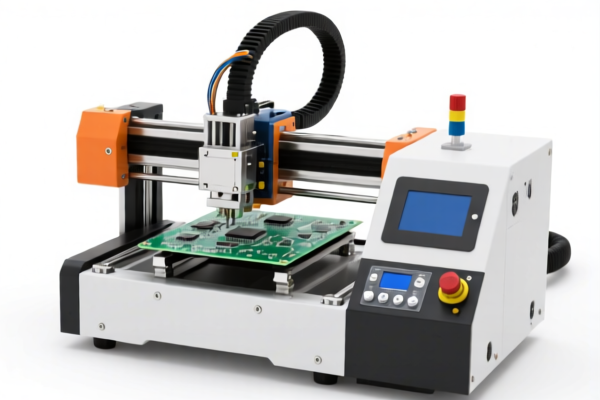
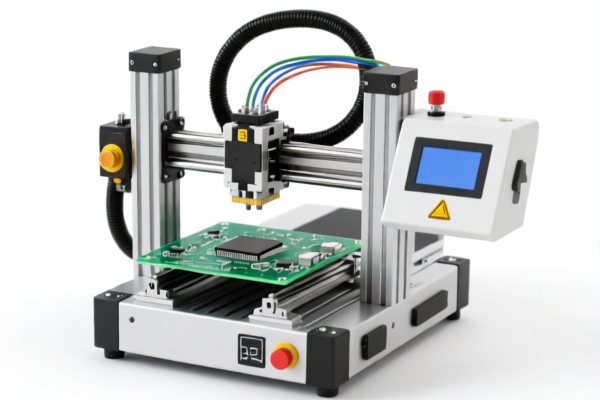
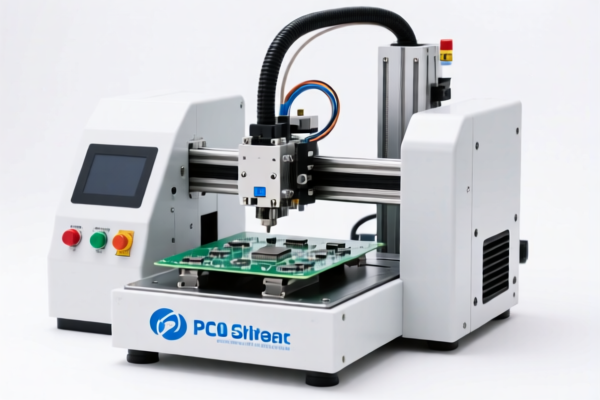
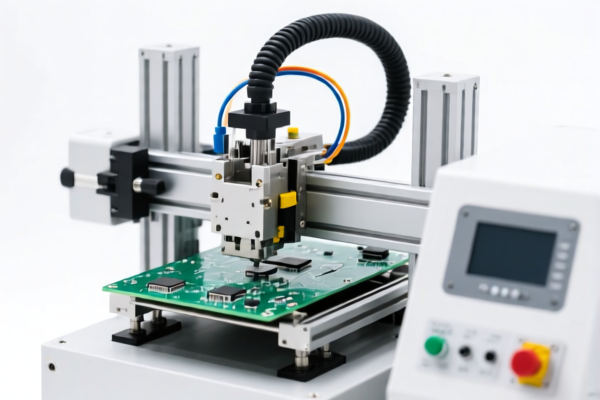
AI分析
⚡ Printed Circuit Boards (PCBs) – The Backbone of Electronics
🌐 HS Code Reference & Customs Clearance Guide | 2026 Latest Tariff Analysis | Professional Strategy
📌 I. Product Definition: What Exactly is a PCB?
A Printed Circuit Board (PCB) is the fundamental structural base for most electronic devices. It mechanically supports and electrically connects electronic components using conductive tracks, pads, and other features etched from one or more sheet layers of copper laminated onto a non-conductive substrate.
In international trade, the classification of PCBs depends heavily on their level of assembly and functionality:
- Unassembled PCBs (Blank Boards): Bare boards with conductive pathways but no components soldered on. These are considered essential components/substitutes.
- Assembled PCBs (PCBA): Boards with electronic components (resistors, capacitors, ICs) soldered onto them. These are often classified under "parts" or "articles" depending on their specific function and integration level.
⚠️ Key Distinction:
- If the board is bare (no components) → Likely falls under 8534 or 8543 based on material/substructure rules.
- If the board is assembled with components and performs a specific function → Often falls under 8543 (Articles with individual functions) or general "parts" categories if generic.
📦 II. HS Code Classification Details (Based on Provided Data)
Based on the provided dataset, the following HS Codes are identified for PCBs. All listed codes carry a total tax rate of 35.0% for goods originating from China entering the US market.
| HS Code | Summary/Logic | Key Classification Principle |
|---|---|---|
8534.00.00.20 |
PCBs classified as Printed Circuits. | Matches via Fallback/Catch-all Principle for standard printed circuits. |
8534.00.00.80 |
PCBs conform to the definition of Printed Circuit Boards. | Classified via Fallback Rule based on physical definition. |
8543.90.65.00 |
PCBs are consistent in form and essence with Printed Circuit Assemblies. | Matches as a default component part due to structural identity. |
8543.90.68.00 |
PCBs match PCB Assemblies in purpose and form, with no material conflict. | Classified as an article with independent function or specific assembly type. |
🔍 Critical Note:
- The dataset indicates that whether the PCB is categorized under 8534 (Printed Circuits) or 8543 (Articles with individual functions/parts), the tariff outcome is identical in this specific context.
- The distinction often lies in administrative preference or specific product descriptions (e.g., "blank" vs. "assembled"), but the tax impact remains 35% for US-bound Chinese goods.
💰 III. 2026 Latest Tariff Rate Breakdown
✅ Applicable Country: United States (US)
✅ Origin: China (CN)
✅ Effective Date: Ongoing (Subject to Section 301 & IEEPA measures)
🎯 General Tariff Structure for PCBs (HS Codes: 8534.00.00.20 / 8534.00.00.80 / 8543.90.65.00 / 8543.90.68.00)
| Item | Rate (%) | Details |
|---|---|---|
| Base Tariff | 0.0% | Standard Most Favored Nation (MFN) rate for many electronics components is often 0%. |
| Section 301 Surcharge | +25.0% | Added under US Trade Law Section 301 against China. |
| Section 122 (IEEPA) Surcharge | +10.0% | Additional tariff imposed via International Emergency Economic Powers Act (IEEPA). |
| Total Tariff | 35.0% | Sum of all applicable duties. |
| Calculation Basis | CIF Value | Tax is calculated on Cost, Insurance, and Freight value. |
| De Minimis Exemption | ❌ No | Cannot be shipped under $800 duty-free. Must declare properly. |
📌 Explanation of Tax Components:
- "Base Tariff: 0.0%": The WTO baseline duty for circuit boards is typically low or zero.
- "Surcharge 25.0%": This is the primary penalty under Section 301, targeting Chinese manufacturing exports in electronics.
- "122 Clause Tariff 10%": Refers to tariffs imposed under IEEPA, often used to address national security or economic emergencies related to specific countries.
- Result: Despite being a "low base" item, the 35% effective rate makes PCBs expensive to import into the US from China.
🛠️ IV. Customs Clearance Practical Advice
✅ 1. Documentation Checklist (Non-Negotiable)
| Document | Required | Purpose |
|---|---|---|
| ✅ Commercial Invoice | ✔️ | Must clearly state "Printed Circuit Board" and HS Code. |
| ✅ Packing List | ✔️ | Detailed breakdown of items, weights, and dimensions. |
| ✅ Product Technical Sheet | ✔️ | Proves whether the PCB is bare or assembled (affects HS code precision). |
| ✅ Bill of Lading / Air Waybill | ✔️ | Proof of shipment and ownership. |
| ✅ Certificate of Origin | ✔️ | To confirm Chinese origin and apply correct tariff rates. |
| ✅ FCC Declaration (if applicable) | ✔️ | If the PCB is part of a device subject to FCC regulation, ensure compliance. |
✅ 2. Declaration Tips (Critical for Avoiding Delays)
🔥 “Be Specific, Avoid Generic Terms!”
| Scenario | Recommended Declaration | Risk if Incorrect |
|---|---|---|
| Bare PCB | "Printed Circuit Board, Unassembled, Multi-layer, FR-4 Substrate" | Misclassification as "electronic assembly" may trigger different scrutiny. |
| Assembled PCB (PCBA) | "Printed Circuit Board Assembly (PCBA) with Components" | Must clearly distinguish from finished goods to avoid "complete set" misclassification. |
| Generic PCB | "Component, Printed Circuit Board, HS 8534.00.00.20" | Using vague terms like "Circuit Board" without HS code leads to delays. |
✅ 3. Special Considerations
| Situation | Handling Advice |
|---|---|
| OEM/Custom PCBs | Provide detailed schematics or BOMs (Bill of Materials) if requested by customs to verify content. |
| Mixed Shipments | If PCBs are shipped with other electronics, declare them separately. Do not bundle under a single generic "electronics" line item. |
| Valuation | Ensure the declared value includes all costs (FOB/CIF) to avoid undervaluation penalties. The 35% tax is significant, so accurate valuation is crucial for cash flow planning. |
| Anti-Dumping | Check if your specific PCB manufacturer is under any anti-dumping orders. While not in the data, this is a common risk in the PCB industry. |
🌍 V. Global Market Comparison (2026 Context)
| Country/Region | Typical HS Code | Tariff Impact | Notes |
|---|---|---|---|
| 🇺🇸 USA | 8534 / 8543 | 35% (0% Base + 25% Sec 301 + 10% IEEPA) | High barrier due to trade tensions. |
| 🇪🇺 EU | 8534.00 / 8543.90 | 0% - 2.7% | Generally lower tariffs; focus on REACH/RoHS compliance. |
| 🇨🇳 China (Import) | 8534 / 8543 | 0% - 3.5% | China often imports PCBs from Southeast Asia or domestic. |
| 🇻🇳 Vietnam | 8534 / 8543 | 0% - 2% | Many PCB manufacturers are relocating here to avoid US tariffs. |
📌 Strategic Insight:
Due to the 35% tariff in the US, many companies are sourcing PCBs from Vietnam, Malaysia, or Mexico to mitigate costs. If your PCBs are manufactured in China, the 35% cost must be factored into your pricing or absorbed to remain competitive.
📌 VI. Common Mistakes & Pitfalls (Learn from Others' Errors)
❌ Mistake 1: Declaring PCBs as "Electronic Parts" without specifying the HS Code.
👉 Consequence: Customs may assign a higher generic rate or hold the shipment for review.
❌ Mistake 2: Confusing PCB with PCBA in documentation.
👉 Consequence: If the board is assembled but declared as bare, it might be flagged for fraud. If declared as assembled but is bare, it may be delayed for inspection.
❌ Mistake 3: Ignoring the 122 Clause (IEEPA).
👉 Consequence: Underestimating the total landed cost. Many importers only budget for the 25% Section 301 tax, forgetting the extra 10%, leading to budget overruns.
✅ Correct Approach:
"Printed Circuit Board, Model XYZ, Unassembled, FR-4, Multi-layer, HS 8534.00.00.20, Origin: China"
🎯 VII. Conclusion: Smart Classification, Smarter Costs
🎯 Key Takeaways:
🔹 All provided PCB HS Codes result in a 35% total tax rate for Chinese-origin goods entering the US.
🔹 The 35% is composed of 0% Base + 25% Section 301 + 10% IEEPA (122 Clause).
🔹 Whether you classify under 8534 or 8543 does not change the tax rate in this dataset, but accuracy in description prevents delays.🔹 "HS Code Accuracy Saves Time; Tariff Knowledge Saves Money!"
🔹 "Don't let the 35% surprise destroy your margin. Plan ahead!"
📌 Pro Tip:
If you have the option to source PCBs from non-China countries (e.g., Vietnam, Singapore), you may be eligible for lower or zero tariffs under various Free Trade Agreements (FTAs) or by avoiding Section 301/IEEPA sanctions. Always verify the Country of Origin and consider supply chain diversification.
📣 Action Item:
📞 Consult a Customs Broker: Get a Pre-Ruling on your specific PCB model to ensure the correct HS Code (8534 vs. 8543) is accepted.
🚀 Calculate Landed Cost Accurately: Include the full 35% in your quotes to avoid unexpected expenses.
✨ Precision in Classification is the Key to Smooth Customs Clearance!
💼 Your PCBs are critical—treat their paperwork with equal importance!
用户评价
关于 HS 编码归类
协调制度(HS)是由世界海关组织(WCO)制定的国际贸易商品分类标准。全球 200 多个国家采用 HS 系统作为海关关税、贸易统计和进出口监管的基础。
每个 HS 编码遵循以下层级结构:
- 章(2 位)——商品大类(例如:第 84 章:机器和机械设备)
- 品目(4 位)——章内的更具体分类
- 子目(6 位)——国际通用细分,所有 WCO 成员国统一使用
- 本国细分(8-10 位)——各国自行扩展的细分编码,如美国 HTSUS 10 位编码
正确的 HS 编码归类对于顺利通关、准确缴纳关税和遵守贸易法规至关重要。错误归类可能导致海关延误、多缴关税或罚款。
从CN进口到US时,适用的关税税率可能包括:
- 最惠国(MFN)税率——适用于 WTO 成员国的标准关税税率
- 普通税率——适用于无贸易协定国家
- 贸易救济关税——附加关税,如 301 条款(反倾销)、232 条款(国家安全)或反补贴税
本页内容仅供参考。如需正式归类,请咨询当地海关或持牌报关代理。