pharmaceutical grade polymer ion exchange resin
CN → US| HS编码 | 关税税率 | 原产国 | 目的国 | 文档 |
|---|---|---|---|---|
| 3914006000 | 38.9% | CN | US | 官方文档 |
| 3914002000 | 35.0% | CN | US | 官方文档 |
| 3907995050 | 41.5% | CN | US | 官方文档 |
| 3824992900 | 41.5% | CN | US | 官方文档 |
| 3907290000 | 41.5% | CN | US | 官方文档 |
商品图片
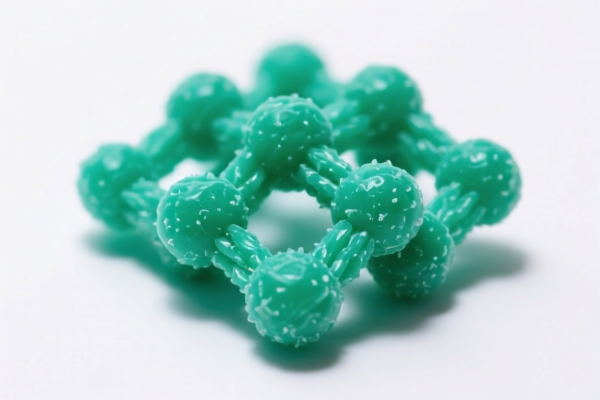
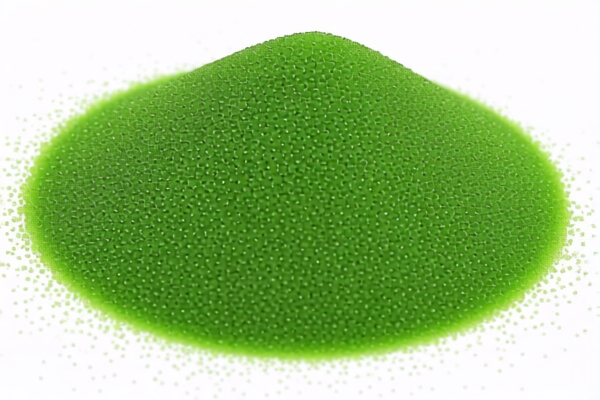
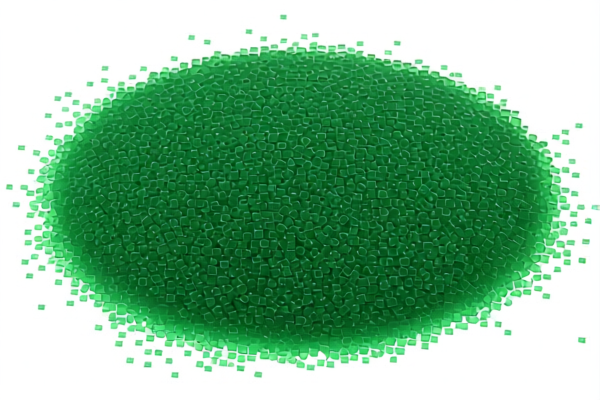
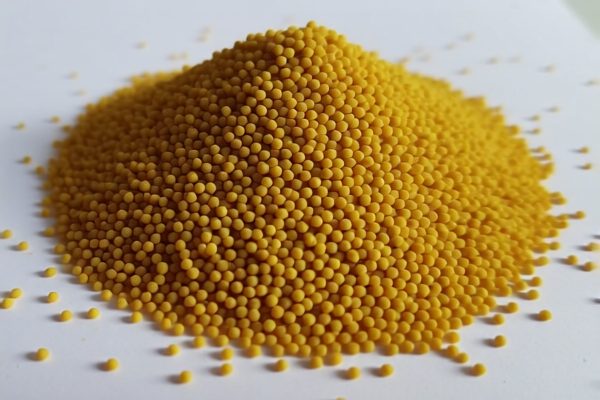
AI分析
🧪 Polymer Ion Exchange Resin (Pharmaceutical Grade)
🌐 HS Code Reference & Clearance Guide | 2026 Latest Tariff Analysis | Professional Entry Strategy
📌 I. Product Definition & Classification: Do You Truly Understand "Ion Exchange Resin"?
Polymer ion exchange resin, especially Pharmaceutical Grade, is a specialized polymeric material used primarily for water purification, drug separation, and chemical processing in the pharma industry. It consists of a polymer matrix (often polystyrene or acrylic) functionalized with ionic groups (acidic or basic).
In international trade, classification is critical because these resins can fall under different categories depending on their physical form, chemical base, and intended use. Misclassification leads to significant tax liabilities and clearance delays.
⚠️ Key Distinction Point:
- If the resin is specifically designed as an ion exchanger (regardless of polymer type) → Often falls under 3914 or 3824 depending on specific formulation.
- If it is a basic polymer/ester/ether without explicit ion-exchange function declared → Falls under 3907.
- Pharmaceutical Grade implies high purity but does not automatically change the HS code unless specific pharma-specific codes exist (which they largely do not in this context; function/polymer type dominates).
📦 II. HS Code Classification Details (2026 Latest Tariff Authoritative Mapping)
Based on the provided data, here are the four potential HS codes for Polymer Ion Exchange Resin, with detailed breakdowns.
| HS Code | Product Description | Key Characteristics | Base Tariff | Add. Tariff (25%) | 122 Clause Tariff (10%) | Total Tax Rate |
|---|---|---|---|---|---|---|
3914.00.60.00 |
Polymer Ion Exchange Resin (Matched with polymer material & ion exchange agent purpose) | Specific ion-exchange resins; polystyrene/divinylbenzene type common | 3.9% | 25.0% | 10% | 38.9% |
3914.00.20.00 |
Polymer-Based Ion Exchange Resin (Meets polymer material & ion exchange agent purpose) | Another sub-category of ion exchange resins; often different functional group base | 0.0% | 25.0% | 10% | 35.0% |
3907.99.50.50 |
Polymer-Based Ion Exchange Resin (Polyesters & Related Polymers, Primary Forms) | Classified as polyester or related polymer if not explicitly covered under 3914 | 6.5% | 25.0% | 10% | 41.5% |
3824.99.29.00 |
Polymer-Based Ion Exchange Resin (Other Chemical Products & Preparations) | Classified as a chemical product/preparation if not meeting 3914 criteria | 6.5% | 25.0% | 10% | 41.5% |
3907.29.00.00 |
Polymer-Based Ion Exchange Resin (Other Polyethers) | Classified under polyether polymers if base polymer is polyether-based | 6.5% | 25.0% | 10% | 41.5% |
🔍 Critical Note:
- 3914 is the preferred code for ion exchange resins if they meet the specific definition of heading 3914.
- Codes under 3907 and 3824 apply only if the resin is classified based on its polymer type (polyester, polyether) or chemical nature rather than its ion-exchange function.
- Pharmaceutical Grade does not inherently shift the code to a "pharma" chapter; function and material structure dictate the code.
💰 III. 2026 Latest Tariff Rate Breakdown (Including Surcharges & Policy Add-ons)
✅ Applicable Country: United States (US)
✅ Origin: China (CN)
✅ Effective Date: November 10, 2025 onwards (including subsequent imports)
🎯 1. 3914.00.20.00 — Polymer-Based Ion Exchange Resin (Lowest Risk & Cost)
| Item | Detail |
|---|---|
| Base Tariff | 0% (ad valorem) |
| USITC Surcharge | +25% (Section 301) |
| IEEPA Surcharge | +10% (China-specific, post-Nov 10, 2025) |
| Total Rate | 35.0% |
| Calculation | CIF Value × 35.0% |
| De Minimis Exemption | ❌ Not Applicable (deny_de_minimis) |
| Legal Basis Path | USITC:3914.00.20.00 → SECTION_301:3914.00.20.00 → IEEPA:9903.01.24 |
📌 Explanation:
- This code has a 0% base tariff, making it the most cost-effective option if applicable.
- The 25% + 10% surcharges are mandatory for Chinese-origin goods.
- Total cost burden: 35%.
🎯 2. 3914.00.60.00 — Polymer Ion Exchange Resin (Matched Purpose)
| Item | Detail |
|---|---|
| Base Tariff | 3.9% |
| USITC Surcharge | +25% |
| IEEPA Surcharge | +10% |
| Total Rate | 38.9% |
| Calculation | CIF Value × 38.9% |
| De Minimis Exemption | ❌ Not Applicable |
| Legal Basis Path | USITC:3914.00.60.00 → SECTION_301 → IEEPA |
📌 Explanation:
- Slightly higher than 3914.00.20.00 due to the 3.9% base tariff.
- Still within the 3914 chapter, which is ideal for ion exchange resins.
🎯 3. 3907.99.50.50 / 3824.99.29.00 / 3907.29.00.00 — Alternative Classifications
| Item | Detail |
|---|---|
| Base Tariff | 6.5% |
| USITC Surcharge | +25% |
| IEEPA Surcharge | +10% |
| Total Rate | 41.5% |
| Calculation | CIF Value × 41.5% |
| De Minimis Exemption | ❌ Not Applicable |
📌 Explanation:
- These codes apply if the resin is classified by polymer type (polyester, polyether) or as a general chemical product.
- Higher total tax burden (41.5%) compared to 3914 codes.
- Risk of customs rejection if the product clearly meets the definition of ion exchange resin (3914).
🛠️ IV. Customs Clearance Practical Advice (Battle-Tested Pitfall Guide)
✅ 1. Required Documentation Checklist (Non-Negotiable)
| Document | Mandatory? | Description |
|---|---|---|
| ✅ Product Specification Sheet | ✔️ | Must specify: polymer base (e.g., styrene-divinylbenzene), functional group (e.g., sulfonic acid), particle size, exchange capacity. |
| ✅ Intended Use Statement | ✔️ | Clearly state: "Pharmaceutical Grade Ion Exchange Resin for Water Purification/Drug Separation." |
| ✅ Structure Diagram / Chemical Formula | ✔️ | To support classification under 3914 (ion exchange resin) vs. 3907 (polymer). |
| ✅ Certificate of Analysis (CoA) | ✔️ | Proof of "Pharmaceutical Grade" purity, heavy metal limits, etc. |
| ✅ Commercial Invoice | ✔️ | Must match HS code description exactly. Avoid vague terms like "Chemical Resin." |
| ✅ Certificate of Origin (CO) | ✔️ | Required for surcharge determination (China origin triggers 35-41.5%). |
| ✅ Packaging List | ✔️ | Show units (e.g., kg per drum). |
✅ 2. Declaration Strategy (Key Mantra)
🔥 “Function First, Polymer Second, Name Precise, Tax Optimized!”
| Scenario | Correct Declaration | Wrong Approach |
|---|---|---|
| Product is clearly an ion exchange resin | HS 3914.00.20.00 (35%) | Declare as "Polymer" (3907) → 41.5% + Risk of Audit |
| Product is a raw polymer to be made into resin | HS 3907.xxxx | Declare as "Ion Exchange Resin" → Misclassification |
| Pharmaceutical Grade | Emphasize Purity Specs in description | Do not rely on "Pharma" to change HS code |
| Mixed Shipments (Resin + Packaging) | Declare resin only as primary good | Splitting may trigger scrutiny |
✅ 3. Special Cases Handling
| Situation | Handling Advice |
|---|---|
| OEM Custom Resin | Provide custom formula + intended application. If it functions as ion exchanger, stick to 3914. |
| Regrind/Used Resin | Different HS code! (Likely 3915 or 3825). Do not mix with new resin. |
| Resin for Non-Pharma Use | Same HS codes apply. "Pharmaceutical Grade" refers to quality, not function. |
| Unclear Polymer Base | If base is unknown, customs may default to 3907 (6.5% base) → higher risk. Clarify polymer type! |
🌍 V. Global Market Clearance Comparison (2026 Latest)
| Country/Region | Recommended HS Code | Tariff (China Origin) | Certification Required | Notes |
|---|---|---|---|---|
| 🇺🇸 USA | 3914.00.20.00 |
35.0% | None specific for HS, but CoA required | High surcharges. Avoid 3907 if 3914 applies. |
| 🇨🇳 China | 3914.00.20.00 |
~5-10% | None | Lower base tariffs. |
| 🇪🇺 EU | 3914.00.00 |
0-6.5% | REACH Registration | No Section 301 equivalent. |
| 🇦🇺 Australia | 3914.00.00 |
5% | None | Moderate tariff. |
| 🇯🇵 Japan | 3914.00.00 |
0-5% | None | Low tariff, strict purity checks. |
📌 Conclusion:
- USA imposes the highest burden due to 301 + IEEPA surcharges.
- Choosing HS 3914.00.20.00 saves 6.5% compared to 3907/3824 codes.
- Accuracy is Key: Misclassifying as 3907 may lead to back-taxes if customs verifies it’s an ion exchange resin.
📌 VI. Common Mistakes & Pitfall Guide (Blood-Tested Lessons)
❌ Mistake 1: Declaring as "Plastic Resin" under 3907 to avoid scrutiny
👉 Consequence: Customs may reclassify to 3914 (35-38.9%) or penalize for misdeclaration. Don’t gamble.
❌ Mistake 2: Ignoring the "122 Clause" (10%) surcharge
👉 Consequence: Underpayment by 10% → Penalties + Interest upon audit.
❌ Mistake 3: Using vague descriptions like "Chemical Material"
👉 Consequence: Customs detention, request for samples, delayed clearance (weeks).
❌ Mistake 4: Assuming "Pharmaceutical Grade" exempts from surcharges
👉 Consequence: No exemption exists. Surcharges apply to all Chinese-origin goods in these HS codes.
✅ Correct Practice:
"Polymer Ion Exchange Resin, Pharmaceutical Grade, Styrene-Divinylbenzene Base, Sulfonic Acid Functional Group, Bead Form, 500kg/Drum, HS 3914.00.20.00"
🎯 VII. Conclusion: Precision Classification Saves Money!
🎯 Remember the Mantra:
🔹 "Ion Exchange = 3914, Polymer Type = 3907/3824"
🔹 "3914.20 saves 3.9% vs 3914.60; 3914 saves 6.5% vs 3907"
🔹 "Surcharges are unavoidable for China origin – minimize base tariff instead!"
📌 Pro Tip:
If your resin is originating from Vietnam, India, or Thailand, you may exempt from IEEPA 10% surcharge, reducing total tax to 25% (or 28.9%).
Recommendation: Obtain Certificate of Origin carefully. Consider pre-ruling with CBP if your resin’s polymer base is complex.
📣 Immediate Action:
📞 Consult a licensed customs broker + Provide Material Safety Data Sheet (MSDS) + Specification Sheet
🚀 Ensure clear declaration of "Ion Exchange Resin" to secure HS 3914.00.20.00 (35% total tax).
✨ Professional Clearance Starts with Accurate Classification!
💼 Your profit margin depends on precise HS coding!
用户评价
关于 HS 编码归类
协调制度(HS)是由世界海关组织(WCO)制定的国际贸易商品分类标准。全球 200 多个国家采用 HS 系统作为海关关税、贸易统计和进出口监管的基础。
每个 HS 编码遵循以下层级结构:
- 章(2 位)——商品大类(例如:第 84 章:机器和机械设备)
- 品目(4 位)——章内的更具体分类
- 子目(6 位)——国际通用细分,所有 WCO 成员国统一使用
- 本国细分(8-10 位)——各国自行扩展的细分编码,如美国 HTSUS 10 位编码
正确的 HS 编码归类对于顺利通关、准确缴纳关税和遵守贸易法规至关重要。错误归类可能导致海关延误、多缴关税或罚款。
从CN进口到US时,适用的关税税率可能包括:
- 最惠国(MFN)税率——适用于 WTO 成员国的标准关税税率
- 普通税率——适用于无贸易协定国家
- 贸易救济关税——附加关税,如 301 条款(反倾销)、232 条款(国家安全)或反补贴税
本页内容仅供参考。如需正式归类,请咨询当地海关或持牌报关代理。