pharmaceutical rubber stoppers
CN → US| HS编码 | 关税税率 | 原产国 | 目的国 | 文档 |
|---|---|---|---|---|
| 4016991500 | 20.2% | CN | US | 官方文档 |
| 4016990500 | 20.9% | CN | US | 官方文档 |
| 3926904510 | 38.5% | CN | US | 官方文档 |
| 4016935010 | 37.5% | CN | US | 官方文档 |
| 3926904510 | 38.5% | CN | US | 官方文档 |
商品图片
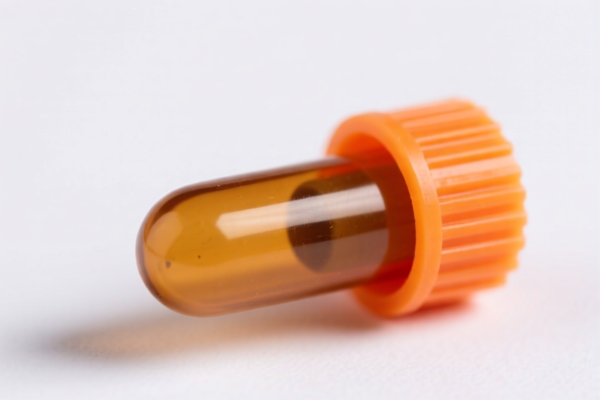
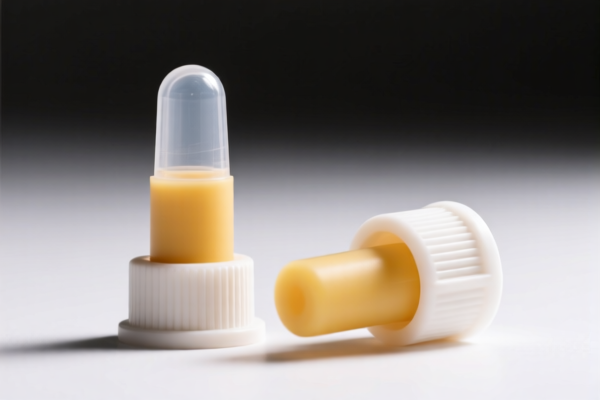
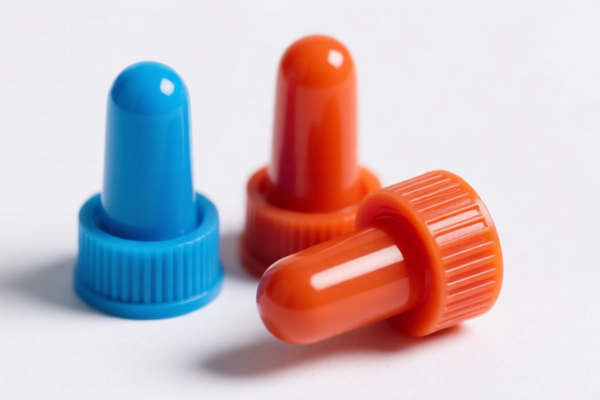

AI分析
🧪 Pharmaceutical Rubber Stoppers (Closures)
🌐 HS Code Reference & Customs Clearance Guide | 2026 Latest Tariff Analysis | Professional-Level Compliance Strategy
📌 1. Product Definition & Classification: Do You Really Understand "Pharmaceutical Rubber Stoppers"?
Pharmaceutical rubber stoppers are critical components in the pharmaceutical packaging industry, serving as primary closures for vials, ampoules, and syringes. In international trade, they are primarily classified under Chapter 40 (Rubber and Articles Thereof) or Chapter 39 (Plastics and Articles Thereof), depending on their material composition and specific form.
Two Main Categories:
- Natural Rubber Stoppers: Made from natural latex, often used for specific vaccine or serum applications.
- Synthetic/Sulfur-Vulcanized Rubber Stoppers: Made from butyl rubber, silicone, or other synthetic materials, widely used for general vaccines, injectables, and biologics due to superior chemical resistance and stability.
⚠️ Key Classification Distinction:
- If the product is explicitly defined as a "stopper" (塞子) made of rubber → Chapter 40 (HS 4016).
- If the product is defined as a "seal/gasket" (密封件) made of rubber/plastic → Chapter 39 or 40 (HS 3926/4016).
- Crucial Point: Misclassification between "Stopper" and "Seal" can lead to significant tariff differences due to Section 301 (122 Clause) penalties.
📦 2. HS Code Classification Details (2026 Latest Tariff Authority Comparison)
Based on the provided data, here are the specific HS Codes and their tax implications:
| HS Code | Product Description | Material/Form | Total Tax Rate (US Import from CN) | Tax Breakdown |
|---|---|---|---|---|
4016.99.15.00 |
Rubber Test Tube Stopper | Rubber, Stopper Form | 20.2% | Base: 2.7% Add'l (Sec 301): 7.5% Sec 122 Clause: 10% |
4016.99.05.00 |
Rubber Articles | Sulfur-Vulcanized Rubber, Stopper Form | 20.9% | Base: 3.4% Add'l (Sec 301): 7.5% Sec 122 Clause: 10% |
3926.90.45.10 |
Plastic/Rubber Products | Seal Form | 38.5% | Base: 3.5% Add'l (Sec 301): 25.0% Sec 122 Clause: 10% |
4016.93.50.10 |
Natural Rubber Products | Natural Rubber, Seal/Gasket Form | 37.5% | Base: 2.5% Add'l (Sec 301): 25.0% Sec 122 Clause: 10% |
3926.90.45.10 |
Natural Rubber Products | Natural Rubber, Seal Form | 38.5% | Base: 3.5% Add'l (Sec 301): 25.0% Sec 122 Clause: 10% |
🔍 Key Reminder:
- "Stopper" (塞子) typically falls under HS 4016.99 with a lower tariff (20.2%-20.9%).
- "Seal/Gasket" (密封件) often falls under HS 3926.90 or 4016.93 with a higher tariff (37.5%-38.5%).
- The difference in tariff between "Stopper" and "Seal" can be up to 18%, directly impacting cost competitiveness.
💰 3. Detailed Tariff Rate Analysis for 2026 (Including Additional Taxes & Policy Surcharges)
✅ Applicable Country: United States (US)
✅ Origin: China (CN)
✅ Effective Time: As per current Section 301 and Section 122 Clause regulations.
🎯 1. 4016.99.15.00 — Rubber Test Tube Stopper (Lowest Cost Option)
| Item | Content |
|---|---|
| Base Rate | 2.7% (ad valorem) |
| USITC Additional Tax (Sec 301) | +7.5% |
| Section 122 Clause Tax | +10% |
| Total Tax Rate | 20.2% |
| Tax Calculation | CIF Value × 20.2% |
| De Minimis Exemption? | ❌ No (Section 301 and 122 Clause items are generally exempt from de minimis relief) |
| Legal Basis Path | USITC:4016.99.15.00 → FOOTNOTE:301 → Section 122 Clause |
📌 Explanation:
- This code is specifically for "Rubber Test Tube Stoppers."
- The "122 Clause" refers to specific trade remedies that impose an additional 10% tariff on certain rubber products from China.
- This is the most cost-effective classification if the product can be accurately described as a "stopper" rather than a "seal."
🎯 2. 4016.99.05.00 — Sulfur-Vulcanized Rubber Stopper
| Item | Content |
|---|---|
| Base Rate | 3.4% |
| USITC Additional Tax (Sec 301) | +7.5% |
| Section 122 Clause Tax | +10% |
| Total Tax Rate | 20.9% |
| Tax Calculation | CIF Value × 20.9% |
| De Minimis Exemption? | ❌ No |
| Legal Basis Path | USITC:4016.99.05.00 → FOOTNOTE:301 → Section 122 Clause |
📌 Note:
- Slightly higher base rate (3.4% vs 2.7%) than4016.99.15.00.
- Still significantly cheaper than the "Seal" categories.
- Suitable for butyl or synthetic rubber stoppers that are sulfur-vulcanized.
🎯 3. 3926.90.45.10 & 4016.93.50.10 — Seal/Gasket Categories (High Cost)
| Item | Content |
|---|---|
| Base Rate | 2.5% - 3.5% |
| USITC Additional Tax (Sec 301) | +25.0% |
| Section 122 Clause Tax | +10% |
| Total Tax Rate | 37.5% - 38.5% |
| Tax Calculation | CIF Value × ~38% |
| De Minimis Exemption? | ❌ No |
📌 Warning:
- These codes classify the product as a "Seal" or "Gasket" (密封件).
- The 25% Section 301 tariff is much higher than the 7.5% for "Stoppers."
- Misclassification Risk: If you declare a rubber stopper as a "seal" to try to fit a different code, or if customs reclassifies it as a "seal," you will pay nearly double the tax.
🛠️ 4. Customs Clearance Practical Advice (Field Pitfall Avoidance Guide)
✅ 1. Preparation Checklist (Must-Haves)
| Document | Required | Notes |
|---|---|---|
| ✅ Product Specification Sheet | ✔️ | Must clearly state "Stopper" (塞子), not just "Seal" or "Gasket." Specify material (Natural/Synthetic/Butyl). |
| ✅ Technical Drawing | ✔️ | Show the specific shape of a "stopper" (cylindrical, flanged, etc.) to distinguish from flat "gaskets." |
| ✅ Product Photos | ✔️ | Clear images showing the stopper in a vial context, if possible. Label should say "Pharmaceutical Rubber Stopper." |
| ✅ Commercial Invoice | ✔️ | Crucial: Use the exact term "Rubber Stopper" or "Pharmaceutical Stopper." Avoid generic terms like "Seal" or "Closure" unless supported by specs. |
| ✅ Certificate of Origin (CO) | ✔️ | Required for determining origin and applying specific trade remedies. |
| ✅ Third-Party Testing Report | ✔️ | USP <382> / EP 3.2.2 compliance reports help prove pharmaceutical grade, though not directly for HS code. |
✅ 2. Declaration Tips (Key Mantra)
🔥 "Stopper vs. Seal: Choose 'Stopper' to Save 18%! Be Specific in Description!"
| Scenario | Correct Declaration | Incorrect Action |
|---|---|---|
| Pharmaceutical Vial Stopper | HS 4016.99.15.00 or 4016.99.05.00 Description: "Rubber Stopper for Pharmaceutical Vials" |
Describing as "Rubber Seal" → HS 3926.90.45.10 (38.5% tax) |
| Butyl Rubber Stopper | HS 4016.99.05.00 Description: "Sulfur-Vulcanized Rubber Stopper" |
Describing as "Plastic Seal" → Misclassification risk |
| Natural Rubber Stopper (Gasket-like) | HS 4016.93.50.10 Description: "Natural Rubber Seal/Gasket" |
Attempting to force into 4016.99 if shape/form clearly indicates "Seal" |
📌 Critical Advice:
- Consistency is Key: The product name on the invoice, packing list, and technical specs must all use the term "Stopper" if you are aiming for the lower 20.2%-20.9% tariff.
- If Customs Disputes: Be prepared to provide engineering drawings that show the stopper is designed to be inserted into a vial, not used as a flat seal between two mating surfaces.
✅ 3. Special Situation Handling
| Situation | Handling Suggestion |
|---|---|
| Mixed Shipments (Stoppers + Seals) | Separate Line Items: Clearly separate "Rubber Stoppers" (HS 4016.99) from "Rubber Seals" (HS 3926.90/4016.93). Do not combine. |
| OEM Custom Stopppers | Provide client order + design blueprints. Emphasize "Custom Pharmaceutical Stopper" to support HS 4016.99 classification. |
| Pre-Certification | Consider applying for an Advance Ruling from US CBP if the volume is high and the classification is borderline. |
🌍 5. Global Market Customs Comparison (2026 Latest)
| Country/Region | Recommended HS Code | Estimated Tariff | Certification Requirements | Notes |
|---|---|---|---|---|
| 🇺🇸 USA | 4016.99.15.00 (Stopper) |
20.2% | FDA Registration, USP Compliance | High penalty for "Seal" classification (38.5%). |
| 🇨🇳 China | 4016.99.15.00 |
~5-8% (Import) | CCC (if applicable), Quality Inspection | No Section 301 or 122 Clause for domestic trade. |
| 🇪🇺 EU | 4016.93 or 4016.99 |
0% - 4.5% | CE, ISO 13485, USP <382> | No additional punitive tariffs like US. |
| 🇯🇵 Japan | 4016.93 |
~0% - 3% | PSE (if electrical components), Quality Standards | Strict pharmaceutical documentation. |
📌 Conclusion:
- USA is the highest-cost market due to Section 301 and Section 122 Clause tariffs.
- Accurate Classification as "Stopper" (not "Seal") is the single most effective way to reduce costs by ~18%.
📌 6. Common Errors & Pitfall Guide (Lessons Learned)
❌ Error 1: Declaring Rubber Stoppers as "Rubber Seals" or "Gaskets"
👉 Consequence: Tariff jumps from 20.2% to 38.5%. Overpayment of 18.3%.
❌ Error 2: Using Generic Terms like "Pharmaceutical Accessories"
👉 Consequence: Customs may assign a default higher rate or request reclassification, causing delays.
❌ Error 3: Ignoring the "122 Clause"
👉 Consequence: Even with correct HS code, failing to account for the 10% Section 122 Clause leads to budget shortfalls and potential penalties.
❌ Error 4: Mixing "Stoppers" and "Seals" on One Line Item
👉 Consequence: Customs may apply the highest tariff rate to the entire shipment.
✅ Correct Practice:
"Rubber Pharmaceutical Stopper, Butyl/Silicone, Size 13mm, for Vial Closure, USP Class I, Model XYZ"
🎯 7. Conclusion: Professional Declaration Saves Money!
🎯 Remember the Mantra:
🔹 "Stopper is Cheaper, Seal is Expensive. 20% vs 38%, Choose Wisely!"
🔹 "HS Code Determines Life, Tax Rate Determines Profit. Precision Saves Thousands!"
📌 Pro Tip:
If your rubber stoppers are originating from Vietnam, Thailand, or Mexico, you may be exempt from Section 301 and 122 Clause tariffs, reducing the tax to just the base rate (2.5%-3.5%).
Always check the Country of Origin and consider supply chain diversification if US duties are too high.
📣 Immediate Action:
📞 Contact a professional customs broker + Provide Product Specs + Apply for HS Code Pre-Ruling
🚀 Let your pharmaceutical stoppers pass customs smoothly, efficiently, and profitably!
✨ Professional Customs Clearance Starts with Precise Classification!
💼 Your Every Cent of Cost Deserves Precise Calculation!
用户评价
关于 HS 编码归类
协调制度(HS)是由世界海关组织(WCO)制定的国际贸易商品分类标准。全球 200 多个国家采用 HS 系统作为海关关税、贸易统计和进出口监管的基础。
每个 HS 编码遵循以下层级结构:
- 章(2 位)——商品大类(例如:第 84 章:机器和机械设备)
- 品目(4 位)——章内的更具体分类
- 子目(6 位)——国际通用细分,所有 WCO 成员国统一使用
- 本国细分(8-10 位)——各国自行扩展的细分编码,如美国 HTSUS 10 位编码
正确的 HS 编码归类对于顺利通关、准确缴纳关税和遵守贸易法规至关重要。错误归类可能导致海关延误、多缴关税或罚款。
从CN进口到US时,适用的关税税率可能包括:
- 最惠国(MFN)税率——适用于 WTO 成员国的标准关税税率
- 普通税率——适用于无贸易协定国家
- 贸易救济关税——附加关税,如 301 条款(反倾销)、232 条款(国家安全)或反补贴税
本页内容仅供参考。如需正式归类,请咨询当地海关或持牌报关代理。