pipes
CN → US| HS编码 | 关税税率 | 原产国 | 目的国 | 文档 |
|---|---|---|---|---|
| 3917290090 | 38.1% | CN | US | 官方文档 |
| 7304490060 | 35.0% | CN | US | 官方文档 |
| 7305111060 | 10.0% | CN | US | 官方文档 |
| 3917210000 | 38.1% | CN | US | 官方文档 |
| 7304598010 | 35.0% | CN | US | 官方文档 |
商品图片
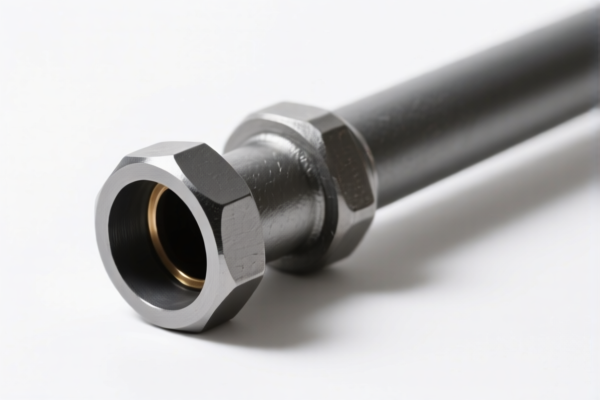
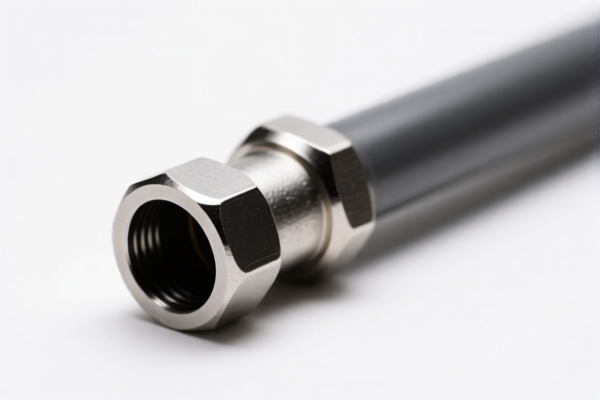
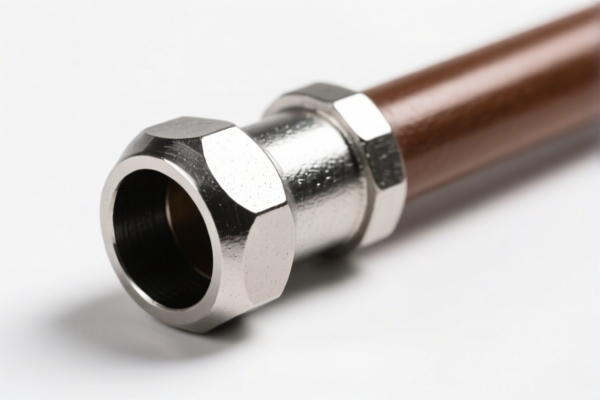
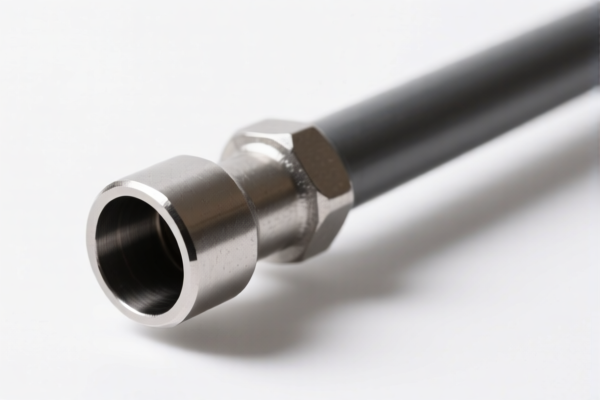
AI分析
🏗️ Pipes (Industrial & Construction Tubing)
🌐 HS Code Reference & Customs Clearance Guide | 2026 Latest Tariff Analysis | Professional Strategy
📌 1. Product Definition: What are "Pipes"?
In international trade, "Pipes" is a broad term covering tubular products used for conveying fluids (water, oil, gas), structural support, or mechanical protection. The critical factor for HS Code classification is Material and Function.
⚠️ Key Classification Logic:
- Plastic Pipes: Usually fall under Chapter 39 (Plastics).
- Steel/Iron Pipes: Usually fall under Chapter 73 (Articles of Iron or Steel).
- Seamless vs. Welded: Affects sub-heading within Chapter 73.
- Specific Use: Pipes specifically designed for oil/gas transmission may have different rates than general-purpose tubes.
📦 2. HS Code Classification Breakdown (Based on Provided Data)
| HS Code | Product Description | Material/Type | Tax Rate (Total) | Key Logic |
|---|---|---|---|---|
3917.29.00.90 |
Plastic Pipes, Other | Plastic (Inferred) | 38.1% | Matches "Pipes" morphology; plastic material inferred. |
7304.49.00.60 |
Other Seamless Tubes of Iron/Steel | Steel/Seamless (Inferred) | 35.0% | "Pipe" matches "Steel Tube" morphology; stainless steel inferred via "fallback" rule. |
7305.11.10.60 |
Line Pipe for Oil/Gas (Steel) | Steel/Line Pipe | 10.0% | High match for "Pipe" morphology + Oil/Gas utility; no material conflict. |
3917.21.00.00 |
Plastic Pipes, Rigid | Plastic/Rigid | 38.1% | "Pipe" matches "Tube" morphology; plastic pipes commonly fall here. |
7304.59.80.10 |
Tubes, Pipes & Hollow Profiles, Other | Steel/Other | 35.0% | "Pipe" matches "Tube/Profile"; metal (iron/steel) inferred by common sense. |
🔍 Critical Note:
- Plastic Pipes (3917.xx) and Steel Pipes (7304.xx/7305.xx) are in completely different chapters. Misclassification between these two can lead to severe penalties.
- 7305.11.10.60 offers the lowest tax rate (10%) but requires proof of "Oil/Gas Line Pipe" usage and steel material.
- 38.1% is the highest rate, applying to most plastic pipes and non-specific steel tubes.
💰 3. Detailed Tax Structure Explanation (2026 Latest)
✅ Applicable Market: USA (US)
✅ Origin: China (CN)
✅ Effective Date: From Nov 10, 2025 (including subsequent imports)
🎯 1. Plastic Pipes (3917.29.00.90 & 3917.21.00.00)
Total Tax Rate: 38.1%
| Component | Rate | Legal Basis |
|---|---|---|
| Base Duty | 3.1% | Standard MFN Rate |
| Section 301 Duty | 25.0% | USITC Footnote 9903.88.01 (Trade Remedy) |
| IEEPA Duty | 10.0% | International Emergency Economic Powers Act (China-specific) |
| Total | 38.1% | Sum of above |
📌 Explanation:
- Plastic pipes are subject to all three layers of taxation.
- The 25% Section 301 duty applies to most plastic articles from China.
- The 10% IEEPA duty is a specific surcharge on Chinese goods.
- Result: High cost impact. Plastic piping systems for construction/plumbing will face nearly 40% additional cost.
🎯 2. Steel Seamless/Other Tubes (7304.49.00.60 & 7304.59.80.10)
Total Tax Rate: 35.0%
| Component | Rate | Legal Basis |
|---|---|---|
| Base Duty | 0.0% | Often 0% for certain steel tubes |
| Section 301 Duty | 25.0% | USITC Footnote 9903.88.01 |
| IEEPA Duty | 10.0% | International Emergency Economic Powers Act |
| Total | 35.0% | Sum of above |
📌 Explanation:
- While the base duty may be 0%, the 35% surcharge makes them expensive.
- The 25% Section 301 duty applies broadly to steel products from China.
- No de minimis exemption: Small shipments do not escape these tariffs.
🎯 3. Oil/Gas Line Pipe (7305.11.10.60)
Total Tax Rate: 10.0%
| Component | Rate | Legal Basis |
|---|---|---|
| Base Duty | 0.0% | Standard MFN Rate |
| Section 301 Duty | 0.0% | Exempted (Specific exclusion for line pipe) |
| IEEPA Duty | 10.0% | International Emergency Economic Powers Act |
| Total | 10.0% | Only IEEPA applies |
📌 Explanation:
- This is the most favorable classification if the pipe is truly for oil/gas transmission.
- Key Advantage: Exempt from the 25% Section 301 duty.
- Risk: Must prove "Line Pipe" usage. If used for structural purposes, customs may reclassify to7304.xxxxand charge 35%.
🛠️ 4. Customs Clearance Practical Advice
✅ 1. Document Checklist (Essential)
| Document | Required? | Purpose |
|---|---|---|
| Product Specifications | ✔️ | Must specify: Material (Steel/Plastic), Diameter, Wall Thickness, Length. |
| Material Certificate | ✔️ | Crucial for distinguishing Plastic (3917) vs. Steel (7304/7305). |
| Usage Declaration | ✔️ | State end-use: "Construction Plumbing," "Oil/Gas Transmission," or "Structural Support." |
| Commercial Invoice | ✔️ | Clear description: "HDPE Pipe," "Seamless Steel Tube," etc. Avoid vague "Pipes." |
| Bill of Lading | ✔️ | Match weight and dimensions with invoice. |
| Certificate of Origin (CO) | ✔️ | Required for IEEPA calculation and potential FTA benefits (if applicable). |
✅ 2. Declaration Tips (Critical!)
🔥 "Know Your Material, Declare Your Use!"
| Scenario | Correct HS Code | Wrong HS Code | Consequence |
|---|---|---|---|
| Plastic Pipe for Water | 3917.21.00.00 |
7304.59.80.10 |
Rejected; penalty for wrong material. |
| Steel Pipe for Building Frame | 7304.59.80.10 |
7305.11.10.60 |
Reclassification Risk: If not for oil/gas, 35% tax applies instead of 10%. |
| Steel Pipe for Oil/Gas | 7305.11.10.60 |
7304.49.00.60 |
Savings: 10% vs. 35%. Must provide proof of use. |
| Stainless Steel Tube | 7304.49.00.60 |
7304.59.80.10 |
Subtle difference: Seamless vs. Welded/Other. Check manufacturing process. |
✅ 3. Special Cases
| Situation | Recommendation |
|---|---|
| OEM Custom Pipes | Provide client’s design specs to prove specific use (e.g., line pipe). |
| Mixed Shipment | If a container has both plastic and steel pipes, split declaration. Do not group them. |
| Unknown Material | Do not guess. Provide material test reports. If steel, specify carbon/stainless. If plastic, specify PE/PP/PVC. |
| Small Samples | Even for samples, IEEPA (10%) and Section 301 (25%) may apply if value exceeds de minimis thresholds. |
🌍 5. Global Market Comparison (2026)
| Market | Recommended HS Code | Est. Total Tax | Key Requirement |
|---|---|---|---|
| 🇺🇸 USA | 7305.11.10.60 |
10.0% | Proof of Oil/Gas use |
| 🇺🇸 USA | 3917.21.00.00 |
38.1% | No exceptions |
| 🇨🇳 China | 3917.21.00.00 |
~10-15% | Lower base duty |
| 🇪🇺 EU | 3917.21.00 |
6.5% | No IEEPA/301 |
| 🇯🇵 Japan | 3917.21.00 |
6% | No additional duties |
📌 Conclusion:
- USA is the most challenging market due to stacked tariffs (Base + 301 + IEEPA).
- Steel pipes for non-oil/gas use face a 35% effective rate.
- Plastic pipes face 38.1%.
- Oil/Gas steel pipes are the only major category with a lower effective rate (10%) due to Section 301 exemption.
📌 6. Common Errors & Pitfalls
❌ Error 1: Declaring "Steel Pipe" but shipping "Plastic Pipe"
👉 Consequence: Customs inspection will find mismatch; goods detained; fines up to 3x duty value.
❌ Error 2: Classifying all steel pipes as 7305.11.10.60 (Oil/Gas)
👉 Consequence: If not used for oil/gas, CBP will reclassify to 7304.xxxx, charging 25% more tax + penalties.
❌ Error 3: Vague Description "Pipes"
👉 Consequence: Customs cannot determine material. Will assign highest possible duty rate or reject entry.
✅ Correct Approach:
"HDPE Water Supply Pipe, 4 inch, 100 ft, ASTM D3035"
"Seamless Carbon Steel Tube, 2 inch, API 5L, for Oil Transmission"
🎯 7. Conclusion: Strategic Recommendations
🎯 Key Takeaways:
🔹 Material is King: Plastic (
3917) vs. Steel (7304/7305) is the first decision.
🔹 Use is Crucial: For steel pipes, proving "Oil/Gas Line Pipe" usage saves 25% tax.
🔹 Avoid Guessing: If material is unknown, get lab tests. Misclassification risks are high.
🔹 Plan for Costs: Budget for 10-38% tariffs for US imports.
📌 Pro Tip:
- For Steel Pipes, consider if any FTA (Free Trade Agreement) benefits apply (e.g., USMCA if from Mexico/Canada).
- For Plastic Pipes, explore if any exclusions exist in current Section 301 lists (rare, but check annually).
- Pre-Ruling: Apply for an Advance Ruling from CBP for high-volume shipments to lock in the correct HS Code and tax rate.
📣 Act Now:
📞 Consult a licensed customs broker.
📄 Prepare material certificates and usage declarations.
🚀 Optimize your supply chain to mitigate 38.1% tariff impacts.
✨ Precision in Classification, Profit in Clearance!
💼 Every Percent Saved is Pure Profit!
用户评价
关于 HS 编码归类
协调制度(HS)是由世界海关组织(WCO)制定的国际贸易商品分类标准。全球 200 多个国家采用 HS 系统作为海关关税、贸易统计和进出口监管的基础。
每个 HS 编码遵循以下层级结构:
- 章(2 位)——商品大类(例如:第 84 章:机器和机械设备)
- 品目(4 位)——章内的更具体分类
- 子目(6 位)——国际通用细分,所有 WCO 成员国统一使用
- 本国细分(8-10 位)——各国自行扩展的细分编码,如美国 HTSUS 10 位编码
正确的 HS 编码归类对于顺利通关、准确缴纳关税和遵守贸易法规至关重要。错误归类可能导致海关延误、多缴关税或罚款。
从CN进口到US时,适用的关税税率可能包括:
- 最惠国(MFN)税率——适用于 WTO 成员国的标准关税税率
- 普通税率——适用于无贸易协定国家
- 贸易救济关税——附加关税,如 301 条款(反倾销)、232 条款(国家安全)或反补贴税
本页内容仅供参考。如需正式归类,请咨询当地海关或持牌报关代理。