piping tip
CN → US| HS编码 | 关税税率 | 原产国 | 目的国 | 文档 |
|---|---|---|---|---|
| 8205595560 | 40.3% | CN | US | 官方文档 |
| 8210000000 | 38.7% | CN | US | 官方文档 |
| 8205906000 | 0.0% | CN | US | 官方文档 |
商品图片
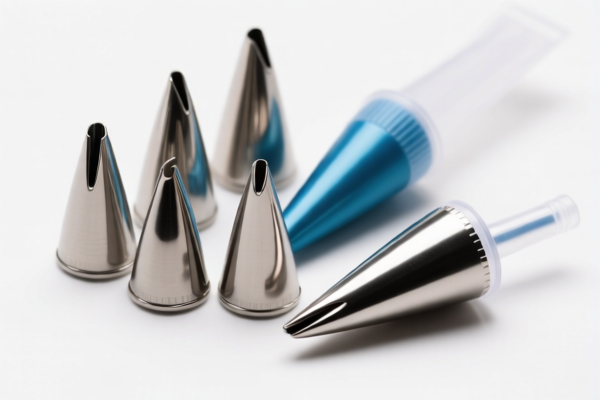
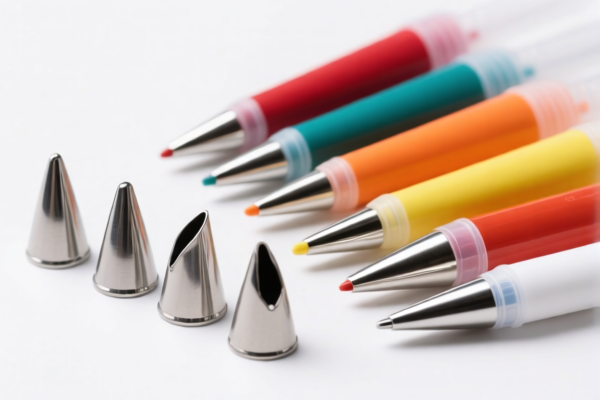
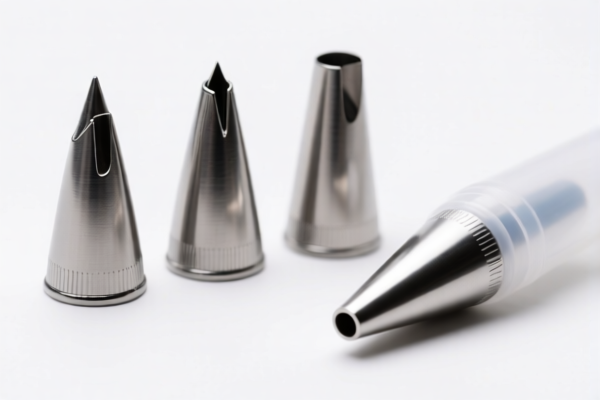
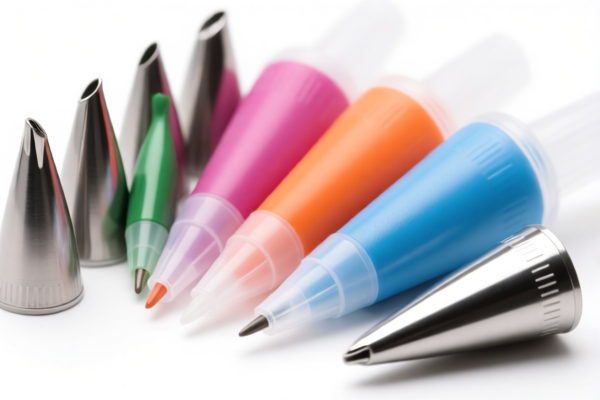
AI分析
🍰 Piping Tips (Pastry/Culinary Piping Tips)
🌐 HS Code Reference & Customs Clearance Guide | 2024 Latest Tariff Analysis | Professional Clearance Strategy
📌 Part 1: Product Definition & Classification: Do You Really Know "Piping Tips"?
Piping tips, commonly known as pastry tips or nozzles, are small attachments used with piping bags for decorating cakes, cookies, and other baked goods. In international trade, their classification is often contentious, falling primarily into two categories: Hand Tools/Accessories or Food Preparation Tools.
Metal Piping Tips: Typically made of stainless steel or nickel-plated metal; designed to be reusable or disposable for culinary applications. Material Logic: They are rigid, non-electric, manual instruments used for manipulating food (icing), distinct from power-driven machinery.
⚠️ Key Distinction Point:
- If the tips are sold alone as individual metal tools: They are generally classified under Chapter 82 (Base Metal Articles) or Chapter 8205 (Hand Tools).
- If the tips are part of a Set/Kit: Classification depends on whether the set is defined as a "hand tool set" or a "food preparation set," which drastically affects the duty rate.
- Crucial Note: They are NOT electronic appliances (Chapter 85) nor plastic kitchenware (Chapter 39) if the primary function and material are metal tools.
📦 Part 2: HS Code Classification Details (Based on Provided Data)
According to the provided data, there are three potential classifications for Piping Tips. The choice depends heavily on how the product is packaged (individual vs. set) and the specific customs interpretation of the country of import (typically the US, given the "Section 301" and "122" references).
| HS Code | Product Description | Application Scenario | Classification Logic |
|---|---|---|---|
| 8205.59.55.60 | Parts of Hand Tools / Tool Sets | Sold as parts of a hand tool set or generic metal hand tool accessories | Logic: Classified as a "part" or accessory of hand tools. Fits the logic of metal tools. |
| 8210.00.00.00 | Hand Tools for Preparing/Service Food | Sold individually or as a tool for food preparation/supply | Logic: Matches the use (food prep) and form (manual mechanical device). Often considered more accurate for culinary-specific tools. |
| 8205.90.60.00 | Sets of Two or More Articles | Sold in a boxed set (e.g., 24-piece set) | Logic: Fits the definition of a "set" containing multiple hand tools/accessories. Rule 3(b) of Harmonized System applies. |
🔍 Critical Reminder:
- Individual Sale: Usually favors 8210.00.00.00 (Food Prep Tool) or 8205.59.55.60 (Hand Tool Part).
- Kit/Set Sale: Forces classification under 8205.90.60.00 (Sets), but the duty calculation becomes complex (see Tax Details below).
- Material: Must be metal. If plastic, classification changes entirely (not covered in this specific data set).
💰 Part 3: 2024 Latest Tariff Rate Details (Including Surcharges)
✅ Applicable Country: United States (US)
✅ Origin: China (CN)
✅ Context: The data reflects US import duties with specific trade war surcharges (Section 301 and Section 122/IEEPA equivalent clauses).
🎯 1. 8205.59.55.60 —— Parts of Hand Tools / Tool Set Components
| Item | Content |
|---|---|
| Base Duty Rate | 5.3% |
| Trade War Surcharge (Section 301) | +25.0% |
| Section 122 Tariff (or Equivalent IEEPA) | +10.0% |
| Total Effective Tax Rate | 40.3% |
| Tax Calculation | CIF Value × 40.3% |
| Legal Basis | Based on "Base Tariff + 301 + 122" logic. |
📌 Explanation:
- 5.3%: The standard Most Favored Nation (MFN) duty for parts of hand tools.
- 25%: The additional 25% tariff imposed under Section 301 of the Trade Act on many Chinese-made metal articles.
- 10%: An additional surcharge (referenced as "122 clause" in the data, likely referring to specific administrative trade measures or IEEPA provisions).
- Total: 40.3%. This is a high-cost classification for individual items.
🎯 2. 8210.00.00.00 —— Hand Tools for Food Preparation/Service
| Item | Content |
|---|---|
| Base Duty Rate | 3.7% |
| Trade War Surcharge (Section 301) | +25.0% |
| Section 122 Tariff (or Equivalent IEEPA) | +10.0% |
| Total Effective Tax Rate | 38.7% |
| Tax Calculation | CIF Value × 38.7% |
| Legal Basis | "Base Tariff + 301 + 122" logic. |
📌 Explanation:
- 3.7%: The standard MFN duty for other hand tools, including those for food preparation. This is lower than 8205.59.55.60.
- 25% + 10%: The same trade war surcharges apply.
- Total: 38.7%. This is the lowest total tax rate among the options, making it the most cost-effective classification if the product can be legally justified as a "food preparation hand tool."
🎯 3. 8205.90.60.00 —— Sets of Hand Tools (e.g., 24-Piece Piping Tip Sets)
| Item | Content |
|---|---|
| Base Duty Rate | "The rate of duty applicable to that article in the set subject to..." |
| Trade War Surcharge (Section 301) | +25.0% |
| Section 122 Tariff (or Equivalent IEEPA) | +10.0% |
| Total Effective Tax Rate | Variable (Depends on Component Rate) + 35% Surcharges |
| Tax Calculation | CIF × (Component Base Rate + 35%) |
📌 Explanation:
- Complex Calculation: For "sets," customs often classify the item based on the component that gives the set its essential character. If the set is considered a "hand tool set," the base duty might vary, but the surcharges are fixed at 25% + 10% = 35% on top of the base rate.
- Risk: If the base rate is high, the total cost increases. However, this classification is mandatory if the product is sold as a complete set (e.g., a kit with a bag and 20 tips).
- Note: The data snippet shows "subject t+35.0%", implying the surcharges are additive to the component's base rate.
🛠️ Part 4: Customs Clearance Practical Advice (Pitfall Avoidance)
✅ 1. Preparation Checklist (Non-Negotiable)
| Document | Required? | Details |
|---|---|---|
| Product Specifications | ✔️ | Material (e.g., "Stainless Steel 304"), Size, Shape. |
| Commercial Invoice | ✔️ | Clearly state "Piping Tips for Culinary Use." Avoid vague terms like "Metal Parts." |
| Packing List | ✔️ | Specify if sold as Individual or Set. This is the #1 determinant for HS Code. |
| Photos | ✔️ | Show the tip's shape, threading, and any branding. |
| Usage Statement | ✔️ | "Used with pastry bags to decorate cakes and pastries." |
✅ 2. Declaration Strategy (Key Mnemonic)
🔥 "Single Item: Use Food Tool (38.7%); Set: Group as Tools (Variable); Never Call it 'Plastic'!"
| Scenario | Correct Declaration | Wrong Declaration | Consequence |
|---|---|---|---|
| Individual Piping Tip | 8210.00.00.00 (Food Prep Tool) |
8205.59.55.60 (Part) |
Paying 40.3% instead of 38.7% (Unnecessary 1.6% loss). |
| 24-Piece Set | 8205.90.60.00 (Set) |
8210.00.00.00 (Tool) |
Customs may reclassify as a set, but misdeclaration leads to penalties/delays. |
| Plastic Piping Tip | Not in Data (Likely Ch. 39) | 82xx (Metal) |
Major classification error. Heavy penalties, potential seizure. |
✅ 3. Special Handling
| Situation | Recommendation |
|---|---|
| Mixed Sets (Tools + Plastic Bags) | Ensure the metal tips are the primary value/component. If plastic bags are included, the set might still be classified under Ch. 82 if the metal tools are essential. |
| OEM/Private Label | Ensure the invoice lists the generic name "Piping Tips" rather than a brand-specific name that might confuse customs. |
| Low-Value Shipments (De Minimis) | Check Eligibility: While Section 301 surcharges often deny de minimis exemptions for Chinese goods, verify the current status of the $800 de minimis rule for Section 301 items. Many metal tools from China are excluded from de minimis relief. |
🌍 Part 5: Global Market Comparison (2024 Context)
| Country/Region | Recommended HS Code (Est.) | Base Duty | Surcharges (China Origin) | Notes |
|---|---|---|---|---|
| 🇺🇸 USA | 8210.00.00.00 (Individual) or 8205.90.60.00 (Set) |
3.7% or Variable | +25% (301) + 10% (122/IEEPA) | Highest cost. Strict enforcement on metal hand tools. |
| 🇨🇳 China | 8205.59 or 8210.00 |
0% - 5% | None | Generally low duty for export. |
| 🇪🇺 EU | 8205.59 or 8210.00 |
0% - 4.5% | None (Unless specific trade barriers) | No Section 301 equivalent. Much cheaper than US. |
| 🇨🇦 Canada | 8205.59 or 8210.00 |
0% - 5% | No Section 301 | Competitive. |
📌 Conclusion:
- The USA is the most expensive market for piping tips due to the 35% in surcharges (25% + 10%).
- The EU and Canada are more favorable, with no such massive surcharges.
- For US exports, optimizing the declaration to8210.00.00.00(Food Prep Tool) saves 1.6% compared to8205.59.55.60.
📌 Part 6: Common Mistakes & Pitfalls
❌ Mistake 1: Classifying a Set as a single tool
👉 Consequence: Customs may reassess as a set, leading to retroactive duty changes and penalties.
👉 Fix: Always declare sets as 8205.90.60.00 or the specific set heading.
❌ Mistake 2: Calling it "Kitchen Utensil" (Chapter 39 or 73)
👉 Consequence: If made of metal, it belongs in Chapter 82. Misclassification leads to audits.
👉 Fix: Use precise terms: "Stainless Steel Piping Tip."
❌ Mistake 3: Ignoring the 10% Surcharge
👉 Consequence: Underestimating landed cost by 10%.
👉 Fix: Always factor in the 38.7% (for individuals) or 40.3% (for parts) total tax rate in pricing.
🎯 Part 7: Conclusion: Professional Clearance for Lower Costs
🎯 Remember:
🔹 "Individual: 8210 (38.7%); Set: 8205.90 (Variable + 35%); Metal Only."
🔹 "Don't split sets! Don't mislabel metal as plastic!"
📌 Pro Tip:
If you are exporting to the USA, consider consolidating shipments or using Bonded Warehouses if eligible. Always request a Binding Tariff Information (BTI) or Advance Ruling from US Customs if your volume is high, to lock in the 8210.00.00.00 classification for individual tips.
📣 Immediate Action:
📞 Verify material: 100% Metal?
📦 Check packaging: Single or Set?
💰 Calculate Tax: 38.7% (Individual) vs. Variable (Set)
🚀 Clear goods smoothly, avoid delays, and maximize profit margins!
✨ Professional Classification, Precise Tax Calculation!
💼 Every percent counts in international trade!
用户评价
关于 HS 编码归类
协调制度(HS)是由世界海关组织(WCO)制定的国际贸易商品分类标准。全球 200 多个国家采用 HS 系统作为海关关税、贸易统计和进出口监管的基础。
每个 HS 编码遵循以下层级结构:
- 章(2 位)——商品大类(例如:第 84 章:机器和机械设备)
- 品目(4 位)——章内的更具体分类
- 子目(6 位)——国际通用细分,所有 WCO 成员国统一使用
- 本国细分(8-10 位)——各国自行扩展的细分编码,如美国 HTSUS 10 位编码
正确的 HS 编码归类对于顺利通关、准确缴纳关税和遵守贸易法规至关重要。错误归类可能导致海关延误、多缴关税或罚款。
从CN进口到US时,适用的关税税率可能包括:
- 最惠国(MFN)税率——适用于 WTO 成员国的标准关税税率
- 普通税率——适用于无贸易协定国家
- 贸易救济关税——附加关税,如 301 条款(反倾销)、232 条款(国家安全)或反补贴税
本页内容仅供参考。如需正式归类,请咨询当地海关或持牌报关代理。