planned notebook
CN → US| HS编码 | 关税税率 | 原产国 | 目的国 | 文档 |
|---|---|---|---|---|
| 4817300000 | 35.0% | CN | US | 官方文档 |
| 4820102010 | 35.0% | CN | US | 官方文档 |
| 4820102060 | 35.0% | CN | US | 官方文档 |
| 4817202000 | 35.0% | CN | US | 官方文档 |
商品图片
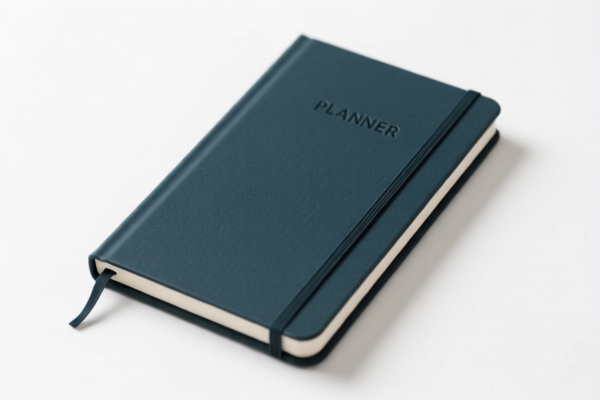
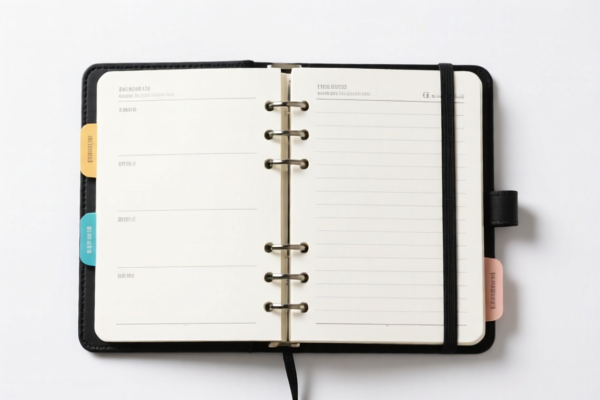
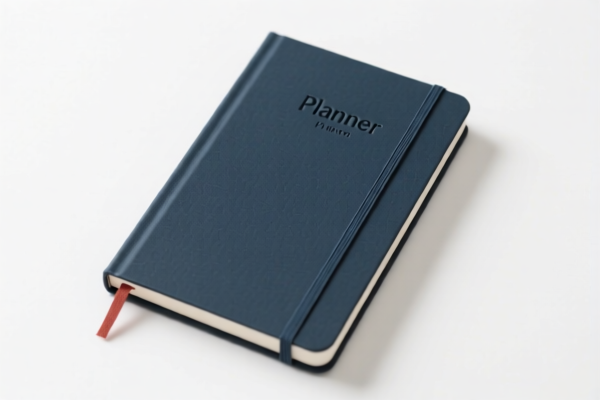
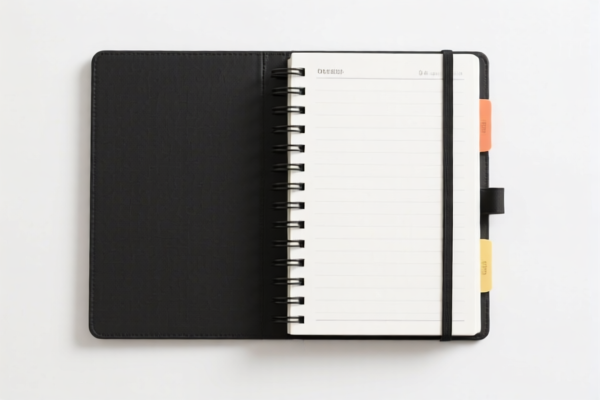
AI分析
📓 Planned Notebook (Plan Book / Planner)
🌐 HS Code Reference & Customs Clearance Guide | 2026 Latest Tariff Analysis | Professional Entry Strategy
📌 I. Product Definition & Classification: Do You Truly Understand the "Planned Notebook"?
A "Planned Notebook" (often referred to as a Planner, Daily Organizer, or Appointment Book) is a portable stationery item used for scheduling, recording, and organizing daily tasks. In international trade, its classification hinges on its form (bound vs. loose) and specific utility (general writing vs. specific record-keeping).
It is primarily categorized under Chapter 48 (Paper and Paperboard), specifically within sections dealing with notebooks, diaries, and address books.
⚠️ Key Distinction Point:
- If the item is a bound book (diary/planner style) with pre-printed calendars or structured pages → It falls under 4820.10.
- If the item is considered a pocket-sized writing pad or a specific type of portable folder for writing → It may fall under 4817.30.
- Crucial Note: All identified HS Codes below carry significant additional tariffs due to US-China trade policies.
📦 II. HS Code Classification Details (2026 Latest Tariff Authority Comparison)
Based on the provided data, here are the four most likely HS Codes for "Planned Notebook," along with their specific matching logic and tax implications.
| HS Code | Product Description & Matching Logic | Applicable Scenario | Total Tax Rate |
|---|---|---|---|
4817.30.00.00 |
Portable Writing Folders/Notebooks Logic: Matches "Planned Notebook" as a paper stationery/portable recording item. Fits the "writing portable clip" or related paper stationery attribute. No material conflict. |
General pocket planners, loose-leaf binders, or portable paper folders. | 35.0% |
4820.10.20.10 |
Diaries, Notebooks, and Address Books Logic: "Planned Notebook" falls under the category of "Diaries, Notebooks, and Address Books." It is a bound paper product. |
Standard bound planners, calendar notebooks, address books. | 35.0% |
4820.10.20.60 |
Other Diaries/Notebooks (Miscellaneous) Logic: Similar to above, but for "Other" types not specifically sized or typed. Based on common sense, material is paper. No conflict with "Other" category. |
Generic or unlisted types of paper-bound notebooks/planners. | 35.0% |
4817.20.20.00 |
Stationery Articles of Paper/Cardboard Logic: Infers paper stationery category. Matches material (Paper/Cardboard) and purpose (Writing/Recording). |
Less specific bound notebooks; general paper stationery items. | 35.0% |
🔍 Critical Insight:
- All four codes result in a 35% total tax rate.
- The distinction between4820.10(Diaries/Notebooks) and4817.30(Portable Writing Clips/Folders) is subtle.
- Recommendation: If it is a bound book (stitched or glued spine),4820.10is generally more accurate. If it is a loose-leaf folder or a specific "planning clip" system,4817.30may apply.
💰 III. 2026 Latest Tariff Rate Breakdown (Including Surtaxes & Policy Add-ons)
✅ Applicable Country: United States (US)
✅ Origin: China (CN)
✅ Effective Time: 2025/2026 (Current Trade Policy)
🎯 1. Universal Tax Structure for "Planned Notebook"
Regardless of which of the four HS Codes is selected (4817.30.00.00, 4820.10.20.10, 4820.10.20.60, or 4817.20.20.00), the tariff structure is identical according to the provided data.
| Item | Content |
|---|---|
| Base Tariff | 0.0% (Ad Valorem) |
| Section 301 Surtax | +25.0% (Additional Tariff under Section 301) |
| Section 122 Surtax | +10.0% (Specific tariff clause mentioned as "122条款关税") |
| Total Tax Rate | 35.0% |
| Tax Calculation | CIF Value × 35% |
| De Minimis Exemption | ❌ NOT APPLICABLE (High value-added category or specific origin restrictions may deny de minimis, though standard $800 de minimis might apply if value is low, but for bulk import, full tax applies). |
📌 Explanation:
- "Section 301 +25%": This is the primary additional tariff imposed on many Chinese-origin goods, including stationery and paper products.
- "Section 122 +10%": This refers to specific trade remedy tariffs or administrative clauses (often related to import volume or specific product lists).
- Total 35%: This is a significant cost factor. For low-margin stationery items, this 35% tax can erase profit margins.
🛠️ IV. Customs Clearance Practical Advice (Battle-Tested Pitfall Guide)
✅ 1. Documentation Checklist (Non-Negotiable)
| Document | Required? | Notes |
|---|---|---|
| ✅ Product Spec Sheet | ✔️ | Must specify: Size (A5, A4, etc.), Binding Type (Spiral, Hardcover, Loose-leaf), Page Count. |
| ✅ Product Photos | ✔️ | Show the binding structure. Is it a book (4820) or a folder (4817)? This determines the HS Code. |
| ✅ Commercial Invoice | ✔️ | Description: "Planned Notebook, Paper, Bound, for Office Use." Avoid vague terms like "Stationery." |
| ✅ Packing List | ✔️ | Clear weight and dimensions. |
| ✅ Origin Certificate | ✔️ | Proof of China origin is required for tax calculation. |
✅ 2. Declaration Strategy (Key Tips)
🔥 “Binding Type Defines Code: Bound Book vs. Loose Folder”
| Scenario | Recommended HS Code | Risk if Incorrect |
|---|---|---|
| Bound Planner (Spiral/Stitched) | 4820.10.20.10 or 4820.10.20.60 |
Misclassifying as 4817 might trigger an audit if the structure is clearly a book. |
| Loose-Leaf Planner / Pocket Folder | 4817.30.00.00 |
Misclassifying as 4820 (book) is less common but possible if it’s a simple folder. |
| Generic Paper Stationery | 4817.20.20.00 |
Use as a fallback if specific sub-categories are ambiguous. |
Pro Tip:
- Always declare the binding method. "Bound Diary" vs. "Planner Folder" can lead to different HS codes under Chapter 48, even if the tax rate is currently the same.
- Ensure the description includes "Paper" as the primary material to avoid misclassification under Chapter 39 (Plastics) if it has plastic covers.
✅ 3. Cost Optimization & Risk Mitigation
| Situation | Advice |
|---|---|
| Low Value Shipment (< $800) | Check if De Minimis ($800) exemption applies. If so, 0% tax. However, bulk commercial imports do NOT qualify. |
| High Value B2B Shipment | Expect 35% tax. Factor this into your pricing model. |
| Alternative Sourcing | Consider sourcing from Vietnam, India, or Mexico if available, to potentially avoid Section 301 tariffs (verify current rules of origin). |
| HS Code Pre-Ruling | If unsure between 4817 and 4820, apply for a HS Code Binding Opinion from US CBP to avoid post-import audits. |
🌍 V. Global Market Comparison (2026 Overview)
| Country/Region | Recommended HS Code | Est. Tariff (China Origin) | Notes |
|---|---|---|---|
| 🇺🇸 USA | 4820.10 / 4817.30 |
35% (0% Base + 25% Sec 301 + 10% Sec 122) | High tariff impact. |
| 🇨🇳 China | 4820.10 |
~10-15% | Import duty for foreign planners into China. |
| 🇪🇺 EU | 4820.10 |
~4-6.5% | No Section 301 equivalent. |
| 🇬🇧 UK | 4820.10 |
~5-6.5% | Post-Brexit tariff structure. |
📌 Conclusion:
- The US is the most challenging market for Chinese-origin stationery due to the 35% combined tariff.
- For other markets, the cost impact is significantly lower.
📌 VI. Common Errors & Pitfall Guide (Lessons Learned)
❌ Error 1: Classifying as "Plastic Stationery" (Chapter 39)
👉 Consequence: Incorrect HS Code, potential penalties, and delay. Planners are primarily paper.
❌ Error 2: Ignoring the "Bound" vs. "Unbound" distinction
👉 Consequence: If it’s a bound book, 4817 may be challenged. Stick to 4820 for bound items.
❌ Error 3: Under-declaring Value
👉 Consequence: 35% tax on undervalued goods leads to heavy fines and seizure.
✅ Correct Declaration Example:
"Planned Notebook, A5 Size, 2026 Edition, Spiral Bound, Paper Pages with Plastic Cover, for Office Scheduling."
HS Code:4820.10.20.10(or4820.10.20.60if generic)
Duty: 35%
🎯 VII. Conclusion: Precision in Classification Saves Money
🎯 Remember the Rule:
🔹 "Bound = 4820, Folder = 4817. Both carry 35% in US."
🔹 "Tax is not optional: 0% Base + 25% Sec 301 + 10% Sec 122 = 35%."
🔹 "Declare Material: Paper is Key."
📌 Pro Tip:
If your planned notebook includes electronic components (e.g., smart sync feature), it may NOT qualify under Chapter 48. Check for classification under Chapter 85 (Electrical machinery), which has different tariff implications.
📣 Immediate Action:
📞 Consult a Customs Broker: Verify if your specific "Planned Notebook" design (bound vs. loose) fits
4820or4817.
📊 Calculate Landed Cost: Include the 35% US Duty in your margin analysis.
🚀 Consider Origin Diversification: If possible, source from non-China origins to mitigate tariff risk.
✨ Professional Customs Clearance Starts with Accurate Classification!
💼 Every 1% saved on HS Code strategy is 1% more profit!
用户评价
关于 HS 编码归类
协调制度(HS)是由世界海关组织(WCO)制定的国际贸易商品分类标准。全球 200 多个国家采用 HS 系统作为海关关税、贸易统计和进出口监管的基础。
每个 HS 编码遵循以下层级结构:
- 章(2 位)——商品大类(例如:第 84 章:机器和机械设备)
- 品目(4 位)——章内的更具体分类
- 子目(6 位)——国际通用细分,所有 WCO 成员国统一使用
- 本国细分(8-10 位)——各国自行扩展的细分编码,如美国 HTSUS 10 位编码
正确的 HS 编码归类对于顺利通关、准确缴纳关税和遵守贸易法规至关重要。错误归类可能导致海关延误、多缴关税或罚款。
从CN进口到US时,适用的关税税率可能包括:
- 最惠国(MFN)税率——适用于 WTO 成员国的标准关税税率
- 普通税率——适用于无贸易协定国家
- 贸易救济关税——附加关税,如 301 条款(反倾销)、232 条款(国家安全)或反补贴税
本页内容仅供参考。如需正式归类,请咨询当地海关或持牌报关代理。