plastic apron
CN → US| HS编码 | 关税税率 | 原产国 | 目的国 | 文档 |
|---|---|---|---|---|
| 3926209010 | 40.0% | CN | US | 官方文档 |
| 3926909989 | 22.8% | CN | US | 官方文档 |
商品图片
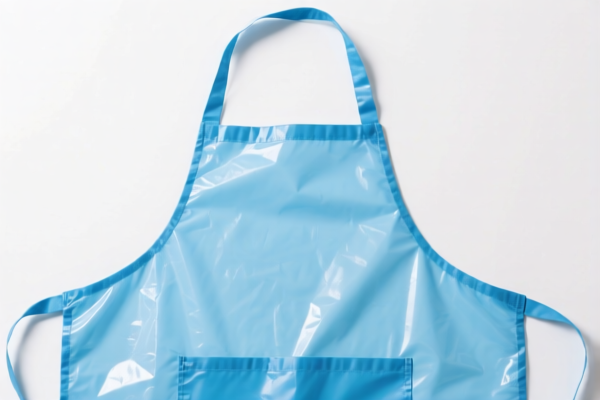
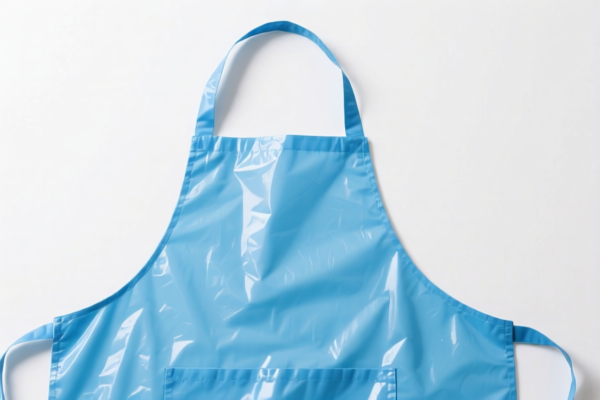
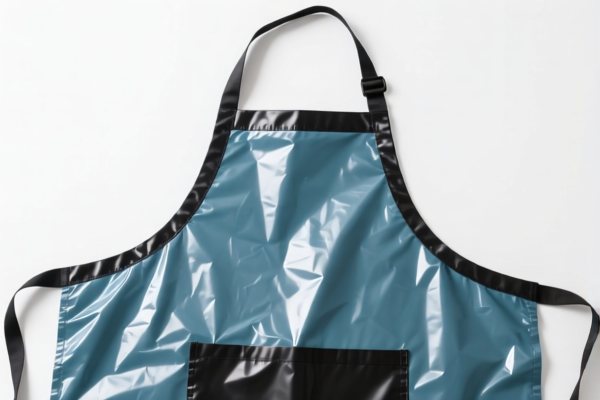
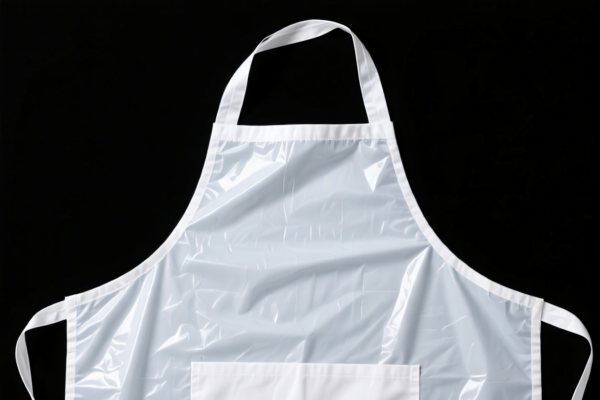
AI分析
🧺 Plastic Aprons (Impermeable Protective Wear)
🌐 HS Code Reference & Clearance Guide | 2024/2025 Latest Tariff Analysis | Professional Customs Strategy 📌 Part 1: Product Definition & Classification: Is it Clothing or an Article?
Plastic aprons are widely used in food processing, laboratories, medical facilities, and household cleaning. The core classification dilemma lies in distinguishing between "Articles of Apparel" (Clothing) and "Other Articles" (General Plastic Goods).
In international trade, the distinction is critical because "Apparel" often carries different duty rates than general "Plastic Articles."
The Key Distinction: * Articles of Apparel (Heading 3926.20): Aprons that are designed to be worn on the body for protection or hygiene, typically covering the front. They are considered "clothing accessories" or "other articles of apparel." * Other Articles (Heading 3926.90): Items that are not primarily designed as wearable clothing, or generic plastic sheets/liners not strictly classified as apparel.
⚠️ Critical Classification Point: - If the item is a standard apron (with neck strap and waist ties) made of plastic (PVC, PE, PP), it is generally classified as "Other: Other Aprons" under 3926.20.90.10. - If the item is a non-apparel plastic sheet, heavy-duty industrial liner, or a generic plastic part not intended as wearable apparel, it may fall under 3926.90.99.89.
📦 Part 2: HS Code Classification Details (Latest Tariff Schedule)
| HS Code | Product Description | Application Scenario | Apparel Classification? |
|---|---|---|---|
3926.20.90.10 |
Other Aprons (Plastic, under 3901-3914) | Standard plastic aprons for kitchens, labs, hospitals, food service | ✅ Yes (Apparel/Clothing Accessory) |
3926.90.99.89 |
Other Articles of plastics (Not elsewhere specified) | Plastic mats, generic liners, non-wearable plastic parts, miscellaneous plastic goods | ❌ No (General Plastic Article) |
🔍 Key Reminder: - Standard Plastic Aprons (with straps/ties for wearing) should be declared under 3926.20.90.10. - Misclassifying a wearable apron as a general "Other Article" (
3926.90.99.89) can lead to customs audits if the item is clearly wearable. - However, if the apron is part of a kit or bundled with other non-apparel items, ensure the primary use is declared accurately.
💰 Part 3: 2024/2025 Latest Tariff Rate Details (Including Surcharges)
✅ Applicable Country: United States (US) ✅ Origin: China (CN) ✅ Effective Date: Current Rates (2024/2025)
🎯 1. 3926.20.90.10 —— Other Aprons (Plastic Apparel)
| Item | Content |
|---|---|
| Base Tariff | 5.0% (Ad Valorem) |
| Section 301 Surcharge | +25.0% (China Origin) |
| Total Tariff Rate | 30.0% |
| Tax Calculation | CIF Value × 30.0% |
| De Minimis Exemption | ❌ Not Eligible (Under Section 301 rules, goods above $800 are fully taxed; below $800, the surcharge may still apply depending on current enforcement, but generally, plastic apparel from China is subject to full duty) |
| Legal Basis Path | HTSUS:3926.20.90.10 → Section 301: Footnote 9903.88.01 |
📌 Explanation: - The 5% base duty is the standard Most Favored Nation (MFN) rate for plastic aprons. - The 25% Section 301 surcharge is applied because the product originates from China. This is a significant cost factor. - Total Cost Impact: For every $10,000 of goods, expect $3,000 in duties.
🎯 2. 3926.90.99.89 —— Other Plastic Articles (Non-Apparel)
| Item | Content |
|---|---|
| Base Tariff | 5.3% (Ad Valorem) |
| Section 301 Surcharge | +7.5% (China Origin) |
| Total Tariff Rate | 12.8% |
| Tax Calculation | CIF Value × 12.8% |
| De Minimis Exemption | ⚠️ Check Current Policy (Generally, Section 301 goods are subject to surcharges, but enforcement varies for low-value shipments) |
| Legal Basis Path | HTSUS:3926.90.99.89 → Section 301: Footnote 9903.88.01 |
📌 Explanation: - If an item is not classified as apparel (e.g., a plastic sheet, a mat, or a generic container), it falls here. - The total tariff is 12.8%, which is significantly lower than the 30% for apparel. - ⚠️ Risk: Misclassifying a wearable apron as a "general article" to save taxes is a high-risk customs violation. If customs determines the item is clearly apparel, they will reassess at 30% + penalties.
🛠️ Part 4: Customs Clearance Practical Advice (Battle-Tested Pitfall Guide)
✅ 1. Documentation Checklist (Mandatory)
| Document | Required? | Notes |
|---|---|---|
| ✅ Product Specifications | ✔️ | Material (PVC, PE, PP), Thickness, Dimensions |
| ✅ Product Photos | ✔️ | Clear image showing neck strap, waist ties, and overall shape to prove it's an apron |
| ✅ Commercial Invoice | ✔️ | Description must say "Plastic Apron" or "Protective Apron" |
| ✅ Packing List | ✔️ | Weight and quantity details |
| ✅ Origin Certificate | ✔️ | Required for Section 301 determination |
| ❌ FDA Application | ❌ | Not required for simple plastic aprons (unless they are medical-grade PPE with specific claims) |
✅ 2. Classification Tips (Key Mantra)
🔥 "Wearable = Apparel (3926.20) | Not Wearable = General (3926.90)"
| Scenario | Correct HS Code | Incorrect HS Code | Consequence |
|---|---|---|---|
| Standard Plastic Apron (with straps) | 3926.20.90.10 (30% Tax) |
3926.90.99.89 |
High Risk: Customs may reclassify and charge back taxes + penalties |
| Plastic Sheet/Liner (no straps, used as floor cover) | 3926.90.99.89 (12.8% Tax) |
3926.20.90.10 |
Low Risk: Underpayment of duty (minor penalty) |
| Disposable Exam Gloves | 4015.11.00.00 |
3926.90.99.89 |
Major Risk: Wrong category entirely |
✅ 3. Special Cases Handling
| Scenario | Handling Advice |
|---|---|
| OEM Custom Aprons | Provide design drawings to prove it's an apparel item. Include size charts (S, M, L, XL). |
| Bundled Kits (e.g., Apron + Gloves + Goggles) | Declare separately! Do not bundle into one HS code. Each item has its own tariff. |
| Medical-Grade Aprons | If claiming "PPE" status, ensure no false health claims on packaging. Standard plastic aprons are not FDA-regulated PPE. |
| Low-Value Shipments (<$800) | Caution: Section 301 surcharges may still apply to Chinese goods under de minimis, depending on current CBP enforcement. Do not assume exemption. |
🌍 Part 5: Global Market Comparison (2024/2025)
| Country/Region | Recommended HS Code | Tariff (China Origin) | Certification | Notes |
|---|---|---|---|---|
| 🇺🇸 USA | 3926.20.90.10 |
30.0% (3926.90: 12.8%) | None | High duty due to Section 301 |
| 🇨🇳 China | 3926.20.90.10 |
5.0% | None | Lower export/import burden |
| 🇪🇺 EU | 3926.20.90 |
0% - 4% | REACH Compliant | No Section 301 equivalent |
| 🇬🇧 UK | 3926.20.90 |
0% - 4% | UKCA Compliant | Post-Brexit rules apply |
| 🇦🇺 Australia | 3926.20.90 |
5.0% | None | No high surcharges |
📌 Conclusion: - The USA is the most expensive market for Chinese plastic aprons due to the 30% total tariff. - EU/UK/AU offer significantly lower tariffs (0-5%), making them more competitive for Chinese exporters. - Strategy: If targeting the US, consider sourcing from Vietnam, Malaysia, or Thailand to avoid Section 301 surcharges (ensure proper origin documentation).
📌 Part 6: Common Errors & Pitfalls (Lessons Learned)
❌ Error 1: Misclassifying a wearable apron as a "Plastic Sheet" (3926.90.99.89) to save taxes.
👉 Consequence: Customs audits, back taxes of 17.2% difference + penalties + potential seizure.
❌ Error 2: Declaring "Apparel" without proof. 👉 Consequence: Customs may reject the classification and assign a higher tariff code with no Section 301 exemption (if misidentified as non-China).
❌ Error 3: Ignoring Section 301 for low-value shipments. 👉 Consequence: Assuming $800 de minimis exemption applies. Note: US CBP is increasingly scrutinizing Section 301 goods under de minimis. Do not rely on this for cost planning.
✅ Correct Approach:
"Plastic Apron, PVC, Clear, with Neck Strap and Waist Tie, Size M-L, For Food Service Use."
🎯 Part 7: Conclusion: Professional Classification Saves Money!
🎯 Remember the Mantra:
🔹 "Wearable = Apparel (30% Tax) | General Article = 12.8% Tax" 🔹 "Misclassification = Penalties | Correct Classification = Predictable Costs"
📌 Pro Tip: If you are shipping to the USA, and your plastic aprons are sourced from Vietnam or Malaysia, you may qualify for lower or zero Section 301 surcharges. Ensure your Certificate of Origin is accurate and matches the manufacturing location.
📣 Immediate Action:
📞 Contact your customs broker to pre-verify the classification. 📦 Label your products clearly as "Plastic Apron" to avoid ambiguity. 🚀 Optimize your supply chain by considering non-China origins for US-bound goods to reduce duty costs.
✨ Professional clearance starts with precise classification! 💼 Every percentage point matters in global trade!
用户评价
关于 HS 编码归类
协调制度(HS)是由世界海关组织(WCO)制定的国际贸易商品分类标准。全球 200 多个国家采用 HS 系统作为海关关税、贸易统计和进出口监管的基础。
每个 HS 编码遵循以下层级结构:
- 章(2 位)——商品大类(例如:第 84 章:机器和机械设备)
- 品目(4 位)——章内的更具体分类
- 子目(6 位)——国际通用细分,所有 WCO 成员国统一使用
- 本国细分(8-10 位)——各国自行扩展的细分编码,如美国 HTSUS 10 位编码
正确的 HS 编码归类对于顺利通关、准确缴纳关税和遵守贸易法规至关重要。错误归类可能导致海关延误、多缴关税或罚款。
从CN进口到US时,适用的关税税率可能包括:
- 最惠国(MFN)税率——适用于 WTO 成员国的标准关税税率
- 普通税率——适用于无贸易协定国家
- 贸易救济关税——附加关税,如 301 条款(反倾销)、232 条款(国家安全)或反补贴税
本页内容仅供参考。如需正式归类,请咨询当地海关或持牌报关代理。