plastic caps and lids
CN → US| HS编码 | 关税税率 | 原产国 | 目的国 | 文档 |
|---|---|---|---|---|
| 3923300090 | 38.0% | CN | US | 官方文档 |
| 3924103000 | 22.8% | CN | US | 官方文档 |
| 3924104000 | 13.4% | CN | US | 官方文档 |
| 3923102000 | 35.0% | CN | US | 官方文档 |
| 3923109000 | 38.0% | CN | US | 官方文档 |
商品图片
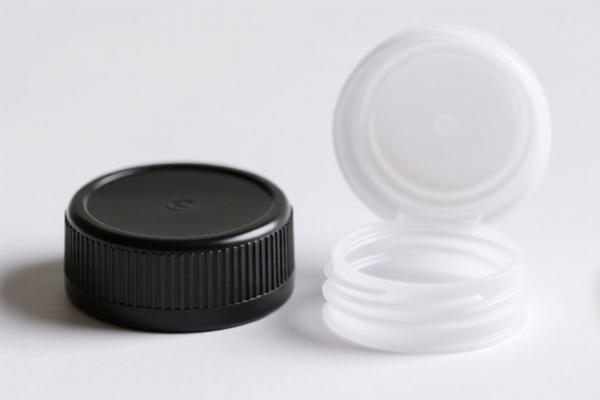
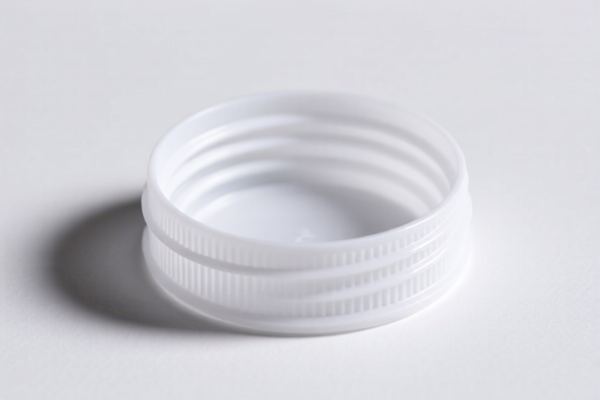
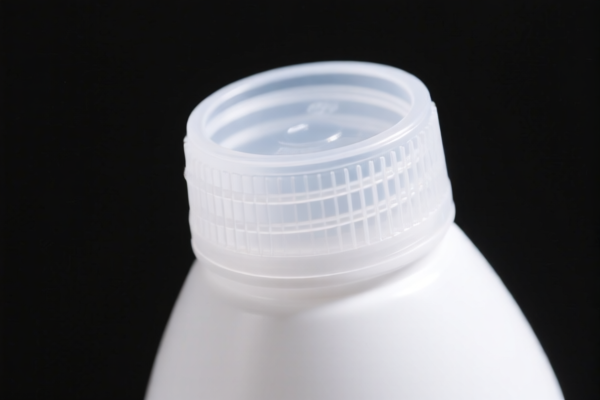
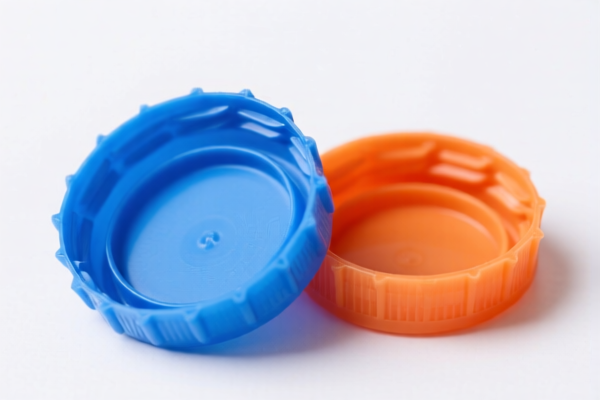
AI分析
🧴 Plastic Caps and Lids (Closures for Containers)
🌐 HS Code Reference & Customs Clearance Guide | 2026 Latest Tariff Analysis | Strategic Entry Strategies 📌 I. Product Definition & Classification: Do You Understand "Plastic Caps"?
Plastic caps and lids are critical packaging components used to seal, close, or protect various containers. In international trade, their classification depends heavily on their specific shape, intended use (food vs. industrial), and structural design.
There are two primary categories: 1. BOTTLE CAPS & CLOSURES (Headings 3923.10 / 3923.30): Used primarily for sealing bottles, flasks, and similar vessels for transport or storage. These often include screw caps, flip-tops, and sprayers.
2. TABLEWARE & KITCHENWARE LIDS (Headings 3924.10): Used specifically for food service, such as bowls, plates, pots, and kitchen storage containers. These are considered part of "tableware and kitchen utensils."
⚠️ Key Distinction Point: - If the lid is designed specifically for a bottle, jar, or industrial flask (transport/packaging) → It generally falls under 3923.x0. - If the lid is part of a bowl, plate, pot, or food container for eating/cooking → It falls under 3924.10. - Accessory Matters: If the cap includes a metal component (like an aluminum screw top) but the main body is plastic, it is still classified under plastic headings, not metal.
📦 II. HS Code Classification Details (2026 Latest Tariff Concordance)
| HS Code | Product Description | Primary Application | Tax Rate (China-Origin to US) |
|---|---|---|---|
| 3923.30.00.90 | Plastic bottles and similar articles (incl. accessories like aluminum caps) | Bottled beverages, chemicals, personal care products | 38.0% |
| 3924.10.30.00 | Plastic tableware & kitchenware (boxes/containers) | Food storage boxes, lunch boxes, bowl lids | 22.8% |
| 3924.10.40.00 | Plastic tableware & kitchenware (other household items) | Kitchen pots, specialized food containers, non-box lids | 13.4% |
| 3923.10.20.00 | Plastic boxes, cases, crates (transport/packaging) | Industrial plastic drums, transport boxes, large bulk containers | 35.0% |
| 3923.10.90.00 | Other plastic boxes, cases, crates (packaging) | Generic plastic packaging boxes, non-specific containers | 38.0% |
🔍 Key Reminder: - 3923.30.00.90 is the most common for bottle caps with mixed materials (plastic + metal). The "90" suffix indicates "Other" specific to this sub-category. - 3924.10 items are strictly for food service/household kitchen use. Misclassifying a food container lid as a transport cap can lead to severe penalties. - 3923.10 is for rigid boxes/crates. Do not use this for small screw caps; use 3923.30 instead.
💰 III. 2026 Latest Tariff Rate Breakdown (Including Surcharges & Policy Add-ons)
✅ Applicable Country: United States (US) ✅ Origin: China (CN) ✅ Effective Date: From November 10, 2025 (and subsequent imports)
🎯 1. 3923.30.00.90 —— Plastic Bottles & Caps (Mixed Material)
| Item | Details |
|---|---|
| Base Tariff | 3.0% (ad valorem) |
| Section 301 Surcharge | +25.0% (USITC Footnote 9903.88.01) |
| 122-Clause Surcharge | +10.0% (IEEPA Section 122, China-specific) |
| Total Rate | 38.0% |
| Calculation | CIF Value × 38% |
| De Minimis Exemption | ❌ NOT Eligible (deny_de_minimis applies to Section 301 goods) |
| Legal Path | IEEPA:9903.01.25 → IEEPA:9903.01.24 → USITC:3923.30.00.90 → FOOTNOTE:9903.88.01 |
📌 Explanation: - The 25% is the standard Section 301 tariff on most Chinese plastic goods. - The 10% is a specific additional surcharge under Section 122 for Chinese imports. - Base 3% is the WTO Most Favored Nation (MFN) rate. - Total 38% is extremely high. This category is heavily targeted.
🎯 2. 3924.10.30.00 —— Plastic Tableware (Food Containers/Lids)
| Item | Details |
|---|---|
| Base Tariff | 5.3% |
| Section 301 Surcharge | +7.5% (Lower rate for certain tableware items under specific conditions) |
| 122-Clause Surcharge | +10.0% |
| Total Rate | 22.8% |
| Calculation | CIF Value × 22.8% |
| De Minimis Exemption | ❌ NOT Eligible |
| Legal Path | IEEPA:9903.01.24 → USITC:3924.10.30.00 → FOOTNOTE:9903.88.01 |
📌 Note: - This category has a lower Section 301 rate (7.5%) compared to general packaging (25%), but the 122-Clause adds 10%. - Essential for food-grade plastic containers. Ensure material safety reports (FDA/LFGB) are ready.
🎯 3. 3924.10.40.00 —— Other Plastic Tableware (Household Items)
| Item | Details |
|---|---|
| Base Tariff | 3.4% |
| Section 301 Surcharge | 0.0% (Specific exemption/low rate for this sub-category) |
| 122-Clause Surcharge | +10.0% |
| Total Rate | 13.4% |
| Calculation | CIF Value × 13.4% |
| De Minimis Exemption | ❌ NOT Eligible |
| Legal Path | IEEPA:9903.01.24 → USITC:3924.10.40.00 → FOOTNOTE:9903.88.01 |
📌 Advantage: - This is the most favorable rate (13.4%) in the dataset. - Applicable to "Other household items" under tableware. If your product can be classified here (e.g., specialized kitchen bowls with lids), it saves significant cost compared to bottle caps.
🎯 4. 3923.10.20.00 —— Plastic Boxes/Cases (Transport)
| Item | Details |
|---|---|
| Base Tariff | 0.0% |
| Section 301 Surcharge | +25.0% |
| 122-Clause Surcharge | +10.0% |
| Total Rate | 35.0% |
| Calculation | CIF Value × 35.0% |
| De Minimis Exemption | ❌ NOT Eligible |
| Legal Path | IEEPA:9903.01.25 → USITC:3923.10.20.00 → FOOTNOTE:9903.88.01 |
🎯 5. 3923.10.90.00 —— Other Plastic Packaging (Boxes/Crates)
| Item | Details |
|---|---|
| Base Tariff | 3.0% |
| Section 301 Surcharge | +25.0% |
| 122-Clause Surcharge | +10.0% |
| Total Rate | 38.0% |
| Calculation | CIF Value × 38.0% |
| De Minimis Exemption | ❌ NOT Eligible |
| Legal Path | IEEPA:9903.01.25 → USITC:3923.10.90.00 → FOOTNOTE:9903.88.01 |
📌 Conclusion on Rates: - Bottle Caps (3923.30) and General Packaging (3923.10.90) face the highest burden at 38%. - Kitchenware/Tableware (3924.10) offers a tiered structure: 22.8% for standard boxes, 13.4% for other household items. - Industrial Boxes (3923.10.20) are at 35%.
🛠️ IV. Customs Clearance Practical Advice (Battle-Tested Pitfall Avoidance)
✅ 1. Essential Documentation Checklist (All Required)
| Document | Mandatory? | Description |
|---|---|---|
| ✅ Product Specification Sheet | ✔️ | Material type (PP, PE, ABS), Dimensions, Seal Type. |
| ✅ Composition Details | ✔️ | CRITICAL: If caps have aluminum lids, declare % of plastic vs. metal. |
| ✅ Photos (Clear & Detailed) | ✔️ | Show the cap/box, threading, and any embossing/molding marks. |
| ✅ FDA/LFGB Compliance Report | ✔️ | If used for food, proof of food-contact safety is mandatory. |
| ✅ Commercial Invoice | ✔️ | Must clearly state "Plastic Cap/Lid" and HS Code. No vague "Accessories". |
| ✅ Packing List | ✔️ | Weight and volume. |
✅ 2. Declaration Tips (Golden Rules)
🔥 "Material Determines Code, Use Determines Rate!"
| Scenario | Correct Declaration | Wrong Declaration | Result |
|---|---|---|---|
| Bottle Cap with Aluminum Top | 3923.30.00.90 (Plastic Bottle/Cap) |
"Metal Lid" or "Accessories" | 38% (Correct) |
| Lid for a Plastic Lunch Box | 3924.10.30.00 (Tableware) |
"Plastic Box Part" | 22.8% vs 38% |
| Lid for a Soup Pot | 3924.10.40.00 (Other Tableware) |
"Plastic Container" | 13.4% vs 38% |
| Industrial Plastic Drum Lid | 3923.10.20.00 (Transport Box) |
"Cap" | 35% |
📌 Crucial Advice: - Do NOT declare food container lids as "packaging boxes" to avoid confusion, but also do NOT declare them as "bottle caps." - Food vs. Non-Food: If the lid is not for food, it cannot be
3924. It must be3923. - Mixed Materials: If a cap is 90% plastic and 10% metal, it still classifies under Chapter 39 (Plastics), provided plastic is the essential character.
✅ 3. Special Handling Scenarios
| Scenario | Handling Advice |
|---|---|
| OEM Custom Caps | Provide design files and mold numbers. Helps prove "essential character" of plastic. |
| Caps Sold Separately | Declare as "Plastic Bottle Caps." Do not bundle with empty bottles unless sold as a set. |
| Food-Grade Lids | Must have FDA 21 CFR compliance documents. Without them, shipment will be detained. |
| Small Caps (De Minimis) | ❌ No Exemption: Due to Section 301 and 122-Clause, even small individual caps under $800 do not get tax-free entry. |
🌍 V. Global Market Comparison (2026 Latest)
| Country/Region | Recommended HS Code | Estimated Duty (CN Origin) | Certification Required | Notes |
|---|---|---|---|---|
| 🇺🇸 USA | 3923.30.00.90 |
38.0% (Caps) 3924.10.40.00 (13.4% Tableware) |
FDA + RoHS | High tariff environment. Strategic classification is key. |
| 🇨🇳 China | 3923.30.00.90 |
~2.5-5% (Import) | CCC (if applicable) | Low duty. Focus on domestic supply chain. |
| 🇪🇺 EU | 3923.30.00.00 |
0% (Most Favored Nation) | REACH + RoHS | No Section 301 equivalent. Easier entry. |
| 🇬🇧 UK | 3923.30.00.00 |
0-2% | UKCA | Post-Brexit rules apply. |
| 🇯🇵 Japan | 3923.30.00.00 |
0-3% | JIS/FSC | Moderate barriers, low tariffs. |
📌 Conclusion: - USA is the most difficult market due to the cumulative 10% (122-Clause) + 25% (Section 301) surcharges. - EU/UK/Japan offer near-zero tariffs but require strict chemical compliance (REACH/JIS). - Strategy: If targeting the US, try to classify as
3924.10.40.00(13.4%) if the product is a kitchen lid/household item, rather than a bottle cap (38%).
📌 VI. Common Mistakes & Pitfalls (Lessons from Experience)
❌ Mistake 1: Declaring "Plastic Accessories" without specificity. 👉 Consequence: Customs may assign a higher rate or detain for review. Fix: Use precise terms like "Polypropylene Screw Cap" or "Polyethylene Lid."
❌ Mistake 2: Ignoring the "Aluminum Cap" component. 👉 Consequence: If declared as "Metal Cap," it goes to Chapter 73/76, triggering different duties and anti-dumping risks. Fix: State "Plastic body with aluminum liner/cap" → Still Chapter 39.
❌ Mistake 3: Assuming Small Items Qualify for De Minimis ($800). 👉 Consequence: Shipment seized or taxed retroactively. Section 301 and 122-Clause goods are explicitly excluded from de minimis relief. Fix: Budget for full taxes (up to 38%) even for small shipments.
❌ Mistake 4: Confusing "Bottle Cap" with "Tableware Lid." 👉 Consequence: Wrong HS code → Audit → Back taxes + Penalties. Fix: Ask: "Is this for drinking/bottling (3923) or eating/kitchen (3924)?"
✅ Correct Declaration Example:
"Plastic Screw Cap for Beverage Bottles, PP Material, with Aluminum Inner Linse, Model ABC123, FDA Compliant"
🎯 VII. Conclusion: Precision Classification Saves Money!
🎯 Remember the Golden Rule:
🔹 "Bottle Cap? 38%. Kitchen Lid? 13.4-22.8%." 🔹 "No De Minimis for China! Every penny is taxed."
📌 Pro Tip: If your plastic caps/lids are exported via Vietnam, Malaysia, or Thailand, you might apply for Country of Origin adjustments to avoid Section 301/122 surcharges. However, ensure substantial transformation occurs there to avoid anti-circumvention checks.
📣 Immediate Action:
📞 Consult a Customs Broker for Pre-Ruling (ACE Portal) if unsure. 🚀 Optimize your HS Code to save up to 24.6% in taxes (38% → 13.4%). 💼 Your profit margin depends on accurate classification!
✨ Professional Clearance Starts with Precision! 💼 Every Dollar Saved is Pure Profit!
用户评价
关于 HS 编码归类
协调制度(HS)是由世界海关组织(WCO)制定的国际贸易商品分类标准。全球 200 多个国家采用 HS 系统作为海关关税、贸易统计和进出口监管的基础。
每个 HS 编码遵循以下层级结构:
- 章(2 位)——商品大类(例如:第 84 章:机器和机械设备)
- 品目(4 位)——章内的更具体分类
- 子目(6 位)——国际通用细分,所有 WCO 成员国统一使用
- 本国细分(8-10 位)——各国自行扩展的细分编码,如美国 HTSUS 10 位编码
正确的 HS 编码归类对于顺利通关、准确缴纳关税和遵守贸易法规至关重要。错误归类可能导致海关延误、多缴关税或罚款。
从CN进口到US时,适用的关税税率可能包括:
- 最惠国(MFN)税率——适用于 WTO 成员国的标准关税税率
- 普通税率——适用于无贸易协定国家
- 贸易救济关税——附加关税,如 301 条款(反倾销)、232 条款(国家安全)或反补贴税
本页内容仅供参考。如需正式归类,请咨询当地海关或持牌报关代理。