plastic fence
CN → US| HS编码 | 关税税率 | 原产国 | 目的国 | 文档 |
|---|---|---|---|---|
| 3925900000 | 40.3% | CN | US | 官方文档 |
| 3917290050 | 38.1% | CN | US | 官方文档 |
| 3925200091 | 22.8% | CN | US | 官方文档 |
| 3917290090 | 38.1% | CN | US | 官方文档 |
商品图片

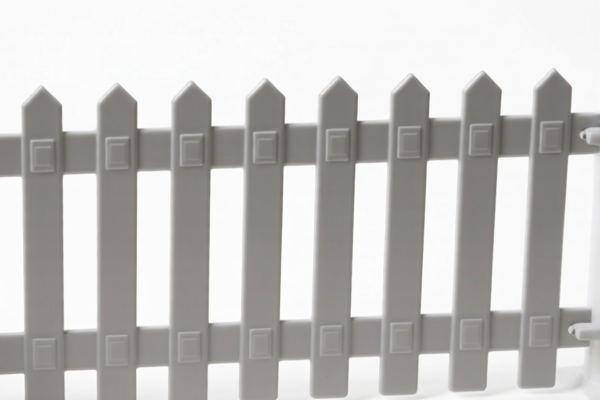
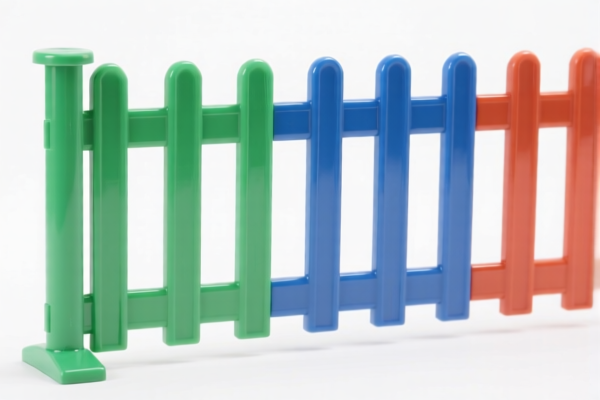
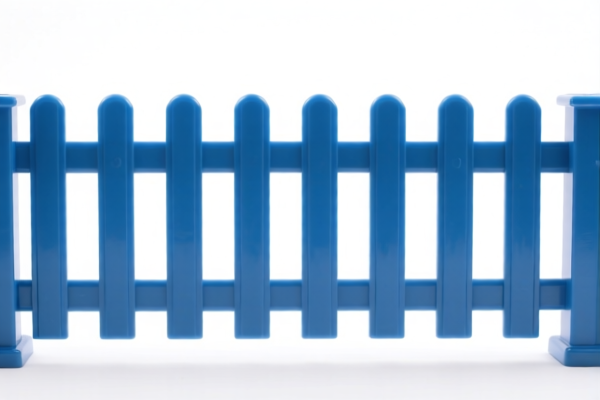
AI分析
🛡️ Plastic Fence – Comprehensive HS Code & Tariff Guide (2026 Update)
🌐 HS Code Classification & Customs Clearance Strategy | 2026 Tariff Deep Dive | Expert-Level Import Planning
📌 One Product, Multiple Classifications — Why the Same Plastic Fence Has 4 Different HS Codes and Tax Rates
The plastic fence may look simple, but its classification depends on form, function, and structural design — leading to dramatically different tariff outcomes. This guide breaks down every possible HS code from your data, explains why each applies, and gives you clear, actionable customs advice.
📦 1. HS Code Breakdown: Why So Many Codes for One Product?
| HS Code | Product Description | Key Classification Factor | Total Duty Rate | Risk Level |
|---|---|---|---|---|
3925.90.00.00 |
Plastic fence as a building component | Used in construction, structural role | 40.3% | ⚠️ High |
3917.29.00.50 |
Plastic fence as an extension of pipe/tube systems | Tubular shape, jointed, or pipe-like structure | 38.1% | ⚠️ High |
3925.20.00.91 |
Plastic fence as a building accessory/component | Non-structural, decorative, or supporting role | 22.8% | ✅ Moderate |
3917.29.00.90 |
Plastic fence as other plastic pipe/tube fittings | Classified under pipe system components | 38.1% | ⚠️ High |
🔍 Critical Insight:
The same physical product can be classified under 4 different codes depending on how it’s used, how it’s made, and how it connects. Misclassification = massive overpayment or seizure.
💰 2. 2026 Tariff Breakdown: Understanding the 40.3% Nightmare
✅ Applicable Country: United States (US)
✅ Origin: China (CN)
✅ Effective Date: November 10, 2025 (and ongoing)
✅ Legal Basis: USITC Section 301, IEEPA, and Section 122 of the Trade Act
🎯 1. 3925.90.00.00 – Plastic Fence as Building Component (40.3%)
| Tax Component | Rate | Legal Basis |
|---|---|---|
| Base Duty | 5.3% | Standard US tariff |
| Section 301 (USITC) Additional Duty | 25.0% | From US Trade Act 301 (China-specific) |
| Section 122 (IEEPA) Emergency Duty | 10.0% | Under International Emergency Economic Powers Act |
| Total Duty | 40.3% | Sum of all three |
📌 Why This Applies:
If the fence is integrated into a structure (e.g., used as a perimeter wall in a building project), fixed to foundation, or designed as a load-bearing or structural element, it falls under "other plastic building components".⚠️ Red Flag:
- Not just "fence" — must be structurally functional in construction. - If it’s bolted to posts, used in commercial buildings, or part of a security wall system, this code applies.
🎯 2. 3917.29.00.50 – Plastic Fence as Pipe/Tube Extension (38.1%)
| Tax Component | Rate | Legal Basis |
|---|---|---|
| Base Duty | 3.1% | Standard US tariff |
| Section 301 (USITC) Additional Duty | 25.0% | China-specific trade action |
| Section 122 (IEEPA) Emergency Duty | 10.0% | IEEPA enforcement |
| Total Duty | 38.1% | Sum of all three |
📌 Why This Applies:
If the fence is tubular in shape, connected like a pipe, or used in a modular system where sections snap, slide, or thread together like pipe fittings, it’s treated as "other plastic rigid pipe or tube".✅ Common Examples: - Fence posts with internal threading - Fence panels with interlocking tube ends - Modular fence systems using pipe-like connectors
🔥 Key Test:
“Would this be used in a plumbing or industrial pipe system?”
If yes, this code applies — even if it’s for fencing.
🎯 3. 3925.20.00.91 – Plastic Fence as Building Accessory (22.8%)
| Tax Component | Rate | Legal Basis |
|---|---|---|
| Base Duty | 5.3% | Standard US tariff |
| Section 301 (USITC) Additional Duty | 7.5% | Reduced due to non-structural use |
| Section 122 (IEEPA) Emergency Duty | 10.0% | Still applies to China-origin goods |
| Total Duty | 22.8% | Lower than others due to reduced 301 duty |
📌 Why This Applies:
If the fence is decorative, non-structural, easily removable, or used for garden, yard, or temporary barriers, it’s classified as "other plastic building accessories".✅ Common Examples: - Garden fence panels - Temporary event fencing - Fence used for landscaping, not construction - Fences with no foundation or structural integration
🛑 Avoid This Trap:
Don’t call it a “security fence” or “perimeter wall” if it’s not fixed to the ground — you’ll trigger higher duties.
🎯 4. 3917.29.00.90 – Plastic Fence as Other Plastic Pipe (38.1%)
| Tax Component | Rate | Legal Basis |
|---|---|---|
| Base Duty | 3.1% | Standard US tariff |
| Section 301 (USITC) Additional Duty | 25.0% | China-specific |
| Section 122 (IEEPA) Emergency Duty | 10.0% | IEEPA enforcement |
| Total Duty | 38.1% | Same as 3917.29.00.50 |
📌 Why This Applies:
If the fence is made from plastic tubing, has a hollow core, and is used in a system where pipe-like parts connect, it’s treated as "other plastic pipes or tubes" — regardless of function.🔍 Key Test:
“Is this product made from a plastic tube that’s cut, joined, and used like a pipe?”
If yes, this code applies — even if it’s for fencing.💡 Real-World Example:
A hollow plastic post with interlocking joints — even if it’s part of a fence — is treated as a pipe fitting.
🛠️ 3. Customs Clearance Strategy: How to Avoid 40.3% & Save Thousands
✅ 1. Pre-申报 Preparation Checklist (Must-Have)
| Document | Required? | Why It Matters |
|---|---|---|
| ✅ Product Photos (Clear, Multiple Angles) | ✔️ | Show shape, joints, hollow core, mounting style |
| ✅ Technical Drawings / Assembly Diagrams | ✔️ | Prove whether it’s pipe-like or structural |
| ✅ Bill of Materials (BOM) | ✔️ | Show if it uses tubes, fittings, or solid panels |
| ✅ Commercial Invoice | ✔️ | Must state exact use case (e.g., "decorative yard fence") |
| ✅ Origin Certificate (CO) | ✔️ | If from Vietnam/Mexico, may qualify for IEEPA exemption |
| ✅ Test Reports (RoHS, UL, etc.) | ✔️ | Helps prove non-structural use |
| ✅ Pre-Review Request (Advance Ruling) | ✔️ | Highly Recommended to lock in the correct HS code |
✅ 2.申报技巧:The 3 Golden Rules
🔥 “Shape, Use, Connection” — The 3 Pillars of Plastic Fence Classification
| Rule | What to Do | What to Avoid |
|---|---|---|
| 1. Shape First | If it’s tubular or hollow, think pipe (3917.29.00.50/90) |
Don’t call it a “fence” if it looks like a pipe |
| 2. Use Determines Duty | If decorative or temporary, use 3925.20.00.91 |
Calling it “security” or “structural” triggers 40.3% |
| 3. Connection Matters | If it joins like pipe fittings, use 3917.29.00.50/90 |
If it’s bolted or fixed, use 3925.90.00.00 |
✅ 3. Special Cases & Risk Mitigation
| Scenario | Recommended Action |
|---|---|
| Fence with hollow posts & threaded joints | Classify as 3917.29.00.50 or 3917.29.00.90 — not a building component |
| Fence permanently fixed to concrete foundation | Use 3925.90.00.00 — high duty risk |
| Fence used in landscaping, not construction | Use 3925.20.00.91 — lowest duty |
| Fence from Vietnam/Mexico | Apply for IEEPA exemption — 0% additional duty |
| Fence with plastic panels on metal frame | Not eligible for plastic-only codes — may need metal classification |
🌍 4. Global Customs Comparison (2026)
| Country | Recommended HS Code | Duty Rate | Certification Required | Notes |
|---|---|---|---|---|
| 🇺🇸 USA | 3925.20.00.91 (if decorative) |
22.8% (China) | None (if non-structural) | 40.3% if structural |
| 🇨🇳 China | 3925.20.00.91 |
5% | CCC | No 301/IEEPA duties |
| 🇪🇺 EU | 3925.20.00.91 |
0% (if CE) | CE, RoHS | No 301/IEEPA |
| 🇦🇺 Australia | 3925.20.00.91 |
5% | RCM | No extra duties |
| 🇯🇵 Japan | 3925.20.00.91 |
0% | PSE | No extra duties |
📌 Insight:
The USA is the only market with multi-tiered additional duties on plastic fences. China-origin goods face the highest risk.
📌 5. Common Mistakes & How to Avoid Them
❌ Mistake 1: Calling a tubular fence a “fence” in the invoice
👉 Result: Customs may reclassify it as pipe → 38.1% duty
✅ Fix: Use “plastic modular fence system using tubular components”
❌ Mistake 2: Using “security fence” or “perimeter barrier”
👉 Result: Triggers structural classification → 40.3%
✅ Fix: Use “decorative yard fence” or “garden fencing”
❌ Mistake 3: Not providing assembly diagrams
👉 Result: Customs delays or misclassification
✅ Fix: Include exploded view diagrams showing how parts connect
❌ Mistake 4: Not applying for Advance Ruling
👉 Result: Risk of audit, penalties, or seizure
✅ Fix: Apply before shipment — costs $1,000–$3,000, but saves $50,000+ in duty
🎯 6. Final Verdict: How to Win the Classification Battle
🔥 The 3-Step Winning Strategy: 1. Check the shape — is it tubular? → Pipe code (
3917.29.00.50/90) 2. Check the use — is it decorative? → Use3925.20.00.91(22.8%) 3. Check the connection — does it join like pipe? → Pipe code📌 Pro Tip:
If you're exporting from China, avoid structural or security claims.
If you're importing into the USA, apply for an Advance Ruling — it’s the only way to guarantee the correct code.
📣 Call to Action: Don’t Risk 40.3% Duty — Act Now!
📞 Contact a U.S. Customs Broker + Submit Product Photos + Request HS Code Pre-Review
🚀 Lock in the lowest possible duty rate before shipment
✨ Your plastic fence isn’t just a fence — it’s a tariff trap waiting to happen.
💼 Get the classification right, and save thousands. Get it wrong, and pay the price.
🔹 "Shape → Use → Connection → Duty" — The Golden Rule of Plastic Fence Classification
🔹 "One mistake = 40.3% extra cost. One pre-review = peace of mind."
📌 Professional Clearance Starts with Precision.
✅ Your next shipment deserves better than guesswork.
用户评价
关于 HS 编码归类
协调制度(HS)是由世界海关组织(WCO)制定的国际贸易商品分类标准。全球 200 多个国家采用 HS 系统作为海关关税、贸易统计和进出口监管的基础。
每个 HS 编码遵循以下层级结构:
- 章(2 位)——商品大类(例如:第 84 章:机器和机械设备)
- 品目(4 位)——章内的更具体分类
- 子目(6 位)——国际通用细分,所有 WCO 成员国统一使用
- 本国细分(8-10 位)——各国自行扩展的细分编码,如美国 HTSUS 10 位编码
正确的 HS 编码归类对于顺利通关、准确缴纳关税和遵守贸易法规至关重要。错误归类可能导致海关延误、多缴关税或罚款。
从CN进口到US时,适用的关税税率可能包括:
- 最惠国(MFN)税率——适用于 WTO 成员国的标准关税税率
- 普通税率——适用于无贸易协定国家
- 贸易救济关税——附加关税,如 301 条款(反倾销)、232 条款(国家安全)或反补贴税
本页内容仅供参考。如需正式归类,请咨询当地海关或持牌报关代理。