plastic seasoning dish
CN → US| HS编码 | 关税税率 | 原产国 | 目的国 | 文档 |
|---|---|---|---|---|
| 3924101000 | 13.4% | CN | US | 官方文档 |
| 3924104000 | 13.4% | CN | US | 官方文档 |
商品图片
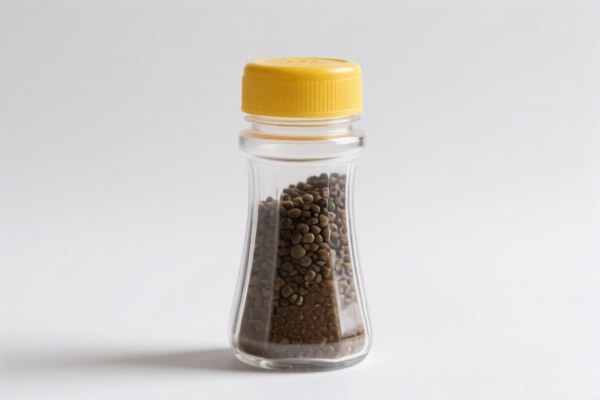
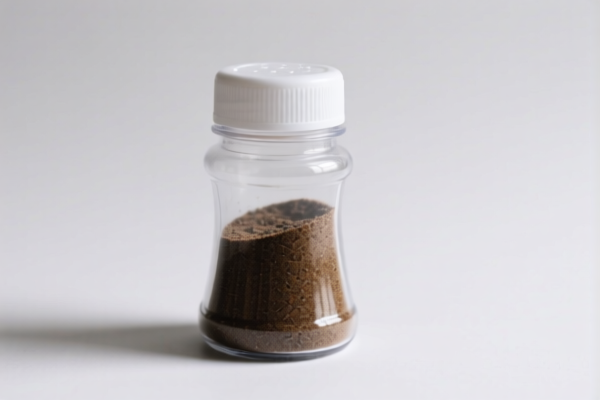
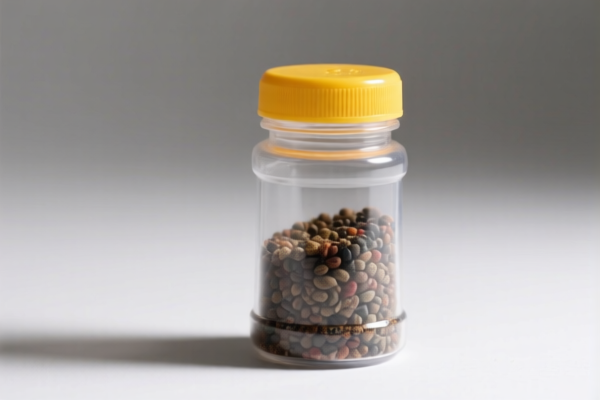

AI分析
🧂 Plastic Seasoning Dish (Dispensers & Tableware)
🌐 HS Code Reference & Customs Clearance Guide | 2026 Latest Tariff Analysis | Strategic Clearance Strategy
📌 I. Product Definition & Classification: Do You Really Understand "Plastic Seasoning Dishes"?
Plastic Seasoning Dishes, often referred to as Salt, Pepper, Mustard, and Ketchup Dispensers, are essential household and restaurant items used for storing and dispensing condiments. In international trade, these items fall under Chapter 39 (Plastics and Articles Thereof).
The classification depends strictly on the function and design: * Dispensers (HS 3924.10.10.00): Items designed specifically to dispense or pour condiments (e.g., shaker tops, squeeze bottles, pump mechanisms, ladle-equipped jars). * General Tableware (HS 3924.10.40.00): Items used for serving or holding food/table setting that do not have a specific dispensing mechanism (e.g., simple bowls, plates, cups, or open jars without dispensing features).
⚠️ Key Distinction Point:
- If the item has a shaker, spout, pump, or controlled pouring mechanism → Classified as Dispensers (3924.10.10.00).
- If the item is a simple container, bowl, or plate without dispensing functionality → Classified as Other Tableware (3924.10.40.00).
📦 II. HS Code Classification Details (2026 Latest Tariff Authority Cross-Reference)
| HS Code | Product Description | Applicable Scenario | Key Feature |
|---|---|---|---|
3924.10.10.00 |
Salt, pepper, mustard, and ketchup dispensers and similar dispensers | Squeeze bottles, shakers, pump dispensers, salt/pepper mills (plastic) | ✅ Has Dispensing Mechanism |
3924.10.40.00 |
Other tableware and kitchenware | Simple plastic bowls, cups, plates, open storage jars, sauce dishes | ❌ No Dispensing Mechanism |
🔍 Important Reminder:
- Dispensers (3924.10.10.00) are specifically defined by their ability to control the release of the condiment.
- If you sell a "seasoning dish" that is just a small bowl for holding salt (without a shaker top), it must be declared as3924.10.40.00, not the dispenser code. Misclassification can lead to customs delays.
💰 III. 2026 Latest Tariff Rate Details (Detailed Tax Clauses)
✅ Applicable Country: United States (US)
✅ Origin: China (CN)
✅ Effective Time: Current applicable rates based on provided data
🎯 1. 3924.10.10.00 —— Plastic Salt, Pepper, Mustard, and Ketchup Dispensers
| Item | Content |
|---|---|
| Base Tariff | 3.4% (Ad Valorem) |
| Additional Tariff (Section 301/Retaliatory) | 0.0% |
| Total Tax Rate | 3.4% |
| Tax Calculation | CIF Value × 3.4% |
| Tax Detail | "Base Tariff: 3.4%, Additional Tariff: 0.0%" |
| De Minimis Eligibility | ✅ Yes (For shipments under $800, generally duty-free if below threshold) |
📌 Explanation:
- The base MFN (Most Favored Nation) rate for plastic dispensers is 3.4%.
- Unlike electronics or steel products, plastic tableware and kitchenware are NOT currently subject to additional Section 301 tariffs in this specific subheading (based on the provided data showing 0.0% additional tax).
- This makes it a low-tariff, high-volume category for exporters.
🎯 2. 3924.10.40.00 —— Other Plastic Tableware and Kitchenware
| Item | Content |
|---|---|
| Base Tariff | 3.4% (Ad Valorem) |
| Additional Tariff (Section 301/Retaliatory) | 0.0% |
| Total Tax Rate | 3.4% |
| Tax Calculation | CIF Value × 3.4% |
| Tax Detail | "Base Tariff: 3.4%, Additional Tariff: 0.0%" |
| De Minimis Eligibility | ✅ Yes (For shipments under $800, generally duty-free if below threshold) |
📌 Note:
- The tax rate is identical (3.4%) to the dispenser category.
- However, misclassifying a simple bowl as a "dispenser" or vice versa can trigger customs audits if the product description doesn't match the HS code definition.
- Since there is no additional tariff, this is one of the most cost-effective plastic goods to export to the US from China.
🛠️ IV. Customs Clearance Practical Advice (Battle-Tested Pitfall Avoidance Guide)
✅ 1. Preparation Checklist (Must-Have)
| Document | Required | Description |
|---|---|---|
| ✅ Product Specification Sheet | ✔️ | Must clearly state material (e.g., "Food-Grade PP Plastic"), usage, and dimensions. |
| ✅ Product Photos (With & Without Contents) | ✔️ | Show the opening mechanism. If it’s a shaker, show the lid. If it’s a bowl, show the open top. |
| ✅ Commercial Invoice | ✔️ | Clearly describe the item: "Plastic Salt Dispenser" vs. "Plastic Sauce Dish". |
| ✅ Packing List | ✔️ | Detail unit weight and quantity. |
| ✅ FDA Compliance Statement | ✔️ | Since it is food-contact plastic, a statement confirming FDA 21 CFR 177 compliance is often requested. |
✅ 2. Declaration Techniques (Key Mnemonic)
🔥 "Shape Determines Code: Pouring? Dispenser. Holding? Other. Tax is 3.4% for Both!"
| Scenario | Correct HS Code | Incorrect Approach |
|---|---|---|
| Plastic bottle with squeeze nozzle | 3924.10.10.00 |
Calling it "Plastic Container" → Risk of re-classification |
| Plastic jar with shaker lid | 3924.10.10.00 |
Calling it "Plastic Jar" → Risk of re-classification |
| Small open plastic bowl for salt | 3924.10.40.00 |
Calling it "Dispenser" → Unnecessary complexity |
| Set: 1 Bowl + 1 Spoon | 3924.10.40.00 (as a set) |
Splitting into separate items |
✅ 3. Special Situation Handling
| Situation | Handling Advice |
|---|---|
| Multi-piece Sets | If sold as a set (e.g., salt + pepper shakers), declare as Dispensers (3924.10.10.00) if the primary function is dispensing. |
| Food Contact Material | Ensure the plastic is marked "Food Safe" or "BPA Free" on the label/packaging to avoid FDA holds. |
| Mixed Materials | If the dispenser has a metal spring or rubber seal, it is still classified under Chapter 39 (Plastics) because the plastic is the essential character. |
| Customs Inquiry | If asked, provide a photo showing the dispensing action or pouring spout to justify 3924.10.10.00. |
🌍 V. Global Market Customs Comparison (2026 Latest)
| Country/Region | Recommended HS Code | Tariff Rate (China Origin) | Certification Requirements | Notes |
|---|---|---|---|---|
| 🇺🇸 USA | 3924.10.10.00 / 3924.10.40.00 |
3.4% | FDA Food Contact Compliance | No Section 301 tax on this specific item. |
| 🇨🇳 China | 3924.10.10.00 / 3924.10.40.00 |
~3.4% (Import) | CCC (if applicable) | Low duty for import; high export volume. |
| 🇪🇺 EU | 3924.10.10.00 / 3924.10.40.00 |
0% - 4.5% | Food Contact Material (FCM) Reg. 10/2011 | Check specific member state rules. |
| 🇬🇧 UK | 3924.10.10.00 / 3924.10.40.00 |
0% - 4.5% | Food Safety Standards | Post-Brexit rules may vary slightly. |
📌 Conclusion:
- USA is the largest market for these items with a stable, low tariff of 3.4%.
- No additional punitive tariffs apply to plastic tableware/dispensers from China in this category, making it a competitive product.
- Focus on FDA compliance rather than tariff optimization, as the base duty is already low.
📌 VI. Common Errors & Pitfall Guide (Lessons Learned)
❌ Error 1: Calling a simple plastic bowl a "Dispenser"
👉 Consequence: While the tax rate is the same (3.4%), it may trigger unnecessary customs scrutiny or documentation requests for "dispensing mechanisms" that don't exist.
❌ Error 2: Calling a squeeze bottle a "Plastic Container" (General)
👉 Consequence: May be misclassified under a different, potentially higher-tariff general plastics code if not clearly identified as tableware. Always specify "Tableware" or "Kitchenware".
❌ Error 3: Ignoring FDA Compliance
👉 Consequence: Detention at US Border. Plastic items contacting food require proof of food-safe material. Without an FDA compliance statement, goods may be held.
❌ Error 4: Misdeclaring "Kitchenware" vs. "Toilet Articles"
👉 Consequence: 3924.10 covers both. Ensure the description matches the use. A plastic toothbrush holder is "Toilet Article"; a ketchup bottle is "Tableware/Dispenser". Both fall under 3924, but precise description helps clearance.
✅ Correct Practice:
"Plastic Ketchup Dispenser Bottle, Food-Grade PP, FDA Compliant, Model XYZ, For Restaurant Use"
🎯 VII. Conclusion: Professional Declaration, Time-Saving, Cost-Effective!
🎯 Remember the Mnemonic:
🔹 "Dispenser or Bowl, Tax is 3.4% only!"
🔹 "FDA Compliance is Key, Don't let your cargo be free (detained)!"
🔹 "Clear Description Saves Time, Correct HS Code Ensures Smooth Passage!"
📌 Tips:
- If your plastic seasoning dishes are shipped in containers under $800 (De Minimis), they may enter the US duty-free and tax-free under Section 321.
- For larger shipments, the 3.4% rate is very favorable compared to many other manufactured goods.
- Proactive Advice: Always include a "Food Contact Safe" label on the packaging to expedite FDA inspections at US ports.
📣 Immediate Action:
📞 Verify FDA compliance documentation + Provide clear product photos + Use precise HS Codes
🚀 Let your seasoning dishes pass through customs smoothly, maximize profit, and delight customers!
✨ Professional Customs Clearance Starts with Accurate Classification!
💼 Every penny of duty saved is pure profit!
用户评价
关于 HS 编码归类
协调制度(HS)是由世界海关组织(WCO)制定的国际贸易商品分类标准。全球 200 多个国家采用 HS 系统作为海关关税、贸易统计和进出口监管的基础。
每个 HS 编码遵循以下层级结构:
- 章(2 位)——商品大类(例如:第 84 章:机器和机械设备)
- 品目(4 位)——章内的更具体分类
- 子目(6 位)——国际通用细分,所有 WCO 成员国统一使用
- 本国细分(8-10 位)——各国自行扩展的细分编码,如美国 HTSUS 10 位编码
正确的 HS 编码归类对于顺利通关、准确缴纳关税和遵守贸易法规至关重要。错误归类可能导致海关延误、多缴关税或罚款。
从CN进口到US时,适用的关税税率可能包括:
- 最惠国(MFN)税率——适用于 WTO 成员国的标准关税税率
- 普通税率——适用于无贸易协定国家
- 贸易救济关税——附加关税,如 301 条款(反倾销)、232 条款(国家安全)或反补贴税
本页内容仅供参考。如需正式归类,请咨询当地海关或持牌报关代理。