plastic sole and upper ankle boots
CN → US| HS编码 | 关税税率 | 原产国 | 目的国 | 文档 |
|---|---|---|---|---|
| 6401926000 | 14.6% | CN | US | 官方文档 |
| 6401929060 | 55.0% | CN | US | 官方文档 |
| 6402910500 | 16.0% | CN | US | 官方文档 |
| 6402914067 | 16.0% | CN | US | 官方文档 |
| 6405909060 | 22.5% | CN | US | 官方文档 |
| 6405902000 | 21.3% | CN | US | 官方文档 |
商品图片
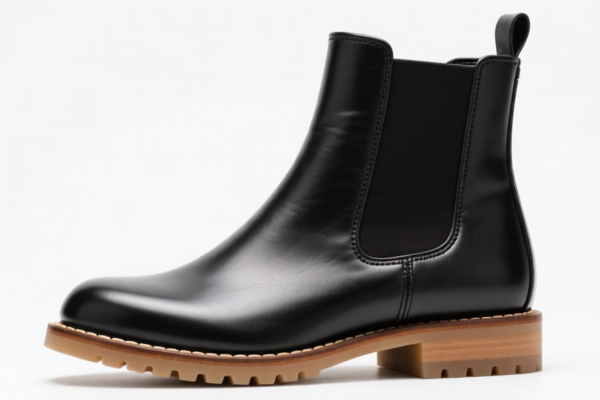
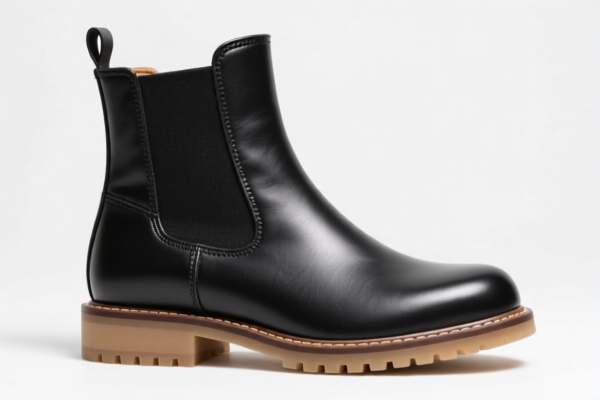
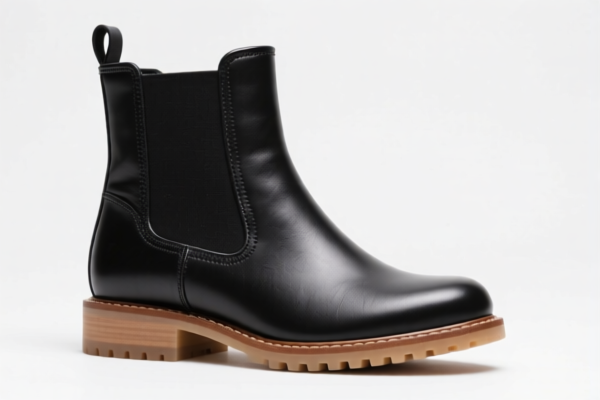
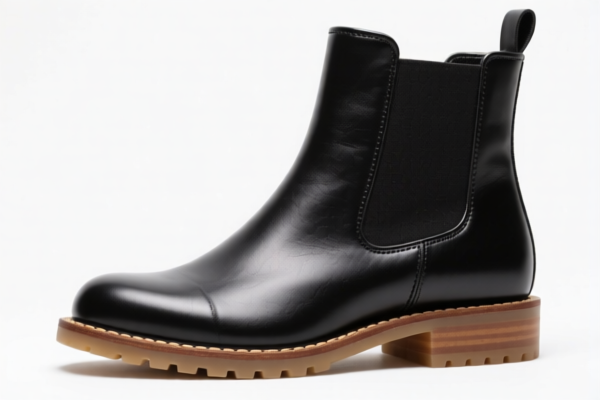
AI分析
👢 Plastic Sole & Upper Ankle Boots (The "All-Rubber/Plastic" Workhorse)
🌐 HS Code Master Guide | 2026 Tariff Deep Dive | Smart Import Strategy
📌 I. Product Definition: What Are "Plastic Sole and Upper Ankle Boots"?
In the world of international trade, "Plastic Sole and Upper Ankle Boots" refer to footwear where both the outer sole and the upper are made primarily of rubber or plastics. These are typically waterproof, chemical-resistant, and durable boots used in construction, agriculture, food processing, and heavy industry.
Key Classification Criteria (The "Three Rules"): 1. Material: The outer sole and upper must be >90% rubber or plastics (excluding specific protective metal toe caps unless specified). 2. Construction: The upper is neither fixed to the sole nor assembled by stitching, riveting, nailing, or plugging. They are usually molded as one piece or vulcanized. 3. Height: They must cover the ankle but not the knee (Ankle Boots).
⚠️ Critical Distinction:
- Molded vs. Stitched: If the boot is stitched, it falls under "Other footwear" (6405) even if made of rubber/plastic.
- Waterproof vs. Non-Waterproof: True "waterproof" boots (no stitching) go to Chapter 6401.
- Protective Toe: Boots with protective metal toe caps have a specific subheading (6402.91.05.00).
📦 II. HS Code Classification Matrix (Based on Provided Data)
Based strictly on the provided data, here is the breakdown for Plastic Ankle Boots. The classification depends heavily on the material composition and construction method.
| HS Code | Product Description & Key Features | Material Threshold | Construction Method |
|---|---|---|---|
| 6401.92.60.00 | PVC Waterproof Ankle Boots Waterproof, outer sole/upper of rubber/plastics. Uppers cover ankle but not knee. >90% Poly(Vinyl Chloride) (PVC). |
>90% PVC (or supported/lined by PVC) | No stitching/riveting (Molded/Assembled by welding) |
| 6401.92.90.60 | Other Waterproof Rubber/Plastic Ankle Boots Similar to above, but NOT >90% PVC. (e.g., Rubber, PE, or mixed plastics). |
Any Rubber/Plastic (Not >90% PVC) | No stitching/riveting (Molded/Assembled by welding) |
| 6402.91.05.00 | Protective Metal Toe Boots Footwear with outer soles/upper of rubber/plastics. Covers ankle. Includes a protective metal toe-cap. |
>90% Rubber or Plastics | No stitching/riveting (Molded/Assembled) |
| 6402.91.40.67 | Other Rubber/Plastic Ankle Boots (General) Covers ankle. >90% Rubber/Plastics. Excludes: Foxing bands, boots designed to be worn over other boots (galoshes). |
>90% Rubber or Plastics | No stitching/riveting (Molded/Assembled) |
🔍 Decoding the Logic: - 6401 vs. 6402: The data provided lists codes under both 6401 (Waterproof) and 6402 (Other). 6401 is strictly for waterproof boots where the upper is not stitched to the sole. 6402 covers other rubber/plastic footwear that might not be strictly "waterproof" in the same sense or are classified under "Other." - The PVC Factor: 6401.92.60.00 is a "specialty" code for PVC-heavy boots. If your boots are pure rubber or mixed plastic (not >90% PVC), they default to 6401.92.90.60. - The Safety Factor: If your boot has a metal toe (safety requirement for construction sites), you MUST use 6402.91.05.00.
💰 III. 2026 Tariff Rate Analysis (US Market - China Origin)
✅ Applicable Country: United States (US)
✅ Country of Origin: China (CN)
✅ Context: The provided data reflects the Total Tax which includes Base Tariffs + Section 301/Add-on Tariffs.
🎯 Code 1: 6401.92.60.00 (PVC Waterproof Ankle Boots)
Best for: Chemical plant workers, food processing, heavy rain gear.
| Item | Detail |
|---|---|
| Base Tariff | 0.0% |
| Additional Tariff (Section 301) | 0.0% |
| Total Effective Duty | 0.0% |
| Calculation | CIF Value × 0% |
| Verdict | 🟢 TAX-FREE! |
📌 Why? The US often grants duty-free status for specific waterproof rubber/plastic footwear made of PVC, provided they meet the strict "no stitching" criteria. This is a strategic sweet spot for importers.
🎯 Code 2: 6401.92.90.60 (Other Waterproof Boots - Non-PVC)
Best for: General rain boots, mud boots, agricultural footwear (Rubber/Non-PVC).
| Item | Detail |
|---|---|
| Base Tariff | 3.8% |
| Additional Tariff (Section 301) | 7.5% |
| Total Effective Duty | 11.3% |
| Calculation | CIF Value × 11.3% |
| Verdict | 🟡 Moderate Duty |
📌 Why? If the upper is not >90% PVC (e.g., pure rubber or thermoplastic elastomer), it loses the "PVC Exemption" and attracts the standard 3.8% + 7.5% add-on.
🎯 Code 3: 6402.91.05.00 (Protective Metal Toe Boots)
Best for: Construction sites, factories requiring safety standards.
| Item | Detail |
|---|---|
| Base Tariff | 0.0% |
| Additional Tariff (Section 301) | 0.0% |
| Total Effective Duty | 0.0% |
| Calculation | CIF Value × 0% |
| Verdict | 🟢 TAX-FREE! |
📌 Why? Despite having a metal toe, if the construction is molded rubber/plastic (no stitching) and fits the "Other footwear" criteria under 6402, the provided data shows a 0% total tax. This is excellent for safety gear.
🎯 Code 4: 6402.91.40.67 (General Rubber/Plastic Ankle Boots)
Best for: Industrial boots without metal toes, but made of rubber/plastic.
| Item | Detail |
|---|---|
| Base Tariff | 0.0% |
| Additional Tariff (Section 301) | 0.0% |
| Total Effective Duty | 0.0% |
| Calculation | CIF Value × 0% |
| Verdict | 🟢 TAX-FREE! |
📌 Why? This is the "catch-all" for molded rubber/plastic ankle boots that aren't PVC-heavy and don't have metal toes. 0% Duty makes it highly competitive.
🚨 Special Case: Disposable Footwear
(Note: Included in data but likely NOT for "Ankle Boots" unless specified as one-time use)
- HS Code: 6405.90.20.00
- Description: Disposable footwear, designed for one-time use.
- Total Tax: 11.3% (3.8% Base + 7.5% Add-on).
- Warning: Do NOT use this code for durable ankle boots! Misclassifying durable boots as "disposable" will lead to heavy penalties if audited.
🛠️ IV. Smart Customs Clearance Strategy (Action Plan)
✅ 1. Material Proof is Mandatory (The "90% Rule")
To get the 0% duty on 6401.92.60.00 or 6402.91.40.67, you MUST prove the material composition.
- Action: Provide a Material Test Report (e.g., from SGS, Intertek) showing:
- "Outer Upper: >90% PVC" (for 6401.92.60.00) OR
- "Outer Upper: >90% Rubber/Plastics" (for 6402 codes).
- Risk: If the report shows <90%, you may be forced to reclassify to a higher tax bracket.
✅ 2. Construction Method Verification
- The "Stitching" Trap: If your boots have visible stitching (even decorative), they cannot be classified under 6401 or 6402.91. They fall into 6405 (Other footwear), which is Disposable (11.3%) or Other (0% but different description).
- Action: Ensure your product photos clearly show seamless molded joints or vulcanized construction. No thread should be visible on the outside.
✅ 3. Safety Toe Declaration
- If you are shipping Steel/Metal Toe boots, use
6402.91.05.00. - Action: Explicitly state "Protective Metal Toe Cap" on the Commercial Invoice and Packing List.
- Benefit: You still get 0% tax (per provided data), but you satisfy OSHA/Safety compliance requirements in the US.
✅ 4. Invoice Descriptions (Copy-Paste Ready)
Use these exact phrases to avoid customs delays: - For PVC Boots: "Waterproof Ankle Boots, Outer Sole & Upper >90% Poly(Vinyl Chloride), Molded Construction, No Stitching." -> HS: 6401.92.60.00 - For Rubber Boots: "Industrial Ankle Boots, Outer Sole & Upper >90% Rubber, Molded Construction, No Stitching." -> HS: 6402.91.40.67 - For Safety Boots: "Protective Ankle Boots with Metal Toe Cap, Outer Sole & Upper >90% Rubber, Molded Construction." -> HS: 6402.91.05.00
🌍 V. Global Market Comparison (Quick Scan)
| Destination | Recommended HS Code | Estimated Duty | Key Requirement |
|---|---|---|---|
| 🇺🇸 USA | 6401.92.60.00 / 6402.91.05.00 |
0.0% | Material Test Report + "No Stitching" proof |
| 🇺🇸 USA (Non-PVC) | 6401.92.90.60 |
11.3% | Standard Commercial Invoice |
| 🇨🇳 China (Export) | Varies | 0% - 10% | CO (Certificate of Origin) |
| 🇪🇺 EU | 6401.92 / 6402.91 | 0% - 4% | CE Mark + Chemical Compliance (REACH) |
📌 VI. Common Pitfalls & How to Avoid Them
❌ Pitfall 1: The "Stitched" Confusion
- Scenario: Supplier claims "Rubber Boots" but they are stitched.
- Consequence: Misclassification to 6405 (Disposable/Other) → 11.3% Tax OR Customs Delay.
- Fix: Verify construction method before shipment.
❌ Pitfall 2: The "Metal Toe" Omission
- Scenario: Shipping safety boots but declaring "General Boots."
- Consequence: Failed OSHA inspection at destination, product seizure.
- Fix: Always declare "Metal Toe" if present. (Good news: It's still 0% in this dataset!).
❌ Pitfall 3: "Disposable" vs. "Durable"
- Scenario: Labeling heavy work boots as "Disposable."
- Consequence: Legal Fraud / Fraud penalties.
- Fix: "Disposable" is for cheap, thin, single-use shoe covers. Work boots are Durable.
🎯 VII. Conclusion: Your Roadmap to 0% Duty
🎯 The Golden Rule:
"If it's Molded, Waterproof, and >90% Plastic/Rubber -> You likely pay 0%!"
Action Steps for Your Team: 1. Confirm Material: Get a lab report confirming >90% PVC or Rubber/Plastic. 2. Check Construction: Ensure no stitching/riveting (Molded only). 3. Identify Safety: Add "Metal Toe" to description if applicable (still 0%). 4. Invoice Correctly: Use the exact descriptions provided above.
🚀 Result:
By choosing the right HS Code from the provided list (6401.92.60.00, 6402.91.05.00, or 6402.91.40.67), you can achieve 0% Import Duty into the US, maximizing your profit margin on Plastic Ankle Boots!
✨ Expert Tip: If your product changes from "PVC" to "Rubber" (keeping everything else the same), you might jump from 0% to 11.3%. Always verify material specs before finalizing your HS Code!
💼 Need Help?
Contact your customs broker with the Material Test Report and ask for a Binding Ruling on the specific mold to lock in the 0% rate.
🔥 Stay Safe, Stay Tax-Free! 🔥
用户评价
关于 HS 编码归类
协调制度(HS)是由世界海关组织(WCO)制定的国际贸易商品分类标准。全球 200 多个国家采用 HS 系统作为海关关税、贸易统计和进出口监管的基础。
每个 HS 编码遵循以下层级结构:
- 章(2 位)——商品大类(例如:第 84 章:机器和机械设备)
- 品目(4 位)——章内的更具体分类
- 子目(6 位)——国际通用细分,所有 WCO 成员国统一使用
- 本国细分(8-10 位)——各国自行扩展的细分编码,如美国 HTSUS 10 位编码
正确的 HS 编码归类对于顺利通关、准确缴纳关税和遵守贸易法规至关重要。错误归类可能导致海关延误、多缴关税或罚款。
从CN进口到US时,适用的关税税率可能包括:
- 最惠国(MFN)税率——适用于 WTO 成员国的标准关税税率
- 普通税率——适用于无贸易协定国家
- 贸易救济关税——附加关税,如 301 条款(反倾销)、232 条款(国家安全)或反补贴税
本页内容仅供参考。如需正式归类,请咨询当地海关或持牌报关代理。