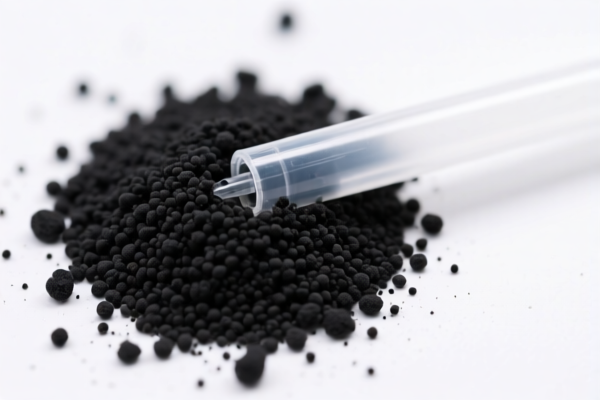
plastic stabilizer compound
CN → US| HS编码 | 关税税率 | 原产国 | 目的国 | 文档 |
|---|---|---|---|---|
| 2942003500 | 41.5% | CN | US | 官方文档 |
| 2942005000 | 38.7% | CN | US | 官方文档 |
| 3824992900 | 41.5% | CN | US | 官方文档 |
| 3824994900 | 41.5% | CN | US | 官方文档 |
| 3901909000 | 41.5% | CN | US | 官方文档 |
商品图片

AI分析
🧪 Plastic Stabilizer Compound (塑料稳定剂复合剂)
🌐 HS Code Reference & Customs Clearance Guide | 2026 Latest Tariff Analysis | Professional Strategy for US Import
📌 I. Product Definition & Classification: What is a "Plastic Stabilizer Compound"?
A Plastic Stabilizer Compound is a chemical additive used in the polymer industry to prevent degradation (such as heat, light, or oxidation) during processing and use. It is not a raw polymer itself but a formulation containing organic chemical substances.
Key Distinction: * Organic Chemicals (Chapter 29): If the stabilizer is a pure chemical entity or a mixture where the chemical structure is the primary defining feature. * Chemical Products/Preparations (Chapter 38): If the stabilizer is a formulated mixture, composite, or preparation designed specifically for industrial chemical purposes, even if it contains organic compounds. * Polymers (Chapter 39): If it is primarily a polymer additive that alters the physical properties of the base plastic.
⚠️ Critical Clarification Point:
- The term "Compound" implies a mixture or formulation, not a single pure organic molecule. This strongly points toward Chapter 38 (Miscellaneous Chemical Products) or Chapter 29 (Other Organic Compounds) depending on the specific chemical nature and whether it fits a specific subheading.
- "Plastic" indicates the application, not necessarily the material of the commodity itself (the stabilizer is added to plastic).
📦 II. HS Code Classification Details (2026 Tariff Schedule)
Based on the provided data, here are the four potential HS Codes, their matching logic, and tax implications.
| HS Code | Product Description / Matching Logic | Application/Context | Key Differentiator |
|---|---|---|---|
2942.00.35.00 |
Other Organic Compounds: Matches "Plastic Stabilizer Compound" as an organic chemical form. The name "Compound" suggests a chemical structure, falling under "Other Organic Compounds" with no obvious material conflict. | Pure chemical additives, single-substance stabilizers. | Focuses on chemical composition. |
2942.00.50.00 |
Other Organic Compounds: Similar to above. "Compound" is inferred as a chemical raw material. Fits the "Other" category's catch-all logic for organic chemicals. | Generic organic chemical raw materials. | Lower base duty (3.7%) vs. 35 (6.5%). |
3824.99.29.00 |
Other Chemical Products/Preparations: "Compound" fits "Chemical Products and Preparations." "Plastic Stabilizer" is a chemical industry product. No material conflict with the "Other" category. | Formulated mixtures, commercial chemical preparations. | Focuses on industrial preparation/formulation. |
3824.99.49.00 |
Other Chemical Products/Preparations: Belongs to chemical industry products/preparations. Inferred to contain hydrocarbons or chemical assistants. Fits "Unspecified Chemical Products." | Complex formulations, proprietary blends. | Focuses on unlisted chemical aids. |
3901.90.90.00 |
Ethylene Polymers (Other): Inferred from "Plastic Stabilizer" to be polymer-related chemical components. Fits the "Other" category for ethylene polymers as an additive raw material. | Polymer-based stabilizers, additive resins. | Focuses on polymer origin. |
🔍 Key Insight:
- Chapter 29 codes (2942.xx) treat the product as a chemical substance.
- Chapter 38 codes (3824.xx) treat the product as a chemical preparation/mixture.
- Chapter 39 code (3901.xx) treats the product as a polymer-related material.
- Most likely scenario: For a "Stabilizer Compound," Chapter 38 is often more accurate if it is a formulated mixture for industrial use. However, if it is a specific organic compound, Chapter 29 may apply.
💰 III. 2026 Latest Tariff Rate Details (Including Surcharges)
✅ Applicable Country: United States (US)
✅ Origin: China (CN)
✅ Effective Date: November 10, 2025 (and subsequent imports)
🎯 1. 2942.00.35.00 —— Other Organic Compounds
| Item | Content |
|---|---|
| Base Duty Rate | 6.5% |
| USITC Surtax (Section 301) | +25.0% |
| IEEPA Surtax (Section 122) | +10.0% |
| Total Tax Rate | 41.5% |
| Tax Calculation | CIF Value × 41.5% |
| De Minimis Eligibility | ❌ Not Eligible (Deny de minimis) |
| Legal Basis Path | Base: 6.5% → USITC: 25% → IEEPA: 10% |
📌 Explanation:
- Base duty: 6.5% for other organic compounds.
- Additional 35% surcharge applied to Chinese goods.
- Total 41.5% is a significant cost factor.
🎯 2. 2942.00.50.00 —— Other Organic Compounds
| Item | Content |
|---|---|
| Base Duty Rate | 3.7% |
| USITC Surtax (Section 301) | +25.0% |
| IEEPA Surtax (Section 122) | +10.0% |
| Total Tax Rate | 38.7% |
| Tax Calculation | CIF Value × 38.7% |
| De Minimis Eligibility | ❌ Not Eligible (Deny de minimis) |
| Legal Basis Path | Base: 3.7% → USITC: 25% → IEEPA: 10% |
📌 Note:
- Lower base duty (3.7%) makes this slightly cheaper than2942.00.35.00, but still very high.
- Suitable if the product is classified under this specific subheading.
🎯 3. 3824.99.29.00 —— Other Chemical Products/Preparations
| Item | Content |
|---|---|
| Base Duty Rate | 6.5% |
| USITC Surtax (Section 301) | +25.0% |
| IEEPA Surtax (Section 122) | +10.0% |
| Total Tax Rate | 41.5% |
| Tax Calculation | CIF Value × 41.5% |
| De Minimis Eligibility | ❌ Not Eligible (Deny de minimis) |
| Legal Basis Path | Base: 6.5% → USITC: 25% → IEEPA: 10% |
📌 Explanation:
- Chapter 38 products often face high duties.
- Classification as "Other Chemical Products" leads to the same 41.5% rate as2942.00.35.00.
🎯 4. 3824.99.49.00 —— Other Chemical Products/Preparations
| Item | Content |
|---|---|
| Base Duty Rate | 6.5% |
| USITC Surtax (Section 301) | +25.0% |
| IEEPA Surtax (Section 122) | +10.0% |
| Total Tax Rate | 41.5% |
| Tax Calculation | CIF Value × 41.5% |
| De Minimis Eligibility | ❌ Not Eligible (Deny de minimis) |
| Legal Basis Path | Base: 6.5% → USITC: 25% → IEEPA: 10% |
📌 Note:
- Similar to3824.99.29.00, this is a "catch-all" for chemical products.
- High tax burden requires careful cost calculation.
🎯 5. 3901.90.90.00 —— Other Ethylene Polymers
| Item | Content |
|---|---|
| Base Duty Rate | 6.5% |
| USITC Surtax (Section 301) | +25.0% |
| IEEPA Surtax (Section 122) | +10.0% |
| Total Tax Rate | 41.5% |
| Tax Calculation | CIF Value × 41.5% |
| De Minimis Eligibility | ❌ Not Eligible (Deny de minimis) |
| Legal Basis Path | Base: 6.5% → USITC: 25% → IEEPA: 10% |
📌 Caution:
- Only applicable if the stabilizer is primarily a polymer additive derived from ethylene polymers.
- Misclassification here could lead to significant duty penalties if it is not a polymer.
🛠️ IV. Customs Clearance Practical Advice (Pitfall Avoidance Guide)
✅ 1. Required Documentation Checklist (All are Mandatory)
| Document | Required | Description |
|---|---|---|
| ✅ Product Specification Sheet | ✔️ | Details composition, CAS numbers, concentration, and physical state. |
| ✅ Safety Data Sheet (SDS) | ✔️ | Must be GHS-compliant, detailing hazards and handling. |
| ✅ Formula/Composition Breakdown | ✔️ | Critical for determining if it’s a "chemical" (Ch 29) or "preparation" (Ch 38). |
| ✅ Commercial Invoice | ✔️ | Clearly state "Plastic Stabilizer Compound" and HS Code. |
| ✅ Packing List | ✔️ | Show net/gross weight, dimensions, and packaging type. |
| ✅ Certificate of Origin (CO) | ✔️ | For origin verification (China). |
| ✅ Third-Party Test Report | ✔️ | FDA, REACH, or other regulatory compliance if applicable. |
✅ 2. Declaration Tips (Key Rules)
🔥 "Clarify Composition, Choose Chapter Wisely, Avoid Polymer Trap!"
| Scenario | Correct Declaration | Wrong Action |
|---|---|---|
| Pure chemical stabilizer | 2942.00.35.00 or 2942.00.50.00 |
Misclassify as "Chemical Mixture" → Higher duty |
| Formulated commercial blend | 3824.99.29.00 or 3824.99.49.00 |
Misclassify as "Pure Organic" → Discrepancy |
| Polymer-based additive | 3901.90.90.00 |
Misclassify as "Chemical" → Incorrect chapter |
| Any scenario | Always provide SDS & Formula | Omit formula → Customs delay/audit |
📌 Note:
- If the product is a mixture, Chapter 38 is often more appropriate.
- If it is a pure substance, Chapter 29 is correct.
- Do not use "Plastic Stabilizer" alone; include "Compound" or "Formulation" to clarify.
✅ 3. Special Handling
| Scenario | Recommendation |
|---|---|
| Proprietary Formulations | Provide a detailed composition breakdown to customs; redact trade secrets if necessary but maintain compliance. |
| New Chemical Substances | Ensure EPA TSCA compliance if imported into the US. |
| High-Volume Imports | Apply for Advance Ruling (Ruling Letter) from CBP to confirm HS Code before shipment. |
| Small Samples | Still subject to 41.5% duty; no de minimis exemption. |
🌍 V. Global Market Comparison (2026 Latest)
| Country/Region | Recommended HS Code | Duty Rate | Certification | Notes |
|---|---|---|---|---|
| 🇺🇸 USA | 3824.99.29.00 / 2942.00.35.00 |
41.5% / 38.7% | TSCA + SDS | High tariffs on Chinese goods. |
| 🇨🇳 China | 3824.99.29.00 |
5-10% | REACH/China Compulsory | No extra surcharges. |
| 🇪🇺 EU | 3824.99.29.00 |
0-4% | REACH + RoHS | Strict chemical regulations. |
| 🇯🇵 Japan | 3824.99.29.00 |
0-5% | PRTR Law | No major surcharges. |
| 🇰🇷 South Korea | 3824.99.29.00 |
0-5% | K-REACH | Free Trade Agreement (FTA) benefits. |
📌 Conclusion:
- USA has the highest duty burden (41.5%) for Chinese-origin plastic stabilizers.
- EU, Japan, and Korea have lower base duties but strict regulatory compliance (REACH, PRTR, K-REACH).
- Cost Advantage: Consider sourcing from countries with FTA benefits (e.g., Vietnam, Mexico) if possible, though chemical sourcing may be limited.
📌 VI. Common Mistakes & Pitfalls (Lessons Learned)
❌ Mistake 1: Declaring as "Plastic Additive" without specifying chemical nature
👉 Consequence: Customs may reclassify to a higher-duty code → Penalties + Delays
❌ Mistake 2: Assuming "Stabilizer" is a polymer (Chapter 39)
👉 Consequence: If it’s not a polymer, classification error → Duty Difference + Audit
❌ Mistake 3: Omitting SDS or Formula
👉 Consequence: Customs cannot verify composition → Hold at Port + Storage Fees
❌ Mistake 4: Ignoring Section 122 (IEEPA) Surcharge
👉 Consequence: Underpayment by 10% → Back Taxes + Interest
✅ Correct Practice:
"Plastic Stabilizer Compound, Formulation, Contains [Chemical Name] CAS# XXXX-XX-X, Non-Polymeric, For Industrial Use, SDS Available, TSCA Compliant"
🎯 VII. Conclusion: Professional Classification Saves Money!
🎯 Remember These Key Points:
🔹 "Compound = Mixture? Think Chapter 38."
🔹 "Pure Chemical? Think Chapter 29."
🔹 "Not a Polymer? Avoid Chapter 39."
🔹 "Always Pay Attention to 35% Surcharges!"
📌 Pro Tip:
If your plastic stabilizer is originated from Vietnam, Malaysia, or Thailand, you may qualify for lower or zero surcharges under certain trade agreements.
Recommendation: Apply for an Advance Ruling (CBP) before shipping to ensure correct HS Code classification and avoid unexpected costs.
📣 Immediate Action:
📞 Contact your customs broker + Provide Formula/SDS + Apply for Pre-Ruling
🚀 Ensure Smooth Customs Clearance, Minimize Costs, and Boost Profit Margins!
✨ Professional Customs Clearance Starts with Accurate Classification!
💼 Every Percent of Duty Counts!
用户评价
关于 HS 编码归类
协调制度(HS)是由世界海关组织(WCO)制定的国际贸易商品分类标准。全球 200 多个国家采用 HS 系统作为海关关税、贸易统计和进出口监管的基础。
每个 HS 编码遵循以下层级结构:
- 章(2 位)——商品大类(例如:第 84 章:机器和机械设备)
- 品目(4 位)——章内的更具体分类
- 子目(6 位)——国际通用细分,所有 WCO 成员国统一使用
- 本国细分(8-10 位)——各国自行扩展的细分编码,如美国 HTSUS 10 位编码
正确的 HS 编码归类对于顺利通关、准确缴纳关税和遵守贸易法规至关重要。错误归类可能导致海关延误、多缴关税或罚款。
从CN进口到US时,适用的关税税率可能包括:
- 最惠国(MFN)税率——适用于 WTO 成员国的标准关税税率
- 普通税率——适用于无贸易协定国家
- 贸易救济关税——附加关税,如 301 条款(反倾销)、232 条款(国家安全)或反补贴税
本页内容仅供参考。如需正式归类,请咨询当地海关或持牌报关代理。