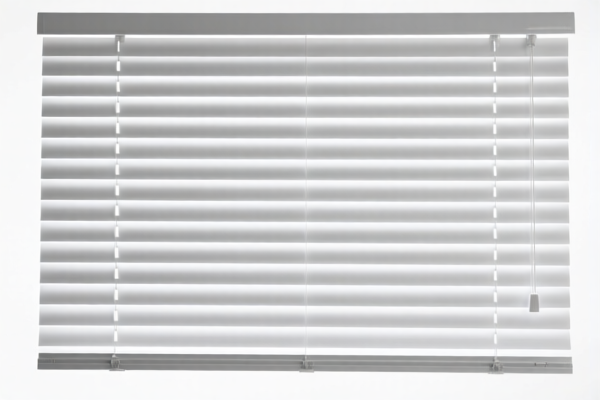
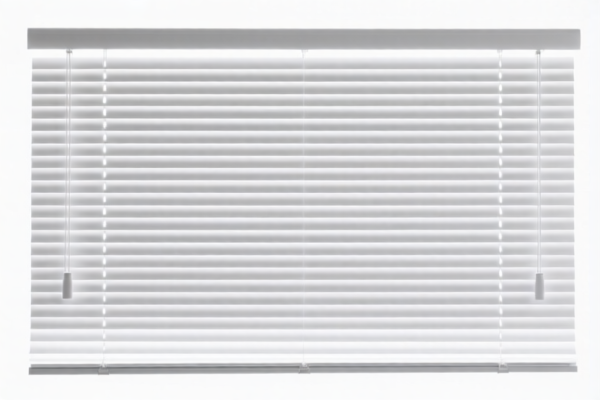
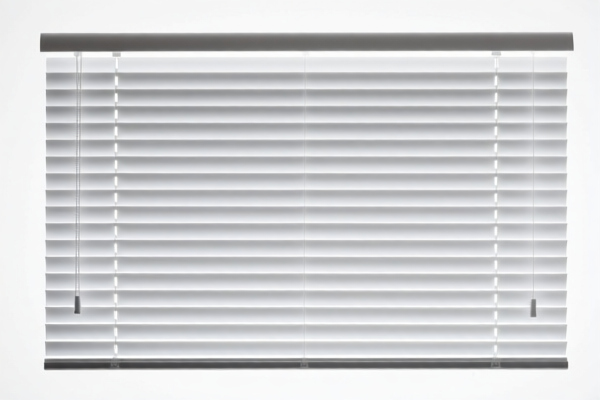
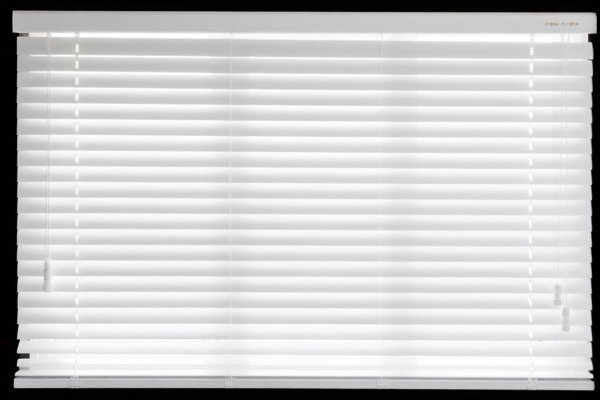
plastic venetian semi transparent blinds
CN → US| HS编码 | 关税税率 | 原产国 | 目的国 | 文档 |
|---|---|---|---|---|
| 3916200020 | 40.8% | CN | US | 官方文档 |
| 3925305000 | 22.8% | CN | US | 官方文档 |
| 3925301000 | 20.8% | CN | US | 官方文档 |
| 3926305000 | 22.8% | CN | US | 官方文档 |
| 3926909989 | 22.8% | CN | US | 官方文档 |
商品图片
AI分析
🪟 Plastic Venetian Semi-Transparent Blinds (Plastic Exterior Window Blinds)
🌐 HS Code Reference & Customs Clearance Guide | 2024/2025 Tariff Analysis | Professional Strategy for US Imports
📌 I. Product Definition & Classification: What Exactly Are "Plastic Venetian Blinds"?
Plastic Venetian Blinds, specifically exterior window blinds made of PVC or other polymers, are architectural accessories used to control light, privacy, and heat in buildings. In international trade (particularly for US imports from China), they are often scrutinized due to high附加 tariffs.
These products are generally categorized under Chapter 39: Plastics and Articles Thereof. The key distinction lies in whether they are classified as: 1. Profiles/Extrusions for Windows: Viewed as parts of the window frame system. 2. Building Accessories/Parts of Construction: Viewed as functional components like louvers. 3. Other Plastic Articles: The "catch-all" category if they don't fit specific definitions.
⚠️ Critical Distinction:
- If the product is defined as a profile/extrusion used in the construction of windows → Higher tariff risk (Section 301/122).
- If defined as a louver/blind (functional accessory) → Slightly lower, but still significant, tariff risk.
- Semi-transparent material does not exempt it from tariffs; it remains a plastic article.
📦 II. HS Code Classification Matrix (Based on Provided Data)
| HS Code | Product Description & Classification Logic | Total Tax Rate | Tax Detail Breakdown |
|---|---|---|---|
| 3916.20.00.20 | Plastic Window Profiles: Classified as PVC polymer profiles specifically for windows. Fits the definition of "profiles of vinyl polymers." | 40.8% | Base: 5.8% Add'l (301): 25.0% Section 122: 10% |
| 3925.30.50.00 | Plastic Building Accessories (Louvers): Classified as plastic louvered blinds for buildings. Fits "Plastic articles of a kind used in buildings." | 22.8% | Base: 5.3% Add'l (301): 7.5% Section 122: 10% |
| 3925.30.10.00 | Plastic Louvers (Best Fit): Explicitly matches "Plastic Louvers" classification. Most accurate for functional blinds. | 20.8% | Base: 3.3% Add'l (301): 7.5% Section 122: 10% |
| 3926.30.50.00 | Plastic Fittings/Fixtures: Classified as plastic articles attached to windows (fittings/hardware). | 22.8% | Base: 5.3% Add'l (301): 7.5% Section 122: 10% |
| 3926.90.99.89 | Other Plastic Articles (Misc): Classified as other plastic manufactured goods not specified elsewhere. | 22.8% | Base: 5.3% Add'l (301): 7.5% Section 122: 10% |
🔍 Key Insight:
- 3925.30.10.00 is the most favorable and technically accurate code if the product is purely a louver/blind assembly. It has the lowest base duty (3.3%).
- 3916.20.00.20 carries the highest penalty (40.8%) because it treats the blinds as "window profiles," triggering the highest base duty and Section 301 rate.
- Section 122 (10%) applies to almost all plastic imports from China under current trade remedies.
💰 III. Detailed Tariff Structure & Legal Basis (US Imports from China)
✅ Applicable Country: United States (US)
✅ Origin: China (CN)
✅ Effective Period: Current (Subject to USITC/USTR rulings)
🎯 1. High-Risk Classification: 3916.20.00.20 (Plastic Profiles)
- Total Rate: 40.8%
- Breakdown:
- Base MFN Duty: 5.8%
- Section 301 (Trade War): 25.0%
- Section 122 (Steel/Aluminum/Related): 10.0%
- Legal Path:
HTSUS:3916.20.00.20→USITC Footnote: Section 301→USTR List 4A - Risk: Very High. This classification assumes the blinds are "extruded profiles" rather than finished blinds. Customs may reclassify finished blinds here if the description is vague (e.g., "PVC strips").
🎯 2. Moderate-Risk Classifications: 3925.30.50.00 / 3926.30.50.00 / 3926.90.99.89
- Total Rate: 22.8%
- Breakdown:
- Base MFN Duty: 5.3%
- Section 301: 7.5% (Note: Some plastic building products have lower 301 rates than general goods)
- Section 122: 10.0%
- Legal Path:
HTSUS:3925.30.50.00→USITC Footnote: Section 301
🎯 3. Best-Fit Classification: 3925.30.10.00 (Plastic Louvers)
- Total Rate: 20.8%
- Breakdown:
- Base MFN Duty: 3.3% (Lowest base duty for this category)
- Section 301: 7.5%
- Section 122: 10.0%
- Legal Path:
HTSUS:3925.30.10.00→Explanatory Notes: Louvers - Advantage: Lowest total tax burden. This code explicitly covers "Louvers," which is the functional definition of Venetian blinds.
📌 Explanation:
- "Section 122 (10%)": Refers to recent trade actions targeting specific steel/aluminum/plastic products from China. It adds a flat 10% on top of existing duties.
- "Section 301": The "Trade War" tariff. Rates vary by product. For plastic building products, it is often 7.5%, but for profiles, it can be 25%.
- Base Duty: The standard Most Favored Nation (MFN) rate.
🛠️ IV. Customs Clearance Practical Advice (Avoiding Pitfalls)
✅ 1. Documentation Checklist (Mandatory)
| Document | Requirement | Purpose |
|---|---|---|
| Product Specification Sheet | ✔️ Must specify: Material (e.g., PVC, HDPE), Form (Slats, Louvers, Frames), Function (Light control, Exterior Use). | Proves it is a "Blind/Louver," not just "Plastic Stock." |
| Commercial Invoice | ✔️ Must use precise terminology: "Plastic Venetian Blinds" or "Plastic Louvers," NOT "PVC Profile" or "Building Material." | Prevents misclassification as 3916.20.00.20. |
| Product Photos | ✔️ Clear images of: Installed view, Slat details, Mounting hardware, Label/Brand. | Visual proof of function as a window accessory. |
| Certificate of Origin | ✔️ If shipped from China, standard COO is required. | Determines eligibility for Section 122/301. |
| Declaration of Compliance | ✔️ If applicable, RoHS/REACH for plastic composition. | Avoids chemical-related holds. |
✅ 2. Classification Strategy: How to Get the 20.8% Rate
🔥 Golden Rule: "Function over Form."
Do NOT describe your product as "PVC Extruded Strips" or "Window Frames."
DO describe it as "Plastic Venetian Blinds (Louvers) for Exterior Windows."
| Scenario | Incorrect Description | Risk (HS Code) | Rate |
|---|---|---|---|
| ❌ Bad | "PVC Plastic Strips for Windows" | 3916.20.00.20 | 40.8% |
| ❌ Bad | "Plastic Building Parts" | 3925.30.50.00 | 22.8% |
| ✅ Good | "Plastic Venetian Blinds / Louvers" | 3925.30.10.00 | 20.8% |
| ✅ Good | "Plastic Window Accessories (Louvers)" | 3926.30.50.00 | 22.8% |
✅ 3. Special Handling for "Semi-Transparent" Material
- Transparency does not change the HS Code.
- Even if the plastic is semi-transparent, it is still a plastic article.
- Do not try to classify it under Chapter 70 (Glass) or Chapter 94 (Furniture/Fixtures) unless it contains significant glass/metal components.
- If the product includes metal slats or cords, you must declare the primary material. For "Plastic Blinds," plastic is dominant.
✅ 4. Section 122 & 301 Mitigation
- Section 122 (10%): Currently unavoidable for most Chinese plastic imports.
- Section 301: Try to argue for the 7.5% rate (under 3925/3926) rather than the 25% rate (under 3916).
- Pre-Ruling (ACE Profile): For large shipments, apply for a Binding Ruling from U.S. Customs and Border Protection (CBP) to lock in the 3925.30.10.00 classification and 20.8% rate.
🌍 V. Global Market Comparison (Quick Reference)
| Market | Recommended HS Code | Estimated Total Duty | Notes |
|---|---|---|---|
| 🇺🇸 USA | 3925.30.10.00 | 20.8% | Best rate for plastic louvers. Avoid 3916. |
| 🇨🇳 China | 3925.30.10.00 | ~5-10% | Import tax for re-export may apply. |
| 🇪🇺 EU | 3925.30.10.00 | ~4-6% | No Section 122/301 equivalent, but VAT applies. |
| 🇬🇧 UK | 3925.30.10.00 | ~4-6% | Post-Brexit tariffs similar to EU. |
📌 Conclusion for US Importers:
The USA is the most expensive market due to Section 301 and Section 122 tariffs.
Strategy: Use HS Code 3925.30.10.00 to achieve the lowest possible rate (20.8%).
Avoid HS Code 3916.20.00.20 at all costs, as it doubles the tariff burden.
📌 VI. Common Mistakes & Pitfalls (Learn from Others' Failures)
❌ Mistake 1: Describing the product as "PVC Window Profile"
👉 Result: Customs assigns 3916.20.00.20 → 40.8% Tax + Possible Penalty for Misdeclaration.
❌ Mistake 2: Ignoring "Section 122" in cost calculation
👉 Result: Budgeting for 25% tax, but actual cost is 35%+ due to the extra 10% charge. Total surprise cost.
❌ Mistake 3: Using "Venetian Blind" without specifying "Plastic"
👉 Result: Customs may look for wood/fabric codes (Chapter 44 or 63) → Delay in clearance while they verify material.
✅ Correct Approach:
Product Name: "Exterior Plastic Venetian Blinds (Louvers), PVC, Semi-Transparent"
HS Code: 3925.30.10.00
Duty Rate: 20.8% (Base 3.3% + 301 7.5% + 122 10%)
🎯 VII. Final Recommendation: Professional Clearance Strategy
🎯 Action Plan: 1. Label Correctly: Ensure invoices and packing lists use "Plastic Louvers" or "Venetian Blinds." Never use "Profile" or "Strip." 2. Verify Material: Confirm the product is >50% plastic by weight. If metal components are significant, re-evaluate HS Code. 3. Apply for Pre-Ruling: If volume is high, submit a Section 177 Request to CBP to get a binding decision on 3925.30.10.00. 4. Cost Calculation: Use 20.8% as your baseline duty rate for US imports. Do not underestimate Section 122.
📌 Pro Tip:
"Don't let 'Plastic' become 'Expensive Profile.' Classify as 'Blind,' Save the Dollar!"
A 20% difference in tax (40.8% vs 20.8%) is huge on large volumes. Precision in description = Profit.
📣 Immediate Next Step:
📝 Update your Commercial Invoice Template to reflect "Plastic Venetian Blinds" and HS Code 3925.30.10.00.
🚀 Contact your Customs Broker to confirm this classification matches their current CBP practices.
✨ Smart Classification, Lower Duties, Smoother Customs!
💼 Every Percentage Point Saved is Profit Kept!
用户评价
关于 HS 编码归类
协调制度(HS)是由世界海关组织(WCO)制定的国际贸易商品分类标准。全球 200 多个国家采用 HS 系统作为海关关税、贸易统计和进出口监管的基础。
每个 HS 编码遵循以下层级结构:
- 章(2 位)——商品大类(例如:第 84 章:机器和机械设备)
- 品目(4 位)——章内的更具体分类
- 子目(6 位)——国际通用细分,所有 WCO 成员国统一使用
- 本国细分(8-10 位)——各国自行扩展的细分编码,如美国 HTSUS 10 位编码
正确的 HS 编码归类对于顺利通关、准确缴纳关税和遵守贸易法规至关重要。错误归类可能导致海关延误、多缴关税或罚款。
从CN进口到US时,适用的关税税率可能包括:
- 最惠国(MFN)税率——适用于 WTO 成员国的标准关税税率
- 普通税率——适用于无贸易协定国家
- 贸易救济关税——附加关税,如 301 条款(反倾销)、232 条款(国家安全)或反补贴税
本页内容仅供参考。如需正式归类,请咨询当地海关或持牌报关代理。