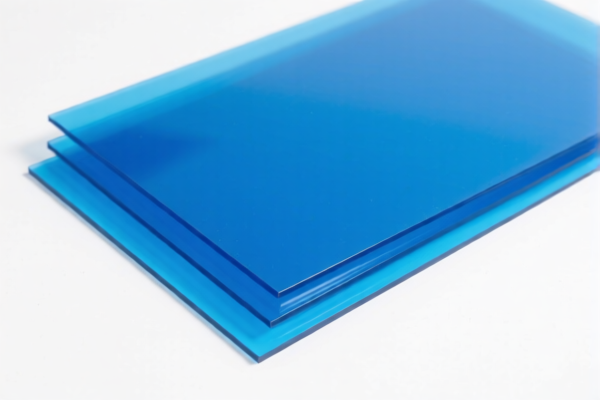
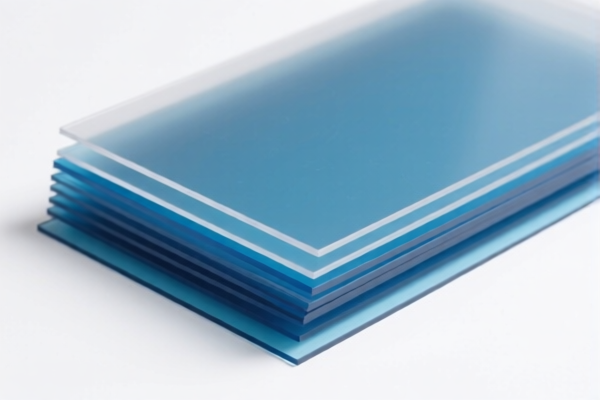
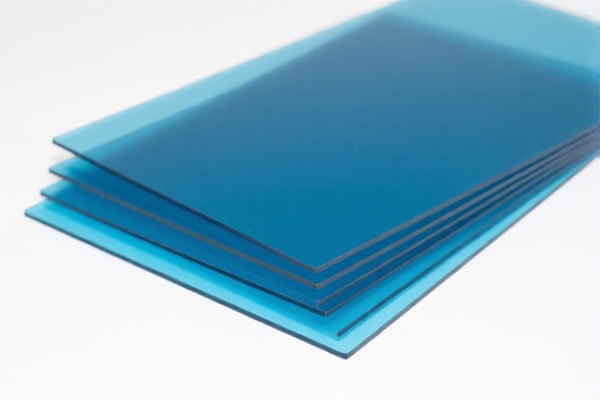
polycarbonate automotive grade sheet
CN → US| HS编码 | 关税税率 | 原产国 | 目的国 | 文档 |
|---|---|---|---|---|
| 3907915000 | 41.5% | CN | US | 官方文档 |
| 3921190090 | 41.5% | CN | US | 官方文档 |
| 3921905050 | 39.8% | CN | US | 官方文档 |
| 8708295160 | 0.0% | CN | US | 官方文档 |
| 3921190090 | 41.5% | CN | US | 官方文档 |
商品图片

AI分析
🚗 Polycarbonate Automotive Grade Sheet (PC Sheets)
🌐 HS Code Reference & Customs Clearance Guide | 2026 Latest Tariff Analysis | Professional Clearance Strategy
📌 Part 1: Product Definition & Classification Strategy
Polycarbonate (PC) sheets, specifically those rated for Automotive Grade, are high-performance transparent thermoplastics known for impact resistance, thermal stability, and optical clarity. In international trade, their classification depends heavily on whether they are viewed as a raw material (plastic sheet) or a finished/auto part.
⚠️ Critical Classification Logic:
- If the sheet is a generic flat plate used as a material substrate →归入 Chapter 39 (Plastics).
- If the sheet is shaped/specialized specifically for body parts (hoods, bumpers) and fits Chapter 87 specific descriptions → Might be misclassified under Chapter 87 (Vehicles).
- Note: Most raw PC sheets are classified as plastic plates, not vehicle parts, unless specially molded.
📦 Part 2: HS Code Classification Details (2026 Latest Tariff Mapping)
Based on the provided data for "Polycarbonate Automotive Grade Sheet," here are the potential HS Codes and their logical derivations.
| HS Code | Product Description / Logic | Applicable Scenario | Tax Rate Structure |
|---|---|---|---|
3907.91.50.00 |
Unsaturated Polyester Based (Note: Data suggests this code is considered for "Automotive Grade Plates" despite material mismatch, likely due to form factor). | Boards/Plates used in automotive contexts. | 41.5% (Base 6.5% + 25% Section 301 + 10% Sec 122) |
3921.19.00.90 |
Plastic Plates/Sheets: Fits the definition of "Plastic Resin" in plate/sheet form. Most accurate for standard PC sheets. | General purpose PC sheets, glazing, protective shields. | 41.5% (Base 6.5% + 25% Section 301 + 10% Sec 122) |
3921.90.50.50 |
Other Plastic Plates/Sheets: Falls under "Other" categories for plastic/resin boards. | Specialized resin boards not fitting standard polyethylene/polypropylene definitions. | 39.8% (Base 4.8% + 25% Section 301 + 10% Sec 122) |
8708.29.51.60 |
Vehicle Body Parts/Accessories: Classified under "Body Parts" if shaped for specific automotive use. | High Risk Classification: If the sheet is pre-formed or explicitly labeled as a body component. | 87.5% (Base 2.5% + 25% Section 301 + 10% Sec 122 + 50% Steel/Aluminum/Copper surcharge if applicable) |
3920.10.00.00 |
Polycarbonate Plates/Sheets: Specifically for Polycarbonate (PC) plastic plates. | Direct classification for PC sheets. | 39.2% (Base 4.2% + 25% Section 301 + 10% Sec 122) |
🔍 Key Observation:
- Codes3921and3907attract a 41.5% total tax.
- Code3920.10.00.00(Specifically for PC) is slightly lower at 39.2%.
- Code8708.29.51.60is dangerous due to potential additional 50% surcharge for metal-containing components or broad automotive part rules, totaling 87.5%.
💰 Part 3: Detailed Tariff Breakdown (2026 Latest Rates)
✅ Applicable Country: United States (US)
✅ Origin: China (CN)
✅ Effective Date: Post-November 2025 adjustments (Section 301 & 122 tariffs active)
🎯 1. The "Safe" Plastic Plate Classifications (3921.19.00.90, 3907.91.50.00)
| Item | Details |
|---|---|
| Base Tariff | 6.5% |
| Section 301 Tariff | +25.0% (Trade Act of 1974, Section 301) |
| Section 122 Tariff | +10.0% (Specific automotive/material surcharges) |
| Total Rate | 41.5% |
| Calculation Base | CIF Value (Cost + Insurance + Freight) |
| De Minimis Exemption | ❌ Not Applicable (Denied for China-origin goods under current rules) |
📌 Explanation:
- These codes classify the product as a plastic sheet/plate.
- The 25% Section 301 tariff is standard for most Chinese plastics.
- The 10% Section 122 is an additional punitive tariff on specific categories of Chinese imports.
- Total Burden: ~41.5% of the declared value.
🎯 2. The Specific Polycarbonate Classification (3920.10.00.00)
| Item | Details |
|---|---|
| Base Tariff | 4.2% |
| Section 301 Tariff | +25.0% |
| Section 122 Tariff | +10.0% |
| Total Rate | 39.2% |
| Calculation Base | CIF Value |
| De Minimis Exemption | ❌ Not Applicable |
📌 Advantage:
- This is the most precise code for Polycarbonate specifically.
- It saves 2.3% compared to the generic "Plastic Plate" (3921) or "Unsaturated Polyester" (3907) classifications.
- Recommendation: If the sheet is purely Polycarbonate, use3920.10.00.00to minimize cost.
🎯 3. The High-Risk Automotive Part Classification (8708.29.51.60)
| Item | Details |
|---|---|
| Base Tariff | 2.5% |
| Section 301 Tariff | +25.0% |
| Section 122 Tariff | +10.0% |
| Steel/Aluminum/Copper Surcharge | +50.0% (If deemed applicable to "auto parts" with metal content or broad categorization) |
| Total Rate | ~87.5% (2.5% + 25% + 10% + 50%) |
| De Minimis Exemption | ❌ Not Applicable |
🚨 WARNING:
- Classifying a raw sheet as a "Vehicle Body Part" (8708) is risky.
- The 50% additional tariff drastically increases costs.
- Only use this if the sheet is pre-molded, painted, and specifically designed to attach directly to a vehicle body without further fabrication.
🛠️ Part 4: Customs Clearance Practical Advice
✅ 1. Documentation Checklist
| Document | Required? | Purpose |
|---|---|---|
| Product Specification Sheet | ✅ Yes | Must explicitly state "Polycarbonate," "Automotive Grade," "Thickness," "Transparency." |
| Material Safety Data Sheet (MSDS) | ✅ Yes | Proves chemical composition (PC resin), helps avoid misclassification as hazardous materials. |
| Commercial Invoice | ✅ Yes | Clearly state "Polycarbonate Sheets" NOT "Vehicle Parts" unless fully assembled. |
| Bill of Lading | ✅ Yes | Ensure packaging matches invoice description (e.g., "Rolled Sheets" vs "Body Panels"). |
| Certificate of Origin | ✅ Yes | To determine eligibility for any potential exemptions (though unlikely for China). |
✅ 2. Critical Declaration Tips
🔥 Golden Rule:
"Declare as Plastic Sheet, NOT Auto Part, to Save 48%!"
| Scenario | Recommended HS Code | Reason |
|---|---|---|
| Raw PC Sheet (Cut to size, clear/tinted) | 3920.10.00.00 |
Most accurate; lowest tax (39.2%). |
| PC Sheet with Automotive Application Label | 3921.19.00.90 |
Safe fallback if 3920 is disputed; tax 41.5%. |
| Pre-Molded Car Hood/Fender | 8708.29.51.60 |
Avoid unless necessary; Tax 87.5%. |
| PC Sheets for Windshields/Glazing | 3920.10.00.00 |
Classified as plastic plate, not glass. |
✅ 3. Common Pitfalls to Avoid
❌ Pitfall 1: Using "Automotive Grade" in the name implies it must be a vehicle part.
👉 Fix: Describe it as "Polycarbonate Sheet for Automotive Interior/Exterior Applications" to keep it in Chapter 39.
❌ Pitfall 2: Assuming "Auto Parts" always have low base tariffs (2.5%).
👉 Fix: The 50% Section 122/301 combination for auto parts from China can exceed 80%. Plastic sheets (39-41%) are cheaper.
❌ Pitfall 3: Misidentifying the resin type.
👉 Fix: If it's Polycarbonate, do not use 3907 (Unsaturated Polyester) or 3921 (Other Plastic) if 3920 (Polycarbonate) is available. Precision saves money.
🌍 Part 5: Global Market Comparison (2026 Outlook)
| Market | Recommended HS Code | Approx. Tax (China Origin) | Key Requirement |
|---|---|---|---|
| 🇺🇸 USA | 3920.10.00.00 |
39.2% | Must prove PC material; High scrutiny on Section 301. |
| 🇨🇳 China | 3920.10.00.00 |
~6-8% | Standard import VAT + Consumption Tax (if any). |
| 🇪🇺 EU | 3920.10.00 |
~6.5% | CE Marking for automotive use; No Section 301. |
| 🇦🇺 Australia | 3920.10.00 |
~5% | GSRV Certification for auto parts. |
📌 Conclusion:
- The US market is the most expensive due to Section 301 and 122 tariffs.
- Strategic Recommendation: Always classify as3920.10.00.00(Polycarbonate Plate) rather than8708(Auto Part) or generic plastics (3921) to optimize cost and compliance.
📌 Part 6: Action Plan for Importers
- Verify Material: Confirm the sheet is 100% Polycarbonate (PC). If blended, use
3921.19.00.90. - Check Shape: Ensure the sheets are flat/rolled. If molded into specific car body shapes, consult a customs broker about
8708risks. - Documentation: Label products as "Polycarbonate Sheets" with application notes like "For automotive interior/exterior fabrication."
- Pre-Arrival Ruling: Consider applying for a Binding Ruling from CBP to lock in the
3920.10.00.00classification and avoid post-import audits.
🎯 Pro Tip:
"Don't let 'Auto Grade' scare you into 'Auto Parts' tax brackets. Stay in Chapter 39, pay 39.2%, and save your margin!"
✨ Professional Clearance Starts with Precise Classification!
💼 Your Bottom Line Depends on the First Digit of the HS Code!
用户评价
关于 HS 编码归类
协调制度(HS)是由世界海关组织(WCO)制定的国际贸易商品分类标准。全球 200 多个国家采用 HS 系统作为海关关税、贸易统计和进出口监管的基础。
每个 HS 编码遵循以下层级结构:
- 章(2 位)——商品大类(例如:第 84 章:机器和机械设备)
- 品目(4 位)——章内的更具体分类
- 子目(6 位)——国际通用细分,所有 WCO 成员国统一使用
- 本国细分(8-10 位)——各国自行扩展的细分编码,如美国 HTSUS 10 位编码
正确的 HS 编码归类对于顺利通关、准确缴纳关税和遵守贸易法规至关重要。错误归类可能导致海关延误、多缴关税或罚款。
从CN进口到US时,适用的关税税率可能包括:
- 最惠国(MFN)税率——适用于 WTO 成员国的标准关税税率
- 普通税率——适用于无贸易协定国家
- 贸易救济关税——附加关税,如 301 条款(反倾销)、232 条款(国家安全)或反补贴税
本页内容仅供参考。如需正式归类,请咨询当地海关或持牌报关代理。