polyethylene gas pipe
CN → US| HS编码 | 关税税率 | 原产国 | 目的国 | 文档 |
|---|---|---|---|---|
| 3917320020 | 38.1% | CN | US | 官方文档 |
| 3917210000 | 38.1% | CN | US | 官方文档 |
| 3926909987 | 22.8% | CN | US | 官方文档 |
| 3926909989 | 22.8% | CN | US | 官方文档 |
| 3917220000 | 38.1% | CN | US | 官方文档 |
商品图片
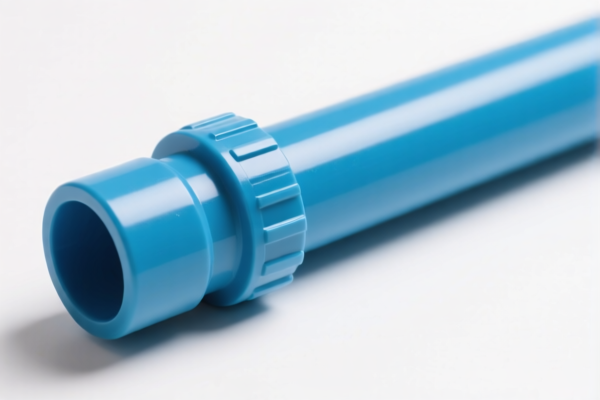
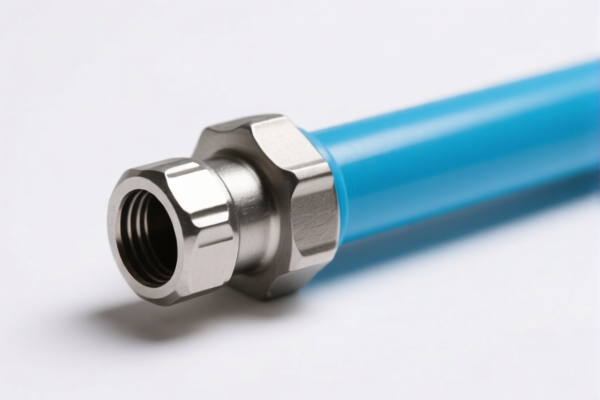
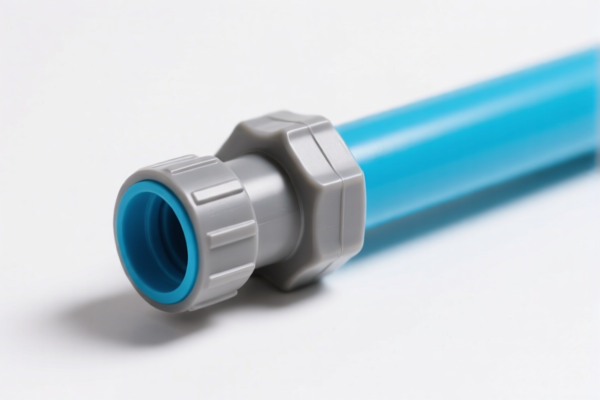
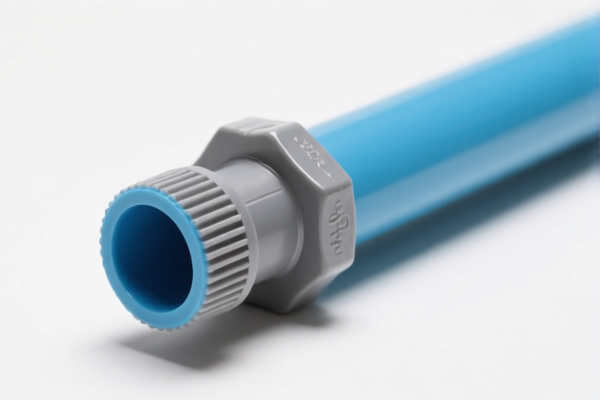
AI分析
🔥 Polyethylene Gas Pipe (PE Gas Pipe)
🌐 HS Code Reference & Customs Clearance Guide | 2026 Latest Tariff Analysis | Professional Customs Strategy
📌 I. Product Definition & Classification: Do You Really Understand "PE Gas Pipes"?
Polyethylene (PE) gas pipes are critical components in natural gas distribution networks, known for their flexibility, corrosion resistance, and durability. In international trade, the classification depends heavily on the specific type of polymer, rigidity, and intended use. Misclassification can lead to significant tariff discrepancies (up to 15% difference) and customs delays.
⚠️ Key Distinction Point:
- If the pipe is made of polyethylene and is rigid (or semi-rigid) and used for plumbing/gas, it generally falls under Heading 3917.
- If it is classified as a generic "other plastic article" due to specific manufacturing details or non-standard forms, it may fall under Heading 3926.
- Crucial Note: Pipes for gas/oil transmission often attract higher duties due to trade remedy laws (Section 301 & Section 232/301 equivalents).
📦 II. HS Code Classification Details (2026 Latest Tariff Authority Comparison)
| HS Code | Product Description | Application Scenario | Tax Rate Structure | Risk Level |
|---|---|---|---|---|
3917.32.00.20 |
Polyethylene pipes, material and form fully match | Standard PE gas pipes, rigid/semi-rigid, precise polymer match | 38.1% (Base 3.1% + 25% Sec 301 + 10% Sec 122) | ⚠️ High |
3917.21.00.00 |
Polyethylene pipes, meets ethylene polymer & rigid pipe requirements | Rigid PE pipes for plumbing/gas, standard ethylene polymers | 38.1% (Base 3.1% + 25% Sec 301 + 10% Sec 122) | ⚠️ High |
3926.90.99.87 |
Polyethylene plastic pipes, classified as plastic articles | Generic PE pipes, non-standard forms, or specific "other" plastic articles | 22.8% (Base 5.3% + 7.5% Sec 301 + 10% Sec 122) | ⚠️ Moderate |
3926.90.99.89 |
Polyethylene pipes, classified as unlisted plastic articles | Unlisted plastic pipes, custom shapes, or specialized fittings | 22.8% (Base 5.3% + 7.5% Sec 301 + 10% Sec 122) | ⚠️ Moderate |
3917.22.00.00 |
Polyethylene plastic oil/gas transmission pipes, meets tubing characteristics | Large diameter PE pipes for oil/gas transmission | 38.1% (Base 3.1% + 25% Sec 301 + 10% Sec 122) | ⚠️ High |
🔍 Key Reminder:
- Headings 3917 vs 3926:3917is for "Tubes, Pipes and Hoses," while3926is for "Other Articles of Plastics." Most standard gas pipes should be in 3917. However, if the pipe is considered an "article" due to specific molding or non-standard use, it might be pushed to 3926, which has a lower total tariff (22.8%).
- Section 122 Tariff (10%): Applies to many Chinese-origin plastic products.
- Section 301 Tariff (25% vs 7.5%): The key differentiator. Pipes under3917often face the higher 25% surcharge, while some3926items may only face 7.5%.
💰 III. 2026 Latest Tariff Rate Details (Including Additional Taxes & Policy Surcharges)
✅ Applicable Country: United States (US)
✅ Origin: China (CN)
✅ Effective Date: 2025 November 10 onwards (including subsequent imports)
🎯 1. 3917.32.00.20 & 3917.21.00.00 & 3917.22.00.00 —— PE Pipes (Plumbing/Transmission)
| Item | Content |
|---|---|
| Base Duty Rate | 3.1% (Ad Valorem) |
| USITC Surcharge (Sec 301) | +25% (From USITC Footnote specific to PE pipes in Ch. 3917) |
| IEEPA/Section 122 Surcharge | +10% (Targeting Chinese plastic products/pipes) |
| Total Tariff Rate | 38.1% |
| Tax Calculation | CIF Value × 38.1% |
| De Minimis Exemption | ❌ NOT Eligible (Deny de minimis for Section 301 goods) |
| Legal Basis Path | IEEPA:9903.01.25 → USITC:3917.xx.xx.xx → FOOTNOTE:3917.30 |
📌 Explanation:
- The 25% surcharge is due to the Section 301 trade war tariffs on specific Chinese plastic pipes.
- The 10% surcharge is an additional layer for plastic articles/pipes under Section 122.
- Total 38.1% is a very high duty. Misclassifying a pipe from3926to3917(or vice versa) can change the cost significantly.
🎯 2. 3926.90.99.87 & 3926.90.99.89 —— Other Plastic Articles (PE Pipes)
| Item | Content |
|---|---|
| Base Duty Rate | 5.3% (Ad Valorem) |
| USITC Surcharge (Sec 301) | +7.5% (Lower tier for specific "other" plastic articles) |
| IEEPA/Section 122 Surcharge | +10% (Same as above) |
| Total Tariff Rate | 22.8% |
| Tax Calculation | CIF Value × 22.8% |
| De Minimis Exemption | ❌ NOT Eligible (Deny de minimis for Section 301 goods) |
| Legal Basis Path | IEEPA:9901.25 → USITC:3926.90.99.87 → FOOTNOTE:3926.90 |
📌 Note:
- These codes are for PE pipes that do not strictly fit the definition of "tubes, pipes, and hoses" under Heading 3917, or are classified as "other plastic articles."
- Savings: Choosing3926over3917can save 15.3% in total duties (38.1% - 22.8%).
- Risk: Customs may challenge this classification if the product is clearly a standard pipe.
🛠️ IV. Customs Clearance Practical Advice (Battle-Proven Pitfall Avoidance Guide)
✅ 1. Required Documentation Checklist (Missing Items = Delay)
| Document | Mandatory | Description |
|---|---|---|
| ✅ Product Specification Sheet | ✔️ | Material: PE100/PE80/PE63, Density, Melt Flow Index (MFI), Pressure Rating (PN) |
| ✅ Test Report | ✔️ | ASTM D3035 (PE Gas Pipe), ISO 4427, or local standards. Must confirm it's for gas. |
| ✅ Product Photos | ✔️ | Clear shots of the pipe, markings (e.g., "GAS", "PE100"), and end caps. |
| ✅ Commercial Invoice | ✔️ | Describe as "Polyethylene Gas Pipe" or "Plastic Pipe for Gas Distribution." Avoid vague terms like "Plastic Tube." |
| ✅ Packing List | ✔️ | Details of coil length, diameter, wall thickness. |
| ✅ Certificate of Origin | ✔️ | Essential for verifying Chinese origin and applying/excluding tariffs. |
✅ 2. Declaration Tips (Key Mnemonic)
🔥 "Gas Pipe Needs ASTM, PE100 is Key, Don't Guess the Code, Check the Section!"
| Scenario | Correct Declaration | Wrong Practice |
|---|---|---|
| Standard PE Gas Pipe (Rigid) | 3917.21.00.00 or 3917.32.00.20 |
Declaring as 3926 without justification → Customs Rejection |
| Large Transmission PE Pipe | 3917.22.00.00 |
Declaring as 3926.90.99.87 → Audit Risk |
| Custom/Non-Standard PE Article | 3926.90.99.87 |
Declaring as 3917 → Overpaying Duty |
| PE Pipe Fittings (Elbows, Tees) | 3926.90.99.87 |
Declaring as 3917 → May be accepted, but risky |
✅ 3. Special Case Handling
| Scenario | Handling Advice |
|---|---|
| PE100 vs PE80 | Both can fall under 3917, but ensure the test report confirms the grade. |
| Colored Pipes (Black with Blue/Yellow Stripes) | These are standard gas pipe markings. Declaring as "General Purpose Pipe" may trigger questions. |
| Coiled vs Cut Pipes | Coiled pipes are still "pipes." Do not declare as "plastic rolls" to avoid 3926 if 3917 is more accurate. |
| Used/Recycled PE | May fall under different subheadings or be subject to stricter environmental checks. |
🌍 V. Global Market Clearance Comparison (2026 Latest)
| Country/Region | Recommended HS Code | Tariff | Certification | Notes |
|---|---|---|---|---|
| 🇺🇸 USA | 3917.32.00.20 / 3926.90.99.87 |
22.8% - 38.1% | ASTM D3035, NSF/ANSI 61 | High Tariffs, strict origin checks |
| 🇨🇳 China | 3917.32.00 |
5% - 8% | GB 15558.1 | No Section 301/122 tariffs |
| 🇪🇺 EU | 3917.31 / 3917.39 |
4% - 6.5% | EN 1555, ISO 4427 | No major anti-dumping on PE pipes |
| 🇬🇧 UK | 3917.31 / 3917.39 |
4% - 6.5% | BS 7159 | Post-Brexit rules apply |
| 🇯🇵 Japan | 3917.31 / 3917.39 |
0% - 3.8% | JIS K 6761 | No anti-dumping on PE gas pipes |
📌 Conclusion:
- USA is the most expensive market due to Section 301 and Section 122 tariffs.
- EU/Asia offer much lower tariffs and smoother clearance for standard PE gas pipes.
- Strategy: If exporting to the US, consider supply chain diversification (e.g., manufacturing in Vietnam or Mexico) to avoid Chinese origin tariffs.
📌 VI. Common Errors & Pitfall Guide (Lessons Learned)
❌ Error 1: Declaring PE Gas Pipe as "Plastic Hose" under 3917.40
👉 Consequence: 3917.40 often has different duty rates and may be rejected if the pipe is rigid. Gas pipes are typically rigid/semi-rigid.
❌ Error 2: Not specifying "Gas" in the description
👉 Consequence: Customs may classify it as "Water Pipe" or "General Purpose," leading to potential misclassification and audits.
❌ Error 3: Using 3926 for standard gas pipes to save duty
👉 Consequence: If the pipe clearly fits 3917 (tubes/pipes/hoses), customs will reclassify it and charge the higher 38.1% rate plus penalties.
❌ Error 4: Ignoring the "Section 122" 10% tariff
👉 Consequence: Underestimating landed cost by 10%. Always include this in your CIF calculation for US imports.
✅ Correct Practice:
"Polyethylene (PE100) Gas Pipe, Black with Yellow Stripe, ASTM D3035 Standard, PN10, 110mm OD, Coil Length 100m, Model XYZ, China Origin"
🎯 VII. Conclusion: Precise Classification, Cost Control, Smooth Clearance!
🎯 Remember the Mnemonic:
🔹 "PE Gas Pipe, Check 3917, If 3917, 38.1%, If 3926, 22.8%, But Justify It!"
🔹 "ASTM Test Report is Key, Origin Matters, Tariffs Can Kill Your Margin!"
📌 Pro Tip:
If your PE pipes are originally manufactured in Vietnam, Mexico, or Thailand, you may exempt the Section 301 and Section 122 tariffs, reducing the rate to Base Duty Only (3.1% - 5.3%).
Recommendation: Apply for a Binding Ruling (Advance Ruling) with US Customs before shipment to confirm the correct HS Code and duty rate.
📣 Immediate Action:
📞 Contact a licensed customs broker + Provide ASTM Test Report + Apply for HS Code Pre-Ruling
🚀 Let your PE Gas Pipes Clear Customs Smoothly, Reduce Costs, and Boost Profits!
✨ Professional Clearance Starts with Accurate Classification!
💼 Every Percent of Duty Matters!
用户评价
关于 HS 编码归类
协调制度(HS)是由世界海关组织(WCO)制定的国际贸易商品分类标准。全球 200 多个国家采用 HS 系统作为海关关税、贸易统计和进出口监管的基础。
每个 HS 编码遵循以下层级结构:
- 章(2 位)——商品大类(例如:第 84 章:机器和机械设备)
- 品目(4 位)——章内的更具体分类
- 子目(6 位)——国际通用细分,所有 WCO 成员国统一使用
- 本国细分(8-10 位)——各国自行扩展的细分编码,如美国 HTSUS 10 位编码
正确的 HS 编码归类对于顺利通关、准确缴纳关税和遵守贸易法规至关重要。错误归类可能导致海关延误、多缴关税或罚款。
从CN进口到US时,适用的关税税率可能包括:
- 最惠国(MFN)税率——适用于 WTO 成员国的标准关税税率
- 普通税率——适用于无贸易协定国家
- 贸易救济关税——附加关税,如 301 条款(反倾销)、232 条款(国家安全)或反补贴税
本页内容仅供参考。如需正式归类,请咨询当地海关或持牌报关代理。