polyisobutylene raw material for adhesives
CN → US| HS编码 | 关税税率 | 原产国 | 目的国 | 文档 |
|---|---|---|---|---|
| 3902205000 | 41.5% | CN | US | 官方文档 |
| 3902201000 | 35.0% | CN | US | 官方文档 |
| 3911901000 | 35.0% | CN | US | 官方文档 |
| 3911901500 | 35.0% | CN | US | 官方文档 |
商品图片

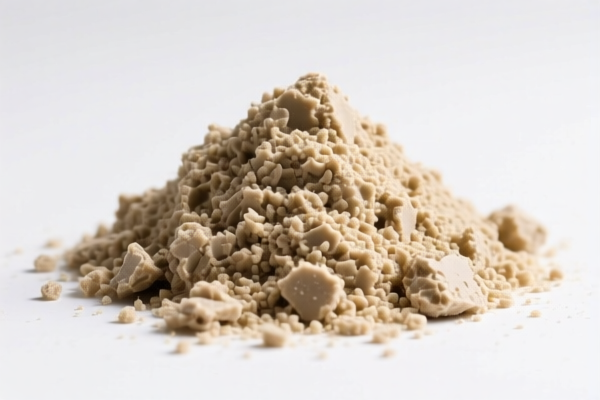
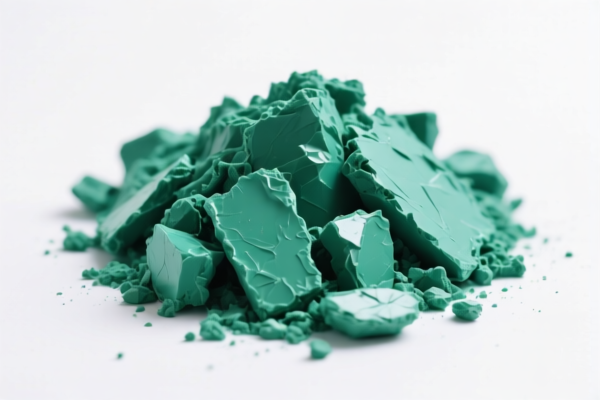
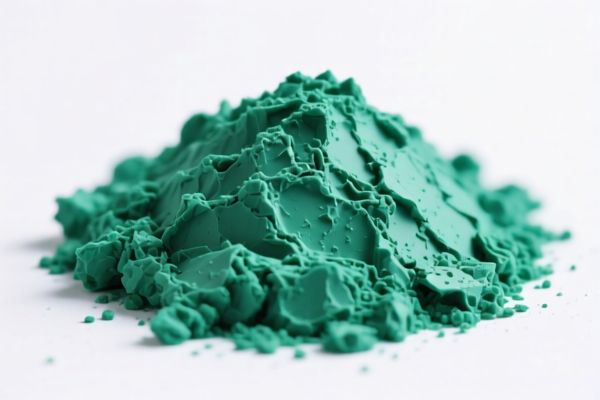
AI分析
🧪 Polyisobutylene (PIB) Raw Material for Adhesives
🌐 HS Code Reference & Customs Clearance Guide | 2026 Latest Tariff Analysis | Professional Clearance Strategy
📌 Part 1: Product Definition & Classification: What is "Polyisobutylene"?
Polyisobutylene (PIB), often referred to as "Butyl Rubber" in its polymerized form, is a synthetic rubber with a simple backbone consisting of only carbon and hydrogen atoms. In the context of adhesives, sealants, and coatings, it is primarily classified as a polymer of isobutylene with a small amount of isoprene.
In international trade, the classification depends heavily on its physical state (primary shape vs. other forms) and chemical composition. It is generally treated as a synthetic plastic material or a modified polymer, falling under Chapter 39 of the Harmonized System.
⚠️ Key Distinction for Customs:
- Primary Forms (Raw Resin): Powder, granules, flakes, or liquid forms that have not been processed into finished articles. These fall under Heading 3902.
- Other Forms (Modified/Resins): If the PIB is compounded, blended with other substances, or classified as a specific type of petroleum resin, it may fall under Heading 3911.
- Application Clue: Even if destined for "adhesives," the raw polymer itself is classified based on its chemical nature, not its end-use.
📦 Part 2: HS Code Classification Details (2026 Latest Tariff Authority Comparison)
| HS Code | Product Description | Applicable Scenario | Primary Shape? | Chemical Category |
|---|---|---|---|---|
3902.20.50.00 |
Polymers of isobutylene, Primary Form | Raw granules/powder for industrial blending | ✅ Yes | Isobutylene Polymer |
3902.20.10.00 |
Polymers of isobutylene, Primary Shape | Standard raw material supply chain | ✅ Yes | Isobutylene Polymer |
3911.90.10.00 |
PIB, Petroleum Resin/Polyolefin Class | Classified as an elastomer/resin derivative | ❌ No (Modified) | Modified Polymer/Elastomer |
3911.90.15.00 |
PIB, Hydrocarbon Polymer | Classified as petroleum resin/other modified polymers | ❌ No (Modified) | Hydrocarbon Polymer |
🔍 Crucial Reminder:
-3902Series: Used when the PIB is in its basic, unmodified chemical state (primary shape).
-3911Series: Used when the PIB is considered a "petroleum resin" or a "modified polymer" (e.g., specific grades treated as resins for adhesive formulation).
- Misclassification Risk: Declaring a raw resin as "petroleum resin" (3911) when it is chemically a primary polymer (3902) can lead to duty discrepancies and customs audits.
💰 Part 3: 2026 Latest Tariff Rate Breakdown (Including Surtaxes & Policy Add-ons)
✅ Applicable Country: United States (US)
✅ Country of Origin: China (CN)
✅ Effective Date: November 10, 2025 (and subsequent imports)
🎯 1. 3902.20.50.00 — Polymers of Isobutylene, Primary Form
| Item | Content |
|---|---|
| Base Tariff Rate | 6.5% (ad valorem) |
| Section 301 Surtax | +25.0% (From USITC Footnote 9903.88.01) |
| Section 122 Tariff | +10.0% (Specific US Trade Policy Surtax) |
| Total Effective Rate | 41.5% |
| Calculation Basis | CIF Value × 41.5% |
| De Minimis Exemption | ❌ Not Applicable (deny_de_minimis) |
| Legal Pathway | Base: 6.5% → Sec 301: +25% → Sec 122: +10% |
📌 Explanation:
- The 6.5% base rate is the standard Most Favored Nation (MFN) rate for isobutylene polymers.
- The 25% is the standard Section 301 tariff on Chinese imports.
- The 10% is the additional Section 122 tariff (or similar recent policy surcharge) applied to this category.
- Total: 41.5%. This is a high-cost entry. You must factor this into your landed cost immediately.
🎯 2. 3902.20.10.00 — Polymers of Isobutylene, Primary Shape
| Item | Content |
|---|---|
| Base Tariff Rate | 0.0% |
| Section 301 Surtax | +25.0% |
| Section 122 Tariff | +10.0% |
| Total Effective Rate | 35.0% |
| Calculation Basis | CIF Value × 35.0% |
| De Minimis Exemption | ❌ Not Applicable |
| Legal Pathway | Base: 0.0% → Sec 301: +25% → Sec 122: +10% |
📌 Note:
- While the base rate is 0%, the surtaxes remain identical (35% total).
- The difference between3902.20.50.00and3902.20.10.00lies in the specific sub-heading definition of "primary form" vs "primary shape," but both attract the same punitive surcharges.
🎯 3. 3911.90.10.00 — PIB, Petroleum Resin/Elastomer Class
| Item | Content |
|---|---|
| Base Tariff Rate | 0.0% |
| Section 301 Surtax | +25.0% |
| Section 122 Tariff | +10.0% |
| Total Effective Rate | 35.0% |
| Calculation Basis | CIF Value × 35.0% |
| De Minimis Exemption | ❌ Not Applicable |
| Legal Pathway | Base: 0.0% → Sec 301: +25% → Sec 122: +10% |
📌 Explanation:
- Classified under Chapter 3911 (Petroleum Resins/Synthetic Polymers).
- Even though the base is 0%, the 35% surcharge still applies due to the Chinese origin.
- This category is often used for PIBs that are chemically modified or blended specifically for resin-like applications.
🎯 4. 3911.90.15.00 — PIB, Hydrocarbon Polymer/Petroleum Resin
| Item | Content |
|---|---|
| Base Tariff Rate | 0.0% |
| Section 301 Surtax | +25.0% |
| > Section 122 Tariff | +10.0% |
| Total Effective Rate | 35.0% |
| Calculation Basis | CIF Value × 35.0% |
| De Minimis Exemption | ❌ Not Applicable |
| Legal Pathway | Base: 0.0% → Sec 301: +25% → Sec 122: +10% |
📌 Note:
- This is the most generic "other hydrocarbon polymer" category.
- Like3911.90.10.00, it benefits from a 0% base rate but incurs the 35% total duty.
- Use this only if the product cannot be strictly defined as a standard "isobutylene polymer" under 3902.
🛠️ Part 4: Customs Clearance Practical Advice (实战避坑指南)
✅ 1. Required Documentation Checklist (Non-Negotiable)
| Document | Required | Explanation |
|---|---|---|
| ✅ Product Specification Sheet | ✔️ | Must detail molecular weight, vinyl content, and physical state (liquid/powder). |
| ✅ Formula/Composition List | ✔️ | Critical for distinguishing between "Primary Polymer" (3902) and "Modified Resin" (3911). |
| ✅ Photos (Clear Labeling) | ✔️ | Show bulk packaging, labeling, and any safety data sheets (SDS). |
| ✅ Commercial Invoice | ✔️ | Must explicitly state "Polyisobutylene, Chemical Formula C4H8n, Primary Polymer." |
| ✅ Certificate of Origin (CO) | ✔️ | Proof of Chinese origin triggers the 35%-41.5% duty. |
| ✅ Packaging List | ✔️ | Detail net/gross weight and container type. |
✅ 2. Declaration Tips (Key Mantra)
🔥 “Be Precise, Avoid Ambiguity: ‘Resin’ vs. ‘Polymer’ is the Duty Divider!”
| Scenario | Correct Declaration | Wrong Declaration |
|---|---|---|
| Raw Granules/Powder | 3902.20.10.00 or 3902.20.50.00 |
“Adhesive Raw Material” → High risk of audit |
| Blended/Modified PIB | 3911.90.10.00 or 3911.90.15.00 |
“Pure Isobutylene” → Misclassification |
| Liquid PIB (Low Viscosity) | 3902.20.10.00 (If primary) |
“Chemical Solvent” → Wrong Chapter |
| Finished Adhesive Sealant | Not Covered Here (Likely 3506 or 4009) | Using 39xx codes for finished glue → Illegal |
📌 Critical Warning:
- Do NOT declare as "Adhesive" if it is the raw polymer. Raw polymers are chemicals; finished adhesives are industrial products.
- Ensure the Chemical Identity matches the HS Code. If it’s a pure polymer, use 3902. If it’s a compounded resin, use 3911.
✅ 3. Special Case Handling
| Situation | Handling Advice |
|---|---|
| PIB in Drum/Barrel | Declare as "Primary Form." Ensure drums are UN-certified if liquid. |
| Blended with Solvents | If solvents are >50% by weight, it might fall under Chapter 38 (Chemical Products) or 3506 (Prepared Adhesives). Consult a broker. |
| OEM/Private Label | Provide the supplier’s technical data sheet. Private labeling does not change the HS code. |
| High Molecular Weight (Butyl Rubber) | Still 3902.20 if it’s polymerized isobutylene-isoprene. Do not confuse with Butyl Latex (3902.90). |
🌍 Part 5: Global Market Clearance Comparison (2026 Latest)
| Country/Region | Recommended HS Code | Base Duty | Surtax (China) | Total Estimate | Notes |
|---|---|---|---|---|---|
| 🇺🇸 USA | 3902.20.10.00 |
0% | +35% | 35.0% | High cost. Section 301 + 122 apply. |
| 🇺🇸 USA | 3902.20.50.00 |
6.5% | +35% | 41.5% | Higher base, same surtax. |
| 🇨🇳 China | 3902.20.10.00 |
0% | 0% | 0% | No surtax on domestic/China-origin. |
| 🇪🇺 EU | 3902.20.10 |
0% | 0% | 0% | No major anti-dumping on PIB. |
| 🇮🇳 India | 3902.20.10 |
0-7.5% | 0% | ~7.5% | Check IGST & Custom Duty. |
📌 Conclusion:
- USA is the most expensive market for Chinese-sourced PIB due to the 35-41.5% effective duty.
- EU and China have significantly lower barriers.
- If possible, explore supply chain diversification (e.g., sourcing from South Korea or Germany) to avoid US surcharges.
📌 Part 6: Common Mistakes & Pitfalls (Lessons Learned)
❌ Mistake 1: Declaring "Adhesive" instead of "Polyisobutylene Polymer"
👉 Consequence: Wrong HS Code, potential fraud allegation, or delayed clearance.
👉 Correction: Declare the chemical composition accurately.
❌ Mistake 2: Ignoring the "Section 122" tariff
👉 Consequence: Underpayment of duties by 10% → Penalties + Interest.
👉 Correction: Always add the 10% surcharge to your cost model for US imports from China.
❌ Mistake 3: Confusing "Primary Form" with "Finished Article"
👉 Consequence: Misclassification between 3902/3911 and 3506/4009.
👉 Correction: If it’s raw polymer in bags/drums, it’s 39xx. If it’s a tube of sealant, it’s 4009/3506.
✅ Correct Declaration Example:
“POLYISOBUTYLENE, PRIMARY POLYMER, GRADE XYZ, 25KG DRUM, CHEMICAL NAME: 1-METHYL-1-BUTENE POLYMER, ORIGIN: CHINA”
🎯 Part 7: Conclusion: Precision in Classification Saves Money!
🎯 Remember the Mantra:
🔹 “Primary Shape is 3902, Resin is 3911, US Duty is 35-41%, Don’t Guess!”
🔹 “Raw Polymer ≠ Adhesive, Declare Chemically, Avoid Penalty!”
📌 Pro Tip:
- If your PIB is originating from Vietnam, Malaysia, or South Korea, you may avoid the 25-35% surtaxes, reducing the duty to near 0-7.5%.
- Consider Advance Ruling (Ruling Letter) from US Customs (CBP) if you are importing large volumes. This locks in the HS code and duty rate for 5 years, providing cost certainty.
📣 Immediate Action:
📞 Contact a Licensed Customs Broker + Provide SDS + Apply for CBP Ruling
🚀 Secure Your Supply Chain, Optimize Your Landed Cost, and Clear Customs Smoothly!
✨ Professional Clearance Starts with Accurate Classification!
💼 Every Percentage Point of Duty is a Point of Profit!
用户评价
关于 HS 编码归类
协调制度(HS)是由世界海关组织(WCO)制定的国际贸易商品分类标准。全球 200 多个国家采用 HS 系统作为海关关税、贸易统计和进出口监管的基础。
每个 HS 编码遵循以下层级结构:
- 章(2 位)——商品大类(例如:第 84 章:机器和机械设备)
- 品目(4 位)——章内的更具体分类
- 子目(6 位)——国际通用细分,所有 WCO 成员国统一使用
- 本国细分(8-10 位)——各国自行扩展的细分编码,如美国 HTSUS 10 位编码
正确的 HS 编码归类对于顺利通关、准确缴纳关税和遵守贸易法规至关重要。错误归类可能导致海关延误、多缴关税或罚款。
从CN进口到US时,适用的关税税率可能包括:
- 最惠国(MFN)税率——适用于 WTO 成员国的标准关税税率
- 普通税率——适用于无贸易协定国家
- 贸易救济关税——附加关税,如 301 条款(反倾销)、232 条款(国家安全)或反补贴税
本页内容仅供参考。如需正式归类,请咨询当地海关或持牌报关代理。