polymer modified stabilizer
CN → US| HS编码 | 关税税率 | 原产国 | 目的国 | 文档 |
|---|---|---|---|---|
| 3812396000 | 41.5% | CN | US | 官方文档 |
| 3909505000 | 41.3% | CN | US | 官方文档 |
| 3909501000 | 35.0% | CN | US | 官方文档 |
| 3812393000 | 35.0% | CN | US | 官方文档 |
| 3824401000 | 41.5% | CN | US | 官方文档 |
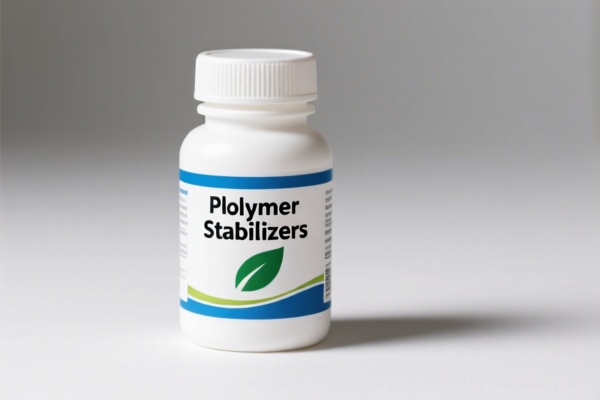
商品图片


AI分析
🧪 Polymer Modified Stabilizer (Polyurethane-Based)
🌐 HS Code Reference & Customs Clearance Guide | 2026 Latest Tariff Breakdown | Professional Strategy for US Imports
📌 I. Product Definition & Classification: What is "Polymer Modified Stabilizer"?
The "Polymer Modified Stabilizer" is a specialized chemical additive used primarily in the plastic and rubber industries to enhance durability and resistance to degradation (such as oxidation, UV light, or thermal breakdown). Based on the material profile provided, this product contains Polyurethane (PU) components and functions as a composite stabilizer/antioxidant.
In international trade, the classification hinges on two key factors: 1. Material Composition: Does it contain Polyurethane? If yes, it leans towards Chapter 39 (Plastics). If it is purely a chemical mixture/auxiliary, it leans towards Chapter 38. 2. Function: Is it a "Stabilizer for Plastics/Rubber" (Chapter 38) or a "Polymer/Resin" itself (Chapter 39)?
⚠️ Key Distinction:
- If the product is primarily a chemical mixture/additive designed to stabilize other materials, it falls under Chapter 38 (Miscellaneous Chemical Products).
- If the product is identified as a Polyurethane resin/polymer itself, it falls under Chapter 39 (Plastics and Articles Thereof).
- Crucial Note: Due to the "Polymer Modified" nature and presence of Polyurethane, US Customs and Border Protection (CBP) often scrutinizes these goods for Section 301 (25%) and Section 122 (10%) additional tariffs.
📦 II. HS Code Classification Matrix (2026 Latest Tariff Mapping)
Based on the provided data, here are the 5 valid HS Code classifications with their respective tax structures.
| HS Code | Product Description & Logic | Total Tax Rate (US/CN) | Tax Breakdown |
|---|---|---|---|
| 3812.39.60.00 | Stabilizers for Rubber/Plastics: Matches the function of "stabilizer" and material "polyurethane" as a plastic/synthetic resin additive. | 41.5% | Base: 6.5% + Sec 301: 25.0% + Sec 122: 10% |
| 3909.50.50.00 | Polyurethanes in Primary Forms: Matches the explicit material keyword "Polyurethane". No conflict in form or use. | 41.3% | Base: 6.3% + Sec 301: 25.0% + Sec 122: 10% |
| 3909.50.10.00 | Polyurethanes (Other): Matches Polyurethane material. Inferring it as a PU-chain chemical auxiliary. | 35.0% | Base: 0.0% + Sec 301: 25.0% + Sec 122: 10% |
| 3812.39.30.00 | Composite Stabilizers (Including Polyurethane Binders): Explicitly matches the definition of composite stabilizers containing polyurethane binders. Form: Chemical Auxiliary. | 35.0% | Base: 0.0% + Sec 301: 25.0% + Sec 122: 10% |
| 3824.40.10.00 | Non-Refined Oils & Additives: Matches the "modified aromatic key material" feature. Inferred use as a chemical industry additive. | 41.5% | Base: 6.5% + Sec 301: 25.0% + Sec 122: 10% |
🔍 Analysis Highlight:
- Lowest Rate:3909.50.10.00and3812.39.30.00offer a 35.0% total tax rate.
- Highest Rate:3812.39.60.00and3824.40.10.00carry a 41.5% total tax rate.
- Why the Difference? The difference lies in the Base Duty (6.5% vs 0.0%). The Section 301 (25%) and Section 122 (10%) duties are constant across all these codes for Chinese origin goods.
💰 III. Detailed Tax Clause Explanation (US Import)
✅ Applicable Country: United States (US)
✅ Origin: China (CN)
✅ Applicable Laws: Section 301 (Trade Act of 1974) & Section 122 (Trade Act of 1974)
🎯 1. The "35.0%" Scenario (Lowest Liability)
HS Codes: 3909.50.10.00 OR 3812.39.30.00
| Component | Rate | Legal Basis / Explanation |
|---|---|---|
| Base Duty | 0.0% | These subheadings are duty-free or have minimal base duties for general imports, but see below for surcharges. |
| Section 301 (25%) | +25.0% | Imposed on specific Chinese goods under US Trade Act Section 301. Applies to most chemical/polymer imports from China. |
| Section 122 (10%) | +10.0% | Imposed under Section 122 of the Trade Act of 1974 (often related to specific import relief or emergency measures). |
| TOTAL | 35.0% | Calculation: CIF Value × 35% |
📌 Why this is optimal: By classifying the product as a Polyurethane Product (
3909...) or a Composite Stabilizer with Polyurethane Binder (3812...30), you benefit from a 0% base duty. The 25% + 10% surcharges are unavoidable for Chinese origin, but starting from 0% base saves you 6.3-6.5% compared to other codes.
🎯 2. The "41.3% - 41.5%" Scenario (Higher Liability)
HS Codes: 3909.50.50.00 OR 3812.39.60.00 OR 3824.40.10.00
| Component | Rate | Legal Basis / Explanation |
|---|---|---|
| Base Duty | 6.3% - 6.5% | These subheadings carry a standard Most Favored Nation (MFN) duty rate. |
| Section 301 (25%) | +25.0% | Same as above. |
| Section 122 (10%) | +10.0% | Same as above. |
| TOTAL | 41.3% - 41.5% | Calculation: CIF Value × 41.5% (max) |
📌 Warning: Choosing
3812.39.60.00or3824.40.10.00results in a ~6.5% higher total tax than the optimal codes. This is a significant cost difference on high-value shipments.
🛠️ IV. Customs Clearance Practical Advice (Avoiding Pitfalls)
✅ 1. Documentation Checklist (Mandatory)
| Document | Requirement | Purpose |
|---|---|---|
| Technical Data Sheet (TDS) | Must explicitly state "Polyurethane" and "Stabilizer/Antioxidant" | Proves material composition for HS Code selection. |
| Formula/Ingredient List | Detailed percentage of Polyurethane vs. other aromatics | Crucial for distinguishing between 3909 (Polymer) and 3812/3824 (Mixture). |
| Product Photos | Clear shot of label, container, and batch number | Verifies commercial identity. |
| Certificate of Origin | Must state "Made in China" | Triggers Section 301 and 122 duties. |
| Commercial Invoice | Description: "Polymer Modified Stabilizer, Polyurethane-based, for Plastic/Rubber Industry" | Aligns with HS Code summary. |
✅ 2. Strategic Classification Recommendation
🔥 Best Strategy for Cost Savings:
Aim for HS Code3812.39.30.00or3909.50.10.00.
Reason:
-3812.39.30.00is the most accurate for "Composite Stabilizers" if the product is a mixture. It explicitly mentions "Polyurethane Binders."
-3909.50.10.00is viable if the product is predominantly Polyurethane resin.Avoid
3812.39.60.00unless you lack detailed formulation data, as it has a higher base duty.
✅ 3. Common Errors & Consequences
| Error | Consequence | Correction |
|---|---|---|
| Misclassifying as General Chemical (No PU mention) | CBP may reclassify to 3824.40.10.00 → Higher Tax (41.5%) |
Always highlight "Polyurethane" in description. |
| Claiming "Duty-Free" Status | Rejection: Section 301/122 duties never apply to duty-free claims for China origin. | Accept the 35%+ tax liability. |
| Splitting Shipment (Components) | Risk of "Essential Character" test: CBP may consolidate components to 3812.39.60.00 → Audit + Penalties. |
Declare as single unit. |
| Ignoring Section 122 | Underpayment of 10% duty → Liquidation Adjustment + Interest. | Include 10% in cost model. |
🌍 V. Global Market Comparison (2026)
| Market | Recommended HS Code | Est. Total Tax (China Origin) | Key Requirement |
|---|---|---|---|
| 🇺🇸 USA | 3812.39.30.00 |
35.0% | Sec 301 (25%) + Sec 122 (10%) |
| 🇨🇳 China | 3812.39.30.00 |
Varies (Import Duty ~5-8%) | No US Section 301/122 |
| 🇪🇺 EU | 3812.39.90 |
~4-5% | No US-style surcharges; REACH compliant |
| 🇯🇵 Japan | 3812.39 |
~3-4% | No US surcharges |
📌 Conclusion:
- US Imports are Expensive: Due to geopolitical tariffs (301 & 122), expect 35-41.5% total duty.
- Optimize HS Code: Use3812.39.30.00or3909.50.10.00to minimize the base duty component.
- Documentation is Key: Ensure "Polyurethane" is clearly stated in the TDS to support the lower base duty classification.
📌 VI. Frequently Asked Questions (FAQ)
Q1: Can I get a duty exemption for Section 301?
❌ No. Section 301 duties on Chinese goods are currently mandatory with no general exemptions for chemicals like this.
Q2: Why is there a 10% "Section 122" duty?
📌 Answer: Section 122 of the Trade Act of 1974 allows the President to adjust duties (usually up to 15%) for specific national security or trade balance reasons. In 2025-2026, this has been applied to various Chinese chemical imports.
Q3: What if my product is 90% Polyurethane?
👉 Classify under Chapter 39 (3909.50.10.00). It is viewed as a "Polymer" rather than a "Mixture," often resulting in lower base duties.
Q4: What if my product is 10% Polyurethane + 90% other stabilizers?
👉 Classify under Chapter 38 (3812.39.30.00). It is viewed as a "Composite Stabilizer" where Polyurethane is a key binder/component.
🎯 VII. Final Verdict & Action Plan
🎯 Action Steps for Importers:
1. Review Technical Data: Confirm the percentage and role of Polyurethane.
2. Select HS Code:
- If PU is the main component → 3909.50.10.00 (35.0% Total).
- If PU is a binder in a stabilizer mix → 3812.39.30.00 (35.0% Total).
3. Calculate Landed Cost: Include 35% duty in your pricing model.
4. Prepare Docs: Highlight "Polyurethane Modified Stabilizer" in the commercial invoice.
🔹 Pro Tip:
"HS Code is not just a number; it's a cost driver. A 6.5% base duty difference can save tens of thousands on large shipments!"
✨ Professional Clearance Starts with Precision!
💼 Don't let classification errors eat your profit margin.
📣 Immediate Action:
📞 Consult your customs broker with the TDS and request a Pre-Ruling for
3812.39.30.00or3909.50.10.00to ensure smooth entry.
🚀 Secure your supply chain, optimize your taxes, and ship with confidence!
用户评价
关于 HS 编码归类
协调制度(HS)是由世界海关组织(WCO)制定的国际贸易商品分类标准。全球 200 多个国家采用 HS 系统作为海关关税、贸易统计和进出口监管的基础。
每个 HS 编码遵循以下层级结构:
- 章(2 位)——商品大类(例如:第 84 章:机器和机械设备)
- 品目(4 位)——章内的更具体分类
- 子目(6 位)——国际通用细分,所有 WCO 成员国统一使用
- 本国细分(8-10 位)——各国自行扩展的细分编码,如美国 HTSUS 10 位编码
正确的 HS 编码归类对于顺利通关、准确缴纳关税和遵守贸易法规至关重要。错误归类可能导致海关延误、多缴关税或罚款。
从CN进口到US时,适用的关税税率可能包括:
- 最惠国(MFN)税率——适用于 WTO 成员国的标准关税税率
- 普通税率——适用于无贸易协定国家
- 贸易救济关税——附加关税,如 301 条款(反倾销)、232 条款(国家安全)或反补贴税
本页内容仅供参考。如需正式归类,请咨询当地海关或持牌报关代理。