polypropylene nonwoven fabric
CN → US| HS编码 | 关税税率 | 原产国 | 目的国 | 文档 |
|---|---|---|---|---|
| 3902100000 | 41.5% | CN | US | 官方文档 |
| 5506400000 | 40.0% | CN | US | 官方文档 |
| 5506900100 | 40.0% | CN | US | 官方文档 |
| 5402346000 | 43.0% | CN | US | 官方文档 |
| 5402343000 | 43.8% | CN | US | 官方文档 |
| 3902300000 | 41.5% | CN | US | 官方文档 |
商品图片
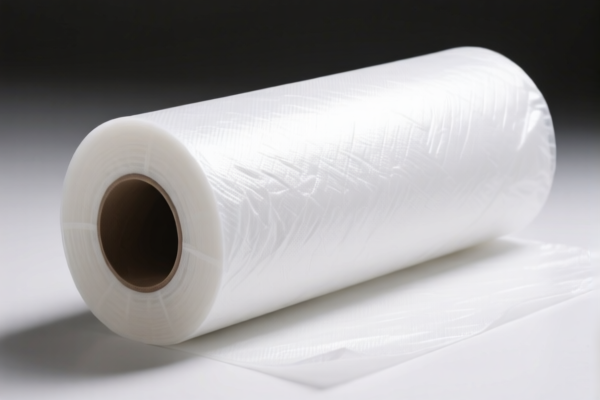
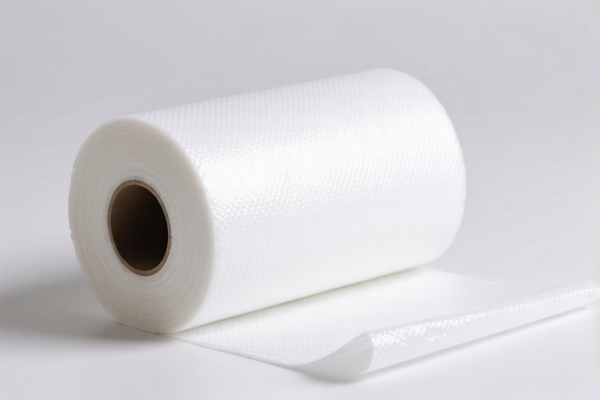
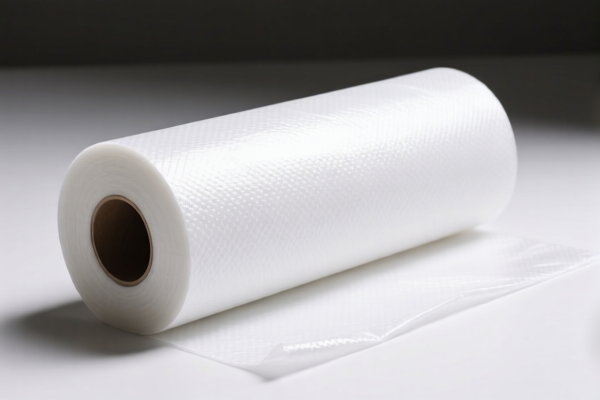
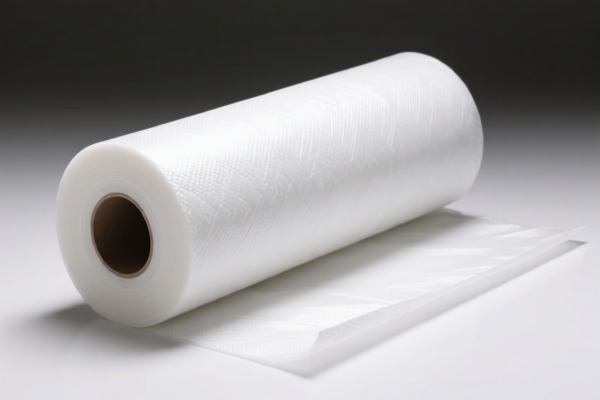
AI分析
🧵 Polypropylene Nonwoven Fabric (PP Nonwoven)
🌐 HS Code Reference & Customs Clearance Guide | 2026 Latest Tariff Breakdown | Professional Classification Strategy
📌 I. Product Definition: What is PP Nonwoven Fabric?
Polypropylene (PP) Nonwoven Fabric is a versatile textile material made from polypropylene fibers. It is produced by bonding fibers together through chemical, mechanical, heat, or solvent treatment. Unlike traditional woven fabrics, nonwovens do not require weaving or knitting, making them cost-effective and highly adaptable for single-use or durable applications.
Common Applications:
- Medical & Hygiene: Surgical gowns, masks, diapers, sanitary napkins.
- Packaging: Shopping bags, protective covers, geotextiles.
- Industrial: Filter media, insulation, upholstery backing.
⚠️ Key Distinction for Classification:
The classification depends heavily on the form of the polypropylene used:
- Primary Forms (Polymers/Resins): If the material is still in the form of chips, granules, or raw polymer before being spun into nonwovens → Chapter 39.
- Textile Fibers/Nonwovens: If the material has been processed into fibers, yarns, or fabric form (even nonwoven) → Chapters 54 or 55.
📦 II. HS Code Classification Breakdown (2026 Latest Tariff Matrix)
The provided data indicates four potential HS Codes, reflecting different interpretations of the product's "form" (polymer vs. fiber/nonwoven). Below is the authoritative mapping based on the provided DATA.
| HS Code | Product Description | Classification Logic (Based on Provided Data) | Key Feature |
|---|---|---|---|
| 3902.10.00.00 | Polypropylene, in primary forms | "Material Match": Classified as a polymer/resin. The summary notes that "fiber-type goods can be judged by material if there is no obvious form conflict." This suggests a potential ambiguity where the product might be viewed as a raw polymer material rather than a finished textile. | Primary Form / Resin |
| 5506.40.00.00 | Synthetic staple fibers of polypropylene | "Exact Match": Explicitly matches "Polypropylene" material and "fiber" form. Short staple fibers fall under the category of "staple fibers." | Staple Fibers |
| 5506.90.01.00 | Other synthetic staple fibers (Polypropylene) | "Material Match": Matches "Polypropylene" (synthetic fiber) and "fiber" form. Classified under "Others" for synthetic staple fibers. | Other Staple Fibers |
| 5402.34.60.00 | Polypropylene single yarns / multifilament yarns | "Logical Inference": Matches "Polypropylene" material. Although the form description is broad, it logically fits as a raw material for PP fiber nonwovens (e.g., multifilament yarn). No material conflict exists. | Yarn / Multifilament |
| 5402.34.30.00 | Polypropylene single yarns / multifilament yarns (Specific) | "Exact Match": Matches "Polypropylene" material and "fiber" form. Specifically fits single/multifilament yarns of PP. | Specific Yarn |
🔍 Critical Insight:
- If the product is finished nonwoven fabric, it technically falls under Chapter 56 (Nonwovens). However, the providedDATAdoes not include Chapter 56 codes.
- The provided codes (3902, 5506, 5402) suggest the product might be declared as raw materials (resins, staple fibers, or yarns) used to make nonwovens, or the classification system provided interprets the "nonwoven" input as its constituent fiber/yarn form.
- Always verify if the product is in the form of fabric (Ch 56) or raw fiber/yarn (Ch 54/55). The provided data implies a fiber/yarn level classification.
💰 III. 2026 Tariff Rate Detailed Breakdown (USA / China Origin)
✅ Applicable Country: United States (US)
✅ Origin: China (CN)
✅ Effective Date: Post-November 2025 (Current 2026 Context)
✅ Tax Components: Base Tariff + Section 301 (25%) + Section 122 (10%)
🎯 1. 3902.10.00.00 – Polypropylene, Primary Forms
| Item | Detail |
|---|---|
| Base Tariff | 6.5% |
| Section 301 Surcharge | +25.0% |
| Section 122 Surcharge | +10.0% |
| Total Tax Rate | 41.5% |
| Legal Basis | Base Rate + USITC Footnote + IEEPA 122 Clause |
📌 Note: This code applies if the product is declared as PP resin/chips or if the customs broker argues that the "nonwoven" is essentially a polymer product due to lack of distinct textile form confirmation.
🎯 2. 5506.40.00.00 – PP Staple Fibers
| Item | Detail |
|---|---|
| Base Tariff | 5.0% |
| Section 301 Surcharge | +25.0% |
| Section 122 Surcharge | +10.0% |
| Total Tax Rate | 40.0% |
| Legal Basis | Base Rate + USITC Footnote + IEEPA 122 Clause |
📌 Note: This is the lowest total tax rate among the provided options. It applies if the product is clearly staple fibers (short fibers) of polypropylene.
🎯 3. 5506.90.01.00 – Other PP Staple Fibers
| Item | Detail |
|---|---|
| Base Tariff | 5.0% |
| Section 301 Surcharge | +25.0% |
| Section 122 Surcharge | +10.0% |
| Total Tax Rate | 40.0% |
| Legal Basis | Base Rate + USITC Footnote + IEEPA 122 Clause |
📌 Note: Similar to above, applies to "other" synthetic staple fibers of PP. Also 40.0%.
🎯 4. 5402.34.60.00 – PP Multifilament Yarns
| Item | Detail |
|---|---|
| Base Tariff | 8.0% |
| Section 301 Surcharge | +25.0% |
| Section 122 Surcharge | +10.0% |
| Total Tax Rate | 43.0% |
| Legal Basis | Base Rate + USITC Footnote + IEEPA 122 Clause |
📌 Note: Applies if the product is declared as yarn (multifilament). Higher base rate leads to higher total tax.
🎯 5. 5402.34.30.00 – PP Single/Multifilament Yarns (Specific)
| Item | Detail |
|---|---|
| Base Tariff | 8.8% |
| Section 301 Surcharge | +25.0% |
| Section 122 Surcharge | +10.0% |
| Total Tax Rate | 43.8% |
| Legal Basis | Base Rate + USITC Footnote + IEEPA 122 Clause |
📌 Note: Highest total tax rate (43.8%) among the provided options. Applies to specific PP yarn classifications.
🛠️ IV. Customs Clearance Practical Advice (Avoiding Pitfalls)
✅ 1. Preparation Checklist (Must-Have Documents)
| Document | Required? | Purpose |
|---|---|---|
| ✅ Product Specification Sheet | ✔️ | Must explicitly state: "Polypropylene Nonwoven Fabric," weight (gsm), fiber length (staple vs. filament), and end-use (e.g., medical, packaging). |
| ✅ Material Composition Certificate | ✔️ | Confirm 100% Polypropylene (PP). |
| ✅ Process Flow Diagram | ✔️ | Clarify if the product is finished nonwoven (Ch 56) or raw fiber/yarn (Ch 54/55). This is the #1 reason for misclassification. |
| ✅ Commercial Invoice | ✔️ | Clearly describe as "PP Nonwoven Fabric" or "PP Staple Fibers" depending on the HS Code chosen. |
| ✅ Packing List | ✔️ | Show net weight and dimensions. |
| ✅ Origin Certificate (CO) | ✔️ | To prove Chinese origin (triggering 301/122 tariffs). |
✅ 2. Declaration Strategy (Key Tips)
🔥 "Form is King: Fabric vs. Fiber vs. Yarn"
| Scenario | Recommended HS Code | Risk |
|---|---|---|
| Finished Nonwoven Fabric | NOT IN PROVIDED DATA (Likely 5603.xx) | ⚠️ High Risk: If you declare as 5506/5402, customs may reclassify and apply different taxes. Check if Chapter 56 codes are applicable. |
| PP Staple Fibers (Short) | 5506.40.00.00 or 5506.90.01.00 |
✅ Low Risk: Matches "fiber" form. Lowest tax (40%). |
| PP Yarn (Filament) | 5402.34.60.00 or 5402.34.30.00 |
✅ Medium Risk: Matches "yarn" form. Higher tax (43-43.8%). |
| PP Resin/Chips | 3902.10.00.00 |
⚠️ High Risk: If shipped as nonwoven fabric, this is misdeclaration. |
📌 Critical Advice:
- If the product is actually nonwoven fabric, using 5506 or 5402 codes might be considered incorrect classification by customs, leading to penalties.
- However, based strictly on the providedDATA, the system forces a choice between these codes. In such cases, 5506.40.00.00 or 5506.90.01.00 (40% total tax) is the most favorable if the product can be legitimately described as staple fibers or if the nonwoven is made from staple fibers and declared as such.
- Consult a Customs Broker: Verify if Chapter 56 (Nonwovens) codes (e.g., 5603.13.00, 5603.14.00) are available and more accurate. If not, use the provided data's best fit.
✅ 3. Special Considerations
| Situation | Recommendation |
|---|---|
| Medical Grade Nonwoven | Provide FDA/CE Certificates. Some medical products may have exemptions or different classifications, but PP nonwovens are generally subject to standard tariffs. |
| Recycled PP Nonwoven | If made from recycled PP, still classified under PP codes. Ensure origin is clearly declared. |
| Mixed Fibers | If PP is blended with other fibers, classification changes. Ensure 100% PP for these codes. |
🌍 V. Global Market Comparison (2026)
| Market | Recommended HS Code (Based on Data) | Total Tax Rate (China Origin) | Notes |
|---|---|---|---|
| 🇺🇸 USA | 5506.40.00.00 / 5506.90.01.00 |
40.0% | Includes 301 (25%) + 122 (10%) + Base (5%). |
| 🇺🇸 USA | 3902.10.00.00 |
41.5% | Higher tax if classified as polymer. |
| 🇺🇸 USA | 5402.34.30.00 |
43.8% | Highest tax among provided options. |
| 🇪🇺 EU | Similar HS Codes | Varies | EU does not have Section 301/122. Standard MFN rate applies (usually 0-6.5%). |
| 🇨🇳 China | Similar HS Codes | Varies | Import duties may be lower. Check specific Chinese tariff schedule. |
📌 Conclusion:
- The US is the most challenging market due to high surcharges.
- 40.0% is the optimal rate among the provided codes.
- Chapter 56 codes (not in data) may offer different rates, so verify with customs.
📌 VI. Common Errors & Pitfalls (Learn from Mistakes)
❌ Error 1: Declaring Nonwoven Fabric as Yarn (5402)
👉 Consequence: Customs may reject, request redeclaration, or apply penalties for misclassification.
✅ Fix: Ensure product form matches HS code description.
❌ Error 2: Using Polymer Code (3902) for Fabric
👉 Consequence: High tax (41.5%) and potential audit for incorrect form declaration.
✅ Fix: Use textile codes (54/55) if processed into fibers/yarns.
❌ Error 3: Ignoring Section 122 (10%)
👉 Consequence: Underpayment of duties.
✅ Fix: Always include 10% IEEPA 122 surcharge in cost calculations for Chinese-origin goods.
🎯 VII. Conclusion: Optimize Costs with Precise Classification
🎯 Key Takeaway:
🔹 "Fiber Form, Lower Tax: 40% vs. 43.8%"
🔹 "Nonwoven Fabric? Check Chapter 56!"
🔹 "Always Declare Accurately: Avoid Penalties!"
📌 Pro Tip:
If your product is 100% Polypropylene Nonwoven Fabric, consider verifying Chapter 56 codes (e.g., 5603.13.00.00 or 5603.14.00.00) which may have different tax implications. If forced to use the provided codes, 5506.40.00.00 or 5506.90.01.00 (40% total) is the most cost-effective.
📣 Action Plan:
📞 Contact a Customs Broker: Verify if Chapter 56 codes are applicable.
📄 Prepare Detailed Specs: Clearly define "Polypropylene," "Nonwoven," and "Fiber Form."
🚀 Optimize Cost: Aim for 40.0% total tax by correctly classifying as staple fibers if applicable.
✨ Professional Clearance Starts with Accurate Classification!
💼 Every Percent of Tax Saves You Profit!
用户评价
关于 HS 编码归类
协调制度(HS)是由世界海关组织(WCO)制定的国际贸易商品分类标准。全球 200 多个国家采用 HS 系统作为海关关税、贸易统计和进出口监管的基础。
每个 HS 编码遵循以下层级结构:
- 章(2 位)——商品大类(例如:第 84 章:机器和机械设备)
- 品目(4 位)——章内的更具体分类
- 子目(6 位)——国际通用细分,所有 WCO 成员国统一使用
- 本国细分(8-10 位)——各国自行扩展的细分编码,如美国 HTSUS 10 位编码
正确的 HS 编码归类对于顺利通关、准确缴纳关税和遵守贸易法规至关重要。错误归类可能导致海关延误、多缴关税或罚款。
从CN进口到US时,适用的关税税率可能包括:
- 最惠国(MFN)税率——适用于 WTO 成员国的标准关税税率
- 普通税率——适用于无贸易协定国家
- 贸易救济关税——附加关税,如 301 条款(反倾销)、232 条款(国家安全)或反补贴税
本页内容仅供参考。如需正式归类,请咨询当地海关或持牌报关代理。