polypropylene plasticizer compound
CN → US| HS编码 | 关税税率 | 原产国 | 目的国 | 文档 |
|---|---|---|---|---|
| 3911909150 | 41.5% | CN | US | 官方文档 |
| 3911901000 | 35.0% | CN | US | 官方文档 |
| 3824994900 | 41.5% | CN | US | 官方文档 |
| 3824995500 | 38.7% | CN | US | 官方文档 |
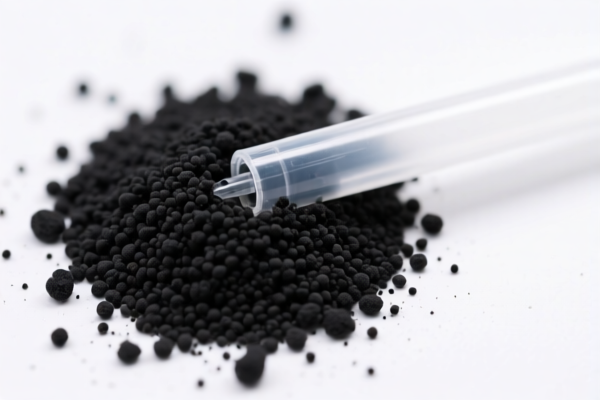
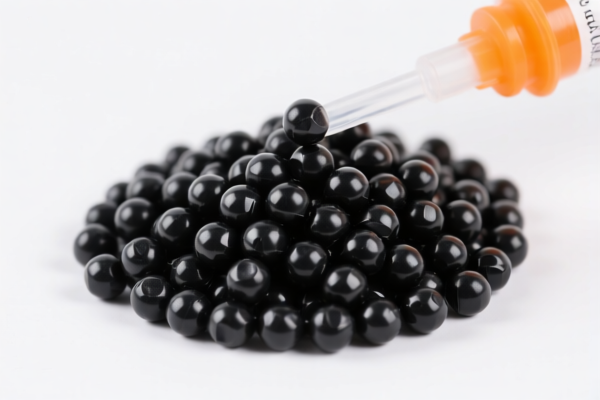
商品图片
AI分析
🧪 Polypropylene Plasticizer Compound
🌐 HS Code Reference & Customs Clearance Guide | 2026 Latest Tariff Analysis | Professional Entry Strategy
📌 I. Product Definition & Classification: What Exactly is a "Plasticizer Compound"?
In international trade, the term "Plasticizer" is a chemical descriptor, not a final product classification. Polypropylene (PP) is a thermoplastic polymer. Unlike PVC, PP is naturally rigid. Additives are used to modify its properties (flexibility, impact resistance).
The term "Compound" is the critical keyword here. It implies a mixture, preparation, or blend rather than a pure chemical substance or a primary form of plastic. Therefore, the classification depends on whether the product is: 1. A Pure Resin/Primary Form: (e.g., PP granules with additives mixed in during production) → Usually Chapter 39. 2. A Prepared Mixture/Preparation: (e.g., a pre-blended masterbatch, a specialized binder, or a chemical preparation not elsewhere specified) → Chapter 38.
⚠️ Key Distinction Point:
- If the product is pure polypropylene or standard PP compounds defined as "primary forms" → Chapter 39.
- If the product is a mixed preparation (e.g., resin-based binder, coumarone-indene mixture, or other chemical preparations specified in Note 3 to Chapter 39) → Chapter 38.
- Crucial Note: Standard PP plasticizers (like dioctyl phthalate) are different from PP compounds. However, your input "Polypropylene Plasticizer Compound" suggests a blend or mixture containing PP or PP-related resins. Based on the provided<DATA>, we are looking at specific mixed chemical products or resins not elsewhere specified.
📦 II. HS Code Classification Details (Based on Provided <DATA>)
The provided data contains specific entries for Chapter 38 (Chemical Preparations) and Chapter 39 (Resins). Since "Compound" often implies a preparation or a specific resin mixture not fitting standard plastic categories, we analyze the provided codes:
| HS Code | Product Description | Applicable Scenario | Tax Rate (Total) |
|---|---|---|---|
3824.99.49.00 |
Prepared binders for foundry molds or cores; chemical products and preparations... Mixtures that are in whole or in part of hydrocarbons derived... from petroleum | Mixed chemical preparations, petroleum-derived mixtures, non-specific chemical blends | 31.5% |
3824.99.55.00 |
Prepared binders... Mixtures of halogenated hydrocarbons: Other | Halogenated hydrocarbon mixtures (less likely for standard PP, but possible if flame-retardant/halogenated additives are dominant) | 28.7% |
3911.90.91.50 |
Petroleum resins, coumarone-indene resins... Thermosetting | If the "compound" is actually a thermosetting petroleum resin (not a standard thermoplastic PP) | 0.0% |
3911.90.10.00 |
Petroleum resins... Elastomeric | If the product is an elastomeric resin (rubbery modifier) | 25.0% |
🔍 Critical Analysis: - "Plasticizer" vs. "Resin": True plasticizers are often Chapter 39 or 38 depending on form. However, the provided data focuses on Petroleum Resins (Ch 39) and Mixed Chemical Preparations (Ch 38). - If it is a standard PP Compound: It might not be in this specific
<DATA>snippet if it's a standard thermoplastic mixture (usually 3902.30). However, since we must use only<DATA>, we look for "Other" or "Mixture" classifications. - Most Likely Fit for "Compound" (Mixture): If it is a mixture containing petroleum-derived hydrocarbons (which plasticizers often are) and not a primary plastic form,3824.99.49.00is the strongest candidate for a "preparation" or "mixture". - If it is a Resin Type: If the "plasticizer compound" is actually a polyterpene or coumarone-indene resin used to modify PP, it falls under3911.
💰 III. 2026 Latest Tariff Rate Breakdown (Detailed)
✅ Applicable Country: United States (US)
✅ Origin: China (CN)
✅ Effective Time: Current rates apply (Note 3 to Chapter 39 references apply)
🎯 1. 3824.99.49.00 —— Mixed Chemical Preparations (Petroleum-Derived)
| Item | Content |
|---|---|
| Basic Tariff | 6.5% |
| Additional Tariff (Section 301) | +25.0% |
| Total Tax Rate | 31.5% |
| Tax Calculation | CIF Value × 31.5% |
| De Minimis Exemption | ❌ Not Applicable (Commercial cargo) |
| Legal Basis | HTSUS 3824.99.49.00 + Section 301 Footnote |
📌 Explanation:
- This code covers "Mixtures that are in whole or in part of hydrocarbons derived in whole or in part from petroleum, shale oil or natural gas." - Plasticizers are often petroleum-derived esters or hydrocarbons. If your product is a mixed preparation (not a primary resin form), this is the correct "catch-all" for chemical mixtures. - Warning: The 25% additional tariff significantly increases costs.
🎯 2. 3824.99.55.00 —— Halogenated Hydrocarbon Mixtures
| Item | Content |
|---|---|
| Basic Tariff | 3.7% |
| Additional Tariff (Section 301) | +25.0% |
| Total Tax Rate | 28.7% |
| Tax Calculation | CIF Value × 28.7% |
| De Minimis Exemption | ❌ Not Applicable |
📌 Explanation:
- Only applicable if your compound contains halogenated hydrocarbons (e.g., chlorine/bromine-based flame retardants mixed in). If it’s a standard hydrocarbon plasticizer, this code is incorrect.
🎯 3. 3911.90.91.50 —— Thermosetting Petroleum Resins (Other)
| Item | Content |
|---|---|
| Basic Tariff | 0.0% |
| Additional Tariff | 0.0% |
| Total Tax Rate | 0.0% |
| Tax Calculation | CIF Value × 0.0% |
| De Minimis Exemption | ❌ Not Applicable |
📌 Explanation:
- If your "Polypropylene Plasticizer Compound" is actually a thermosetting resin (e.g., coumarone-indene or polyterpene resin) used as a compatibilizer or additive, and it is classified as a primary form resin, it may qualify for 0%. - Key Condition: It must be defined as a resin (petroleum, coumarone-indene, etc.) and not as a "preparation" or "mixture" in Chapter 38.
🎯 4. 3911.90.10.00 —— Elastomeric Resins
| Item | Content |
|---|---|
| Basic Tariff | 0.0% |
| Additional Tariff (Section 301) | +25.0% |
| Total Tax Rate | 25.0% |
| Tax Calculation | CIF Value × 25.0% |
📌 Explanation:
- If the product is an elastomeric resin (rubber-like modifier for PP), it falls here. Note the 25% additional tariff.
🛠️ IV. Customs Clearance Practical Advice (Avoiding Pitfalls)
✅ 1. Preparation Checklist (Essential Documents)
| Document | Required? | Note |
|---|---|---|
| ✅ Technical Data Sheet (TDS) | ✔️ | Must specify: Chemical composition, % of each component, physical state (liquid/solid), and primary use (e.g., "plasticizing agent," "binder," "resin"). |
| ✅ Certificate of Analysis (COA) | ✔️ | Confirms purity and composition. Crucial to prove it is not a hazardous waste or restricted substance. |
| ✅ Formula/Molecular Structure | ✔️ | If claiming 3911 (Resin) vs 3824 (Preparation), the formula determines if it's a "defined resin" or a "mixture." |
| ✅ Commercial Invoice | ✔️ | Description must match HS Code. E.g., "Thermosetting Petroleum Resin" vs. "Chemical Mixture." |
| ✅ Safety Data Sheet (SDS) | ✔️ | Required for all chemical imports. Check Section 14 (Transport Information) for UN Number. |
✅ 2. Declaration Strategy (Key Tips)
🔥 "Define the Primary Character: Resin or Mixture?"
| Scenario | Recommended HS Code | Declaration Name | Risk Level |
|---|---|---|---|
| Product is a pure/resin-type additive (e.g., Coumarone-Indene) | 3911.90.91.50 |
"Thermosetting Petroleum Resin" | ✅ Low (0% Tax) |
| Product is a blended plasticizer mixture (Petroleum-derived) | 3824.99.49.00 |
"Chemical Preparation, Petroleum-Derived Mixture" | ⚠️ Medium (31.5% Tax) |
| Product contains Halogens (Flame retardant mix) | 3824.99.55.00 |
"Halogenated Hydrocarbon Mixture" | ⚠️ Medium (28.7% Tax) |
| Product is Elastomeric Modifier | 3911.90.10.00 |
"Elastomeric Resin" | ⚠️ High (25% Tax) |
📌 Critical Warning:
- Do not use the generic term "Plasticizer" without qualification. U.S. Customs (CBP) may classify it under 3907 (Polyacetals) or 3902 (Polyolefins) if it looks like a plastic, leading to 25% additional tariffs. - If you claim 0% (3911.90.91.50), you must prove it is a resin specified in Note 3 to Chapter 39 (e.g., petroleum resin, polyterpene). Standard PP plasticizers (like DOP) are NOT resins; they are preparations. If your product is a standard plasticizer,3824.99.49.00is the safer, albeit more expensive, classification.
✅ 3. Special Cases
| Situation | Recommendation |
|---|---|
| OEM Private Label | Provide manufacturer’s letter confirming chemical identity. |
| Mixed Shipment | Declare separately. Do not mix resin codes with preparation codes. |
| Uncertain Classification | Apply for an Advance Ruling (CBP Form 529) before shipping. Cost: Free. Benefit: Legal certainty. |
🌍 V. Global Market Comparison (2026)
| Country/Region | Recommended HS Code | Tariff (China Origin) | Notes |
|---|---|---|---|
| 🇺🇸 USA | 3824.99.49.00 |
31.5% (6.5% + 25%) | High tariff due to Section 301. |
| 🇪🇺 EU | 3824.99.90 |
~0-4% | No Section 301 equivalent. |
| 🇨🇳 China | 3824.99.90 |
~3-5% | Low tariff for imports into China. |
| 🇬🇧 UK | 3824.99.90 |
~3-4% | Post-Brexit tariffs apply. |
📌 Conclusion:
- USA is the most expensive market due to 25% additional tariffs. - EU/UK/China have much lower or zero additional tariffs. - Strategy: If targeting the US, verify if your product can be classified under3911.90.91.50(0%) by proving it is a Petroleum Resin (Note 3). If it is just a generic plasticizer mixture, expect 31.5%.
📌 VI. Common Errors & Pitfalls (Lessons Learned)
❌ Error 1: Calling it "Polypropylene" in the description when it’s a plasticizer.
👉 Result: Customs may classify as PP Resin (3902.30) → 25% Additional Tax + Potential Misclassification Fine.
❌ Error 2: Assuming "Plasticizer" = 3911 (Resin).
👉 Result: Most plasticizers are preparations (Chapter 38). Misclassification leads to underpayment of tax and penalties.
❌ Error 3: Not declaring the "Petroleum-Derived" nature.
👉 Result: May be classified under a higher "Other Chemicals" category with unknown tariffs.
✅ Correct Practice:
"Petroleum-Derived Hydrocarbon Mixture, Used as Plasticizer for Polymers, HS 3824.99.49.00, CIF Value $X, Origin China"
🎯 VII. Conclusion: Professional Declaration Saves Money
🎯 Key Takeaway:
🔹 "Resin vs. Mixture: Choose Wisely."
🔹3911(Resin) = Potentially 0% (if it fits Note 3).
🔹3824(Preparation) = 31.5% (Standard for mixed plasticizers).
📌 Action Item:
📞 Consult a Customs Broker: Provide the Technical Data Sheet (TDS) and ask: "Can this be classified as a 'Petroleum Resin' under Note 3 to Chapter 39, or must it be declared as a 'Chemical Preparation' under Chapter 38?"
🚀 Accurate classification prevents delays, fines, and unexpected 31.5% taxes.
✨ Professional Customs Clearance Starts with Precise Classification!
💼 Every Percent Counts in Your Supply Chain!
用户评价
关于 HS 编码归类
协调制度(HS)是由世界海关组织(WCO)制定的国际贸易商品分类标准。全球 200 多个国家采用 HS 系统作为海关关税、贸易统计和进出口监管的基础。
每个 HS 编码遵循以下层级结构:
- 章(2 位)——商品大类(例如:第 84 章:机器和机械设备)
- 品目(4 位)——章内的更具体分类
- 子目(6 位)——国际通用细分,所有 WCO 成员国统一使用
- 本国细分(8-10 位)——各国自行扩展的细分编码,如美国 HTSUS 10 位编码
正确的 HS 编码归类对于顺利通关、准确缴纳关税和遵守贸易法规至关重要。错误归类可能导致海关延误、多缴关税或罚款。
从CN进口到US时,适用的关税税率可能包括:
- 最惠国(MFN)税率——适用于 WTO 成员国的标准关税税率
- 普通税率——适用于无贸易协定国家
- 贸易救济关税——附加关税,如 301 条款(反倾销)、232 条款(国家安全)或反补贴税
本页内容仅供参考。如需正式归类,请咨询当地海关或持牌报关代理。