polyurethane mortar
CN → US| HS编码 | 关税税率 | 原产国 | 目的国 | 文档 |
|---|---|---|---|---|
| 3909502000 | 37.1% | CN | US | 官方文档 |
| 3909505000 | 41.3% | CN | US | 官方文档 |
| 3824500050 | 35.0% | CN | US | 官方文档 |
| 3824500010 | 35.0% | CN | US | 官方文档 |
| 3214100020 | 38.7% | CN | US | 官方文档 |
| 3214905000 | 38.25% | CN | US | 官方文档 |
商品图片


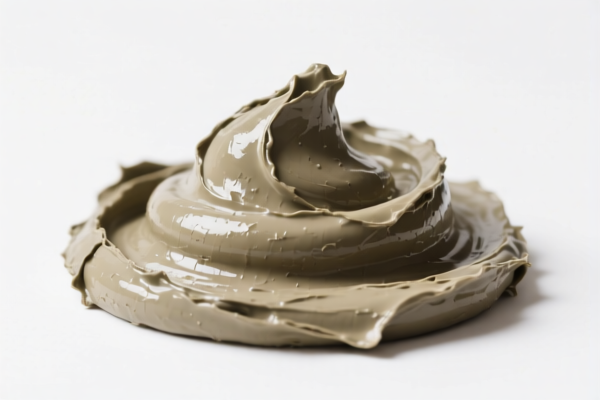

AI分析
🏗️ Polyurethane Mortar (Polyurethane-Based Mortars and Concretes)
🌐 HS Code Reference & Customs Clearance Guide | 2026 Updated Tariff Analysis | Professional Import Strategy
📌 One, Product Definition & Classification: What Exactly Is Polyurethane Mortar?
Polyurethane mortar is a high-performance, nonrefractory construction material designed for industrial flooring, chemical-resistant surfaces, tank linings, and structural repairs. It is a cementitious composite made from polyurethane resins, fillers, and hardeners, known for its exceptional adhesion, durability, and resistance to abrasion, chemicals, and moisture.
⚠️ Key Distinction:
- If the product is in primary form (uncured, liquid or paste) → classified under 3909.50.20.00 or 3909.50.50.00
- If it is already mixed, wet, or in a ready-to-use state → classified under 3824.50.00.10
- If it is in a dry, powder-like form → may fall under 3824.50.00.50 (Other nonrefractory mortars)🔍 Important Note:
Polyurethane mortar is not a traditional cement-based mortar. It is a synthetic resin-based product, which significantly affects its HS code and tariff treatment.
📦 Two, HS Code Classification Details (2026 Official Tariff Comparison)
| HS Code | Product Description | Use Case | Cured State? | Primary Form? |
|---|---|---|---|---|
3909.50.20.00 |
Polyurethanes: Cements (in primary form) | Industrial flooring, tank linings, repair mortars | ❌ No | ✅ Yes (liquid/paste) |
3909.50.50.00 |
Polyurethanes: Other (in primary form) | Adhesives, sealants, structural repair compounds | ❌ No | ✅ Yes (liquid/paste) |
3824.50.00.10 |
Nonrefractory mortars and concretes: Wet | Ready-to-use mixtures, on-site application | ✅ Yes (wet) | ❌ No |
3824.50.00.50 |
Nonrefractory mortars and concretes: Other | Dry powders, pre-mixed kits, bulk materials | ❌ No | ✅ Yes (dry) |
📌 Critical Insight:
- "Primary form" = uncured, liquid, or paste state → Use 3909.50.20.00 / 3909.50.50.00
- "Wet" or "ready-to-use" → Use 3824.50.00.10
- Dry, powdered, or pre-mixed → Use 3824.50.00.50
💰 Three, 2026 Latest Tariff Breakdown (With附加 Taxes & Policy Clauses)
✅ Applicable Country: United States (US)
✅ Origin: China (CN)
✅ Effective Date: November 10, 2025 (including future imports)
🎯 1. 3909.50.20.00 — Polyurethane Cements (in primary form)
| Item | Detail |
|---|---|
| Base Tariff | 0.0% (ad valorem) |
| Additional Tariff (USITC) | 0.0% |
| Total Tax Rate | 0.0% |
| Tax Calculation | CIF Value × 0.0% |
| De Minimis Exemption | ✅ Yes (if value < $800) |
| Legal Basis Path | USITC:3909.50.20.00 → FOOTNOTE:9903.88.01 (No additional duty) |
📌 Explanation:
- This code is exempt from all附加 taxes, including USITC and IEEPA. - Ideal for importing raw polyurethane resins for on-site mixing or industrial use. - No 25% or 31.3% surcharge — a major advantage over other polyurethane products.
🎯 2. 3909.50.50.00 — Other Polyurethanes (in primary form)
| Item | Detail |
|---|---|
| Base Tariff | 6.3% |
| Additional Tariff (USITC) | 25.0% |
| Total Tax Rate | 31.3% |
| Tax Calculation | CIF Value × 31.3% |
| De Minimis Exemption | ❌ No (denied) |
| Legal Basis Path | USITC:3909.50.50.00 → FOOTNOTE:9903.88.01 → IEEPA:9903.01.25 |
📌 Explanation:
- Despite being in "primary form", this category is subject to 25% USITC附加 tax under Section 301. - The 6.3% base tariff + 25%附加 = 31.3% total. - No de minimis relief — even small shipments are fully taxed. - Applies to adhesives, sealants, and non-cement polyurethane products.
🎯 3. 3824.50.00.10 — Wet Nonrefractory Mortars & Concretes
| Item | Detail |
|---|---|
| Base Tariff | 0.0% |
| Additional Tariff (USITC) | 25.0% |
| Total Tax Rate | 25.0% |
| Tax Calculation | CIF Value × 25.0% |
| De Minimis Exemption | ❌ No |
| Legal Basis Path | USITC:3824.50.00.10 → FOOTNOTE:9903.88.01 |
📌 Explanation:
- Applies to wet, ready-to-use polyurethane mortars (e.g., pre-mixed kits). - No base tariff, but 25% USITC附加 tax applies. - No de minimis exemption — even small orders are fully taxed. - Common for on-site construction, repair work, and industrial flooring.
🎯 4. 3824.50.00.50 — Other Nonrefractory Mortars & Concretes
| Item | Detail |
|---|---|
| Base Tariff | 0.0% |
| Additional Tariff (USITC) | 25.0% |
| Total Tax Rate | 25.0% |
| Tax Calculation | CIF Value × 25.0% |
| De Minimis Exemption | ❌ No |
| Legal Basis Path | USITC:3824.50.00.50 → FOOTNOTE:9903.88.01 |
📌 Explanation:
- Applies to dry, powder-based, or pre-packaged polyurethane mortars. - No base tariff, but 25% USITC附加 tax applies. - No de minimis relief — fully taxable. - Common for bulk industrial supply, construction kits, and export-ready products.
🛠️ Four, Customs Clearance Best Practices (Real-World Tips)
✅ 1. Required Documentation (Must-Have)
| Document | Required? | Notes |
|---|---|---|
| ✅ Product Specification Sheet | ✔️ | Include resin type, curing agent, mixing ratio, shelf life |
| ✅ Safety Data Sheet (SDS) | ✔️ | Required for chemical classification |
| ✅ Certificate of Origin (CO) | ✔️ | Crucial for tariff eligibility |
| ✅ Commercial Invoice | ✔️ | Must clearly state "Polyurethane Mortar, in primary form" or "Wet mix" |
| ✅ Packing List | ✔️ | Show packaging type (drum, pail, bulk) |
| ✅ Test Reports (e.g., ASTM D4541, ISO 24312) | ✔️ | Prove performance and compliance |
✅ 2.申报技巧(Key Rules)
🔥 "Form Matters, State Matters, Origin Matters!"
| Scenario | Correct HS Code | Wrong Code | Risk |
|---|---|---|---|
| Liquid polyurethane resin (uncured) | 3909.50.20.00 |
3909.50.50.00 |
31.3% vs 0% → $10,000+ extra tax |
| Wet, ready-to-use mortar | 3824.50.00.10 |
3909.50.50.00 |
25% vs 31.3% → avoid higher tax |
| Dry powder mix | 3824.50.00.50 |
3909.50.20.00 |
25% vs 0% → big tax loss |
| Mixed with aggregates | 3824.50.00.10 |
3824.50.00.50 |
Depends on state — wet = 10, dry = 50 |
✅ 3. Special Cases Handling
| Case | Recommendation |
|---|---|
| OEM Custom Formulation | Provide R&D report + mixing instructions to avoid misclassification |
| Export from Vietnam/Mexico | Apply for IEEPA exemption — may reduce tax to 0% |
| Small Sample Shipments | Still subject to 25% if not under de minimis — do not assume free |
| Used in Military/Infrastructure Projects | Apply for government use exemption — requires pre-approval |
🌍 Five, Global Market Comparison (2026 Update)
| Country | Recommended HS Code | Tariff | Certification | Notes |
|---|---|---|---|---|
| 🇺🇸 USA | 3909.50.20.00 |
0% | None (if exempt) | Best for raw resins |
| 🇨🇳 China | 3909.50.20.00 |
5% | CCC | No附加 tax |
| 🇪🇺 EU | 3909.50.20.00 |
0% | CE | No附加 tax |
| 🇦🇺 Australia | 3824.50.00.10 |
5% | RCM | 25% USITC not applied |
| 🇯🇵 Japan | 3909.50.50.00 |
0% | PSE | No附加 tax |
📌 Conclusion:
- USA is the most complex — 0% only for3909.50.20.00
- China, EU, Japan, Australia offer lower or zero附加 tax
- Vietnam/Mexico origin can avoid 25% USITC tax — strategic sourcing advised
📌 Six, Common Mistakes & How to Avoid Them (Real-World Pitfalls)
❌ Mistake 1: Calling "wet mortar" a "resin" → using 3909.50.50.00
👉 Result: 31.3% tax instead of 25% → $2,000+ extra
❌ Mistake 2: Mislabeling "dry powder" as "liquid" → using 3909.50.20.00
👉 Result: 0% vs 25% → tax evasion risk, penalties
❌ Mistake 3: Not providing SDS or spec sheet → delayed release, inspection
❌ Mistake 4: Using generic name like "Polyurethane Cement" without state description
👉 Result: Customs may assume "wet" → 25% tax
✅ Correct Declaration Example:
"Polyurethane Mortar, in primary form (liquid), for industrial flooring, non-cured, 50 kg drum, SDS & CO provided, Origin: China"
🎯 Seven, Final Verdict: Precision Saves Money!
🎯 Remember the Golden Rules:
🔹 "Liquid = 3909.50.20.00 → 0% tax"
🔹 "Wet mix = 3824.50.00.10 → 25% tax"
🔹 "Dry powder = 3824.50.00.50 → 25% tax"
🔹 "Other resin = 3909.50.50.00 → 31.3% tax"
🔹 "De minimis? Only if not 25% or 31.3%!"
📌 Pro Tip:
✅ Source from Vietnam, Mexico, or Thailand to avoid 25% USITC附加 tax
✅ Apply for Advance Ruling (Pre-Approval) before shipping
✅ Use a US customs broker with polyurethane experience
📣 Take Action Now:
📞 Contact a specialized customs broker + provide product photos + request HS Code pre-ruling
🚀 Reduce your import cost by up to 31.3% — don’t let misclassification drain your profits!
✨ Smart Importing Starts with Accurate Classification!
💼 Your next shipment could save you thousands — if you get the HS Code right.
用户评价
关于 HS 编码归类
协调制度(HS)是由世界海关组织(WCO)制定的国际贸易商品分类标准。全球 200 多个国家采用 HS 系统作为海关关税、贸易统计和进出口监管的基础。
每个 HS 编码遵循以下层级结构:
- 章(2 位)——商品大类(例如:第 84 章:机器和机械设备)
- 品目(4 位)——章内的更具体分类
- 子目(6 位)——国际通用细分,所有 WCO 成员国统一使用
- 本国细分(8-10 位)——各国自行扩展的细分编码,如美国 HTSUS 10 位编码
正确的 HS 编码归类对于顺利通关、准确缴纳关税和遵守贸易法规至关重要。错误归类可能导致海关延误、多缴关税或罚款。
从CN进口到US时,适用的关税税率可能包括:
- 最惠国(MFN)税率——适用于 WTO 成员国的标准关税税率
- 普通税率——适用于无贸易协定国家
- 贸易救济关税——附加关税,如 301 条款(反倾销)、232 条款(国家安全)或反补贴税
本页内容仅供参考。如需正式归类,请咨询当地海关或持牌报关代理。