polyurethane textile composite buffer board
CN → US| HS编码 | 关税税率 | 原产国 | 目的国 | 文档 |
|---|---|---|---|---|
| 3921131500 | 41.5% | CN | US | 官方文档 |
| 3921131950 | 40.3% | CN | US | 官方文档 |
| 5903202500 | 42.5% | CN | US | 官方文档 |
| 5903202000 | 35.0% | CN | US | 官方文档 |
| 6810990080 | 35.0% | CN | US | 官方文档 |
商品图片
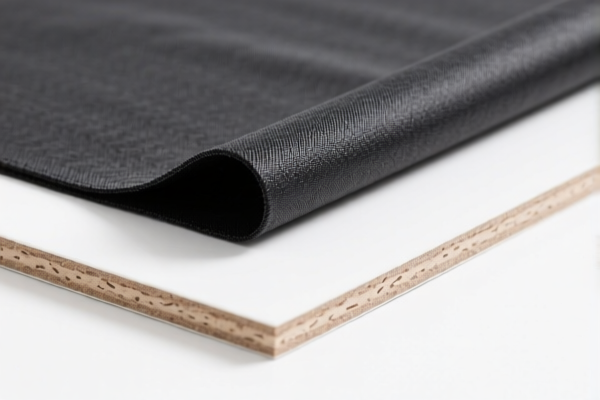
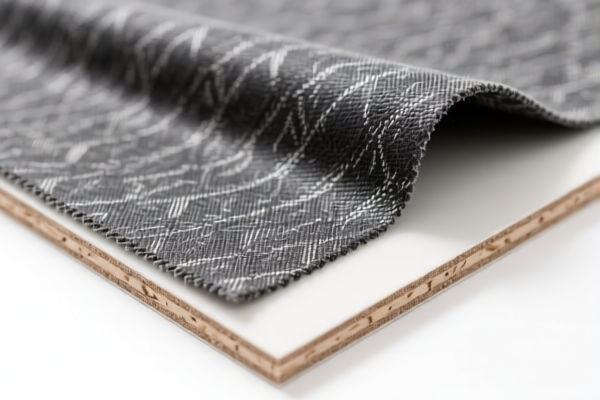
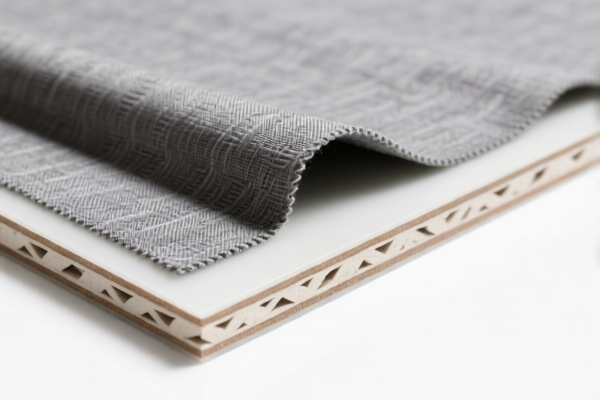

AI分析
🧱 Polyurethane Textile Composite Buffer Board
🌐 HS Code Reference & Customs Clearance Guide | 2026 Latest Tariff Analysis | Professional Compliance Strategy
📌 I. Product Definition & Classification: What Exactly Is a "Polyurethane Textile Composite Buffer Board"?
This product is a specialized construction material combining Polyurethane (PU) foam/resin with textile materials (such as fiberglass mesh, non-woven fabrics, or woven layers) to create a composite board. Its primary function in construction is likely for insulation, soundproofing, impact buffering, or structural reinforcement.
In international trade, classification depends heavily on: 1. Primary Material: Is it primarily plastic (PU) or textile? 2. Form Factor: Is it a board, a laminate, or a fabric? 3. Processing: Is it impregnated, coated, or laminated?
⚠️ Key Distinction:
- If the polyurethane is the core/primary component giving the board its structural rigidity, it leans toward Chapter 39 (Plastics).
- If the textile layer is dominant and the PU is merely a coating/impregnation, it leans toward Chapter 59 (Impregnated Textiles).
- If it mimics stone/concrete for construction, it might be misclassified under Chapter 68 (Stone/Cement), but this is rare for PU products and often incorrect.
📦 II. HS Code Classification Details (2026 Latest Tariff Authority Comparison)
Based on the provided data, here are the 5 potential HS Codes and their logic:
| HS Code | Product Description (from Data) | Classification Logic | Tax Rate |
|---|---|---|---|
| 3921.13.15.00 | PU Textile Composite Building Board | Primary Reason: Fits "Plastics" category. Specifically, "Polyurethane" composite boards used in construction. Emphasizes the composite nature of PU + Textile. | 41.5% |
| 3921.13.19.50 | PU Textile Composite Board | Primary Reason: Also under "Plastics". Broader category for "Polyurethane boards, sheets, films." Used when the specific "composite" sub-code doesn't fit perfectly, but it's still fundamentally a plastic board. | 40.3% |
| 5903.20.25.00 | PU-Treated Textile Fabric for Building | Primary Reason: Fits "Textiles" category. Specifically, "Artificial fiber textile fabrics impregnated/coated/laminated with polyurethane." Emphasizes the textile substrate treated with PU. | 42.5% |
| 5903.20.20.00 | PU-Impregnated Textile Composite | Primary Reason: Also under "Textiles". Focuses on the impregnation/lamination process. Lower base tariff makes it attractive, but still carries high add-on taxes. | 35.0% |
| 6810.99.00.80 | Other Cement/Concrete or Artificial Stone Products | Primary Reason: High Risk/Misclassification. The data suggests classifying it as "Other products of cement, concrete..." likely due to its building board application. This is generally incorrect for PU products but appears in the data as a potential (risky) fallback. | 35.0% |
🔍 Critical Analysis:
- Chapters 39 vs. 59: The most common dispute is between 3921 (Plastics) and 5903 (Textiles).
- Rule of Thumb: If the board is rigid, foam-like, and holds its shape due to PU → Chapter 39.
- If it is flexible, fabric-like, and the PU is just a surface coating → Chapter 59.
- Chapter 68: Using 6810 for a PU board is highly unusual and likely incorrect unless the product contains significant cement/concrete additives. Avoid this unless explicitly required by local customs due to specific product composition.
💰 III. 2026 Latest Tariff Rate Breakdown (Including Surtaxes & Policy Add-ons)
✅ Applicable Country: United States (US)
✅ Origin: China (CN)
✅ Effective Date: Post-November 2025 (Including Section 301 & IEEPA measures)
🎯 1. 3921.13.15.00 – Polyurethane Composite Board (Construction)
| Item | Content |
|---|---|
| Base Duty | 6.5% (Ad Valorem) |
| Section 301 Surcharge | +25.0% (Trade Remedy) |
| IEEPA Add-on | +10.0% (China-specific) |
| Total Tax Rate | 41.5% |
| Calculation | CIF Value × 41.5% |
| De Minimis Exemption | ❌ Not Eligible (Deny De Minimis for Section 301 goods) |
| Legal Path | USITC:3921.13.15.00 → Section 301: Footnote 9903.88.01 → IEEPA:9903.01.25 |
📌 Explanation:
- This is a standard plastics classification with high tariffs.
- The 25% Section 301 and 10% IEEPA are non-negotiable for Chinese-origin goods.
- Total 41.5% is a significant cost driver.
🎯 2. 3921.13.19.50 – Other Polyurethane Boards
| Item | Content |
|---|---|
| Base Duty | 5.3% (Ad Valorem) |
| Section 301 Surcharge | +25.0% |
| IEEPA Add-on | +10.0% |
| Total Tax Rate | 40.3% |
| Calculation | CIF Value × 40.3% |
| De Minimis Exemption | ❌ Not Eligible |
| Legal Path | USITC:3921.13.19.50 → Section 301: Footnote 9903.88.01 → IEEPA:9903.01.24 |
📌 Explanation:
- Slightly lower base duty (5.3% vs 6.5%) makes this 1.2% cheaper than 3921.13.15.00.
- Still subject to full surcharges.
🎯 3. 5903.20.25.00 – PU-Impregnated Textile Fabric
| Item | Content |
|---|---|
| Base Duty | 7.5% (Ad Valorem) |
| Section 301 Surcharge | +25.0% |
| IEEPA Add-on | +10.0% |
| Total Tax Rate | 42.5% |
| Calculation | CIF Value × 42.5% |
| De Minimis Exemption | ❌ Not Eligible |
| Legal Path | USITC:5903.20.25.00 → Section 301: Footnote 9903.88.01 → IEEPA:9903.01.25 |
📌 Explanation:
- Highest total rate (42.5%) among the options.
- Only use if the product is clearly textile-dominant and cannot be classified under plastics.
🎯 4. 5903.20.20.00 – PU-Coated/Laminated Textile
| Item | Content |
|---|---|
| Base Duty | 0.0% (Ad Valorem) |
| Section 301 Surcharge | +25.0% |
| IEEPA Add-on | +10.0% |
| Total Tax Rate | 35.0% |
| Calculation | CIF Value × 35.0% |
| De Minimis Exemption | ❌ Not Eligible |
| Legal Path | USITC:5903.20.20.00 → Section 301: Footnote 9903.88.01 → IEEPA:9903.01.24 |
📌 Explanation:
- Lowest total rate (35.0%).
- Attractive only if the product qualifies as a "textile impregnated with PU" under this specific subheading.
- Risk: Customs may challenge this if the board is rigid/plastic-like.
🎯 5. 6810.99.00.80 – Other Cement/Concrete Products
| Item | Content |
|---|---|
| Base Duty | 0.0% (Ad Valorem) |
| Section 301 Surcharge | +25.0% |
| IEEPA Add-on | +10.0% |
| Total Tax Rate | 35.0% |
| Calculation | CIF Value × 35.0% |
| De Minimis Exemption | ❌ Not Eligible |
| Legal Path | USITC:6810.99.00.80 → Section 301: Footnote 9903.88.01 → IEEPA:9903.01.24 |
📌 Explanation:
- High Risk. This classification is likely incorrect for a pure PU product.
- Using this code may trigger audits, penalties, or delays if customs inspects the product and finds it is not cement/concrete.
- Only consider if the product contains significant inorganic fillers (e.g., cement-based PU composite).
🛠️ IV. Customs Clearance Practical Advice (Pitfall Avoidance Guide)
✅ 1. Document Checklist (Non-Negotiable)
| Document | Required | Purpose |
|---|---|---|
| Product Specification Sheet | ✔️ | Must clearly state: % Polyurethane, % Textile, Form (Board/Lamina), Use (Building/Buffer) |
| Technical Data Sheet (TDS) | ✔️ | Shows density, hardness, fire rating. Proves if it’s rigid (plastic) or flexible (textile). |
| Composition Analysis | ✔️ | Lab report confirming material breakdown (e.g., "60% PU Foam, 40% Fiberglass Mesh"). |
| Photos (Clear & Detailed) | ✔️ | Cross-section view to show layers. Front/back view. |
| Commercial Invoice | ✔️ | Must match HS Code description. Avoid vague terms like "Building Material." Use "Polyurethane Textile Composite Board." |
| Bill of Lading | ✔️ | Ensure weight/volume matches invoice. |
| Certificate of Origin (CO) | ✔️ | Required for China origin verification. |
✅ 2. Declaration Strategy (Key Mantra)
🔥 "Rigid = Plastic (39), Flexible = Textile (59), Stone = Stone (68). Be Honest or Pay the Price!"
| Scenario | Recommended HS Code | Why? |
|---|---|---|
| Rigid, Foam-like Board | 3921.13.15.00 or 3921.13.19.50 |
Primary material is PU plastic. |
| Flexible, Fabric-like Sheet | 5903.20.20.00 or 5903.20.25.00 |
Primary material is textile, coated with PU. |
| Cement-PU Hybrid Board | 6810.99.00.80 |
Only if cement/concrete is a major component. |
✅ 3. Special Situations
| Situation | Handling Advice |
|---|---|
| OEM Custom Boards | Provide customer specs + design drawings. Avoid generic names. |
| Mixed Packaging | If shipped with frames or accessories, declare as set if marketed together, or separately if not. |
| Fire-Rated Products | Ensure UL/ASTM fire ratings are documented. May require additional certifications. |
| Suspicion of Misclassification | If using 5903 or 6810 to save tax, be prepared for customs inspection. Have lab reports ready. |
🌍 V. Global Market Comparison (2026)
| Market | Recommended HS Code | Total Tariff (China Origin) | Certification |
|---|---|---|---|
| 🇺🇸 USA | 3921.13.15.00 / 5903.20.20.00 |
35% - 42.5% | FCC (if electronic), UL (Fire) |
| 🇨🇳 China | 3921.13.15.00 / 5903.20.20.00 |
Low (5-10%) | CCC (if applicable) |
| 🇪🇺 EU | 3921.13.15.00 / 5903.20.20.00 |
0-7% | CE, REACH, RoHS |
| 🇬🇧 UK | 3921.13.15.00 / 5903.20.20.00 |
0-7% | UKCA |
| 🇯🇵 Japan | 3921.13.15.00 / 5903.20.20.00 |
5-8% | PSE (if electrical) |
📌 Conclusion:
- USA is the most challenging market due to Section 301 and IEEPA tariffs.
- EU/UK/Japan have much lower tariffs, making exports more profitable.
- China has moderate tariffs but no surcharges.
📌 VI. Common Errors & Pitfalls (Lessons Learned)
❌ Error 1: Classifying a rigid PU board as Textile (5903) to save tax.
👉 Consequence: Customs inspection reveals plastic content → Penalty + Back Taxes + Delay.
❌ Error 2: Classifying a PU-textile composite as Stone/Cement (6810).
👉 Consequence: High audit risk. Customs will demand proof of cement content. If none exists, reclassification + fines.
❌ Error 3: Vague Invoice Description ("Building Board").
👉 Consequence: Customs cannot determine HS Code → HOLD for Inspection.
❌ Error 4: Ignoring Section 301/IEEPA applicability.
👉 Consequence: Underpayment of duties → Seizure of Goods.
✅ Correct Practice:
"Polyurethane Foam Board with Fiberglass Reinforcement, Rigid, Non-Structural Insulation, Model XYZ, UL 94 V-0 Rated"
🎯 VII. Conclusion: Precise Classification Saves Money!
🎯 Remember the Mantra:
🔹 "Rigid = Plastic (39), Flexible = Textile (59). Don't fake Stone (68)!
🔹 "USA Tariffs are High (35-42.5%). Declare Honestly!"
🔹 "HS Code is King. Wrong Code = Delayed Goods + Fines!"
📌 Pro Tip:
If your product is primarily PU, stick to 3921.13.15.00 or 3921.13.19.50.
If it’s primarily Textile, use 5903.20.20.00 (lowest rate at 35%).
Avoid 6810 unless you have cement/concrete in the mix.
📣 Immediate Action:
📞 Consult a licensed customs broker BEFORE shipping.
📦 Provide cross-section photos and material composition.
📄 Apply for Pre-Ruling if possible to secure HS Code.
🚀 Clear Customs Smoothly, Protect Your Profit Margin!
✨ Professional Clearance Starts with Accurate Classification!
💼 Every Percent of Duty Saved is Pure Profit!
用户评价
关于 HS 编码归类
协调制度(HS)是由世界海关组织(WCO)制定的国际贸易商品分类标准。全球 200 多个国家采用 HS 系统作为海关关税、贸易统计和进出口监管的基础。
每个 HS 编码遵循以下层级结构:
- 章(2 位)——商品大类(例如:第 84 章:机器和机械设备)
- 品目(4 位)——章内的更具体分类
- 子目(6 位)——国际通用细分,所有 WCO 成员国统一使用
- 本国细分(8-10 位)——各国自行扩展的细分编码,如美国 HTSUS 10 位编码
正确的 HS 编码归类对于顺利通关、准确缴纳关税和遵守贸易法规至关重要。错误归类可能导致海关延误、多缴关税或罚款。
从CN进口到US时,适用的关税税率可能包括:
- 最惠国(MFN)税率——适用于 WTO 成员国的标准关税税率
- 普通税率——适用于无贸易协定国家
- 贸易救济关税——附加关税,如 301 条款(反倾销)、232 条款(国家安全)或反补贴税
本页内容仅供参考。如需正式归类,请咨询当地海关或持牌报关代理。