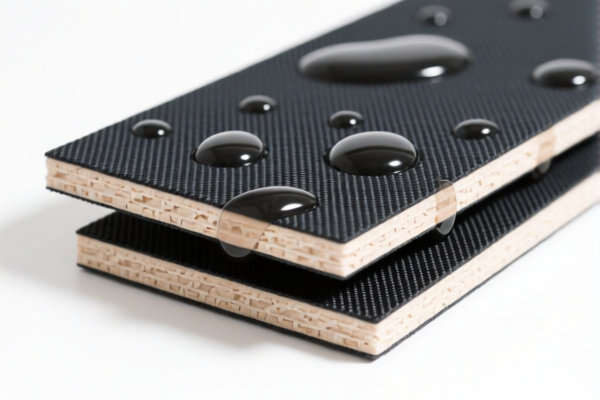
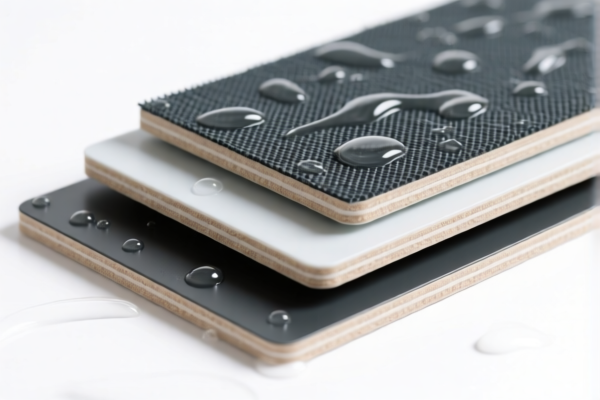
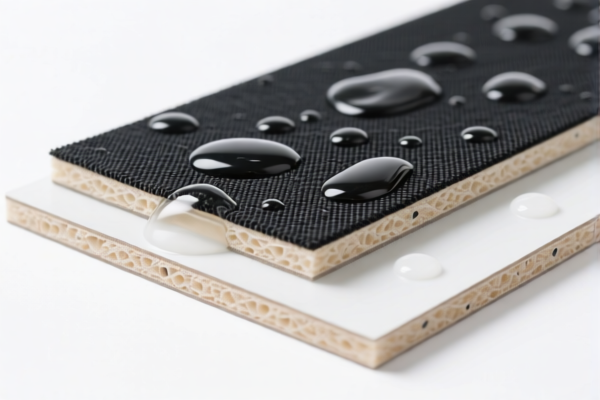
polyurethane textile composite shockproof board
CN → US| HS编码 | 关税税率 | 原产国 | 目的国 | 文档 |
|---|---|---|---|---|
| 3921131500 | 41.5% | CN | US | 官方文档 |
| 3921131950 | 40.3% | CN | US | 官方文档 |
| 5903202500 | 42.5% | CN | US | 官方文档 |
| 5903202000 | 35.0% | CN | US | 官方文档 |
| 6810990080 | 35.0% | CN | US | 官方文档 |
商品图片

AI分析
🛡️ Polyurethane Textile Composite Shockproof Board
🌐 HS Code Reference & Customs Clearance Guide | 2026 Latest Tariff Analysis | Professional-Level Clearance Strategy
📌 Part 1: Product Definition and Classification: Do You Really Understand "Polyurethane Textile Composite Shockproof Board"?
This product is a composite building material consisting of polyurethane (PU) and textile materials. In international trade, its classification depends on its physical form, manufacturing process, and primary function (shockproof/construction use). The ambiguity lies in whether it is classified as a plastic composite, a treated textile, or a construction accessory.
⚠️ Key Distinction Points:
- If viewed as a composite board with PU as the core material → Likely Chapter 39 (Plastics).
- If viewed as a textile fabric impregnated/layered with PU → Likely Chapter 59 (Impregnated Textiles).
- If viewed as a construction stone/concrete substitute → Incorrectly classified under Chapter 68 (Rare, but possible if misdescribed).
📦 Part 2: HS Code Classification Details (2026 Latest Tariff Authority Comparison)
| HS Code | Product Description | Application Scenario | Classification Logic |
|---|---|---|---|
3921.13.15.00 |
Polyurethane textile composite construction board; material is polyurethane; form is composite board; use is for construction; matches characteristics of PU combined with textile materials. | General construction insulation, wall panels | ✅ Primary Fit: Emphasizes "Composite Board" structure. |
3921.13.19.50 |
Polyurethane textile composite construction board; material is polyurethane; form is board; use is for construction; matches description of "Plates, Sheets, Film, Foil, Strip, and Flakes of Plastics." | Alternative classification for PU boards without specific textile fabric integration. | ⚠️ Secondary Fit: Broad "Plastic Board" category. |
5903.20.25.00 |
Polyurethane textile composite construction board; name includes polyurethane material and textile form; matches classification features of polyurethane-treated artificial fiber textile fabrics. | Textile-focused classification; highlights PU impregnation/coating on fabric. | 🧵 Textile Focus: Emphasizes "Treated Fabric." |
5903.20.20.00 |
Polyurethane textile composite construction board; polyurethane meets material requirements; textile composite meets impregnation/coating/lamination form; construction board is the downstream application scenario. | Laminated textile products used in construction. | 🧵 Lamination Focus: Emphasizes "Laminated/Impregnated Textile." |
6810.99.00.80 |
Polyurethane textile composite construction board; infers classification under "Other articles of cement, concrete, or artificial stone" based on construction board use. | ❌ Misclassification Risk: Only applies if mistakenly described as stone/concrete-like. | 🚫 High Risk: Often flagged as incorrect unless specifically engineered as concrete substitute. |
🔍 Key Reminder:
- If the product is primarily a rigid board with PU foam/core, Chapter 39 is safer.
- If the product is primarily a flexible textile layer coated with PU, Chapter 59 is appropriate.
- Chapter 68 is generally incorrect unless the product is explicitly marketed as a "synthetic stone" with similar density and hardness, but this is rare for PU-textile composites.
💰 Part 3: 2026 Latest Tariff Rate Details (Including Surcharges, Policy Add-ons)
✅ Applicable Country: United States (US)
✅ Country of Origin: China (CN)
✅ Effective Time: November 10, 2025 (and subsequent imports)
🎯 1. 3921.13.15.00 —— Polyurethane Composite Board (Primary Recommendation)
| Item | Content |
|---|---|
| Base Tariff Rate | 6.5% (ad valorem) |
| Section 301 Surcharge | +25.0% |
| Section 122 Surcharge | +10.0% |
| Total Tariff Rate | 41.5% |
| Tax Calculation | CIF Value × 41.5% |
| De Minimis Eligibility | ❌ No (deny_de_minimis) |
| Legal Basis Path | USITC:3921.13.15.00 → Section 301: Footnote 9903.88.01 → Section 122 |
📌 Explanation:
- This is the most direct classification for a polyurethane-based composite board.
- The 25% Section 301 tariff is applied due to China origin.
- The 10% Section 122 tariff is a recent addition for certain materials.
- Total 41.5% is significant but lower than textile classifications in some cases.
🎯 2. 3921.13.19.50 —— Other Plastic Plates, Sheets, Film (Secondary Option)
| Item | Content |
|---|---|
| Base Tariff Rate | 5.3% (ad valorem) |
| Section 301 Surcharge | +25.0% |
| Section 122 Surcharge | +10.0% |
| Total Tariff Rate | 40.3% |
| Tax Calculation | CIF Value × 40.3% |
| De Minimis Eligibility | ❌ No (deny_de_minimis) |
| Legal Basis Path | USITC:3921.13.19.50 → Section 301 → Section 122 |
📌 Note:
- Slightly lower base rate (5.3% vs 6.5%) makes this 1.2% cheaper than3921.13.15.00.
- Use this if the product is perceived more as a "plastic sheet/board" rather than a "composite textile."
- Same surcharges apply, so the difference is minimal.
🎯 3. 5903.20.25.00 —— Polyurethane-Treated Textile Fabric
| Item | Content |
|---|---|
| Base Tariff Rate | 7.5% (ad valorem) |
| Section 301 Surcharge | +25.0% |
| Section 122 Surcharge | +10.0% |
| Total Tariff Rate | 42.5% |
| Tax Calculation | CIF Value × 42.5% |
| De Minimis Eligibility | ❌ No (deny_de_minimis) |
| Legal Basis Path | USITC:5903.20.25.00 → Section 301 → Section 122 |
📌 Explanation:
- Higher base rate (7.5%) due to textile classification.
- Total 42.5% is the highest among the plastic/textile options.
- Only use if customs insists on textile classification based on fabric content.
🎯 4. 5903.20.20.00 —— Impregnated/Laminated Textile (Zero Base Rate?)
| Item | Content |
|---|---|
| Base Tariff Rate | 0.0% (ad valorem) |
| Section 301 Surcharge | +25.0% |
| Section 122 Surcharge | +10.0% |
| Total Tariff Rate | 35.0% |
| Tax Calculation | CIF Value × 35.0% |
| De Minimis Eligibility | ❌ No (deny_de_minimis) |
| Legal Basis Path | USITC:5903.20.20.00 → Section 301 → Section 122 |
📌 Critical Warning:
- Base rate is 0%, making the total effective rate only 35.0%.
- This is the LOWEST tariff option!
- However, this classification is risky. Customs may argue the product is not primarily textile but a composite board.
- Use only if you have strong evidence that the product is primarily a laminated textile fabric used in construction, not a rigid board.
🎯 5. 6810.99.00.80 —— Other Cement/Concrete Articles (High Risk)
| Item | Content |
|---|---|
| Base Tariff Rate | 0.0% (ad valorem) |
| Section 301 Surcharge | +25.0% |
| Section 122 Surcharge | +10.0% |
| Total Tariff Rate | 35.0% |
| Tax Calculation | CIF Value × 35.0% |
| De Minimis Eligibility | ❌ No (deny_de_minimis) |
| Legal Basis Path | USITC:6810.99.00.80 → Section 301 → Section 122 |
🚫 Strong Caution:
- Although the total rate is 35.0%, this classification is technically incorrect for a polyurethane-textile composite.
- Customs may flag this as misclassification, leading to penalties, delays, or seizure.
- Avoid this HS Code unless the product is explicitly marketed as "Artificial Stone" or "Concrete Substitute" with identical properties.
🛠️ Part 4: Customs Clearance Practical Advice (Real-World Pitfall Avoidance Guide)
✅ 1. Preparation Checklist (Essential Documents)
| Document | Required | Notes |
|---|---|---|
| ✅ Product Specification Sheet | ✔️ | Must detail: PU content %, textile type, thickness, density, shockproof rating. |
| ✅ Composition Analysis Report | ✔️ | Third-party lab report proving material makeup (e.g., 70% PU, 30% Textile). |
| ✅ Product Photos (Including Labels) | ✔️ | Show both sides: textile surface and PU core/layer. |
| ✅ Commercial Invoice | ✔️ | Clearly state: "Polyurethane-Textile Composite Board for Construction/Shockproof Use." |
| ✅ Packing List | ✔️ | Detail weight, dimensions, and packaging method. |
| ✅ Origin Certificate (CO) | ✔️ | Required for Section 301 surcharge determination. |
✅ 2. Declaration Tips (Key Mantras)
🔥 “Describe by Material, Not Just Function”
| Scenario | Correct Declaration | Incorrect Action |
|---|---|---|
| Rigid Board with PU Core | 3921.13.15.00 or 3921.13.19.50 |
Mislabeling as "Stone" → 6810.99.00.80 |
| Flexible Laminated Fabric | 5903.20.20.00 |
Mislabeling as "Board" → Higher tax |
| Composite Panel | 3921.13.15.00 |
Vague description like "Construction Material" → Audit risk |
✅ 3. Special Case Handling
| Scenario | Recommendation |
|---|---|
| OEM Custom Boards | Provide customer design specs to justify composition. |
| Mixed Materials | If >50% PU by weight/volume, lean toward Chapter 39. |
| Textile-Dominant | If textile is the primary layer, consider Chapter 59. |
| Construction Application | Emphasize "Shockproof" and "Insulation" in description to support Chapter 39. |
🌍 Part 5: Global Market Comparison (2026 Latest)
| Country/Region | Recommended HS Code | Tariff (China Origin) | Certification | Notes |
|---|---|---|---|---|
| 🇺🇸 USA | 3921.13.15.00 |
41.5% (Total) | FCC, UL (if applicable) | High tariff due to Section 301 + 122. |
| 🇨🇳 China | 3921.13.15.00 |
~5-6% | CCC (if applicable) | Low tariff, no surcharges. |
| 🇪🇺 EU | 3921.13.15.00 |
~6.5% | CE, REACH | No Section 301. |
| 🇬🇧 UK | 3921.13.15.00 |
~6.5% | UKCA | Post-Brexit rules apply. |
| 🇨🇦 Canada | 3921.13.15.00 |
~6.0% | CSA | CUSMA benefits may apply if non-Chinese. |
📌 Conclusion:
- USA is the most challenging market due to 41.5% total tariff.
- EU/UK/Canada offer much lower tariffs (~6-7%), making them more cost-effective for Chinese-origin goods.
- Consider supply chain diversification if targeting the US market heavily.
📌 Part 6: Common Errors & Pitfalls (Lessons Learned)
❌ Error 1: Classifying PU composite board as "Construction Stone" (6810.99.00.80)
👉 Consequence: Customs rejects, demands reclassification, or imposes penalties.
❌ Error 2: Ignoring Section 122 Surcharge
👉 Consequence: Underpayment of 10% tariff → Audit and back-taxes.
❌ Error 3: Vague Description "Composite Board"
👉 Consequence: Customs may choose the highest applicable tariff or delay clearance for inspection.
❌ Error 4: Using Chapter 59 for Rigid Boards
👉 Consequence: Dispute over "textile" definition → Potential reclassification to Chapter 39 with penalties.
✅ Correct Approach:
"Polyurethane-Textile Composite Board, 10mm Thick, Shockproof, for Wall Insulation, HS Code: 3921.13.15.00"
🎯 Part 7: Conclusion: Professional Declaration, Cost Savings, Efficiency!
🎯 Remember the Mantra:
🔹 "Material First, Function Second. Chapter 39 is Safe, Chapter 59 is Risky, Chapter 68 is Wrong."
🔹 "Total Tariff: 35% to 42.5%. Check Base Rate + Surcharges."
📌 Pro Tip:
- If your product is primarily textile-based, try to justify 5903.20.20.00 for 35.0% total tariff.
- If primarily PU-based, 3921.13.19.50 offers 40.3% (slightly lower than 3921.13.15.00's 41.5%).
- Apply for Advance Ruling from CBP to confirm classification before shipping.
📣 Immediate Action:
📞 Contact a licensed customs broker + Provide lab reports + Request HS Code Pre-Ruling
🚀 Ensure smooth clearance, avoid penalties, and optimize your supply chain costs!
✨ Professional Clearance Starts with Accurate Classification!
💼 Every Percent of Tariff Counts!
用户评价
关于 HS 编码归类
协调制度(HS)是由世界海关组织(WCO)制定的国际贸易商品分类标准。全球 200 多个国家采用 HS 系统作为海关关税、贸易统计和进出口监管的基础。
每个 HS 编码遵循以下层级结构:
- 章(2 位)——商品大类(例如:第 84 章:机器和机械设备)
- 品目(4 位)——章内的更具体分类
- 子目(6 位)——国际通用细分,所有 WCO 成员国统一使用
- 本国细分(8-10 位)——各国自行扩展的细分编码,如美国 HTSUS 10 位编码
正确的 HS 编码归类对于顺利通关、准确缴纳关税和遵守贸易法规至关重要。错误归类可能导致海关延误、多缴关税或罚款。
从CN进口到US时,适用的关税税率可能包括:
- 最惠国(MFN)税率——适用于 WTO 成员国的标准关税税率
- 普通税率——适用于无贸易协定国家
- 贸易救济关税——附加关税,如 301 条款(反倾销)、232 条款(国家安全)或反补贴税
本页内容仅供参考。如需正式归类,请咨询当地海关或持牌报关代理。