polyurethane textile composite soundproof board
CN → US| HS编码 | 关税税率 | 原产国 | 目的国 | 文档 |
|---|---|---|---|---|
| 3921131500 | 41.5% | CN | US | 官方文档 |
| 3921131950 | 40.3% | CN | US | 官方文档 |
| 5903202500 | 42.5% | CN | US | 官方文档 |
| 5903202000 | 35.0% | CN | US | 官方文档 |
| 6810990080 | 35.0% | CN | US | 官方文档 |
商品图片

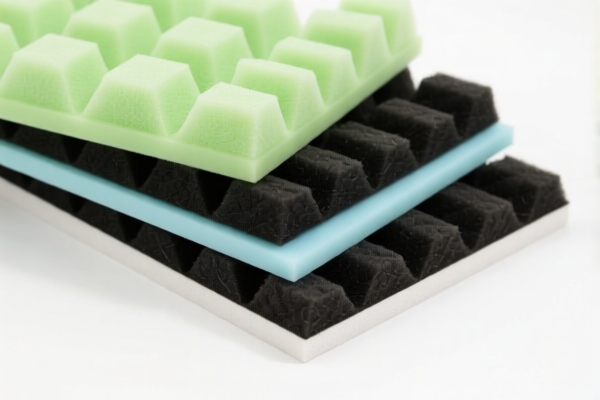
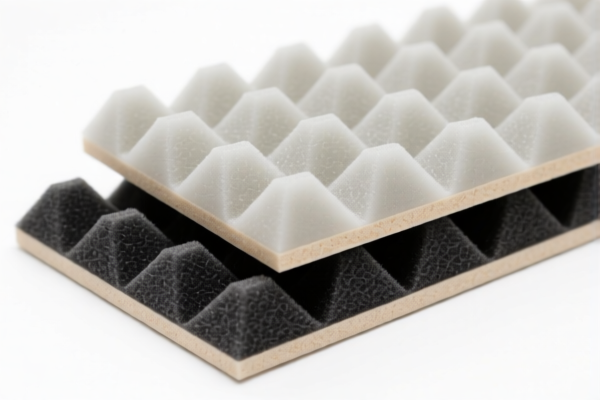
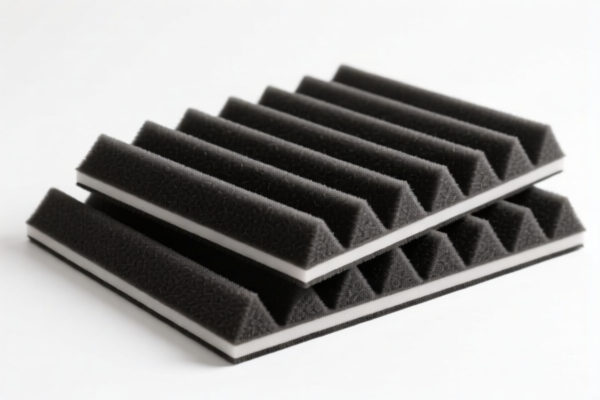
AI分析
🔇 Polyurethane Textile Composite Soundproof Board
🌐 HS Code Reference & Customs Clearance Guide | 2026 Latest Tariff Analysis | Professional Clearance Strategy
📌 Part 1: Product Definition & Classification: Do You Really Understand This "Soundproof Board"?
The Polyurethane (PU) Textile Composite Soundproof Board is a specialized construction material designed for noise reduction and acoustic insulation. In international trade, its classification depends heavily on the primary character of the composite: is it primarily a plastic/board or primarily a textile fabric?
Key Components: 1. Polyurethane (PU): Provides the core soundproofing density and elasticity. 2. Textile Material: Acts as a facing, reinforcement, or aesthetic layer. 3. Composite Structure: Laminated or impregnated layers bonded together.
⚠️ Critical Distinction Point:
- If the product is viewed as a constructed panel/board where PU is the main structural material → Chapter 39 (Plastics).
- If the product is viewed as a fabric impregnated with PU → Chapter 59 (Impregnated Textiles).
- Misclassification Risk: Incorrectly classifying it as "Cement/Concrete" (Chapter 68) can lead to severe penalties or rejection, as the primary material is clearly polymer-based.
📦 Part 2: HS Code Classification Details (2026 Latest Tariff Authority对照)
Based on the provided data, here are the five potential HS Codes, ranging from high to low tax liability.
| HS Code | Product Description (From Data) | Applicable Scenario | Tax Rate Analysis |
|---|---|---|---|
3921.13.15.00 |
PU Textile Composite Building Board: Material is PU, Form is composite board, Use is for building. Matches the feature of PU combined with textile materials. | Best fit for structured composite panels. | 41.5% (Highest Risk) |
3921.13.19.50 |
PU Textile Composite Building Board: Material is PU, Form is board/sheet/film. Matches the description of "Plastics, sheets, film, foil, and strip." | Alternative classification for non-specific composite boards. | 40.3% |
5903.20.25.00 |
PU Textile Composite Building Board: Name includes PU material and textile form. Matches the classification of PU-treated artificial fiber textile fabrics. | Best fit if the product is primarily fabric-like or soft composite. | 42.5% (Highest Tax) |
5903.20.20.00 |
PU Textile Composite Building Board: PU corresponds to material requirements; textile composite matches impregnated/coated/laminated forms. Building board is the downstream application. | Best fit for impregnated/laminated textiles used in construction. | 35.0% (Lowest Tax) |
6810.99.00.80 |
PU Textile Composite Building Board: Infers compliance with "other articles of cement, concrete, or artificial stone" based on the "building board" usage. | ⚠️ High Risk/Incorrect: Only if the PU layer is negligible and the core is cementitious (rare for pure PU boards). | 35.0% |
🔍 Key Reminder:
- Chapter 39 (Plastics): If the PU is the dominant structural element,3921is the standard classification for plastic plates/sheets. - Chapter 59 (Textiles): If the textile fabric is the base and PU is merely a coating/impregnation,5903applies. - Chapter 68 (Stone/Cement): Generally incorrect for PU-based products unless it is a cement board with a thin PU coating. Use with extreme caution.
💰 Part 3: 2026 Latest Tariff Rate Breakdown (Including Surtaxes & Policy Additions)
✅ Applicable Country: United States (US)
✅ Origin: China (CN)
✅ Effective Time: Post-2025 November 10 (Includes subsequent imports)
🎯 1. 3921.13.15.00 — Composite Boards (Plastics)
| Item | Content |
|---|---|
| Base Tariff | 6.5% (ad valorem) |
| Section 301 Surtax | +25.0% (From USITC Footnote on Chinese Goods) |
| Section 122 Tariff | +10.0% (Specific policy surcharge) |
| Total Tariff | 41.5% |
| Tax Calculation | CIF Value × 41.5% |
| De Minimis Eligibility | ❌ No (Denied) |
| Legal Basis Path | Base Tariff: 6.5% → Section 301: 25.0% → Section 122: 10.0% |
📌 Explanation:
- This is the most "direct" classification for a plastic composite board. - The 41.5% total rate is very high. It includes the base duty, the 301 trade war tariff, and the 122 policy tariff. - Cost Impact: For a $10,000 shipment, you pay $4,150 in tariffs alone.
🎯 2. 3921.13.19.50 — Other Plastic Plates/Sheets
| Item | Content |
|---|---|
| Base Tariff | 5.3% (ad valorem) |
| Section 301 Surtax | +25.0% |
| Section 122 Tariff | +10.0% |
| Total Tariff | 40.3% |
| Tax Calculation | CIF Value × 40.3% |
| De Minimis Eligibility | ❌ No |
| Legal Basis Path | Base Tariff: 5.3% → Section 301: 25.0% → Section 122: 10.0% |
📌 Note:
- Slightly lower than3921.13.15.00due to a lower base tariff (5.3% vs 6.5%). - Suitable if the board does not fit the specific "composite board" subcategory but is still a plastic sheet/board.
🎯 3. 5903.20.25.00 — Impregnated Textile Fabrics (Artificial Fiber)
| Item | Content |
|---|---|
| Base Tariff | 7.5% (ad valorem) |
| Section 301 Surtax | +25.0% |
| Section 122 Tariff | +10.0% |
| Total Tariff | 42.5% |
| Tax Calculation | CIF Value × 42.5% |
| De Minimis Eligibility | ❌ No |
| Legal Basis Path | Base Tariff: 7.5% → Section 301: 25.0% → Section 122: 10.0% |
📌 Warning:
- This is the highest tax rate (42.5%). - Classifying as "Textile" often carries a higher base duty. Avoid this unless the product is clearly a soft fabric roll, not a rigid board.
🎯 4. 5903.20.20.00 — Impregnated/Laminated Textile Fabrics (Other)
| Item | Content |
|---|---|
| Base Tariff | 0.0% (ad valorem) |
| Section 301 Surtax | +25.0% |
| Section 122 Tariff | +10.0% |
| Total Tariff | 35.0% |
| Tax Calculation | CIF Value × 35.0% |
| De Minimis Eligibility | ❌ No |
| Legal Basis Path | Base Tariff: 0.0% → Section 301: 25.0% → Section 122: 10.0% |
📌 Optimization Tip:
- This is the lowest tax rate (35.0%) among all options. - It relies on a 0% base tariff. To use this, you must prove the product is primarily textile-based (e.g., a PU-coated fabric roll) rather than a rigid plastic board. - Strategy: If the product can be described as "PU-impregnated textile fabric used for soundproofing," this is the best financial choice.
🎯 5. 6810.99.00.80 — Articles of Cement/Concrete/Artificial Stone
| Item | Content |
|---|---|
| Base Tariff | 0.0% (ad valorem) |
| Section 301 Surtax | +25.0% |
| Section 122 Tariff | +10.0% |
| Total Tariff | 35.0% |
| Tax Calculation | CIF Value × 35.0% |
| De Minimis Eligibility | ❌ No |
| Legal Basis Path | Base Tariff: 0.0% → Section 301: 25.0% → Section 122: 10.0% |
📌 Caution:
- While the rate is low (35%), the classification is highly risky. - Customs may reject this if the product is not primarily cement/concrete. Misclassification can lead to audits, penalties, and shipment delays. - Only use if the product is a cement board with a thin PU layer, not a pure PU board.
🛠️ Part 4: Customs Clearance Practical Advice (Battle-Tested Pitfall Avoidance)
✅ 1. Preparation Checklist (Mandatory)
| Document | Required | Notes |
|---|---|---|
| ✅ Product Specification Sheet | ✔️ | Must detail: PU density, textile type, thickness, weight per square meter. |
| ✅ Material Composition Statement | ✔️ | Explicitly state: "% Polyurethane" and "% Textile Fiber". This determines Chapter 39 vs. Chapter 59. |
| ✅ Photos (Clear Labeling) | ✔️ | Show the cross-section of the composite to prove lamination/impregnation. |
| ✅ Third-Party Test Report | ✔️ | Fire resistance, sound absorption coefficient (NRC), and material analysis. |
| ✅ Commercial Invoice | ✔️ | Do NOT just say "Board." Use precise terms like "PU-Composite Soundproof Panel" or "PU-Impregnated Textile Roll." |
| ✅ Packing List | ✔️ | Ensure weight and dimensions match the HS Code description (e.g., roll length vs. rigid board size). |
✅ 2. Declaration Strategy (Key Mantras)
🔥 “Character Defines Chapter, Base Rate Determines Cost!”
| Scenario | Recommended HS Code | Reasoning |
|---|---|---|
| Rigid PU Panel with Textile Facing | 3921.13.15.00 or 3921.13.19.50 |
The board shape and PU core suggest plastic classification. |
| Soft PU-Coated Fabric Roll (Unwound) | 5903.20.20.00 |
If it behaves like fabric, use the 0% base rate. Save 5.3-7.5% vs. Chapter 39. |
| Cement Board with PU Surface | 6810.99.00.80 |
Only if cement is the core. Risky if PU is dominant. |
📌 Critical Advice:
- If you can legally describe the product as a "PU-treated textile fabric" (even if it's stiff), choose5903.20.20.00(35%). This saves you 6.5% compared to the highest plastic classification. - Do NOT use6810.99.00.80unless you are 100% sure it contains significant cement/concrete content. Customs experts will easily identify pure PU boards.
✅ 3. Special Case Handling
| Situation | Handling Advice |
|---|---|
| OEM Custom Soundproof Boards | Provide design drawings showing the layer structure. Label clearly as "Custom PU Composite." |
| Rolls vs. Cut Boards | If imported as rolls, argue for 5903 (Textile). If imported as pre-cut rigid panels, argue for 3921 (Plastic). |
| Soundproofing Certification | Provide NRC (Noise Reduction Coefficient) tests. This proves the "soundproof" function but doesn't change HS Code. |
| Mixed Shipments | If shipping both PU boards and textile rolls, declare separately. Do not mix HS Codes on one line item. |
🌍 Part 5: Global Market Comparison (2026 Latest)
| Country/Region | Recommended HS Code | Tariff Rate (China Origin) | Certification Requirements | Notes |
|---|---|---|---|---|
| 🇺🇸 USA | 5903.20.20.00 (Best) |
35.0% (Total) | N/A | High surtaxes apply. Base rate is 0%. |
| 🇺🇸 USA | 3921.13.15.00 |
41.5% (Total) | N/A | Higher base rate (6.5%). |
| 🇨🇳 China | 3921.13.15.00 |
~6.5% | N/A | No US surtaxes. |
| 🇪🇺 EU | 3921.13.15.00 |
~3.8% | CE + RoHS | Lower duties than US. |
| 🇦🇺 Australia | 3921.13.15.00 |
~5.0% | N/A | Standard FTA rates may apply. |
📌 Conclusion:
- The USA is the most expensive market due to Section 301 and Section 122 tariffs. - Optimization Goal: Try to classify under5903.20.20.00to benefit from the 0% base tariff. - European Union offers significantly lower duties if you can prove the textile nature.
📌 Part 6: Common Mistakes & Pitfalls (Blood-Teachings)
❌ Mistake 1: Classifying as "Construction Material" broadly.
👉 Consequence: Customs assigns a random HS Code or rejects the declaration.
❌ Mistake 2: Ignoring the "Textile" component.
👉 Consequence: Missed opportunity for 0% base rate under 5903.20.20.00. You pay 6.5% extra unnecessarily.
❌ Mistake 3: Misdeclaring as "Cement Board" (6810).
👉 Consequence: Customs demands proof of cement content. If none is found, penalties + retroactive taxes apply.
❌ Mistake 4: Not providing cross-section photos.
👉 Consequence: Customs cannot determine if it's a plastic board or impregnated textile. Holds shipment for 2-4 weeks.
✅ Correct Approach:
"Polyurethane-Impregnated Textile Soundproof Panel, 10mm thick, 1.2m x 2.4m, NRC 0.8, Model XYZ."
🎯 Part 7: Conclusion: Professional Declaration, Cost Reduction!
🎯 Remember the Mantra:
🔹 "Base Rate is King: 0% vs 6.5% is a 6.5% Savings!"
🔹 "Chapter 59 (Textile) beats Chapter 39 (Plastic) if the fabric is dominant!"
🔹 "US Tariffs are brutal: Plan your HS Code early!"
📌 Pro Tip:
If your product is shipped as rolls, emphasize the textile fabric aspect to qualify for 5903.20.20.00 (35% Total).
If it is pre-cut rigid boards, be prepared for 3921 rates (40-41.5% Total).
📣 Immediate Action:
📞 Consult your customs broker.
📸 Provide cross-section images.
📄 Request an Advance Ruling if the product is new.
🚀 Save 6.5% on every shipment by choosing the right Chapter!
✨ Professional Clearance Starts with Precise Classification!
💼 Every Dollar of Tariff Matters!
用户评价
关于 HS 编码归类
协调制度(HS)是由世界海关组织(WCO)制定的国际贸易商品分类标准。全球 200 多个国家采用 HS 系统作为海关关税、贸易统计和进出口监管的基础。
每个 HS 编码遵循以下层级结构:
- 章(2 位)——商品大类(例如:第 84 章:机器和机械设备)
- 品目(4 位)——章内的更具体分类
- 子目(6 位)——国际通用细分,所有 WCO 成员国统一使用
- 本国细分(8-10 位)——各国自行扩展的细分编码,如美国 HTSUS 10 位编码
正确的 HS 编码归类对于顺利通关、准确缴纳关税和遵守贸易法规至关重要。错误归类可能导致海关延误、多缴关税或罚款。
从CN进口到US时,适用的关税税率可能包括:
- 最惠国(MFN)税率——适用于 WTO 成员国的标准关税税率
- 普通税率——适用于无贸易协定国家
- 贸易救济关税——附加关税,如 301 条款(反倾销)、232 条款(国家安全)或反补贴税
本页内容仅供参考。如需正式归类,请咨询当地海关或持牌报关代理。