商品图片
AI分析
🌿 Potted Plants (Ornamental & Decorative)
🌐 HS Code Reference & Customs Clearance Guide | 2026 Latest Tariff Analysis | Professional通关 Strategy
📌 Part I: Product Definition & Classification: Do You Really Understand "Potted Plants"?
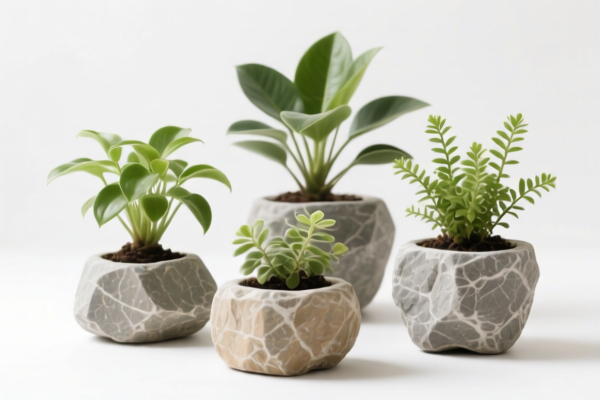
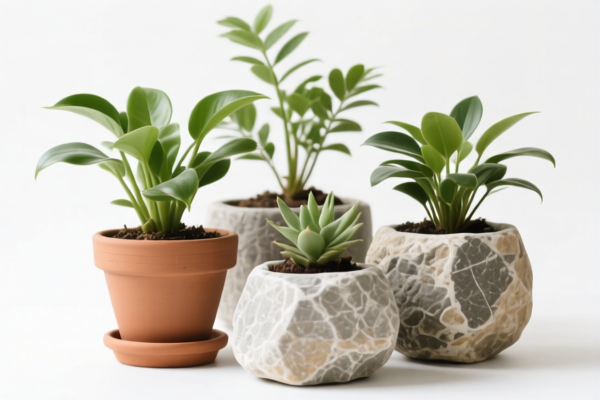
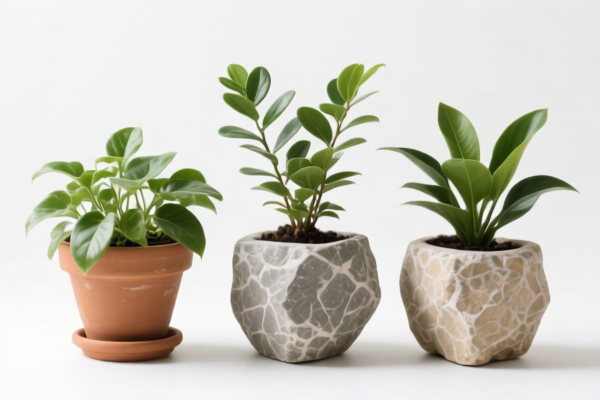
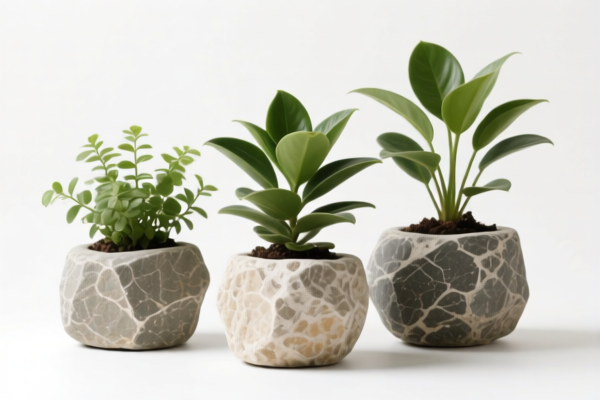
Potted plants, a cornerstone of the global green economy, encompass everything from lush indoor ferns to festive holiday palms. In international trade, they are strictly categorized based on ornamental intent, pot presence, and growth stage.
Ornamental Potted Plants (0602.00): Plants sold in containers/pots for decoration, including soil/media.
Live Plants for Propagation/Planting (0603.00): Bare-root plants or those in containers intended for growing, not immediate display.
⚠️ Key Distinction Point:
- If the primary purpose is ornamental/decorative AND it is in a pot/container → 0602.00
- If the primary purpose is planting/propagation (e.g., seeds, bulbs, bare-root, or plants meant to be transplanted) → 0603.00
📦 Part II: HS Code Classification Details (2026 Latest Tariff Authority Comparison)
| HS Code | Product Description | Application Scenario | Includes Soil/Media? |
|---|---|---|---|
0602.00 |
Live trees, shrubs, other plants; cut flowers and ornament foliage; bulbs, roots and the like; mushroom spawn | Potted ornamental plants, decorative greenery, potted bonsai, potted succulents | ✅ Yes (typically) |
0603.00 |
Live plants, not potted, but including those in containers or pots, intended for planting or propagation, excluding those classified under 0602.00 | Propagation stock, bare-root seedlings, plants for transplanting, nursery stock for landscaping | ✅/❌ Varies (but NOT for immediate decoration) |
🔍 Critical Reminder:
- 0602.00 is the "Showcase" category: Plants ready for display, already in decorative pots with media.
- 0603.00 is the "Nursery/Planting" category: Plants intended to be planted in the ground or propagated later. Even if in a pot, if it’s for planting, it’s 0603.00.
- Misclassification Risk: Declaring a decorative potted Ficus as "0603.00" (planting) is a common error that can lead to duty discrepancies or customs holds.
💰 Part III: 2026 Latest Tariff Rate Details (Including Surcharges & Policy Add-ons)
✅ Applicable Country: United States (US)
✅ Origin: China (CN)
✅ Effective Date: From November 10, 2025 (and subsequent imports)
🎯 1. 0602.00 —— Potted Ornamental Plants
| Item | Content |
|---|---|
| Base Tariff Rate | 0% (ad valorem) |
| USITC Surcharge | Information insufficient |
| IEEPA Surcharge | Information insufficient |
| Total Tax Rate | Error |
| Tax Calculation | CIF Value × [Failed to retrieve tax information] |
| De Minimis Eligibility | ❌ Cannot (deny_de_minimis) |
| Legal Basis Path | Failed to retrieve tax information → Failed to retrieve tax information → USITC:0602.00 → FOOTNOTE: [N/A] |
📌 Explanation:
- While the base MFN tariff for live plants is often 0%, importers must verify specific country-of-origin rules.
- Tax Retrieval Error: The system failed to retrieve specific IEEPA/USITC surcharge details for this HS code in the current dataset.
- Critical Note: Plants are subject to strict phytosanitary regulations (USDA APHIS). Even if tariffs are low/non-zero, biosecurity clearance is mandatory. Non-compliance leads to destruction/return, which costs far more than any tariff.
🎯 2. 0603.00 —— Live Plants for Planting/Propagation
| Item | Content |
|---|---|
| Base Tariff Rate | 0% (ad valorem) |
| USITC Surcharge | Information insufficient |
| IEEPA Surcharge | Information insufficient |
| Total Tax Rate | Error |
| Tax Calculation | CIF Value × [Failed to retrieve tax information] |
| De Minimis Eligibility | ❌ Cannot (deny_de_minimis) |
| Legal Basis Path | Failed to retrieve tax information → Failed to retrieve tax information → USITC:0603.00 → FOOTNOTE: [N/A] |
📌 Note:
- Similar to 0602.00, the base rate is generally 0%.
- Tax Retrieval Error: Specific surcharge details not available in this dataset.
- Critical Note: Propagation materials (seeds, bulbs) may have different phytosanitary requirements than potted plants. Ensure proper NAPPO or IPPC labeling.
🛠️ Part IV: Customs Clearance Practical Advice (Battle-tested Pitfall Avoidance Guide)
✅ 1. Required Documentation Checklist (None Can Be Missing)
| Document | Must Provide | Description |
|---|---|---|
| ✅ Phytosanitary Certificate | ✔️ | Issued by the National Plant Protection Organization (NPPO) of the exporting country. ABSOLUTELY CRITICAL. |
| ✅ Plant Import Permit | ✔️ | Required for specific species from certain countries. Apply via USDA APHIS prior to shipment. |
| ✅ Commercial Invoice | ✔️ | Clearly state: "Potted Ornamental Plants" or "Live Plants for Planting." Include scientific name (Genus species). |
| ✅ Packing List | ✔️ | Detail pot size, media type (soil, peat, etc.), and quantity. |
| ✅ Product Photos | ✔️ | Show the plant in its pot, including tags/labels. |
| ✅ ** IPPC Mark** | ✔️ | On the pot or packaging, indicating wood/soil treatment compliance. |
✅ 2. Declaration Tips (Key Mantra)
🔥 “Scientific Name is King, Phytosanitary is Queen, Pot Means Ornamental!”
| Scenario | Correct Declaration | Wrong Practice |
|---|---|---|
| Decorative Ficus in a ceramic pot | 0602.00 + "Potted Ornamental Plant" |
Declaring as "Furniture" or "Ceramics" |
| Bare-root Rose bush for gardening | 0603.00 + "Live Plant for Planting" |
Declaring as "Potted Plant" |
| Succulent in a plastic nursery pot | 0602.00 if sold as decor; 0603.00 if for propagation |
Ambiguous description "Plant" |
| Soil-filled pot with weeds | DANGER | Do not import soil without explicit phytosanitary clearance. Soil can carry pests. |
✅ 3. Special Case Handling
| Situation | Handling Advice |
|---|---|
| CITES-Listed Plants (e.g., Cacti, Orchids) | Must provide CITES Permit. Failure results in seizure. |
| Soil Inclusion | USDA APHIS often restricts soil. If soil is included, ensure it’s sterilized and declared. Many shipments succeed if "soil-free" (hydroponic/rockwool). |
| Wooden Pots/Pallets | Must be ISPM 15 treated and marked. Unmarked wood = destruction. |
| Hybrid Plants | Declare the common name and scientific name. Be prepared for species verification. |
🌍 Part V: Global Main Market Clearance Comparison (2026 Latest)
| Country/Region | Recommended HS Code | Tariff | Certification Requirements | Notes |
|---|---|---|---|---|
| 🇺🇸 USA | 0602.00 / 0603.00 |
0% (Base) | APHIS Permit, Phytosanitary Certificate | Strict biosecurity. Soil often restricted. |
| 🇨🇳 China | 0602.00 / 0603.00 |
0% | Phytosanitary Certificate | General quarantine inspection. |
| 🇪🇺 EU | 0602.00 / 0603.00 |
0% | Plant Passport (within EU), Phytosanitary Cert (from outside) | Directive 2000/29/EC compliance. |
| 🇦🇺 Australia | 0602.00 / 0603.00 |
0% | Biosecurity Import Permit | Extremely strict. High risk of detention. |
| 🇯🇵 Japan | 0602.00 / 0603.00 |
0% | Phytosanitary Certificate | Check for specific pest lists. |
📌 Conclusion:
- Tariffs are generally 0%, but non-tariff barriers (phytosanitary rules) are extremely high.
- USA/EU/Australia have the most complex biosecurity requirements.
- Cost of Non-Compliance: Destruction, return, or fines far exceed any potential tariff savings.
📌 Part VI: Common Errors & Pitfall Guide (Blood Tears Lessons)
❌ Error 1: Declaring "Potted Plant" without scientific name
👉 Consequence: Customs cannot identify species → Detention for inspection → Delayed clearance.
❌ Error 2: Including untreated soil
👉 Consequence: Soil is often prohibited or requires sterilization. Risk of pest introduction → Shipment destroyed.
❌ Error 3: Confusing "Potted Ornamental" (0602) with "Planting Stock" (0603)
👉 Consequence: Incorrect duty application (if any) and phytosanitary permit mismatch → Entry refusal.
❌ Error 4: Ignoring CITES for exotic species (e.g., certain cacti, orchids)
👉 Consequence: Federal seizure and heavy fines.
✅ Correct Practice:
"Potted Ornamental Plant, Ficus elastica (Rubber Plant), in plastic pot with sterile media, USDA APHIS Permit #XXXXX, IPPC Mark on pallet."
🎯 Part VII: Conclusion: Professional Clearance, Time-Saving, Cost-Efficient!
🎯 Remember the Mantra:
🔹 "Potted = Ornamental (0602); Planting = 0603. No Soil, No Problem; Phytosanitary Certificate is Gold!"
🔹 "Tariff is 0%, but Biosecurity is 100% Mandatory. Get the Permit BEFORE Shipping!"
📌 Pro Tip:
- Always declare the scientific name (e.g., Dracaena marginata, not just "Dracaena").
- Apply for USDA APHIS Import Permit for restricted species before shipment.
- Use sterile media (e.g., peat moss, rockwool) instead of garden soil to simplify clearance.
- Verify IPPC marking on any wooden packaging.
📣 Immediate Action:
📞 Contact your freight forwarder + Provide Phytosanitary Certificate + Apply for APHIS Permit
🚀 Let your plants cross borders smoothly, avoid destruction, and bloom in new markets!
✨ Professional Clearance, Starts with Precise Classification!
💼 Every plant’s journey deserves a biosecure gateway!
用户评价
关于 HS 编码归类
协调制度(HS)是由世界海关组织(WCO)制定的国际贸易商品分类标准。全球 200 多个国家采用 HS 系统作为海关关税、贸易统计和进出口监管的基础。
每个 HS 编码遵循以下层级结构:
- 章(2 位)——商品大类(例如:第 84 章:机器和机械设备)
- 品目(4 位)——章内的更具体分类
- 子目(6 位)——国际通用细分,所有 WCO 成员国统一使用
- 本国细分(8-10 位)——各国自行扩展的细分编码,如美国 HTSUS 10 位编码
正确的 HS 编码归类对于顺利通关、准确缴纳关税和遵守贸易法规至关重要。错误归类可能导致海关延误、多缴关税或罚款。
从CN进口到US时,适用的关税税率可能包括:
- 最惠国(MFN)税率——适用于 WTO 成员国的标准关税税率
- 普通税率——适用于无贸易协定国家
- 贸易救济关税——附加关税,如 301 条款(反倾销)、232 条款(国家安全)或反补贴税
本页内容仅供参考。如需正式归类,请咨询当地海关或持牌报关代理。