pp hard pipe
CN → US| HS编码 | 关税税率 | 原产国 | 目的国 | 文档 |
|---|---|---|---|---|
| 3917220000 | 38.1% | CN | US | 官方文档 |
| 3926909989 | 22.8% | CN | US | 官方文档 |
| 3917290090 | 38.1% | CN | US | 官方文档 |
| 3926909987 | 22.8% | CN | US | 官方文档 |
商品图片


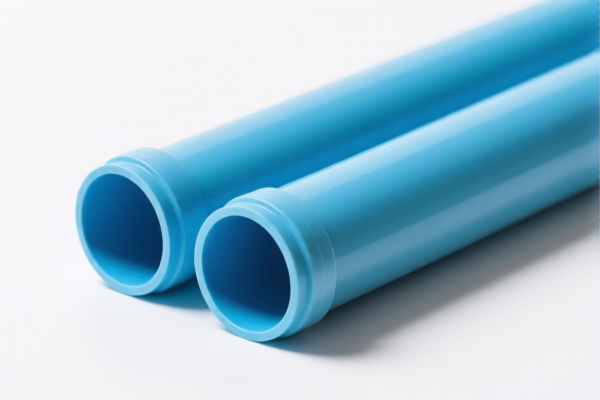

AI分析
🔧 PP Hard Pipe (Polypropylene Rigid Conduit/Tubing)
🌐 HS Code Reference & Customs Clearance Guide | 2026 Latest Tariff Analysis | Professional Compliance Strategy
📌 I. Product Definition: What Exactly is a "PP Hard Pipe"?
Polypropylene (PP) hard pipes are rigid plastic tubes made from polypropylene homopolymers or copolymers. In international trade, the classification hinges on two critical factors: 1. Material Composition: Is it a pure polymer (Pipe) or a fabricated article (Other Plastic Article)? 2. Function/Use: Is it primarily for conveying fluids/gases (Pipe) or is it a specific manufactured component like a wire conduit?
⚠️ Critical Distinction:
- If the item is a generic tube/pipeline for fluid/gas transport → Classified under Chapter 3917 (Plastic Pipes & Tubes). - If the item is a finished article not specifically listed elsewhere (e.g., specific wire conduits, fittings, or non-pipe shaped rigid forms) → Classified under Chapter 3926 (Other Plastic Articles).
📦 II. HS Code Classification Matrix (2026 Latest Customs Data)
| HS Code | Product Description | Application Scenario | Key Classification Feature |
|---|---|---|---|
3917.22.00.00 |
Pipes & Tubes, Rigid, of Polypropylene (PP) | General plumbing, industrial fluid transport, chemical lines | ✅ Primary Pipe Classification: Pure PP material, rigid tube form. |
3917.29.00.90 |
Other Pipes & Tubes, Rigid, of Plastics | Non-PP plastics (e.g., PVC, PE), or mixed polymer pipes not in 3917.22 | ✅ Secondary Pipe Classification: Fits "Plastic Rigid Tube" but not specifically PP (or generic PP if 3917.22 is deemed too specific/narrow by local customs). |
3926.90.99.89 |
Other Plastic Articles, n.e.s. (Not Elsewhere Specified) | Complex PP fittings, non-standard rigid components, specialized wire conduits | ✅ Article Classification: Not a simple pipe; considered a "manufactured article." |
3926.90.99.87 |
Other Plastic Articles, n.e.s. (Specifically for Wire Ducts/Conduits) | Electrical wire protection pipes, cable management systems | ✅ Article Classification: Specific use-case (wire conduit) overrides general pipe classification in some interpretations. |
🔍 Key Insight:
- 3917.22.00.00 is the most accurate for pure PP rigid pipes.
- 3926.90.99.87 is often used for electrical PP conduits because they are seen as "articles for wiring" rather than "pipes for fluid."
- 3917.29.00.90 is a fallback if customs authorities do not recognize 3917.22 for your specific PP variant, or if the pipe contains other polymers.
💰 III. 2026 Tariff Rate Breakdown (US Import from China)
✅ Applicable Country: United States (US)
✅ Origin: China (CN)
✅ Effective Date: 2025–2026 (Current Policy)
⚠️ Note: US tariffs include Base Rate + Section 301 (25%) + 122 Clause (10%).
🎯 1. 3917.22.00.00 – PP Rigid Pipes (Primary Classification)
| Item | Detail |
|---|---|
| Base Tariff | 3.1% |
| Section 301 Tariff | +25.0% |
| 122 Clause Tariff | +10.0% |
| Total Tax Rate | 38.1% |
| Calculation | CIF Value × 38.1% |
| De Minimis Eligibility | ❌ Denied (High-value industrial goods) |
| Legal Basis | HTSUS:3917.22 → USITC:3917.22.00.00 → Footnote 9903.88.01 (301) → 122 Clause |
📌 Explanation:
- PP pipes are considered industrial materials. The 25% Section 301 tariff applies broadly to plastic pipes from China.
- The 122 Clause adds another 10% for specific strategic materials, pushing the total to 38.1%.
- Cost Impact: High. Importers must factor in nearly 40% additional cost.
🎯 2. 3917.29.00.90 – Other Plastic Rigid Pipes (Fallback)
| Item | Detail |
|---|---|
| Base Tariff | 3.1% |
| Section 301 Tariff | +25.0% |
| 122 Clause Tariff | +10.0% |
| Total Tax Rate | 38.1% |
| Calculation | CIF Value × 38.1% |
| De Minimis Eligibility | ❌ Denied |
📌 Note:
- Same tax burden as3917.22.00.00.
- Use this only if3917.22.00.00is rejected due to material composition nuances (e.g., blended polymers).
🎯 3. 3926.90.99.89 – Other Plastic Articles (General)
| Item | Detail |
|---|---|
| Base Tariff | 5.3% |
| Section 301 Tariff | +7.5% |
| 122 Clause Tariff | +10.0% |
| Total Tax Rate | 22.8% |
| Calculation | CIF Value × 22.8% |
| De Minimis Eligibility | ❌ Denied |
| Legal Basis | HTSUS:3926.90 → USITC:3926.90.99.89 → Footnote 9903.88.01 (Note: Lower 301 rate for some "other articles") |
📌 Explanation:
- This is a lower tax bracket (22.8% vs. 38.1%).
- However, misclassifying a pipe as "other article" is a major compliance risk.
- Only use if the product is not a simple tube but a complex molded component (e.g., custom junction boxes made of PP).
🎯 4. 3926.90.99.87 – Other Plastic Articles (Wire Ducts/Conduits)
| Item | Detail |
|---|---|
| Base Tariff | 5.3% |
| Section 301 Tariff | +7.5% |
| 122 Clause Tariff | +10.0% |
| Total Tax Rate | 22.8% |
| Calculation | CIF Value × 22.8% |
| De Minimis Eligibility | ❌ Denied |
📌 Strategic Note:
- If your "PP Hard Pipe" is specifically for electrical wire protection, classify as3926.90.99.87to save 15.3% in tariffs.
- Risk: Customs may reclassify as3917.22.00.00if the pipe is generic. You must prove specific end-use (e.g., labeled "Electrical Conduit," no fluid compatibility).
🛠️ IV. Customs Clearance Best Practices (Avoid Penalties!)
✅ 1. Essential Documentation Checklist
| Document | Required? | Purpose |
|---|---|---|
| ✅ Product Specification Sheet | ✔️ | Must state: Material (PP), Form (Rigid Pipe), Diameter, Wall Thickness. |
| ✅ Material Safety Data Sheet (MSDS) | ✔️ | Confirms pure PP composition (excludes 3917.29 if mixed). |
| ✅ Product Photos | ✔️ | Show ends, markings, and any fittings. |
| ✅ End-Use Statement | ✔️ | Crucial for 3926.90.99.87: Declare "Used for electrical wire protection only, not for fluid transport." |
| ✅ Commercial Invoice | ✔️ | Accurate description: "PP Rigid Electrical Conduit, Model XYZ." |
| ✅ Packing List | ✔️ | Weight and dimensions for duty calculation. |
✅ 2. Classification Strategy & Naming Tips
🔥 “Fluid vs. Wire: Name Matters, Use Defines Tax!”
| Scenario | Recommended HS Code | Tax Rate | Risk Level |
|---|---|---|---|
| General PP Pipe (Plumbing, Chemical) | 3917.22.00.00 |
38.1% | ✅ Low (Accurate) |
| Electrical PP Conduit (Labeled/Designed for wires) | 3926.90.99.87 |
22.8% | ⚠️ Medium (Needs proof of end-use) |
| Mixed Polymer Pipe (Not pure PP) | 3917.29.00.90 |
38.1% | ✅ Low (If not PP) |
| Complex PP Fitting/Box | 3926.90.99.89 |
22.8% | ⚠️ Medium (Must not be a simple tube) |
📌 Key Tip:
- If you declare as 3926.90.99.87 (Wire Duct), ensure the product cannot carry fluids (e.g., no pressure rating, smooth interior for wires, not threaded for pipes).
- If declared as 3917.22.00.00, ensure the material is 100% Polypropylene.
✅ 3. Special Case Handling
| Situation | Recommendation |
|---|---|
| OEM Custom Pipes | Provide client design specs. If client specifies "wire conduit," use 3926.90.99.87. |
| PP Pipes with Fittings Sold Together | Declare as Set: Primary function determines classification. If for wiring, use 3926.90.99.87. |
| PP Pipes for Medical Use | May qualify for different HTS, but generally still 3917.22.00.00 unless specific exemption applies. |
| Mixed Shipment (Pipe + Fittings) | Separate lines: Pipes as 3917.22.00.00, Fittings as 3926.90.99.89 if not part of the same system. |
🌍 V. Global Market Comparison (2026)
| Country | Recommended HS Code | Base Tariff | US Surcharges | Total (China Origin) |
|---|---|---|---|---|
| 🇺🇸 USA | 3917.22.00.00 |
3.1% | +35% (301+122) | 38.1% |
| 🇺🇸 USA | 3926.90.99.87 |
5.3% | +17.5% (301+122) | 22.8% |
| 🇨🇳 China | 3917.22.00.00 |
6.5% | None | 6.5% |
| 🇪🇺 EU | 3917.22.00.00 |
4.5% | None | 4.5% |
| 🇯🇵 Japan | 3917.22.00.00 |
3.0% | None | 3.0% |
📌 Conclusion:
- USA has the highest effective tariff due to Section 301 and 122 Clause.
- Optimization Strategy: If your PP hard pipe is specifically for electrical wiring, classify under 3926.90.99.87 to save 15.3% in duties.
- Documentation is Key: You must prove the "wire conduit" designation to justify the lower tax bracket.
📌 VI. Common Mistakes & Pitfalls (Learn from Others!)
❌ Mistake 1: Declaring all PP pipes as 3926.90.99.87 to save taxes.
👉 Consequence: Customs audits reveal fluid-carrying pipes → 15.3% penalty + back taxes.
❌ Mistake 2: Not specifying material in invoice.
👉 Consequence: Customs assumes worst-case (higher tax or detention).
❌ Mistake 3: Mixing PP and PVC pipes in one HS line.
👉 Consequence: Classification error → Rejection.
✅ Correct Declaration Example:
"PP Rigid Electrical Conduit, 1/2 inch, 100% Polypropylene, Non-pressure rated, For Wire Protection Only, No Fluid Transport."
🎯 VII. Final Recommendations
🎯 Remember This Rule:
🔹 “If it carries fluid → 3917.22 (38.1%). If it carries wires → 3926.90.99.87 (22.8%).”
🔹 “Document the end-use! Labeling is your best defense.”
📌 Pro Tip:
If you are exporting to the USA, consider:
1. Pre-Ruling: Apply for a Binding Ruling from CBP to confirm if your specific PP pipe qualifies as "wire conduit" (3926.90.99.87).
2. Supply Chain Diversification: If tariffs are prohibitive, consider sourcing from Vietnam/Malaysia (if PP resin allows) for lower tariffs.
📣 Action Step:
📞 Contact your freight forwarder with product photos and end-use declaration.
🚀 Optimize your HS Code to save 15.3% in US tariffs if eligible!
✨ Accurate Classification = Lower Costs = Smoother Customs!
💼 Don’t let tariff mistakes eat your margin!
用户评价
关于 HS 编码归类
协调制度(HS)是由世界海关组织(WCO)制定的国际贸易商品分类标准。全球 200 多个国家采用 HS 系统作为海关关税、贸易统计和进出口监管的基础。
每个 HS 编码遵循以下层级结构:
- 章(2 位)——商品大类(例如:第 84 章:机器和机械设备)
- 品目(4 位)——章内的更具体分类
- 子目(6 位)——国际通用细分,所有 WCO 成员国统一使用
- 本国细分(8-10 位)——各国自行扩展的细分编码,如美国 HTSUS 10 位编码
正确的 HS 编码归类对于顺利通关、准确缴纳关税和遵守贸易法规至关重要。错误归类可能导致海关延误、多缴关税或罚款。
从CN进口到US时,适用的关税税率可能包括:
- 最惠国(MFN)税率——适用于 WTO 成员国的标准关税税率
- 普通税率——适用于无贸易协定国家
- 贸易救济关税——附加关税,如 301 条款(反倾销)、232 条款(国家安全)或反补贴税
本页内容仅供参考。如需正式归类,请咨询当地海关或持牌报关代理。