preserved lambskin
CN → US| HS编码 | 关税税率 | 原产国 | 目的国 | 文档 |
|---|---|---|---|---|
| 4114100000 | 38.2% | CN | US | 官方文档 |
| 4114207000 | 36.6% | CN | US | 官方文档 |
| 4112003060 | 12.0% | CN | US | 官方文档 |
| 4112006000 | 12.0% | CN | US | 官方文档 |
| 4205001000 | 35.0% | CN | US | 官方文档 |
商品图片
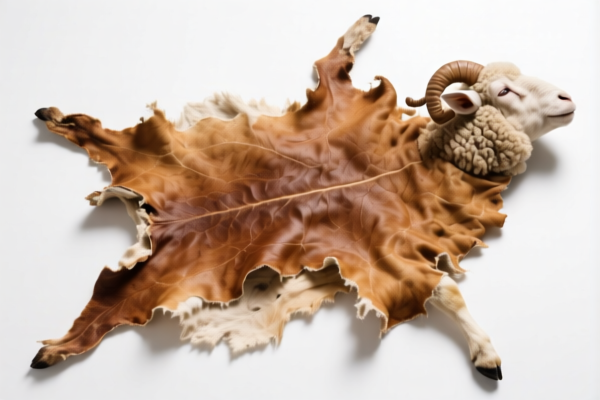
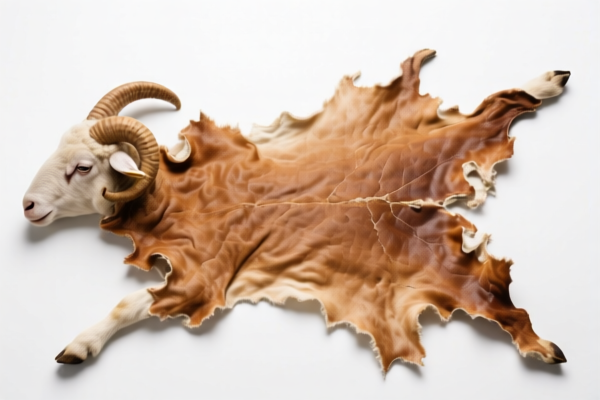
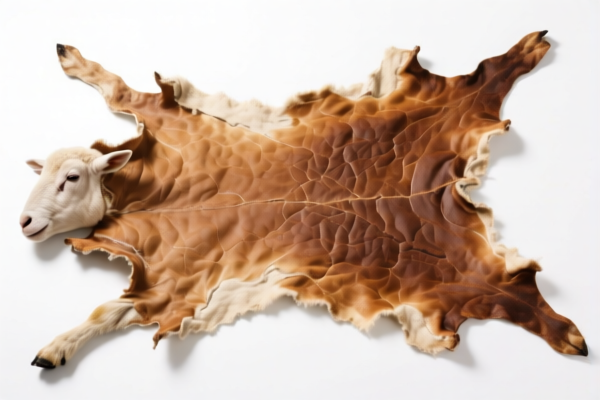
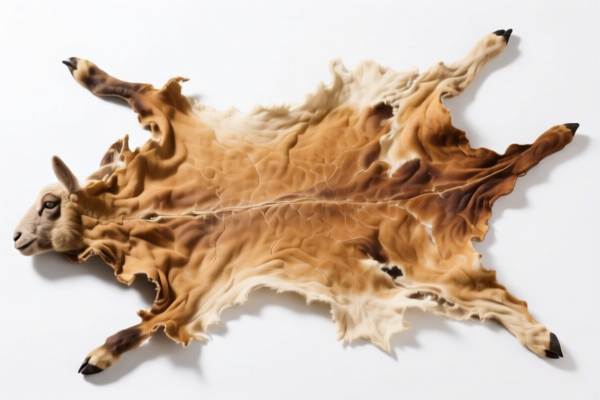
AI分析
🐑 Preserved Lambskin (Tanned Sheepskin for Home Decor)
🌐 HS Code Reference & Customs Clearance Guide | 2026 Latest Tariff Analysis | Professional Clearance Strategy
📌 I. Product Definition & Classification: What Exactly is "Preserved Lambskin"?
Preserved Lambskin refers to sheepskin that has undergone a tanning process to prevent decomposition, making it durable and suitable for non-clothing applications (such as home decoration, upholstery, or crafting). In international trade, the classification depends heavily on the specific finish (e.g., suede, lacquered) and the exact nature of the tanned product.
⚠️ Key Distinction Point:
- Is it Suede/Nubuck? → Falls under specific HS codes with higher tariffs due to trade restrictions.
- Is it Lacquered/Varnished? → Another specific sub-category with its own tariff rate.
- Is it Standard Tanned Leather (non-apparel)? → Generally lower base tariff, but still subject to Section 122 duties.
- Is it a Finished Product (not raw hide/leather)? → Classified under Chapter 42 (Articles of leather), not Chapter 41.
📦 II. HS Code Classification Details (2026 Latest Tariff Authority Cross-Reference)
| HS Code | Product Description | Applicable Scenario | Material/Finish Type |
|---|---|---|---|
4114.10.00.00 |
Tanned fur skins, including dressed lamb skins (Suede/Nubuck type) | Lamb skin used for home decor, matching suede/leather texture & tanning attributes | ✅ Suede/Nubuck Finish |
4114.20.70.00 |
Tanned fur skins, lacquered or patent leather; other lacquered/finished leathers | Lamb skin with a lacquer/patent coating, other forms under the lacquered leather category | ✅ Lacquered/Patent Finish |
4112.00.30.60 |
Tanned fur skins, of sheep or lamb; other, not fitted for clothing | Tanned lamb skin, material is sheepskin/tanned leather, use is non-apparel | ✅ Standard Tanned (Non-Clothing) |
4112.00.60.00 |
Tanned fur skins, of sheep or lamb; other, of lamb | Tanned lamb skin, material is sheepskin, form is tanned leather | ✅ Standard Tanned (General) |
4205.00.10.00 |
Articles of tanned fur skins, other than those of heading 4303 or 4304 | Tanned fur skin finished goods (e.g., cut pieces for upholstery, accessories), matches leather material & finished goods category | ✅ Finished Product (Not Raw Hide/Leather) |
🔍 Key Reminder:
- Chapter 41 covers raw hides, skins, and leather (semi-finished or finished sheets).
- Chapter 42 covers articles of leather (finished goods like bags, belts, or specific upholstery parts). If the "preserved lambskin" is already cut/finished into a specific product, it must go under4205.00.10.00.
- Misclassification between "Leather" (Ch 41) and "Finished Article" (Ch 42) can lead to severe penalties.
💰 III. 2026 Latest Tariff Rate Breakdown (Including Additional Duties, Policy Surcharges)
✅ Applicable Country: USA (US)
✅ Origin: China (CN)
✅ Effective Date: As per current trade measures (Section 301 & Section 122)
🎯 1. 4114.10.00.00 —— Tanned Fur Skins (Suede/Nubuck Lambskin)
| Item | Content |
|---|---|
| Base Tariff | 3.2% (ad valorem) |
| Section 301 Additional Duty | +25.0% (from USITC Footnote 9903.88.01) |
| Section 122 Duty | +10.0% (Targeted at Chinese textile/leather goods) |
| Total Tax Rate | 38.2% |
| Tax Calculation | CIF Value × 38.2% |
| De Minimis Eligibility | ❌ No (deny_de_minimis) |
| Legal Basis Path | IEEPA:9903.01.25 → USITC:4114.10.00.00 → FOOTNOTE:9903.88.01 + Section 122 |
📌 Explanation:
- This category is often targeted due to its high volume and specific trade concerns.
- The 25% Section 301 tariff is standard for many Chinese imports.
- The 10% Section 122 duty is a specific surcharge on certain leather/textile products from China.
- Total 38.2% is significant. Cost calculation must include this.
🎯 2. 4114.20.70.00 —— Tanned Fur Skins (Lacquered/Patent Lambskin)
| Item | Content |
|---|---|
| Base Tariff | 1.6% (ad valorem) |
| Section 301 Additional Duty | +25.0% |
| Section 122 Duty | +10.0% |
| Total Tax Rate | 36.6% |
| Tax Calculation | CIF Value × 36.6% |
| De Minimis Eligibility | ❌ No |
| Legal Basis Path | IEEPA:9903.01.25 → USITC:4114.20.70.00 → FOOTNOTE:9903.88.01 + Section 122 |
📌 Note:
- Although the base tariff is lower (1.6%), the total rate (36.6%) is still very high due to the same additional duties.
- Lacquered/patent leather is considered a processed good, attracting the same Section 301 and 122 surcharges.
🎯 3. 4112.00.30.60 & 4112.00.60.00 —— Tanned Sheep/Lamb Skin (Non-Clothing/Standard)
| Item | Content |
|---|---|
| Base Tariff | 2.0% (ad valorem) |
| Section 301 Additional Duty | +0.0% (Exempt from 301 under specific footnotes for this subcategory) |
| Section 122 Duty | +10.0% |
| Total Tax Rate | 12.0% |
| Tax Calculation | CIF Value × 12.0% |
| De Minimis Eligibility | ❌ No |
| Legal Basis Path | USITC:4112.00.30.60 / 4112.00.60.00 → Section 122 |
📌 Critical Advantage:
- These two codes have NO Section 301 (25%) surcharge.
- Only the 10% Section 122 duty applies.
- Total 12.0% is significantly more competitive than the 36-38% range for suede/lacquered types.
- Must ensure the product is clearly defined as "non-apparel" or "general tanned leather" to qualify for this lower tier. Misdeclaring as apparel or suede could trigger the higher rates.
🎯 4. 4205.00.10.00 —— Articles of Tanned Fur Skins (Finished Goods)
| Item | Content |
|---|---|
| Base Tariff | 0.0% (ad valorem) |
| Section 301 Additional Duty | +25.0% |
| Section 122 Duty | +10.0% |
| Total Tax Rate | 35.0% |
| Tax Calculation | CIF Value × 35.0% |
| De Minimis Eligibility | ❌ No |
| Legal Basis Path | IEEPA:9903.01.25 → USITC:4205.00.10.00 → FOOTNOTE:9903.88.01 + Section 122 |
📌 Note:
- While the base tariff is 0%, the additional duties bring the total to 35.0%.
- This code applies only if the product is a finished article (e.g., a cut piece ready for upholstery, not a raw hide or sheet).
- Ensure documentation clearly states "Finished Article" rather than "Raw Leather."
🛠️ IV. Customs Clearance Practical Advice (Real-World Pitfall Avoidance Guide)
✅ 1. Document Checklist (Essential)
| Document | Mandatory | Description |
|---|---|---|
| ✅ Product Specification Sheet | ✔️ | Must specify: Material (Sheepskin/Lambskin), Tanning Process, Finish (Suede/Lacquered/Standard), Use (Home Decor/Non-Clothing) |
| ✅ Tanning Certificate | ✔️ | Proof of tanning process to confirm it is "leather" (Ch 41) and not "raw hide" (Ch 41 other) |
| ✅ Product Photos | ✔️ | Clear images showing texture (suede vs. smooth/lacquered) |
| ✅ Commercial Invoice | ✔️ | Must accurately describe the product using the HS Code terms (e.g., "Tanned Lambskin, Suede Finish") |
| ✅ Packing List | ✔️ | Detail weight, dimensions, and quantity |
| ✅ Declaration of Non-Apparel Use | ✔️ | For HS Codes 4112.00.30.60 / 4112.00.60.00, explicitly state "NOT FOR CLOTHING" to qualify for lower Section 301 rate |
✅ 2. Declaration Tips (Key Mantra)
🔥 "Finish Matters: Suede/Lacquered = High Tax (38%). Standard/Non-Clothing = Lower Tax (12%). Finished Goods = Medium (35%)."
| Scenario | Correct Declaration | Wrong Practice |
|---|---|---|
| Suede Lamb Skin | 4114.10.00.00 |
Misdeclare as standard leather → Audit risk |
| Lacquered Lamb Skin | 4114.20.70.00 |
Misdeclare as suede → Tariff calculation error |
| Standard Tanned Skin (Not for clothes) | 4112.00.30.60 / 4112.00.60.00 |
Declare as apparel → 38.2% instead of 12% |
| Cut Pieces for Upholstery (Finished) | 4205.00.10.00 |
Declare as raw leather → Chapter misclassification |
✅ 3. Special Handling
| Situation | Recommendation |
|---|---|
| Mixed Shipments | Separate HS Codes if possible. Suede (38.2%) and Standard (12%) have vastly different rates. Consolidating may lead to audit. |
| "Home Decor" Use | Ensure invoices state "For Home Decor" to support 4112.00.30.60 classification if applicable. |
| Section 122 Application | All these codes are subject to the 10% Section 122 duty. Ensure your broker knows this applies to Chinese-origin leather goods. |
| De Minimis (Section 321) | ❌ Not Eligible. All these HS Codes are denied de minimis entry for Chinese goods. Must file formal entry with duty payment. |
🌍 V. Global Market Comparison (2026 Latest)
| Country/Region | Recommended HS Code | Tariff (China Origin) | Notes |
|---|---|---|---|
| 🇺🇸 USA | 4112.00.30.60 |
12.0% (Best Option) | Avoid 4114 codes if possible (38.2%). |
| 🇺🇸 USA | 4114.10.00.00 |
38.2% (Suede) | High cost. Consider supply chain adjustment. |
| 🇪🇺 EU | 4112.00.30.60 |
~2.4% | No Section 301 or 122 equivalent. |
| 🇨🇳 China | 4112.00.30.60 |
~2% | Import duty only. |
📌 Conclusion:
- USA is the most challenging market due to Section 301 (25%) and Section 122 (10%).
- Strategy: If the product is standard tanned lambskin (not suede/lacquered), strictly classify under4112.00.30.60or4112.00.60.00to save 26% in tariffs.
- If it is suede or lacquered, the 35-38% rate is unavoidable for Chinese goods. Consider non-Chinese origin (e.g., Vietnam, Turkey) to avoid Section 301.
📌 VI. Common Errors & Pitfalls (Blood-Teaching Lessons)
❌ Error 1: Declaring "Suede Lambskin" as "Standard Tanned Leather" (4114 vs 4112)
👉 Consequence: Underpayment of 26% tariff → Audit, back taxes, and penalties!
❌ Error 2: Ignoring Section 122
👉 Consequence: All these leather goods from China are subject to an extra 10%. Forgetting this leads to 10% shortfall in duty payment.
❌ Error 3: Misclassifying Finished Goods as Raw Leather
👉 Consequence: If the product is already cut/finished (e.g., upholstery panels), it should be 4205.00.10.00. Misclassifying may lead to Chapter misclassification errors.
❌ Error 4: Assuming De Minimis Applies
👉 Consequence: These HS Codes are NOT eligible for Section 321 (de minimis) from China. Attempting to ship via courier without formal entry will result in seizure or return.
✅ Correct Practice:
"Tanned Lambskin, Sheepskin, Standard Finish, For Home Decor Upholstery, NOT Apparel, HS 4112.00.30.60"
🎯 VII. Conclusion: Professional Declaration, Save Costs!
🎯 Remember the Mantra:
🔹 "Suede/Lacquered = 38%. Standard/Non-Clothing = 12%. Section 122 +10% Always Applies."
🔹 "HS Code Choice Saves $$$. De Minimis is OFF for Chinese Leather."
📌 Pro Tip:
If your volume is high, consider Pre-Ruling (Advance Ruling) from CBP to confirm the exact HS Code and duty rate.
For suede/lacquered goods, evaluate supply chain shifts to countries not subject to Section 301 (e.g., India, Turkey) to reduce costs from 38.2% to ~2-5%.
📣 Immediate Action:
📞 Contact your Customs Broker + Provide Product Samples/Photos + Verify "Non-Clothing" Status
🚀 Accurate Classification = Lower Duties = Higher Profit!
✨ Professional Clearance Starts with Precise Classification!
💼 Every Percent of Duty Saved is Pure Profit!
用户评价
关于 HS 编码归类
协调制度(HS)是由世界海关组织(WCO)制定的国际贸易商品分类标准。全球 200 多个国家采用 HS 系统作为海关关税、贸易统计和进出口监管的基础。
每个 HS 编码遵循以下层级结构:
- 章(2 位)——商品大类(例如:第 84 章:机器和机械设备)
- 品目(4 位)——章内的更具体分类
- 子目(6 位)——国际通用细分,所有 WCO 成员国统一使用
- 本国细分(8-10 位)——各国自行扩展的细分编码,如美国 HTSUS 10 位编码
正确的 HS 编码归类对于顺利通关、准确缴纳关税和遵守贸易法规至关重要。错误归类可能导致海关延误、多缴关税或罚款。
从CN进口到US时,适用的关税税率可能包括:
- 最惠国(MFN)税率——适用于 WTO 成员国的标准关税税率
- 普通税率——适用于无贸易协定国家
- 贸易救济关税——附加关税,如 301 条款(反倾销)、232 条款(国家安全)或反补贴税
本页内容仅供参考。如需正式归类,请咨询当地海关或持牌报关代理。