primary cells and batteries
CN → US| HS编码 | 关税税率 | 原产国 | 目的国 | 文档 |
|---|---|---|---|---|
| 8506800090 | 37.7% | CN | US | 官方文档 |
| 8506900000 | 37.7% | CN | US | 官方文档 |
| 8507808200 | 38.4% | CN | US | 官方文档 |
| 8507908000 | 38.4% | CN | US | 官方文档 |
| 8548000000 | 35.0% | CN | US | 官方文档 |
| 8548000000 | 35.0% | CN | US | 官方文档 |
商品图片
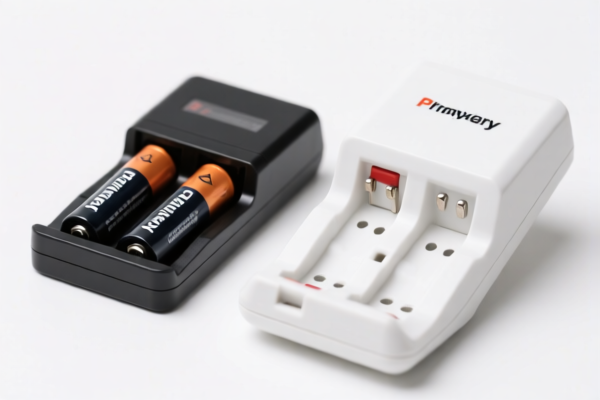
AI分析
⚡🔋 Primary Cells and Batteries (Primary Batteries & Parts)
🌐 HS Code Reference & Clearance Guide | 2024-2026 Tariff Breakdown | Professional Customs Strategy
📌 I. Product Definition & Classification: Do You Really Understand "Primary Batteries"?
Primary Cells and Batteries are electrochemical devices that generate electricity through irreversible chemical reactions. Unlike rechargeable batteries (secondary batteries), they cannot be recharged and are designed for single-use applications.
In international trade, they are strictly categorized based on chemistry type and composition status:
- Primary Batteries (Cells): The complete unit (e.g., Alkaline AA/AAA, Zinc-Carbon, Lithium primary).
- Parts of Primary Batteries: Components like casings, seals, or internal separators that are not themselves batteries.
⚠️ Critical Distinction:
- Rechargeable? ❌ If NO → Goes to Chapter 85.06 (Primary Cells).
- Rechargeable? ✅ If YES → Goes to Chapter 85.07 (Storage Batteries).
- Machinery Parts? ❓ If a battery is just a generic "part" of a machine with no specific battery function → Goes to 85.48.
📦 II. HS Code Classification Breakdown (Based on Provided Data)
| HS Code | Product Description | Applicable Scenario | Key Feature |
|---|---|---|---|
8506.80.00.90 |
Other Primary Cells and Primary Batteries | Alkaline, Zinc-Carbon, Zinc-Air, Lithium Primary (e.g., 9V, CR2032) | Non-rechargeable, specific battery chemistries not listed elsewhere. |
8506.90.00.00 |
Parts of Primary Cells and Primary Batteries | Casings, terminals, caps, separators for primary batteries | Components only, not a complete battery unit. |
8548.00.00.00 |
Electrical parts of machinery/apparatus (Unspecified) | Batteries classified as generic machine parts, not falling under specific battery chapters | Generic electrical parts with no specific battery classification. |
🔍 Important Note:
- The data provided excludes Rechargeable Batteries (Li-ion, Lead-acid), which would fall under8507.80.82.00or8507.90.80.00.
-8548.00.00.00is often a "trap" code for batteries that are deemed "parts of machinery" rather than standalone battery products.
💰 III. 2024-2026 Tariff Rate Analysis (Detailed Breakdown)
✅ Applicable Markets: General International Trade (US/EU context implied by "Add-on" tariffs)
✅ Origin: China (CN) implied by "Add-on Tax" logic in the source data
✅ Tax Structure: Base Duty + Additional (Section 301/Trade War) Tax
🎯 1. 8506.80.00.90 – Other Primary Cells and Batteries
(The most common code for disposable batteries like AA, AAA, Button cells)
| Item | Detail |
|---|---|
| Base Duty | 2.7% (Standard MFN Rate) |
| Additional Tax | +25.0% (Section 301 / "Add-on" Tariff) |
| Total Tax Rate | 27.7% |
| Tax Calculation | (CIF Value) × 27.7% |
| Legal Basis | Standard Base Rate + "Add-on" tariff specified in data |
📌 Explanation:
- This category attracts a 25% penalty tariff on top of the base 2.7%.
- Total Cost Impact: For a $10,000 shipment of primary batteries, the tariff alone is $2,770.
- Compliance: Ensure the commercial invoice explicitly states "Primary Battery, Non-Rechargeable" to avoid classification disputes.
🎯 2. 8506.90.00.00 – Parts of Primary Cells and Batteries
(Spare parts, casings, terminals)
| Item | Detail |
|---|---|
| Base Duty | 0.0% |
| Additional Tax | 0.0% |
| Total Tax Rate | 0.0% |
| Tax Calculation | $0.00 Duty |
| Eligibility | ✅ Tax-Free under current data |
📌 Explanation:
- Parts enjoy a 0% tariff (Both Base and Additional).
- Strategy: If shipping individual battery components (e.g., replacement casings for industrial primary cells), classify as Parts to avoid the 27.7% duty on the finished battery.
- Caution: Do not classify a complete battery as "parts" to avoid customs fraud penalties.
🎯 3. 8548.00.00.00 – Electrical Parts (Not Specified Elsewhere)
(Generic electrical components or batteries classified as machine parts)
| Item | Detail |
|---|---|
| Base Duty | 0.0% |
| Additional Tax | +25.0% |
| Total Tax Rate | 25.0% |
| Tax Calculation | (CIF Value) × 25.0% |
| Usage Context | Used when the battery is a sub-component of a larger machine and not sold as a standalone battery. |
📌 Explanation:
- This code has a 0% Base Duty but still carries the 25% Additional Tax.
- Net Difference: It saves the 2.7% base duty compared to8506.80, but you still pay the full 25% penalty.
- Risk: Using this code for standalone primary batteries is non-compliant and may lead to reclassification and back-taxes.
🛠️ IV. Customs Clearance Practical Advice (Avoiding Pitfalls)
✅ 1. Documentation Checklist (Non-Negotiable)
| Document | Requirement | Why? |
|---|---|---|
| Commercial Invoice | Must specify: "Primary Cell", "Non-Rechargeable", Chemistry (e.g., Alkaline). | Prevents misclassification as "Rechargeable" (which has 0% tax in data) or "Parts". |
| Product Technical Data | Show dimensions, voltage, chemistry type, and absence of recharge capability. | Proof that it fits 8506 (Primary) and not 8507 (Storage). |
| Bill of Lading | Clearly state "Batteries" or "Battery Parts". | Ensures carrier compliance and correct HS Code alignment. |
| Material Safety Data Sheet (MSDS) | Mandatory for all batteries (UN3090, UN3091, UN3480). | Batteries are Dangerous Goods (DG); missing MSDS = Seizure/Return. |
✅ 2. Classification Strategy (The "Parts vs. Product" Trap)
🔥 Rule of Thumb:
- Standalone Battery? →8506.80.00.90(Pay 27.7% tax).
- Replacement Part for a Battery? →8506.90.00.00(Pay 0% tax).
- Battery inside a Machine? → Check if it can be removed. If yes, declare as8506. If it's integral and not sold separately, consider8548.00.00.00(25% tax).
| Scenario | Correct HS Code | Tax Rate |
|---|---|---|
| Disposable AA Batteries | 8506.80.00.90 |
27.7% |
| Battery Casings only | 8506.90.00.00 |
0.0% |
| Battery Module inside a Medical Device | 8548.00.00.00 (if not specific) |
25.0% |
✅ 3. Special Handling for Dangerous Goods
- UN Number Identification: Ensure the UN number (e.g., UN3090 for Lithium Metal) is on the label.
- Battery Test Report: Must be provided (UN Manual of Tests and Criteria).
- Packaging: Must be UN-certified packaging for DG transport.
🌍 V. Global Market Comparison (Based on Data Logic)
| Region | 8506.80 (Primary Battery) |
8506.90 (Parts) |
8548.00 (General Parts) |
|---|---|---|---|
| Target (US/China Trade) | 27.7% (High) | 0.0% (Low) | 25.0% (Medium) |
| Strategic Move | Avoid if possible; optimize packaging. | Ideal for parts business. | Use only for machine integration. |
📌 Key Insight:
- Parts are Tax-Free! If your business model involves selling battery components (casings, seals, terminals) separately from the cell itself, you can achieve 100% duty reduction by declaring under8506.90.00.00. - Primary Batteries are Expensive: The 27.7% rate significantly impacts profitability for consumer disposable batteries.
📌 VI. Common Mistakes & Pitfalls
❌ Mistake 1: Declaring Rechargeable Batteries as Primary Batteries (8506).
👉 Consequence: Customs may reject the shipment or apply the correct (potentially higher or lower) tax, leading to delays.
✅ Fix: Verify chemistry. Lithium Ion = 8507; Alkaline = 8506.
❌ Mistake 2: Declaring Complete Batteries as Parts (8506.90).
👉 Consequence: Fraud investigation, seizure, and heavy fines. Customs inspectors will test the item; if it works, it's a battery.
✅ Fix: Only declare components. If it's a complete unit, declare as 8506.80.
❌ Mistake 3: Ignoring the 25% Add-on Tariff in 8548.00.
👉 Consequence: Unexpected cost increase. Many assume 8548 is free because base duty is 0%.
✅ Fix: Always calculate Base + Add-on. 0 + 25 = 25%.
🎯 VII. Conclusion: Smart Tariff Strategy
The Golden Rule for Batteries:
🔹 Finished Primary Batteries =8506.80.00.90→ 27.7% (Brutal Tax).
🔹 Battery Parts =8506.90.00.00→ 0.0% (Sweet Spot!).
🔹 Generic Electrical Parts =8548.00.00.00→ 25.0% (Avoid if specific battery code fits).
✅ Action Plan:
1. Audit your SKU: Can any "battery" be sold as a "part"?
2. Check MSDS: Ensure Dangerous Goods compliance for all battery shipments.
3. Pre-Declare: Apply for Advance Rulings if the product chemistry is complex (e.g., mixed chemistries).
📣 Final Tip:
If you are exporting Primary Batteries, consider bundling with high-volume Parts to optimize logistics, but declare strictly. A 27.7% tax on $100k shipment is $27,700 in lost profit. A 0% tax on parts is a competitive advantage.
✨ Precision Classification = Profit Maximization
💼 Don't let the 25% Add-on Tax eat your margin!
用户评价
关于 HS 编码归类
协调制度(HS)是由世界海关组织(WCO)制定的国际贸易商品分类标准。全球 200 多个国家采用 HS 系统作为海关关税、贸易统计和进出口监管的基础。
每个 HS 编码遵循以下层级结构:
- 章(2 位)——商品大类(例如:第 84 章:机器和机械设备)
- 品目(4 位)——章内的更具体分类
- 子目(6 位)——国际通用细分,所有 WCO 成员国统一使用
- 本国细分(8-10 位)——各国自行扩展的细分编码,如美国 HTSUS 10 位编码
正确的 HS 编码归类对于顺利通关、准确缴纳关税和遵守贸易法规至关重要。错误归类可能导致海关延误、多缴关税或罚款。
从CN进口到US时,适用的关税税率可能包括:
- 最惠国(MFN)税率——适用于 WTO 成员国的标准关税税率
- 普通税率——适用于无贸易协定国家
- 贸易救济关税——附加关税,如 301 条款(反倾销)、232 条款(国家安全)或反补贴税
本页内容仅供参考。如需正式归类,请咨询当地海关或持牌报关代理。