printed satin/twill fabric
CN → US| HS编码 | 关税税率 | 原产国 | 目的国 | 文档 |
|---|---|---|---|---|
| 5512990040 | 47.0% | CN | US | 官方文档 |
| 5408349050 | 47.0% | CN | US | 官方文档 |
| 6006340080 | 45.0% | CN | US | 官方文档 |
| 6006440085 | 45.0% | CN | US | 官方文档 |
| 5208492000 | 35.0% | CN | US | 官方文档 |
商品图片
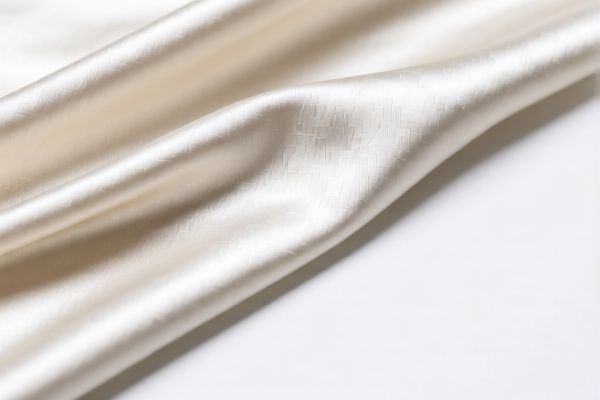
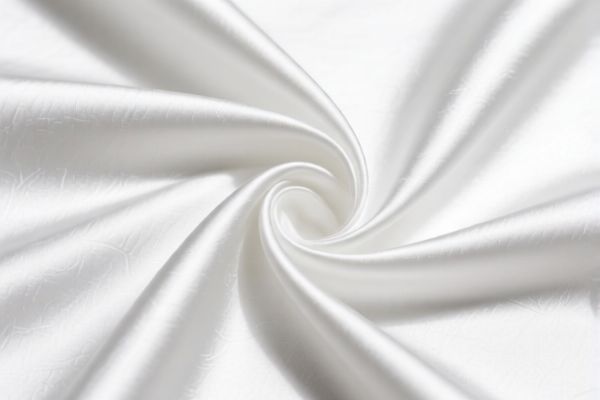
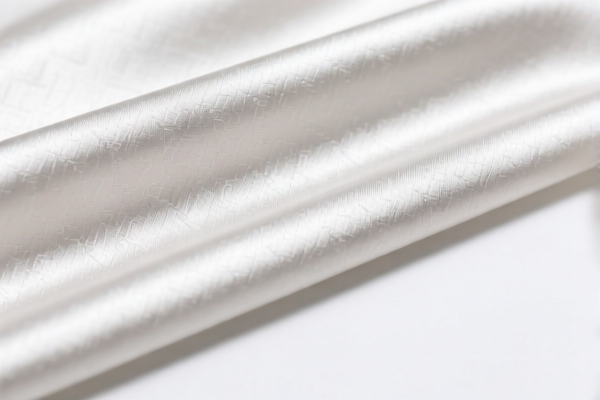

AI分析
🧵 Printed Satin & Twill Fabrics (Decorative/Utility Textiles)
🌐 HS Code Reference & Customs Clearance Guide | 2026 Latest Tariff Analysis | Professional Strategy
📌 I. Product Definition: What Exactly Are We Importing?
"Printed Satin/Twill Fabric" is a broad category describing textiles where the surface pattern is created through printing techniques on fabrics woven with Satin or Twill structures. The classification heavily depends on the fiber content (Synthetic vs. Man-made vs. Cotton Blend) and the specific weave structure.
In international trade, these are typically classified under Chapter 50-60, depending on whether they are woven fabrics (Ch 50-55, 60) and their material composition.
⚠️ Key Distinction Points: - Material: Is it Polyester/Synthetic (
54/55) or Rayon/Viscose (54)? Or a Cotton Blend (52)? - Weave: Satin (smooth, shiny surface) vs. Twill (diagonal rib pattern). - Width/Structure: Woven on looms (Chapter 50-55) vs. Knitted (Chapter 60). Note: The data provided lists specific HS codes, some of which are Woven (Ch 50-55) and some Knitted (Ch 60). This indicates "Satin" here may refer to a finish or a specific knitted structure, or the data includes both woven and knitted variants.
📦 II. HS Code Classification Matrix (Based on Provided Data)
| HS Code | Summary Description | Material / Structure | Total Tax Rate |
|---|---|---|---|
5512.99.00.40 |
Satin Printed Fabric | Synthetic Fiber, Woven, Satin Weave, Printed | 47.0% |
5408.34.90.50 |
Satin Printed Fabric | Synthetic Fiber (Artificial Filament), Woven, Satin, Printed | 47.0% |
6006.34.00.80 |
Printed Fabric | Synthetic Fiber, Knitted, Satin Weave/Structure | 45.0% |
6006.44.00.85 |
Printed Fabric | Man-made Fiber (Non-Synthetic), Knitted, Satin, Printed | 45.0% |
5208.49.20.00 |
Cotton Blend Twill/Satin Decorative Fabric | Cotton Blend, Twill/Satin Weave, Decorative Use | 35.0% |
🔍 Critical Analysis of Data Discrepancy: - Codes
5512and5408are Woven fabrics (Chapter 55). - Codes6006are Knitted fabrics (Chapter 60). - Code5208is Woven Cotton Blend (Chapter 52). - User must verify if the product is Woven or Knitted to select the correct chapter.
💰 III. Detailed Tariff Breakdown (2026 Latest Rates)
✅ Applicable Country: United States (US)
✅ Origin: China (CN)
✅ Effective Date: Post-November 2025 Regulations
🎯 1. High-Tax Categories: Synthetic Satin/Printed Fabrics
HS Codes: 5512.99.00.40 & 5408.34.90.50
Total Tax: 47.0%
| Component | Rate | Legal Basis / Note |
|---|---|---|
| Base Tariff | 12.0% | Standard MFN rate for synthetic fabrics |
| Section 301 Tariff (Add-on) | 25.0% | USITC Footnote for Chinese goods |
| IEEPA Tariff (Section 122/EO) | 10.0% | Executive Order on specific Chinese imports |
| TOTAL | 47.0% | High Barrier Entry |
📌 Explanation:
- These codes cover Synthetic Fiber (Polyester/Nylon) Satin fabrics.
- The 25% Section 301 tariff is aggressive on textiles from China.
- The 10% IEEPA adds further burden, often applicable to strategic or specific textile categories.
- Result: Nearly half the value of the goods is lost to customs duties.
🎯 2. Medium-Tax Categories: Knitted Satin/Printed Fabrics
HS Codes: 6006.34.00.80 & 6006.44.00.85
Total Tax: 45.0%
| Component | Rate | Legal Basis / Note |
|---|---|---|
| Base Tariff | 10.0% | Standard MFN rate for knitted synthetic/man-made fabrics |
| Section 301 Tariff (Add-on) | 25.0% | USITC Footnote for Chinese goods |
| IEEPA Tariff (Section 122/EO) | 10.0% | Executive Order on specific Chinese imports |
| TOTAL | 45.0% | High Barrier Entry |
📌 Explanation:
- Knitted fabrics (Chapter 60) have a slightly lower Base Tariff (10%) compared to Woven Synthetics (12%).
- However, the Add-ons (25% + 10%) remain identical, resulting in a 45% total rate.
-6006.34= Synthetic (Polyester/Acrylic);6006.44= Man-made (Viscose/Rayon).
🎯 3. Lowest-Tax Category: Cotton Blend Decorative Fabric
HS Code: 5208.49.20.00
Total Tax: 35.0%
| Component | Rate | Legal Basis / Note |
|---|---|---|
| Base Tariff | 0.0% | Preferential or low base rate for cotton blends/decorative |
| Section 301 Tariff (Add-on) | 25.0% | USITC Footnote for Chinese goods |
| IEEPA Tariff (Section 122/EO) | 10.0% | Executive Order on specific Chinese imports |
| TOTAL | 35.0% | Most Cost-Effective |
📌 Explanation:
- This code specifically mentions "Cotton Blend" and "Decorative Fabric".
- The 0% Base Tariff significantly reduces the final liability.
- Crucial Condition: The fabric must be classified as "Decorative" and contain Cotton Blend (not pure synthetic). If it’s 100% polyester satin, this code is incorrect and risks audit penalties.
🛠️ IV. Customs Clearance Strategy & Practical Advice
✅ 1. Documentation Requirements (Non-Negotiable)
| Document | Purpose | Key Details to Include |
|---|---|---|
| Commercial Invoice | Valuation | Must clearly state: "Printed Satin/Twill Fabric", Fiber Content (% Cotton/% Poly/etc.), Weave Type (Woven/Knitted), Width, Weight. |
| Packing List | Logistics | Net/Gross weight, dimensions, number of rolls. |
| Certificate of Origin (CO) | Tariff Eligibility | Proves Chinese origin (triggers 301/IEEPA taxes). If from Vietnam/India, taxes may differ. |
| Product Spec Sheet | Classification Support | Detailed description of: 1. Fiber Content (e.g., 95% Poly, 5% Spandex) 2. Weave Structure (Satin vs. Twill) 3. End Use (e.g., Upholstery, Apparel, Curtains) |
| Photos | Verification | Clear images of fabric front, back, selvage, and label. |
✅ 2. Classification Strategy (How to Save Money)
| Strategy | Action | Risk/Reward |
|---|---|---|
| Maximize Cotton Content | If possible, formulate fabric as Cotton Blend (e.g., 60% Cotton/40% Poly) and claim Decorative Use. | Reward: Drops tax from 47% → 35%. Risk: Must prove "Decorative" end-use; customs may reclassify if used for apparel. |
| Verify Woven vs. Knitted | Ensure fabric type matches HS Code chapter. - Woven → Ch 50-55 - Knitted → Ch 60 |
Reward: Accurate classification prevents penalties. Risk: Misclassification leads to delays & fines. |
| Avoid "Pure Synthetic" if Possible | If budget allows, shift supply chain to non-China origins (e.g., Vietnam, India) to potentially avoid 25% + 10% add-ons (subject to FTAs). | Reward: Potentially 0-10% total duty. Risk: Higher FOB cost. |
✅ 3. Common Pitfalls & Red Flags
❌ Pitfall 1: Mislabeling "Satin"
- Issue: Calling all shiny fabrics "Satin."
- Reality: Satin is a weave structure. If the fabric is printed but has a plain weave, it may fall under different subheadings.
- Fix: Provide weave structure diagrams.
❌ Pitfall 2: Ignoring "Decorative" Criteria for 5208.49.20.00
- Issue: Using code 5208.49.20.00 for garment fabric.
- Reality: This code is often for home décor, curtains, upholstery.
- Fix: If used for clothing, customs may assess the higher 45-47% rate + penalties.
❌ Pitfall 3: Inaccurate Fiber Content
- Issue: Stating "Polyester" when fabric is 5% Rayon blend.
- Reality: Rayon falls under 5408 or 6006.44, changing the Base Tariff (10% vs 12%).
- Fix: Get a lab test report (e.g., SGS, Bureau Veritas) for fiber composition.
🌍 V. Global Market Comparison (2026)
| Destination | HS Code Range | Est. Total Duty (CN Origin) | Notes |
|---|---|---|---|
| 🇺🇸 USA | 5208.49 / 5408 / 5512 / 6006 |
35% - 47% | High due to Section 301 & IEEPA |
| 🇨🇳 China | Same Codes | ~0-9% | No Section 301; Low Import Duty |
| 🇪🇺 EU | Similar Codes | ~4-12% | No IEEPA; Standard WTO rates apply |
| 🇬🇧 UK | Similar Codes | ~4-12% | Post-Brexit independent tariffs |
| 🇯🇵 Japan | Similar Codes | ~0-5% | Free Trade Agreement benefits may apply |
📌 Conclusion for US Importers:
The US market is the most expensive due to layered tariffs.
- Best Case: Cotton Blend Decorative (35%).
- Worst Case: Synthetic Woven/Knitted Satin (47%).
Strategy: Optimize fiber blend and end-use declaration to target the 35% bracket.
📌 VI. Final Checklist for Importers
- [ ] Lab Test: Confirm exact fiber content (Cotton vs. Synthetic %).
- [ ] Weave Check: Is it Woven (Ch 50-55) or Knitted (Ch 60)?
- [ ] End-Use Definition: Is it truly "Decorative" (for
5208.49.20.00)? - [ ] Origin Verification: Ensure CO reflects China (to calculate correct add-ons).
- [ ] Pre-Arrival Review: Submit documents to broker 48 hours before arrival to avoid demurrage.
🎯 Pro Tip:
"Cotton Blend + Decorative Use = 35% Savings!"
If your satin fabric is 100% polyester, you are stuck at 45-47%.
Consider working with mills to produce Cotton-Poly blends marketed for Home Décor to unlock the lower tariff code5208.49.20.00.
✨ Smart Classification, Smarter Profits!
💼 Contact a Licensed Customs Broker for Pre-Import Ruling to Confirm HS Code Accuracy.
用户评价
关于 HS 编码归类
协调制度(HS)是由世界海关组织(WCO)制定的国际贸易商品分类标准。全球 200 多个国家采用 HS 系统作为海关关税、贸易统计和进出口监管的基础。
每个 HS 编码遵循以下层级结构:
- 章(2 位)——商品大类(例如:第 84 章:机器和机械设备)
- 品目(4 位)——章内的更具体分类
- 子目(6 位)——国际通用细分,所有 WCO 成员国统一使用
- 本国细分(8-10 位)——各国自行扩展的细分编码,如美国 HTSUS 10 位编码
正确的 HS 编码归类对于顺利通关、准确缴纳关税和遵守贸易法规至关重要。错误归类可能导致海关延误、多缴关税或罚款。
从CN进口到US时,适用的关税税率可能包括:
- 最惠国(MFN)税率——适用于 WTO 成员国的标准关税税率
- 普通税率——适用于无贸易协定国家
- 贸易救济关税——附加关税,如 301 条款(反倾销)、232 条款(国家安全)或反补贴税
本页内容仅供参考。如需正式归类,请咨询当地海关或持牌报关代理。