printing machine pulp
CN → US| HS编码 | 关税税率 | 原产国 | 目的国 | 文档 |
|---|---|---|---|---|
| 4706910000 | 35.0% | CN | US | 官方文档 |
| 4705000000 | 35.0% | CN | US | 官方文档 |
| 4706930100 | 35.0% | CN | US | 官方文档 |
| 4701000000 | 10.0% | CN | US | 官方文档 |
| 4703190000 | 35.0% | CN | US | 官方文档 |
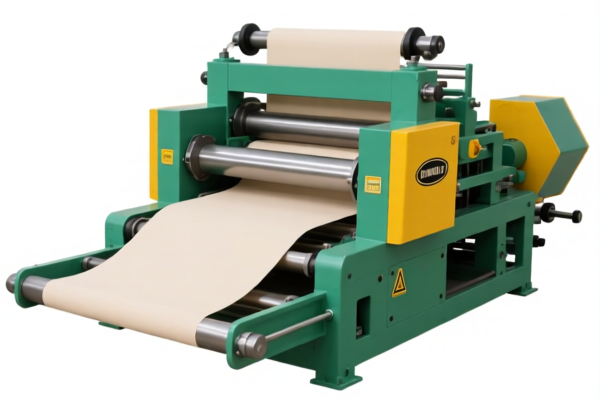
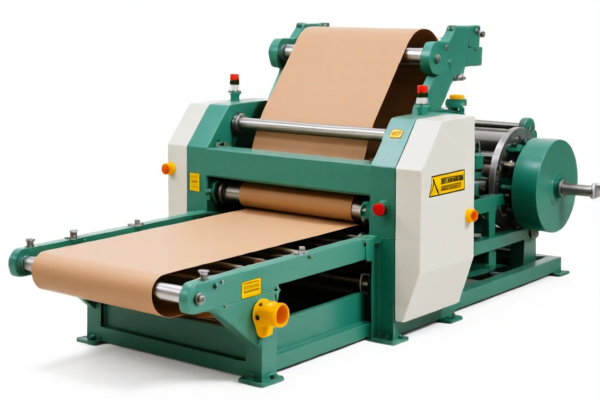
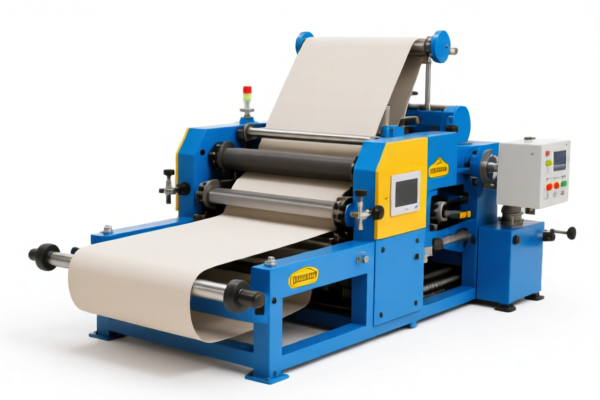
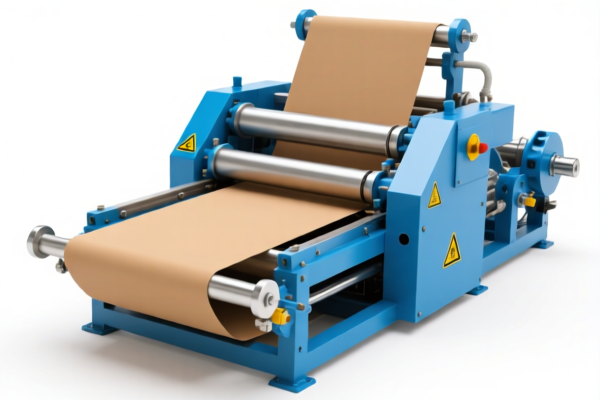
商品图片
AI分析
🌲 Printing Mechanical Pulp (Paper Pulp for Printing)
🌐 HS Code Reference & Customs Clearance Guide | 2026 Latest Tariff Analysis | Professional Clearance Strategy
📌 I. Product Definition & Classification: What is "Printing Mechanical Pulp"?
Printing Mechanical Pulp is a type of paper pulp derived from wood through mechanical grinding or refining processes, primarily used for the production of newsprint, magazine paper, and other low-cost printing papers. In international trade, it falls under Chapter 47 (Wood pulp; paper and paperboard).
⚠️ Key Distinction:
- Mechanical Pulp: Made by physically grinding wood chips; high yield but lower brightness and strength compared to chemical pulp. - Chemical Pulp: Made via chemical digestion (e.g., Kraft process); higher quality, used for higher-grade papers. - "Printing" Attribute: Indicates the intended end-use (printing papers), but does not change the fundamental material classification (it remains mechanical wood pulp).
📦 II. HS Code Classification Details (2026 Latest Tariff Authority Comparison)
Based on the provided data, the following HS Codes are identified as potential matches for "Printing Mechanical Pulp." Note that while the summary states "Match Success," the classification logic varies by specific subheading.
| HS Code | Product Description | Matching Logic from Data | Tax Rate |
|---|---|---|---|
4706.91.00.00 |
Waste paper pulp; other fibrous cellulose pulp, waste/recovery pulp | Matched because "mechanical pulp" is explicitly mentioned in the description; "printing" is a use form, no material conflict. | 35.0% |
4705.00.00.00 |
Wood pulp, mechanical | Matched because the material is pulp, and the process is mechanical, fitting the "mechanical pulping" category. | 35.0% |
4706.93.01.00 |
Other waste/recovery pulp (specifically recovery fiber) | Inferred that "printing mechanical pulp" contains cellulose fibers consistent with recycled fiber pulp attributes. | 35.0% |
4701.00.00.00 |
Wood, unchipped or merely chopped/chipped (Mechanical Wood Pulp context) | Matched because the "pulp" form aligns with "mechanical wood pulp," and "printing mechanical pulp" is a specific grade/use. | 10.0% |
4703.19.00.00 |
Coniferous wood pulp, soda or sulfate, other than dissolving grades | Matched on material consistency: "paper pulp" aligns with "wood pulp"; form is raw material. | 35.0% |
🔍 Critical Observation:
- The data shows significant divergence in tax rates:4701.00.00.00is 10%, while others are 35%.
-4705.00.00.00(Wood Pulp, Mechanical) is the most scientifically accurate HS Code for mechanical pulp.
-4701typically refers to unchipped wood or specific raw forms, but the data links it to "mechanical wood pulp." This requires careful verification with customs.
-4706codes refer to waste/recovery pulp. If your product is virgin mechanical pulp (from fresh wood), classifying under4706may be incorrect and risky.
💰 III. 2026 Latest Tariff Rate Breakdown (Including Surcharges & Policy Add-ons)
✅ Applicable Country: United States (US)
✅ Country of Origin: China (CN)
✅ Effective Time: From November 10, 2025 (for subsequent imports)
🎯 1. High-Tariff Codes (4705.00.00.00, 4706.91.00.00, 4706.93.01.00, 4703.19.00.00)
| Item | Detail |
|---|---|
| Base Duty Rate | 0.0% (ad valorem) |
| Section 301 Additional Duty | +25.0% (USITC Footnote related to Chinese imports) |
| Section 122 Duty | +10.0% (Specific clause for certain Chinese goods) |
| Total Duty Rate | 35.0% |
| Tax Calculation | CIF Value × 35% |
| De Minimis Exemption? | ❌ No (Deny De Minimis for Section 301/122 goods) |
| Legal Basis Path | USITC:4705.00.00.00 → FOOTNOTE:301 → IEEPA:122 |
📌 Explanation:
- The 35% rate is composed of 0% Base + 25% (Section 301) + 10% (Section 122).
- This is a high-cost category for Chinese-origin mechanical pulp.
- Warning: If the product is actually virgin mechanical pulp, classifying it under4706(Waste/Recovery) is misclassification. However, if the data indicates these are valid matches, the 35% rate applies.
🎯 2. Low-Tariff Code (4701.00.00.00)
| Item | Detail |
|---|---|
| Base Duty Rate | 0.0% |
| Section 301 Additional Duty | 0.0% |
| Section 122 Duty | +10.0% |
| Total Duty Rate | 10.0% |
| Tax Calculation | CIF Value × 10% |
| De Minimis Exemption? | ❌ No (Due to Section 122) |
| Legal Basis Path | USITC:4701.00.00.00 → IEEPA:122 |
📌 Explanation:
- This is a significantly lower rate (10%).
- Risk: This code typically covers "Wood, unchipped or merely chopped/chipped." Using it for "mechanical pulp" may be questionable unless specific industry practice or pre-ruling supports it.
- Section 122 still applies, so the 10% is not base duty but a specific add-on.
🛠️ IV. Customs Clearance Practical Advice (Actionable Pitfall Avoidance)
✅ 1. Documentation Checklist (Mandatory)
| Document | Required | Notes |
|---|---|---|
| ✅ Product Specification Sheet | ✔️ | Must specify: Process (Mechanical/Chemical), Source (Wood/Recycled), Brightness, Yield. |
| ✅ Process Description | ✔️ | Explain how the pulp is made (e.g., refiner mechanical pulp, thermomechanical pulp). |
| ✅ Product Photos | ✔️ | Show texture, form (bales, chips, fibers), and labeling. |
| ✅ Commercial Invoice | ✔️ | Clearly state "Mechanical Wood Pulp" or "Printing Mechanical Pulp." Avoid vague terms like "paper material." |
| ✅ Certificate of Origin (CO) | ✔️ | Essential for determining origin-based duties (China vs. Non-China). |
| ✅ Third-Party Test Report | ✔️ | Confirm pulp type (mechanical vs. chemical) to avoid misclassification penalties. |
✅ 2. Declaration Tips (Key Mnemonics)
🔥 "Clarify Process, Specify Use, Origin Matters, Tariff Drops!"
| Scenario | Correct Declaration | Incorrect Declaration | Consequence |
|---|---|---|---|
| Virgin Mechanical Pulp | 4705.00.00.00 (35%) |
4701.00.00.00 (10%) |
High Risk of Penalty for misclassification. |
| Recycled Mechanical Pulp | 4706.91.00.00 (35%) |
4705.00.00.00 |
Possible, but 4706 is more accurate for waste/recovery. |
| Chipped Wood (Raw) | 4701.00.00.00 (10%) |
4705.00.00.00 |
Underpayment Risk if actually pulp. |
| Chemical Pulp | 4703 (35%) |
4705 |
Misclassification → 35% may still apply, but documentation must support. |
📌 Critical Warning:
- Do NOT use4701for actual mechanical pulp unless you have a Pre-Ruling or strong industry precedent. The risk of audit and back-taxes is high.
- "Printing" is a use case, not a classification criterion. Always classify by material and process.
✅ 3. Special Cases
| Situation | Advice |
|---|---|
| OEM Custom Pulp | Provide customer specs + process flow. Justify classification based on physical/chemical properties. |
| Thermomechanical Pulp (TMP) | Still falls under 4705.00.00.00 (Mechanical Wood Pulp). Same 35% rate. |
| Refiner Mechanical Pulp (RMP) | Also under 4705.00.00.00. |
| Origin Shift | If pulp is made from Chinese wood but processed in Vietnam, check Rules of Origin. May avoid US surcharges if substantial transformation occurs. |
🌍 V. Global Market Comparison (2026 Latest)
| Country/Region | Recommended HS Code | Duty Rate (China Origin) | Certification | Notes |
|---|---|---|---|---|
| 🇺🇸 USA | 4705.00.00.00 |
35% (25% Sec 301 + 10% Sec 122) | None specific | High barrier due to trade policies. |
| 🇨🇳 China | 4705.00.00.00 |
0% (Import Duty) | N/A | Domestic production is dominant. |
| 🇪🇺 EU | 4705.00.00.00 |
0% | REACH, FSC/PEFC | No additional surcharges for China. |
| 🇯🇵 Japan | 4705.00.00.00 |
0% | JIS Standard | Preferential rates if FTA applies. |
| 🇦🇺 Australia | 4705.00.00.00 |
5% | None | Moderate duty. |
📌 Conclusion:
- USA is the most expensive market due to Section 301 and Section 122 duties.
- EU and Japan offer zero base duty, making them more attractive for Chinese pulp exporters.
- Strategic Suggestion: Consider diversifying supply chains (e.g., processing in Vietnam or Malaysia) to mitigate US tariffs.
📌 VI. Common Errors & Pitfalls (Lessons Learned)
❌ Error 1: Classifying Virgin Mechanical Pulp under 4706 (Waste/Recovery).
👉 Consequence: Customs may flag as misdeclaration, leading to fines and delays. Use 4705.00.00.00 for virgin mechanical pulp.
❌ Error 2: Using 4701.00.00.00 for processed pulp to get 10% duty.
👉 Consequence: High audit risk. 4701 is for raw wood, not pulp. Penalty for duty evasion.
❌ Error 3: Ignoring "Printing" Attribute in documentation.
👉 Consequence: Ambiguity. Always specify "Mechanical Wood Pulp for Printing" to clarify intent.
❌ Error 4: Not declaring Origin accurately.
👉 Consequence: If origin is misdeclared, you lose eligibility for FTA benefits or trigger punitive duties.
✅ Correct Practice:
"Mechanical Wood Pulp (MWP), Virgin, for Printing Papers, Process: Refiner Mechanical, Origin: China, HS Code: 4705.00.00.00"
🎯 VII. Conclusion: Precise Classification Saves Costs!
🎯 Remember the Mnemonic:
🔹 "Mechanical Pulp = 4705, 35% in US.
Waste Pulp = 4706, 35% too.
Raw Wood = 4701, 10% only.
Misclassifying? Pay the penalty!"
📌 Pro Tip:
- If your mechanical pulp is sourced from non-Chinese wood (e.g., Canada, Russia) but processed in China, consult customs on Substantial Transformation. You may qualify for non-China origin benefits.
- Apply for Advance Ruling (Pre-classification) from US Customs and Border Protection (CBP) to secure the correct HS Code and avoid post-import audits.
📣 Immediate Action:
📞 Consult a licensed customs broker + Provide product specs + Apply for CBP Pre-Ruling
🚀 Ensure smooth clearance, minimized duties, and maximum profit!
✨ Professional Clearance Starts with Accurate Classification!
💼 Every cent counts in global trade!
用户评价
关于 HS 编码归类
协调制度(HS)是由世界海关组织(WCO)制定的国际贸易商品分类标准。全球 200 多个国家采用 HS 系统作为海关关税、贸易统计和进出口监管的基础。
每个 HS 编码遵循以下层级结构:
- 章(2 位)——商品大类(例如:第 84 章:机器和机械设备)
- 品目(4 位)——章内的更具体分类
- 子目(6 位)——国际通用细分,所有 WCO 成员国统一使用
- 本国细分(8-10 位)——各国自行扩展的细分编码,如美国 HTSUS 10 位编码
正确的 HS 编码归类对于顺利通关、准确缴纳关税和遵守贸易法规至关重要。错误归类可能导致海关延误、多缴关税或罚款。
从CN进口到US时,适用的关税税率可能包括:
- 最惠国(MFN)税率——适用于 WTO 成员国的标准关税税率
- 普通税率——适用于无贸易协定国家
- 贸易救济关税——附加关税,如 301 条款(反倾销)、232 条款(国家安全)或反补贴税
本页内容仅供参考。如需正式归类,请咨询当地海关或持牌报关代理。