pulp surface treatment chemicals
CN → US| HS编码 | 关税税率 | 原产国 | 目的国 | 文档 |
|---|---|---|---|---|
| 3206496050 | 38.1% | CN | US | 官方文档 |
| 3204179086 | 41.5% | CN | US | 官方文档 |
| 3204195000 | 41.5% | CN | US | 官方文档 |
| 3824994900 | 41.5% | CN | US | 官方文档 |
| 3824999397 | 40.0% | CN | US | 官方文档 |
商品图片
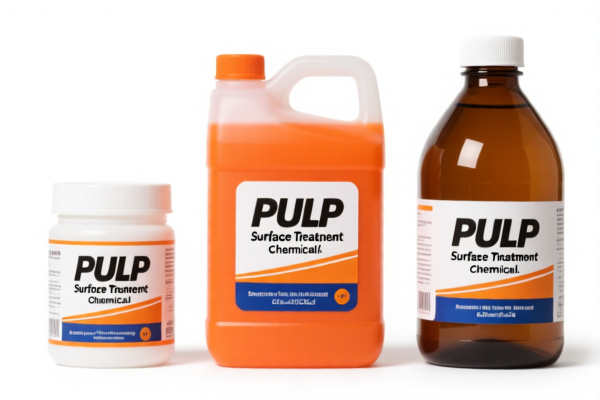
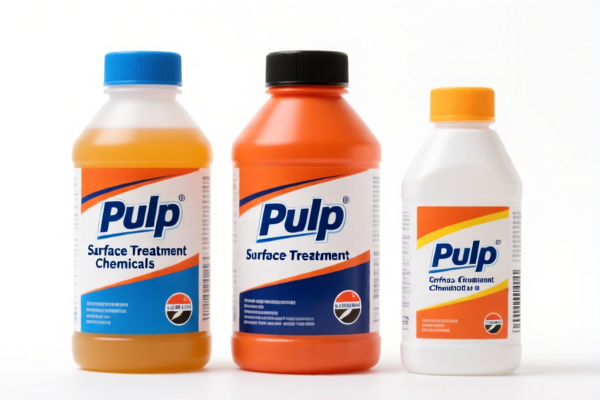
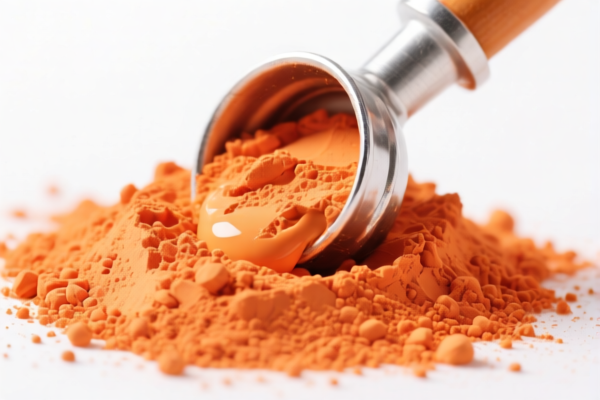
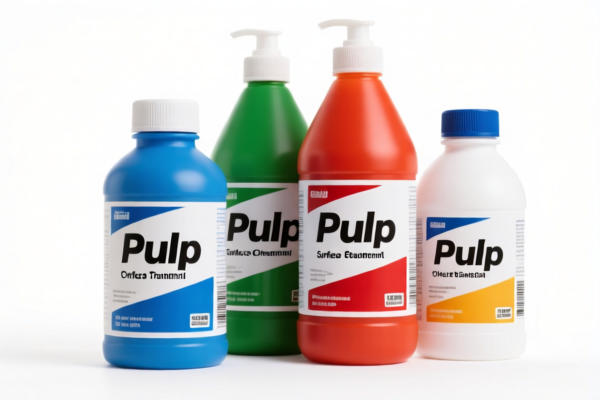
AI分析
📄 Pulp Surface Treatment Chemicals (Paper Pulp Coloring Agents)
🌐 HS Code Reference & Customs Clearance Guide | 2026 Latest Tariff Analysis | Strategic Compliance Strategy
📌 I. Product Definition & Classification: What Exactly Are "Pulp Coloring Chemicals"?
Pulp Surface Treatment Chemicals, specifically referring to paper pulp coloring agents, are specialized chemical additives used during the papermaking process to impart color, enhance visual appeal, or meet specific aesthetic requirements for various paper grades.
In international trade, these products are generally categorized based on their chemical composition and functional application: * Synthetic Organic Colorants: Dyes and pigments derived from organic synthesis. * Chemical Preparations: Complex mixtures or formulations containing colorants, dispersants, or other auxiliary agents designed specifically for pulp integration.
⚠️ Key Distinction for Customs:
- If the product is a pure chemical coloring agent not fitting other specific headings → Falls under 3206.
- If it is a synthetic organic colorant or pigment preparation → Falls under 3204.
- If it is a general chemical mixture/additive for industrial use → Falls under 3824.
📦 II. HS Code Classification Details (2026 Latest Tariff Authority Comparison)
| HS Code | Product Description | Application Scenario | Tariff Category |
|---|---|---|---|
3206.49.60.50 |
Other Coloring Matter and Preparations: Pulp coloring chemicals, classified as chemical colorants, falling under other coloring materials and preparations. | General chemical colorants for paper pulp, non-specific synthetic dyes. | Other Coloring Matters |
3204.17.90.86 |
Synthetic Organic Colouring Matter: Pulp coloring chemicals, classified as synthetic organic colorants and their preparations, falling under pigments and preparations. | Specific synthetic organic dyes/pigments used in pulp bleaching or coloring. | Synthetic Organic Colorants |
3204.19.50.00 |
Synthetic Organic Colouring Matter: Pulp coloring chemicals, classified as synthetic organic colorants and their preparations, falling under colorant category applications. | Broad category for synthetic organic colorants applied in pulp processing. | Synthetic Organic Colorants |
3824.99.49.00 |
Prepared Binders for Foundry Molds/Core: Other chemical products and preparations (including those consisting of mixtures of natural products): Chemical additives, falling under chemical additive category. | Industrial chemical mixtures/additives not strictly defined as pure colorants. | Chemical Additives |
3824.99.93.97 |
Other Chemical Products and Preparations: Pulp coloring chemicals, classified as chemical products and preparations, falling under other categories of chemical mixtures. | General chemical mixtures, composite additives for pulp treatment. | Chemical Mixtures |
🔍 Important Reminder:
- The classification heavily depends on the chemical nature (organic vs. inorganic) and specific function.
- Products primarily functioning as colorants (dyes/pigments) are preferentially classified under Chapter 32 (3204 or 3206).
- Products functioning as general chemical additives or complex mixtures without distinct coloring characteristics may fall under Chapter 38 (3824).
- Misclassification between Chapter 32 and 38 can lead to significant duty differences and customs delays.
💰 III. 2026 Latest Tariff Rate Breakdown (Including Surtaxes & Policy Add-ons)
✅ Applicable Country: United States (US)
✅ Country of Origin: China (CN)
✅ Effective Date: Post-2025 policies (Section 301 & 122 Tariffs apply)
🎯 1. 3206.49.60.50 —— Other Coloring Matter and Preparations
| Item | Content |
|---|---|
| Basic Tariff Rate | 3.1% (ad valorem) |
| Section 301 Surtax | +25.0% (China-specific additional duty) |
| Section 122 Tariff | +10.0% (Specific provision for certain chemical/industrial goods) |
| Total Effective Rate | 38.1% |
| Tax Calculation | CIF Value × 38.1% |
| De Minimis Eligibility | ❌ Not Eligible (Section 301/122 tariffs generally exclude de minimis exemptions for China-origin goods) |
| Legal Basis Path | HTSUS: 3206.49.60.50 → USITC Footnote 9903.88.01 (301 Tariff) → Section 122 Statutory Authority |
📌 Explanation:
- The 3.1% is the standard Most Favored Nation (MFN) rate for other coloring preparations.
- The 25% Section 301 tariff applies to most Chinese-manufactured chemical products.
- The 10% Section 122 tariff may apply depending on specific customs rulings for this subheading.
- Total 38.1% is a significant cost factor. Proper documentation proving the exact chemical composition is crucial to avoid misclassification into higher-duty categories.
🎯 2. 3204.17.90.86 & 3204.19.50.00 —— Synthetic Organic Colouring Matter
| Item | Content |
|---|---|
| Basic Tariff Rate | 6.5% (ad valorem) |
| Section 301 Surtax | +25.0% |
| Section 122 Tariff | +10.0% |
| Total Effective Rate | 41.5% |
| Tax Calculation | CIF Value × 41.5% |
| De Minimis Eligibility | ❌ Not Eligible |
| Legal Basis Path | HTSUS: 3204.17.90.86 / 3204.19.50.00 → USITC Footnote 9903.88.01 → Section 122 |
📌 Explanation:
- Synthetic organic colorants have a higher base rate (6.5%) compared to other coloring preparations (3.1%).
- However, the Section 301 (25%) and Section 122 (10%) surtaxes remain constant.
- Total 41.5% makes this category more expensive. Ensure your product is not purely "other coloring matter" (3206) if it fits this description, as the 3.1% base rate is preferable.
🎯 3. 3824.99.49.00 & 3824.99.93.97 —— Other Chemical Products and Preparations
| Item | Content |
|---|---|
| Basic Tariff Rate | 6.5% (3824.99.49.00) / 5.0% (3824.99.93.97) |
| Section 301 Surtax | +25.0% |
| Section 122 Tariff | +10.0% |
| Total Effective Rate | 41.5% (3824.99.49.00) / 40.0% (3824.99.93.97) |
| Tax Calculation | CIF Value × Total Rate |
| De Minimis Eligibility | ❌ Not Eligible |
| Legal Basis Path | HTSUS: 3824.99.xxxx → USITC Footnote 9903.88.01 → Section 122 |
📌 Explanation:
- If the product is classified as a general chemical mixture or additive rather than a specific colorant, it falls under Chapter 38.
-3824.99.93.97has a slightly lower base rate (5.0%) resulting in a 40.0% total duty, which is the lowest effective rate among the listed codes.
- However, using this code requires proving the product is not primarily a "coloring matter" under Chapter 32. Misuse can lead to penalties.
🛠️ IV. Customs Clearance Practical Advice (Pitfall Avoidance Guide)
✅ 1. Required Documentation Checklist (Non-Negotiable)
| Document | Mandatory | Explanation |
|---|---|---|
| ✅ Technical Data Sheet (TDS) | ✔️ | Must detail chemical composition, CAS numbers, and primary function. |
| ✅ Formula/Composition Statement | ✔️ | Critical to distinguish between "Colorant" (Ch 32) and "Chemical Mixture" (Ch 38). |
| ✅ Product Photographs | ✔️ | Clear images of packaging, labeling, and product state (powder, liquid, etc.). |
| ✅ Statement of Function | ✔️ | Explicitly state "Used for coloring pulp in paper manufacturing" to support Ch 32 classification. |
| ✅ Commercial Invoice | ✔️ | Accurately describe goods as "Pulp Coloring Chemicals" or "Synthetic Organic Colorants." |
| ✅ Certificate of Origin | ✔️ | Essential for applying Section 301 and 122 tariffs. |
| ✅ Packaging List | ✔️ | Show net/gross weights, number of packages, and content details. |
✅ 2. Declaration Tips (Key Mnemonics)
🔥 “Chemical Nature Dictates Code; Be Precise, Avoid Penalties!”
| Scenario | Correct Declaration Approach | Wrong Approach |
|---|---|---|
| Pure synthetic organic dye | 3204.17.90.86 or 3204.19.50.00 |
Declare as "Industrial Additive" → Risk of Ch 38 misclassification or audit |
| General coloring preparation | 3206.49.60.50 |
Declare as "Organic Colorant" → Higher base duty (6.5% vs 3.1%) |
| Complex chemical mixture | 3824.99.93.97 |
Declare as "Colorant" → If function is not primarily coloring, customs may reclassify and penalize |
| Any Pulp Chemical | Clear description of CAS numbers | Vague terms like "Chemicals for Paper" |
✅ 3. Special Circumstances Handling
| Situation | Handling Advice |
|---|---|
| OEM/Custom Formulations | Provide the exact chemical formula. If it contains >50% colorant by weight, lean towards Ch 32. |
| Mixed Shipments | Declare each HS Code separately. Do not bundle different chemical types into one line item. |
| Samples for Testing | Still subject to full tariffs. Mark as "Commercial Samples" but declare value accurately. |
| Origin Change | If processed in a third country (e.g., Vietnam) with substantial transformation, origin may change, potentially avoiding Section 301/122. |
🌍 V. Global Market Comparison (2026 Latest)
| Country/Region | Recommended HS Code | Tariff (China Origin) | Certification | Remarks |
|---|---|---|---|---|
| 🇺🇸 USA | 3206.49.60.50 |
38.1% | No specific US certification required | High tariffs due to 301/122 |
| 🇨🇳 China | 3206.49.60.50 |
3.1% | None | Low import duty, no surtaxes |
| 🇪🇺 EU | 3204.17.90 |
0% - 6.5% | REACH Registration | REACH compliance is critical |
| 🇦🇺 Australia | 3204.17.90 |
5% - 6.5% | None | Free Trade Agreement (China-Australia) may apply |
| 🇯🇵 Japan | 3204.17.90 |
0% - 5% | None | JIS standards may apply |
📌 Conclusion:
- The US is the most challenging market for pulp coloring chemicals from China due to the cumulative 38.1% - 41.5% tariff burden.
- European and Asian markets are significantly more favorable, but REACH (EU) compliance is a major non-tariff barrier.
- Consider supply chain diversification if targeting the US market heavily.
📌 VI. Common Errors & Pitfall Guide (Lessons Learned)
❌ Error 1: Declaring all pulp chemicals under one generic HS Code (3824.99.99)
👉 Consequence: If the product is primarily a colorant, customs will reclassify to Ch 32, applying higher base rates and potential penalties for misdeclaration.
❌ Error 2: Ignoring Section 122 Tariff Application
👉 Consequence: Failure to include the 10% surtax in cost calculations leads to unexpected costs at customs clearance.
❌ Error 3: Vague Product Descriptions ("Chemical Mix")
👉 Consequence: Customs officers may suspect smuggling of controlled substances or misclassification, leading to detention, inspection, and delays.
❌ Error 4: Assuming De Minimis Exemption Applies
👉 Consequence: Section 301 and 122 tariffs do not apply to de minimis shipments from China. All shipments are taxable.
✅ Correct Approach:
"Synthetic Organic Colorant for Pulp Coloring, CAS No. XXXX-XX-X, Liquid Formulation, for Paper Manufacturing Use."
🎯 VII. Conclusion: Professional Declaration, Cost Control, Efficiency!
🎯 Remember the Mnemonic:
🔹 "Chapter 32 for Color, Chapter 38 for Mix; 301 + 122 = High Cost; Precision Saves Dollars!"
🔹 "Base Rate + 25% + 10% = Total Duty; Don't Guess, Verify!"
📌 Tips:
- If your pulp coloring chemicals are originating from Vietnam, Malaysia, or Thailand, they may be exempt from Section 301/122 tariffs, significantly reducing costs.
- Consider applying for an Advance Ruling from US Customs and Border Protection (CBP) to lock in the correct HS Code and duty rate before shipment.
📣 Immediate Action:
📞 Contact a licensed customs broker + Provide full chemical composition + Request HS Code Advance Ruling
🚀 Ensure your pulp chemicals clear customs smoothly, minimize costs, and maximize profit!
✨ Professional Customs Clearance Starts with Accurate Classification!
💼 Every percentage point of duty matters in your bottom line!
用户评价
关于 HS 编码归类
协调制度(HS)是由世界海关组织(WCO)制定的国际贸易商品分类标准。全球 200 多个国家采用 HS 系统作为海关关税、贸易统计和进出口监管的基础。
每个 HS 编码遵循以下层级结构:
- 章(2 位)——商品大类(例如:第 84 章:机器和机械设备)
- 品目(4 位)——章内的更具体分类
- 子目(6 位)——国际通用细分,所有 WCO 成员国统一使用
- 本国细分(8-10 位)——各国自行扩展的细分编码,如美国 HTSUS 10 位编码
正确的 HS 编码归类对于顺利通关、准确缴纳关税和遵守贸易法规至关重要。错误归类可能导致海关延误、多缴关税或罚款。
从CN进口到US时,适用的关税税率可能包括:
- 最惠国(MFN)税率——适用于 WTO 成员国的标准关税税率
- 普通税率——适用于无贸易协定国家
- 贸易救济关税——附加关税,如 301 条款(反倾销)、232 条款(国家安全)或反补贴税
本页内容仅供参考。如需正式归类,请咨询当地海关或持牌报关代理。