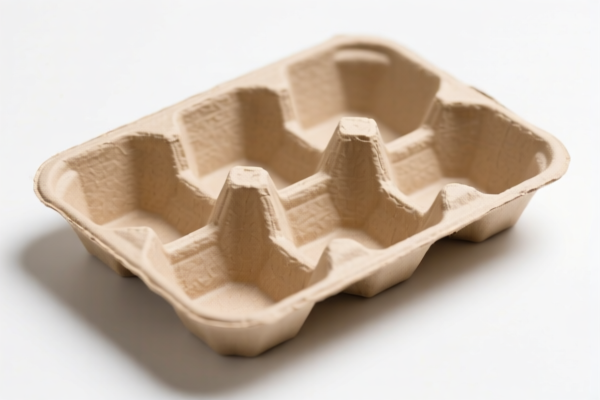
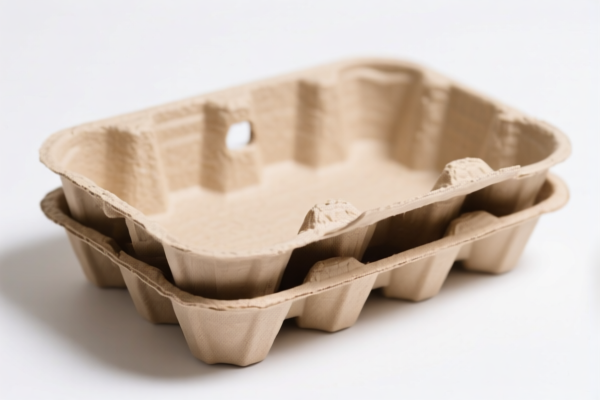
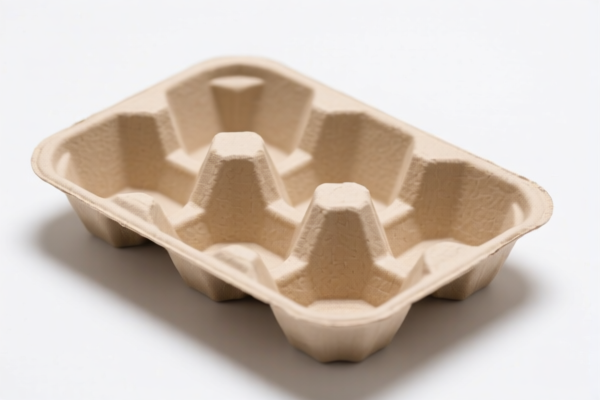
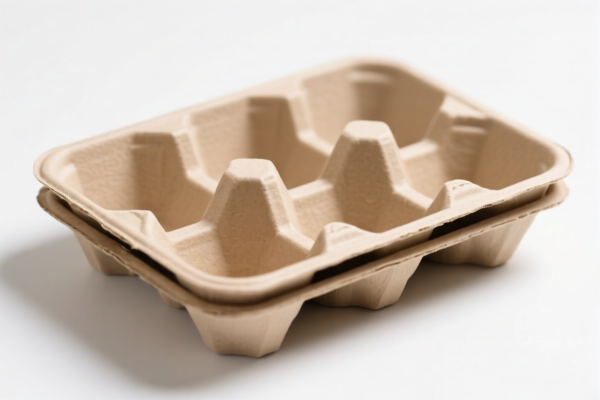
pulp vintage tray
CN → US| HS编码 | 关税税率 | 原产国 | 目的国 | 文档 |
|---|---|---|---|---|
| 4822900000 | 35.0% | CN | US | 官方文档 |
| 4823700020 | 35.0% | CN | US | 官方文档 |
| 4819502000 | 35.0% | CN | US | 官方文档 |
| 4823700040 | 35.0% | CN | US | 官方文档 |
| 4819504060 | 35.0% | CN | US | 官方文档 |
商品图片
AI分析
🍽️ Pulp Vintage Tray (Paper Moulded Trays)
🌐 HS Code Reference & Customs Clearance Guide | 2026 Latest Tariff Analysis | Professional Level Strategy
📌 I. Product Definition: What Exactly is a "Pulp Vintage Tray"?
A "Pulp Vintage Tray" typically refers to eco-friendly packaging or serving ware made from recycled paper pulp via moulding processes. It is often used for food service, retail packaging, or decorative purposes. In international trade, its classification depends heavily on its material composition, structural form, and intended use.
⚠️ Key Distinction Point:
- Is it a structural support (like a pallet/insert)? → Look at Chapter 48, Heading 4822.
- Is it a disc/vessel (like a plate/bowl)? → Look at Chapter 48, Heading 4823.
- Is it a container for packaging (especially for food/drink)? → Look at Chapter 48, Heading 4819.
📦 II. HS Code Classification Details (2026 Latest Tariff Authority对照)
Based on the provided data, here are the five possible classifications for "Pulp Vintage Trays," along with the rationale for each:
| HS Code | Product Description | Application Scenario | Key Classification Logic |
|---|---|---|---|
4822.90.00.00 |
Paper Pulp Trays, material: pulp, form: support/carrying object | Industrial inserts, protective packaging layers, pallets | Classified as pulp articles not elsewhere specified, primarily functioning as support. |
4823.70.00.20 |
Paper Pulp Trays, material: pulp, form: disc/tableware | Plates, saucers, circular serving trays | Classified as other paper pulp articles, specifically shaped as discs or vessels. |
4819.50.20.00 |
Paper Pulp Trays, material: paper, form: packaging container, for food/beverage | Food containers, takeaway boxes, beverage trays | Classified as packing containers, specifically for food/drink items. |
4823.70.00.40 |
Paper Pulp Trays, material: pulp, form: moulded articles | Custom-shaped pulp products, molded inserts | Broad category for other moulded pulp articles, covering various shapes not specifically listed. |
4819.50.40.60 |
Paper Pulp Trays, material: pulp, form: packaging container | General packaging trays, retail display trays | Classified as packing containers, generic pulp-based packaging. |
🔍 Critical Reminder:
- Form Matters: If the tray is round/flat like a plate, lean towards4823.70.x0.x0. If it’s a box-like container for food, lean towards4819.50.x0.x0. If it’s just a protective pad, consider4822.90.00.00.
- Material Nuance: Although "pulp" and "paper" are closely related, customs may distinguish them based on processing.4819often implies paper-based containers, while4822/4823explicitly mention pulp moulding.
- Avoid Misclassification: Do not classify a food tray as "industrial packaging" (4822) if it is explicitly designed for direct food contact (4819), as this can lead to rejection or additional scrutiny.
💰 III. 2026 Latest Tariff Rate Breakdown (Including Surtaxes & Policy Add-ons)
✅ Applicable Country: United States (US)
✅ Origin: China (CN)
✅ Effective Date: Ongoing (Including subsequent imports)
🎯 1. All Listed HS Codes (4822.90.00.00, 4823.70.00.20, 4819.50.20.00, 4823.70.00.40, 4819.50.40.60)
| Item | Content |
|---|---|
| Base Tariff Rate | 0% (ad valorem) |
| Section 301 Surcharge (USITC) | +25% (Under USITC Footnote related to Section 301) |
| Section 122 Surcharge | +10% (Specific policy surcharge for Chinese origin goods in this category) |
| Total Tax Rate | 35.0% |
| Tax Calculation | CIF Value × 35% |
| De Minimis Exemption Available? | ❌ No (deny_de_minimis) |
| Legal Basis Path | Base: 0% → Section 301: +25% → Section 122: +10% → Total: 35% |
📌 Explanation:
- "Base Tariff 0%": Paper pulp products generally have a low base duty to encourage eco-friendly material imports.
- "Section 301 Surcharge 25%": This is the standard additional tariff imposed on a wide range of Chinese imports under Section 301 of the Trade Act.
- "Section 122 Surcharge 10%": This is a specific additional tax layer applicable to these HS codes, often linked to national security or trade remedy measures.
- Total 35%: This is a high tariff burden. Importers must factor this into their cost structure. There is no de minimis exemption (small packages under $800 are NOT exempt), meaning even small shipments are subject to full duty calculation.
🛠️ IV. Customs Clearance Practical Advice (Combat Pitfalls Guide)
✅ 1. Required Documentation Checklist (None Can Be Missing)
| Document | Must Provide | Description |
|---|---|---|
| ✅ Product Specifications | ✔️ | Detailed description: dimensions, weight, pulp type (e.g., recycled, bagasse), color. |
| ✅ Product Photos | ✔️ | Clear images showing shape, texture, and any food-contact certification marks. |
| ✅ Commercial Invoice | ✔️ | Must clearly state "Pulp Moulded Tray" or similar, not just "Tray." Include HS Code. |
| ✅ Packing List | ✔️ | Weight and dimensions per carton. |
| ✅ Certificate of Origin | ✔️ | Proof of Chinese origin (critical for applying the correct surcharges). |
| ✅ FDA/Food Contact Notification | ✔️ (If applicable) | If the tray is for food/beverage (4819.50.20.00), provide FDA compliance docs to avoid rejection. |
✅ 2. Declaration Tips (Key Mantras)
🔥 "Be Specific, Don't Generalize, Food Needs Food Docs!"
| Scenario | Correct Declaration | Wrong Practice |
|---|---|---|
| Food Serving Tray | 4819.50.20.00 (Food container) |
Calling it "Pulp Pallet" → 4822.90.00.00 (May be rejected if clearly for food). |
| Round Plate/Bowl | 4823.70.00.20 (Disc/Vessel) |
Calling it "Packaging" → 4819.50.40.60 (May trigger unnecessary food safety checks). |
| Protective Insert | 4822.90.00.00 (Support) |
Calling it "Plate" → Misleading description. |
| Generic Pulp Shape | 4823.70.00.40 (Moulded Article) |
Using vague terms like "Eco-friendly item." |
📌 Note:
- If the tray is explicitly for food, use4819.50.20.00and ensure FDA compliance is documented.
- If it is non-food (e.g., retail display, industrial), use4822.90.00.00or4819.50.40.60.
- Do not mislabel a food tray as a non-food pallet to avoid FDA scrutiny; the risk of seizure is higher than the effort of proper declaration.
✅ 3. Special Situations Handling
| Situation | Handling Advice |
|---|---|
| Mixed Shipments | If a shipment contains both food trays (4819.50.20.00) and industrial pulp pads (4822.90.00.00), declare separately. Do not combine them under one HS code. |
| Composite Products | If the tray comes with a plastic lid, the entire set is usually classified based on the essential character (the pulp tray). |
| Origin Marking | Ensure each tray or package is marked "Made in China" to avoid customs delays due to missing origin info. |
| High Value Shipments | Since the duty is 35%, consider Advance Ruling from US CBP to confirm the HS code before shipping, especially for new product lines. |
🌍 V. Global Market Comparison (2026 Latest)
| Country/Region | Recommended HS Code | Tariff Rate | Certification Requirements | Notes |
|---|---|---|---|---|
| 🇺🇸 United States | See above | 35% (incl. surcharges) | FDA (if food), US Customs Entry | High tariff burden. Plan accordingly. |
| 🇨🇳 China | See above | 0-5% (depending on exact code) | None for import | Low duty, but check local environmental regulations. |
| 🇪🇺 European Union | 4823.70 or 4819.50 | 0-5% (usually) | CE (if applicable), REACH | Generally low tariffs for paper pulp, but strict environmental standards. |
| 🇯🇵 Japan | 4823.70 or 4819.50 | 0-3% | FSC (Forest Stewardship Council) preferred | Eco-friendly certifications are highly valued. |
📌 Conclusion:
- The US market is the most expensive for Chinese-made pulp trays due to the 35% total tariff.
- EU and Japan are more tariff-friendly but have stricter environmental and sustainability certifications.
- If exporting to the US, ensure your cost model includes the 35% duty, or consider alternative origins if feasible.
📌 VI. Common Mistakes & Pitfalls (Lessons from Blood and Tears)
❌ Mistake 1: Declaring a Food Tray as Industrial Packaging (4822.90.00.00)
👉 Consequence: FDA may block entry due to lack of food safety documentation → Shipment Delay/Rejection.
❌ Mistake 2: Using vague descriptions like "Eco-friendly Box" without specifying material or form
👉 Consequence: Customs officer assigns a default higher tariff code → Unnecessary Cost.
❌ Mistake 3: Assuming De Minimis ($800) applies to small shipments
👉 Consequence: The tariff notes explicitly state deny_de_minimis for these HS codes → Full Tax Charged even on small packages.
❌ Mistake 4: Ignoring Section 122 and Section 301 surcharges
👉 Consequence: Underestimating landed cost by 35% → Profit Margin Collapse.
✅ Correct Practice:
"Paper Moulded Pulp Tray, Round, 8-inch, For Food Service Use, Recycled Material, FDA Compliant, Model XYZ, Made in China"
🎯 VII. Conclusion: Professional Declaration, Save Time, Reduce Costs!
🎯 Remember the Mantra:
🔹 "Food Needs Food Code, Support Needs Pulp Code, 35% Tax is Fixed, Don't Guess!"
🔹 "HS Code Determines Duty, 35% is the Reality, De Minimis is Gone, Plan Your Cash Flow!"
📌 Tip:
If your pulp trays are 100% biodegradable and recycled, highlight this in the documentation for potential green trade incentives in non-US markets (like the EU).
For the US market, consider Advance Ruling to lock in the HS code and avoid post-clearance audits.
📣 Immediate Action:
📞 Contact a licensed customs broker + Provide Product Photos + Apply for HS Code Advance Ruling
🚀 Let your Pulp Trays clear customs smoothly, expand your market, and protect your margins!
✨ Professional Customs Clearance Starts with Accurate Classification!
💼 Every Dollar of Duty Matters—Calculate Precisely!
用户评价
关于 HS 编码归类
协调制度(HS)是由世界海关组织(WCO)制定的国际贸易商品分类标准。全球 200 多个国家采用 HS 系统作为海关关税、贸易统计和进出口监管的基础。
每个 HS 编码遵循以下层级结构:
- 章(2 位)——商品大类(例如:第 84 章:机器和机械设备)
- 品目(4 位)——章内的更具体分类
- 子目(6 位)——国际通用细分,所有 WCO 成员国统一使用
- 本国细分(8-10 位)——各国自行扩展的细分编码,如美国 HTSUS 10 位编码
正确的 HS 编码归类对于顺利通关、准确缴纳关税和遵守贸易法规至关重要。错误归类可能导致海关延误、多缴关税或罚款。
从CN进口到US时,适用的关税税率可能包括:
- 最惠国(MFN)税率——适用于 WTO 成员国的标准关税税率
- 普通税率——适用于无贸易协定国家
- 贸易救济关税——附加关税,如 301 条款(反倾销)、232 条款(国家安全)或反补贴税
本页内容仅供参考。如需正式归类,请咨询当地海关或持牌报关代理。