pvc chemical pipes
CN → US| HS编码 | 关税税率 | 原产国 | 目的国 | 文档 |
|---|---|---|---|---|
| 3917230000 | 38.1% | CN | US | 官方文档 |
| 3926909989 | 22.8% | CN | US | 官方文档 |
| 3917320010 | 38.1% | CN | US | 官方文档 |
| 3926909987 | 22.8% | CN | US | 官方文档 |
商品图片
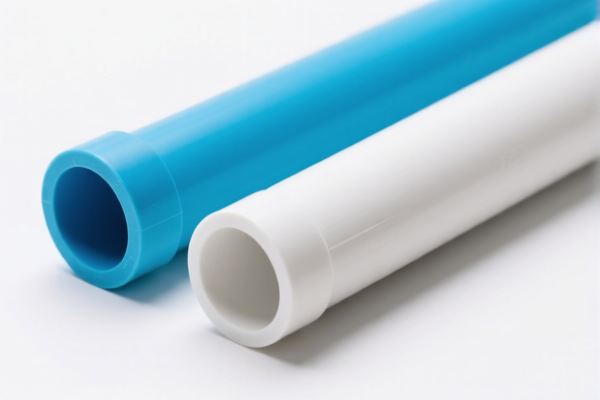
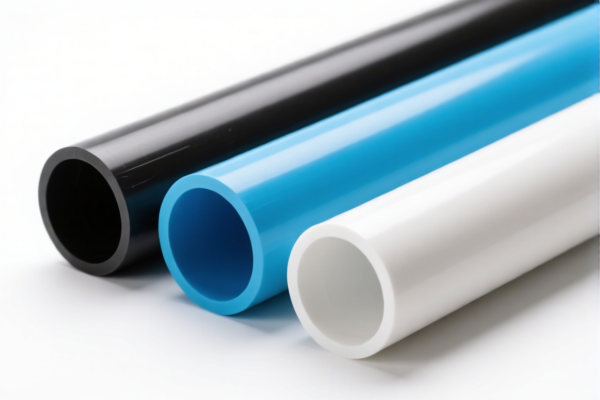
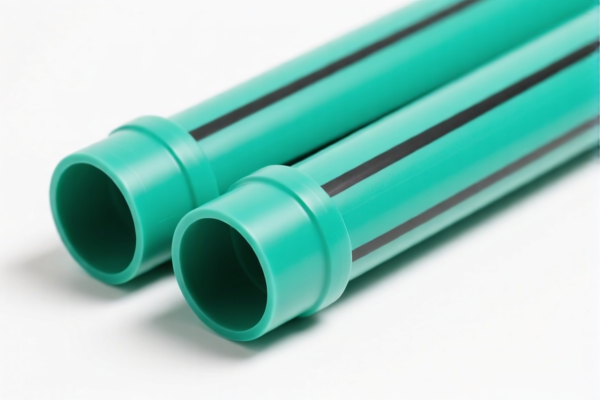
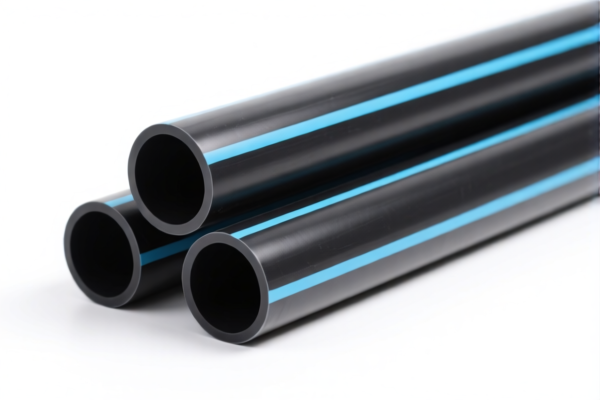
AI分析
🏗️ PVC Chemical Pipes (PVC Pipes)
🌐 HS Code Reference & Customs Clearance Guide | 2026 Latest Tariff Analysis | Professional Clearance Strategy
📌 I. Product Definition & Classification: Do You Really Understand "PVC Pipes"?
PVC (Polyvinyl Chloride) pipes are rigid or semi-rigid tubes made from thermoplastic PVC, widely used in chemical industry, water supply, drainage, and industrial fluid transport. In international trade, classification depends on whether the product is considered a "pipe/conduit" (Chapter 39.17) or a "general plastic article" (Chapter 39.26).
⚠️ Key Distinction Point:
- If the product is explicitly a "pipe, tube, or hose" with specific dimensions, pressure ratings, or chemical resistance specs → Classify under 3917 (Articles of plastics, pipes, tubes, hoses).
- If the product is a "general plastic part" without clear pipe-specific features, or used as a generic component → Classify under 3926 (Other articles of plastics).
📦 II. HS Code Classification Details (2026 Latest Tariff Authority Comparison)
| HS Code | Product Description | Application Scenario | Classification Logic |
|---|---|---|---|
3917.23.00.00 |
PVC pipes made of氯乙烯 polymers, classified as pipes/conduits | Industrial chemical pipes, drainage pipes, pressure pipes | ✅ Correct: Specific to "pipes" of vinyl polymers |
3926.90.99.89 |
PVC pipes classified as "other plastic articles" (fallback category) | Generic plastic parts, non-specific fittings | ❌ Less Preferred: Used if pipe-specific classification is disputed |
3917.32.00.10 |
PVC pipes made of polyvinyl chloride, conforming to pipe shape requirements | Standard PVC chemical pipes, industrial tubing | ✅ Correct: Explicitly matches "pipe" definition |
3926.90.99.87 |
PVC pipes as "other plastic articles" due to shape | Generic plastic components, non-standard fittings | ❌ Less Preferred: Fallback for non-pipe-specific items |
🔍 Critical Reminder:
- All standard PVC pipes (with clear cylindrical shape, intended for fluid/gas transport) must be classified under 3917 series (pipes/tubes).
- Classifying PVC pipes under 3926 is only acceptable if the product lacks clear pipe characteristics or is used as a generic plastic part.
- Misclassification Risk: Declaring PVC pipes as "plastic articles" (3926) instead of "pipes" (3917) may lead to customs disputes, delays, or additional penalties.
💰 III. 2026 Latest Tariff Rate Breakdown (Including Additional Duties & Policy Surcharges)
✅ Applicable Country: United States (US)
✅ Origin: China (CN)
✅ Effective Date: November 10, 2025 (and subsequent imports)
🎯 1. 3917.23.00.00 —— PVC Pipes (Vinyl Polymers)
| Item | Content |
|---|---|
| Base Tariff Rate | 3.1% (ad valorem) |
| Section 301 Additional Tariff | +25.0% |
| Section 122 Tariff | +10.0% |
| Total Tariff Rate | 38.1% |
| Tax Calculation | CIF Value × 38.1% |
| De Minimis Eligibility | ❌ Not Applicable (denied) |
| Legal Authority Path | Base Tariff:3917.23 → Section 301:25% → Section 122:10% |
📌 Explanation:
- Base Tariff (3.1%): Standard MFN rate for PVC pipes.
- Section 301 Additional Tariff (25%): Imposed on Chinese goods under U.S. Trade Act Section 301.
- Section 122 Tariff (10%): Additional surcharge on certain plastic products from China.
- Total: 38.1%. This is a high tariff rate. Pre-planning is essential.
🎯 2. 3926.90.99.89 —— PVC Pipes as "Other Plastic Articles"
| Item | Content |
|---|---|
| Base Tariff Rate | 5.3% (ad valorem) |
| Section 301 Additional Tariff | +7.5% |
| Section 122 Tariff | +10.0% |
| Total Tariff Rate | 22.8% |
| Tax Calculation | CIF Value × 22.8% |
| De Minimis Eligibility | ❌ Not Applicable (denied) |
| Legal Authority Path | Base Tariff:3926.90 → Section 301:7.5% → Section 122:10% |
📌 Note:
- This classification applies only if the product is not clearly identified as a pipe under Chapter 39.17.
- Lower total tariff (22.8%) compared to 3917 (38.1%), but higher compliance risk.
- Customs may challenge this classification if the product is clearly a pipe.
🎯 3. 3917.32.00.10 —— PVC Pipes (Polyvinyl Chloride)
| Item | Content |
|---|---|
| Base Tariff Rate | 3.1% (ad valorem) |
| Section 301 Additional Tariff | +25.0% |
| Section 122 Tariff | +10.0% |
| Total Tariff Rate | 38.1% |
| Tax Calculation | CIF Value × 38.1% |
| De Minimis Eligibility | ❌ Not Applicable (denied) |
| Legal Authority Path | Base Tariff:3917.32 → Section 301:25% → Section 122:10% |
📌 Explanation:
- This HS code is synonymous with 3917.23.00.00 in terms of tariff treatment.
- Both fall under the same 38.1% total rate.
- The difference lies in sub-category precision (vinyl polymer vs. polyvinyl chloride), but tax impact is identical.
🎯 4. 3926.90.99.87 —— PVC Pipes as "Other Plastic Articles"
| Item | Content |
|---|---|
| Base Tariff Rate | 5.3% (ad valorem) |
| Section 301 Additional Tariff | +7.5% |
| Section 122 Tariff | +10.0% |
| Total Tariff Rate | 22.8% |
| Tax Calculation | CIF Value × 22.8% |
| De Minimis Eligibility | ❌ Not Applicable (denied) |
| Legal Authority Path | Base Tariff:3926.90 → Section 301:7.5% → Section 122:10% |
📌 Note:
- Same as3926.90.99.89in tariff rate.
- Lower tax burden, but higher classification risk.
- Only use if product lacks clear pipe-specific features.
🛠️ IV. Customs Clearance Practical Advice (Real-World Pitfall Avoidance Guide)
✅ 1. Documentation Checklist (All Required)
| Document | Required | Notes |
|---|---|---|
| ✅ Product Specification Sheet | ✔️ | Include material (PVC), diameter, wall thickness, pressure rating, chemical resistance |
| ✅ Product Photos (with labels) | ✔️ | Show pipe ends, markings, brand, model |
| ✅ Commercial Invoice | ✔️ | Clearly state "PVC Chemical Pipes" or "Polyvinyl Chloride Pipes" |
| ✅ Packing List | ✔️ | Indicate units, dimensions, weight |
| ✅ Certificate of Origin (CO) | ✔️ | If not Chinese origin, to claim preferential rates |
| ✅ Third-Party Test Reports | ✔️ | ASTM, ISO, or chemical resistance certification |
| ✅ Declaration Statement | ✔️ | Confirm product is "pipes" and not "general plastic articles" |
✅ 2. Declaration Tips (Key Mnemonics)
🔥 "Pipe Shape, Pressure Rating, Chemical Resist — Declare as 3917, Avoid 3926 Mistakes!"
| Scenario | Correct Declaration | Wrong Approach |
|---|---|---|
| Standard PVC pipe (cylindrical, for fluid transport) | 3917.23.00.00 or 3917.32.00.10 |
Declaring as "plastic parts" → 22.8% |
| PVC pipe fittings (elbows, tees) | 3917.23.00.00 or 3917.32.00.10 |
Declaring as "plastic fittings" → 22.8% |
| Non-standard plastic tubes (no clear pipe use) | 3926.90.99.89 |
Declaring as "pipes" → 38.1% |
| PVC pipes with chemical resistance certification | 3917.23.00.00 |
Declaring as "general plastics" → 22.8% |
✅ 3. Special Cases Handling
| Scenario | Advice |
|---|---|
| OEM Custom PVC Pipes | Provide customer order + technical drawings to prove pipe-specific use |
| PVC Pipes for Chemical Industry | Highlight "chemical resistance" in declaration to support 3917 classification |
| PVC Pipes + Fittings Sold Together | Declare as "pipes" (3917), not "fittings" (3926) |
| PVC Pipes with Insulation | Still classify as "pipes" (3917) if insulation is minor |
🌍 V. Global Customs Comparison (2026 Latest)
| Country/Region | Recommended HS Code | Tariff Rate | Certification Requirements | Notes |
|---|---|---|---|---|
| 🇺🇸 United States | 3917.23.00.00 |
38.1% (China origin) | No specific cert | High tariff due to Section 301 + 122 |
| 🇨🇳 China | 3917.23.00.00 |
5% | No additional tariff | Lower rate |
| 🇪🇺 European Union | 3917.23.00.00 |
0% (if CE compliant) | CE + RoHS | No additional duties |
| 🇦🇺 Australia | 3917.23.00.00 |
5% | No specific cert | No additional duties |
| 🇯🇵 Japan | 3917.23.00.00 |
0% | PSE | No additional duties |
📌 Conclusion:
- The U.S. imposes the highest tariffs on Chinese PVC pipes (38.1%).
- China, EU, Australia, and Japan have significantly lower or zero tariffs.
- Consider supply chain diversification (e.g., production in Vietnam, Mexico) to avoid U.S. tariffs.
📌 VI. Common Errors & Pitfall Avoidance (Lessons Learned)
❌ Error 1: Declaring PVC pipes as "plastic parts" (3926) instead of "pipes" (3917)
👉 Consequence: Incorrect classification → Customs audit, back taxes, penalties.
❌ Error 2: Not providing technical specifications for chemical resistance
👉 Consequence: Customs disputes classification → Delayed clearance.
❌ Error 3: Using "PVC Pipes" in declaration without confirming pipe-specific features
👉 Consequence: Misclassification risk → 38.1% vs. 22.8% rate difference.
❌ Error 4: Assuming de minimis exemption applies
👉 Consequence: No de minimis for PVC pipes from China → Full tariff liability.
✅ Correct Declaration Example:
"PVC Chemical Pipes, Polyvinyl Chloride, Diameter 50mm, Wall Thickness 3mm, Pressure Rating 10 Bar, Chemical Resistant, ASTM D1784 Compliant, Model XYZ, No Insulation"
🎯 VII. Conclusion: Precise Classification Saves Costs!
🎯 Key Takeaways:
🔹 "Pipes are Pipes: Declare as 3917, Avoid 3926 Risks!"
🔹 "Tariff Gap: 38.1% vs. 22.8% — Classification Matters!"
🔹 "Documentation is Key: Specs, Photos, Certifications Save Days!"
📌 Pro Tip:
If your PVC pipes are originating from Vietnam, Mexico, Thailand, or Malaysia, you may qualify for IEEPA exemptions or lower tariffs (0%~5%).
Consider applying for Advance Ruling from U.S. Customs to confirm HS Code classification.
📣 Immediate Action:
📞 Contact professional customs brokers + Provide product specs + Apply for HS Code Advance Ruling
🚀 Ensure smooth customs clearance, minimize costs, and maximize profit!
✨ Professional customs clearance starts with precise classification!
💼 Every dollar saved in tariffs is pure profit!
用户评价
关于 HS 编码归类
协调制度(HS)是由世界海关组织(WCO)制定的国际贸易商品分类标准。全球 200 多个国家采用 HS 系统作为海关关税、贸易统计和进出口监管的基础。
每个 HS 编码遵循以下层级结构:
- 章(2 位)——商品大类(例如:第 84 章:机器和机械设备)
- 品目(4 位)——章内的更具体分类
- 子目(6 位)——国际通用细分,所有 WCO 成员国统一使用
- 本国细分(8-10 位)——各国自行扩展的细分编码,如美国 HTSUS 10 位编码
正确的 HS 编码归类对于顺利通关、准确缴纳关税和遵守贸易法规至关重要。错误归类可能导致海关延误、多缴关税或罚款。
从CN进口到US时,适用的关税税率可能包括:
- 最惠国(MFN)税率——适用于 WTO 成员国的标准关税税率
- 普通税率——适用于无贸易协定国家
- 贸易救济关税——附加关税,如 301 条款(反倾销)、232 条款(国家安全)或反补贴税
本页内容仅供参考。如需正式归类,请咨询当地海关或持牌报关代理。