pvc embossed sheet
CN → US| HS编码 | 关税税率 | 原产国 | 目的国 | 文档 |
|---|---|---|---|---|
| 3921125000 | 41.5% | CN | US | 官方文档 |
| 3921121950 | 40.3% | CN | US | 官方文档 |
| 3926909989 | 22.8% | CN | US | 官方文档 |
商品图片
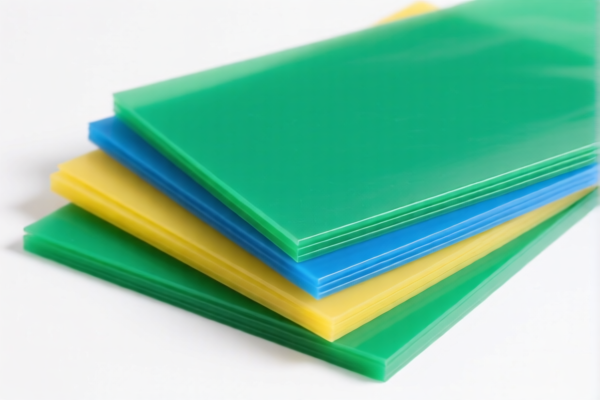
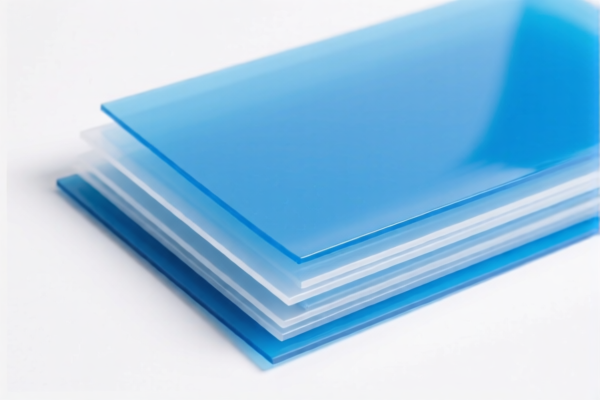
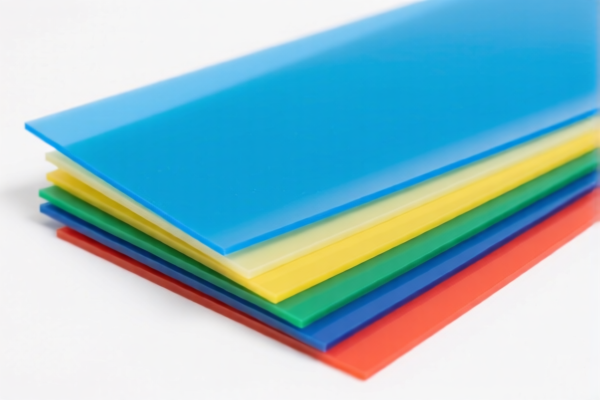
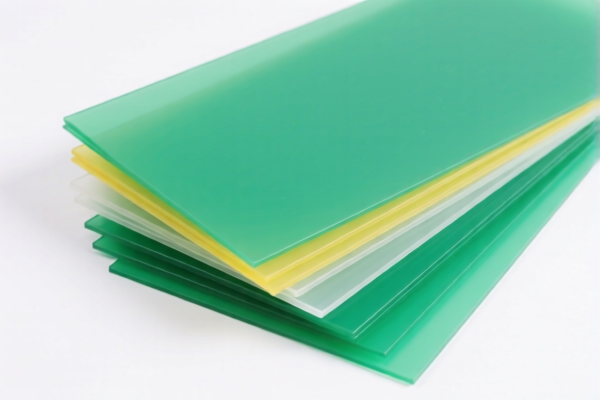
AI分析
🛡️ PVC Embossed Sheet (Plastic Cellular Articles)
🌐 HS Code Reference & Customs Clearance Guide | 2026 Latest Tariff Analysis | Professional Clearance Strategy
📌 I. Product Definition & Classification: Do You Really Understand "PVC Embossed Sheets"?
PVC Embossed Sheets, often referred to as PVC Foam Boards, Celuka Sheets, or Expanded PVC Boards, are rigid plastic products widely used in construction, signage, furniture, and industrial insulation. In international trade, their classification depends heavily on their structure (cellular/non-cellular) and composition (pure PVC vs. composite).
The term "Embossed" refers to the surface texture, but the core classification hinges on whether it is cellular (foamed) or solid, and if it is combined with other materials.
⚠️ Key Distinction Points:
- Cellular (Foamed) Structure: The presence of closed or open cells throughout the material. If it is pure PVC and cellular, it falls under 3921.12.
- Composite Structure: If the PVC sheet is bonded to textile materials (e.g., fabric backing, mesh), it is classified differently (3921.12.19).
- Non-Cellular/Other Articles: If it is not cellular, or is a finished article (not just sheet/plate), it may fall under 3926.90.
📦 II. HS Code Classification Details (2026 Latest Tariff Authority Cross-Reference)
Based on the provided data, here are the three specific HS codes applicable to PVC Embossed Sheets depending on their exact manufacturing and composition:
| HS Code | Product Description | Applicable Scenario | Key Characteristics |
|---|---|---|---|
3921.12.50.00 |
Cellular plates/sheets/film/foil/strip of plastics: Of polymers of vinyl chloride: Other | Pure PVC foam sheets, Celuka boards, rigid PVC foam sheets without textile backing | ✅ Cellular (Foamed) ✅ 100% PVC ❌ No textile composite |
3921.12.19.50 |
Cellular plates/sheets/film/foil/strip of plastics: Of polymers of vinyl chloride: Combined with textile materials: Other Other | PVC sheets with fabric backing, mesh reinforcement, or textile lamination | ✅ Cellular (Foamed) ✅ Combined with Textile ❌ Not a finished article |
3926.90.99.89 |
Other articles of plastics: Other: Other Other | Finished PVC articles, non-cellular PVC sheets, or PVC parts that don't fit the "sheet/plate" definition of 3921 | ✅ Non-Cellular OR ✅ Finished Article ❌ Not a raw sheet material |
🔍 Critical Reminder:
- "Embossed" is a surface treatment, not a structural one.海关 (Customs) looks at the cross-section and material composition.
- If it is a solid PVC sheet (no cells), it does NOT qualify for 3921.12. It might fall under 3921.10 (Solid) or 3926 (Other articles). However, the provided data only includes cellular codes (3921.12) and a general "other articles" code (3926). If your sheet is solid, please verify if 3921.10 codes apply, but based on the provided list,3926.90.99.89is the fallback for non-cellular/other.
- Composite sheets (PVC + Textile) have a significantly different tax rate than pure PVC sheets.
💰 III. 2026 Latest Tariff Rate Breakdown (Detailed Tax Clause Explanation)
✅ Applicable Country: United States (US)
✅ Country of Origin: China (CN) (Assumed based on tariff structure context)
✅ Effective Time: Current Rates (2025-2026 Context)
🎯 1. 3921.12.50.00 —— Pure PVC Cellular Sheets (Foam Boards)
| Item | Detail |
|---|---|
| Product Type | PVC Foam Sheet (Celuka/Extruded) |
| Base Tariff Rate | 6.5% |
| Section 301 Additional Tariff | +25.0% |
| Total Tariff Rate | 31.5% |
| Tax Calculation | CIF Value × 31.5% |
| De Minimis Eligibility | ❌ Not Applicable (Shipments >$800 subject to full inspection) |
| Legal Basis Path | HTSUS: 3921.12.50 → Section 301 List 4 → Total 31.5% |
📌 Explanation:
- Pure PVC foam sheets are considered intermediate plastic materials.
- The 6.5% base duty is standard for plastic sheets.
- The 25% additional duty is imposed under Section 301 on certain Chinese goods.
- Total Cost Impact: For every $10,000 of goods, you pay $3,150 in tariffs.
🎯 2. 3921.12.19.50 —— PVC Cellular Sheets Combined with Textile
| Item | Detail |
|---|---|
| Product Type | PVC + Textile Composite Sheet |
| Base Tariff Rate | 5.3% |
| Section 301 Additional Tariff | +25.0% |
| Total Tariff Rate | 30.3% |
| Tax Calculation | CIF Value × 30.3% |
| De Minimis Eligibility | ❌ Not Applicable |
| Legal Basis Path | HTSUS: 3921.12.19 → Section 301 List 4 → Total 30.3% |
📌 Explanation:
- The base duty is slightly lower (5.3%) than pure PVC sheets.
- However, the 25% additional duty still applies.
- Total Cost Impact: For every $10,000 of goods, you pay $3,030 in tariffs.
- Note: If the textile component is minimal, customs may still reclassify it as pure PVC (3921.12.50) if the textile is only for reinforcement, but the provided code suggests a distinct composite category.
🎯 3. 3926.90.99.89 —— Other Plastic Articles (Fallback/Non-Cellular)
| Item | Detail |
|---|---|
| Product Type | Non-cellular PVC Sheets OR Finished PVC Articles |
| Base Tariff Rate | 5.3% |
| Section 301 Additional Tariff | +7.5% |
| Total Tariff Rate | 12.8% |
| Tax Calculation | CIF Value × 12.8% |
| De Minimis Eligibility | ❌ Not Applicable |
| Legal Basis Path | HTSUS: 3926.90.99 → Section 301 List 4B (or similar lower tier) → Total 12.8% |
📌 Explanation:
- This code applies if the sheet is NOT cellular (solid PVC) or if it is a finished article (e.g., a pre-cut sign board, not a raw sheet).
- Significant Savings: The additional duty is only 7.5% (not 25%), resulting in a much lower total rate of 12.8%.
- Strategic Implication: If your product is solid PVC (not foamed), this is a highly favorable classification. However, misclassification (claiming solid when it's foamed) leads to severe penalties.
🛠️ IV. Customs Clearance Practical Advice (Battle-Tested Pitfall Guide)
✅ 1. Documentation Checklist (Essential)
| Document | Required? | Purpose |
|---|---|---|
| ✅ Product Specification Sheet | ✔️ | Must explicitly state: Cellular Structure (foam density, cell size) vs. Solid Structure. |
| ✅ Cross-Section Photo | ✔️ | CRITICAL: A macro photo showing the cross-section to prove it is "cellular" (foamed) or "solid". |
| ✅ Material Composition Declaration | ✔️ | State % of PVC, % of additives, and if any textile layer exists. |
| ✅ Commercial Invoice | ✔️ | Clearly describe as "PVC Cellular Sheet" or "PVC Foam Board", not just "Plastic Sheet". |
| ✅ Packing List | ✔️ | Include dimensions and weight per sheet to verify density (foam is lighter). |
✅ 2. Declaration Tips (Key Mnemonics)
🔥 "Check the Cell, Check the Thread, Tax Rate Follows!"
| Scenario | Correct HS Code | Risk if Incorrect |
|---|---|---|
| Pure PVC Foam Sheet (No textile) | 3921.12.50.00 |
If misdeclared as 3926..., you underpay tax (12.8% vs 31.5%) → Penalty + Back Taxes. |
| PVC Foam + Textile Backing | 3921.12.19.50 |
If misdeclared as pure PVC, you pay 31.5% instead of 30.3% (minor) or vice versa. |
| Solid PVC Sheet (No foam) | 3926.90.99.89 (Likely) |
If misdeclared as cellular, you overpay tax (31.5% vs 12.8%). |
| Finished PVC Sign Board | 3926.90.99.89 |
Treated as an "article," not a "sheet." |
⚠️ Warning: Do NOT declare "PVC Embossed Sheet" without specifying cellular status. "Embossed" is cosmetic; "Cellular" is structural. Customs officers will check the cross-section.
✅ 3. Special Cases & Solutions
| Situation | Handling Advice |
|---|---|
| High Foam Density (Close to Solid) | Provide density data (g/cm³). If density > 0.8 g/cm³, customs may question "cellular" status. |
| Multi-layer Composite | If PVC is bonded to fabric, ensure you declare it under 3921.12.19.50. Do not split the shipment. |
| Samples/Small Quantity | Even small shipments of PVC foam from China are subject to the 25% Section 301 duty. Do not assume de minimis ($800) applies if the port performs random checks or if the carrier requires full declaration. |
| Pre-Cut Shapes | If the sheet is cut into specific shapes (e.g., puzzle pieces, specific panels), it may be considered an "article" under 3926.90.99.89, potentially lowering the tax to 12.8%. |
🌍 V. Global Market Comparison (2026 Latest)
| Country/Region | Recommended HS Code | Tariff Rate (China Origin) | Notes |
|---|---|---|---|
| 🇺🇸 USA | 3921.12.50.00 |
31.5% | High duty due to Section 301. |
| 🇨🇳 China | 3921.12.50.00 |
6.5% | Low import duty. No additional surcharge. |
| 🇪🇺 EU | 3921.10.90 |
6.5% | Standard duty. No Section 301 equivalent. |
| 🇦🇺 Australia | 3921.12.50 |
5.0% | Lower duty. No additional surcharge. |
📌 Conclusion:
- USA is the most expensive market for PVC sheets due to the 25%–31.5% total tariff.
- Cost Optimization: If possible, structure the product as non-cellular or finished articles (if design allows) to benefit from the 12.8% rate, but only if technically accurate.
- Alternative Sourcing: Consider sourcing from Vietnam or Mexico to avoid Section 301 tariffs (if applicable rules of origin are met).
📌 VI. Common Mistakes & Pitfalls (Lessons Learned)
❌ Mistake 1: Declaring "PVC Sheet" without specifying "Cellular"
👉 Consequence: Customs requests clarification, leading to 7-14 days delay. If they suspect it's solid, they may apply 3926 (12.8%) but then audit and demand back taxes if it's actually cellular.
❌ Mistake 2: Ignoring the "Textile Composite" aspect
👉 Consequence: If your sheet has a fabric backing, declaring it as pure PVC (3921.12.50) is misclassification. It should be 3921.12.19.50. While the rate difference is small (31.5% vs 30.3%), it reflects poor compliance.
❌ Mistake 3: Assuming "Embossed" changes the HS Code
👉 Consequence: Embossing is a surface finish. It does not change the fundamental classification. It must still be classified based on structure (cellular/solid) and material.
✅ Correct Declaration Example:
"PVC Cellular Foam Sheet, Extruded, 5mm Thickness, White, Embossed Surface, No Textile Backing, Model: XYZ"
🎯 VII. Conclusion: Professional Declaration, Cost Savings, Risk Mitigation!
🎯 Remember the Golden Rule:
🔹 "Cellular = 31.5% (Pure) / 30.3% (Composite)"
🔹 "Solid/Finished = 12.8%"
🔹 "Verify Cross-Section!"
📌 Pro Tip:
If your PVC sheet is not foamed (solid), fight for classification under 3926.90.99.89 to save 18.7% in duties.
If it is foamed, prepare for the 31.5% duty and ensure all documentation proves the "cellular" structure to avoid reclassification disputes.
📣 Immediate Action:
📞 Contact your customs broker to verify the density and layer composition of your PVC sheets.
🚀 Accurate classification saves thousands in tariffs!
✨ Professional Clearance Starts with Precise Classification!
💼 Every dollar of duty matters!
用户评价
关于 HS 编码归类
协调制度(HS)是由世界海关组织(WCO)制定的国际贸易商品分类标准。全球 200 多个国家采用 HS 系统作为海关关税、贸易统计和进出口监管的基础。
每个 HS 编码遵循以下层级结构:
- 章(2 位)——商品大类(例如:第 84 章:机器和机械设备)
- 品目(4 位)——章内的更具体分类
- 子目(6 位)——国际通用细分,所有 WCO 成员国统一使用
- 本国细分(8-10 位)——各国自行扩展的细分编码,如美国 HTSUS 10 位编码
正确的 HS 编码归类对于顺利通关、准确缴纳关税和遵守贸易法规至关重要。错误归类可能导致海关延误、多缴关税或罚款。
从CN进口到US时,适用的关税税率可能包括:
- 最惠国(MFN)税率——适用于 WTO 成员国的标准关税税率
- 普通税率——适用于无贸易协定国家
- 贸易救济关税——附加关税,如 301 条款(反倾销)、232 条款(国家安全)或反补贴税
本页内容仅供参考。如需正式归类,请咨询当地海关或持牌报关代理。