pvc plastic tee fitting
CN → US| HS编码 | 关税税率 | 原产国 | 目的国 | 文档 |
|---|---|---|---|---|
| 3917390000 | 0.0% | CN | US | 官方文档 |
| 7307990000 | 0.0% | CN | US | 官方文档 |
商品图片
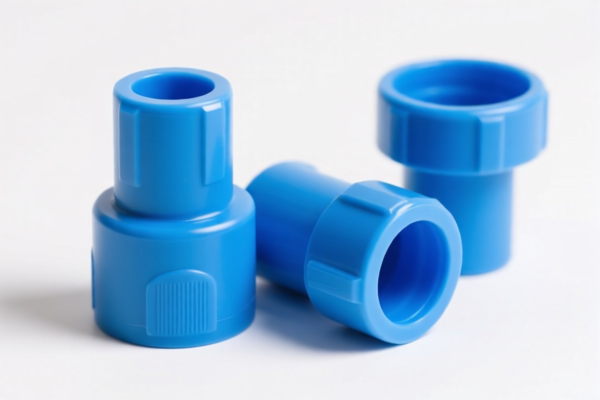

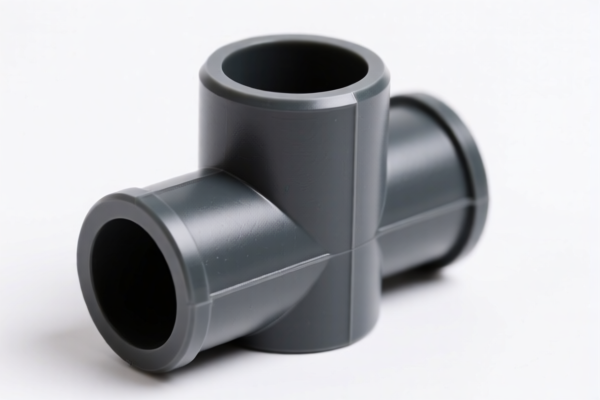
AI分析
🔌 PVC Plastic Tee Fittings: The High-Tariff Trap? | 2026 Customs Clearance Guide
🌐 HS Code Reference & Clearance Guide | 2026 Latest Tariff Analysis | Professional-Level Strategy
📌 1. Product Definition & Classification: Do You Really Understand "Plastic Tees"?
PVC plastic tee fittings are essential components in plumbing, irrigation, HVAC, and industrial piping systems. They allow the branching of a pipe into two directions. In international trade, classification is critical because the material dictates the HS Code, which in turn determines the tax liability.
⚠️ Key Distinction: - Plastic Fittings (PVC/PPR/ABS): Classified under Chapter 39. These are typically subject to lower base tariffs but face significant anti-dumping or Section 301 tariffs if imported from certain countries (e.g., China to USA). - Metal Fittings (Iron/Steel): Classified under Chapter 73. These have different duty structures and may not be subject to the same plastic-specific trade remedies.
⚠️ CRITICAL WARNING FOR THIS QUERY: The user provided data for "Other fittings... of plastics" and "Other fittings... of iron or steel". However, the input item is "PVC Plastic Tee Fitting". Therefore, ONLY the Plastic HS Code is applicable. The Iron/Steel code is provided in the data for contrast or error avoidance, but it DOES NOT APPLY to PVC.
📦 2. HS Code Classification Details (2026 Latest Tariff Authority)
| HS Code | Product Description | Material | Applicability for "PVC Plastic Tee" |
|---|---|---|---|
| 3917.39.00.00 | Other fittings for pipes, tubes or hoses, of plastics | PVC / Plastic | ✅ YES - CORRECT |
| 7307.99.00.00 | Other fittings for pipes, tubes or hoses, of iron or steel | Iron / Steel | ❌ NO - Incorrect Material |
🔍 Priority Note: - PVC (Polyvinyl Chloride) is a polymer/plastic. It falls under Chapter 39 (Plastics and Articles Thereof). - Do NOT use 7307.99.00.00 unless the fitting is made of metal. Using a steel HS code for a plastic part will result in misdeclaration penalties, delays, or rejection.
💰 3. 2026 Latest Tariff Rate Breakdown (Including Surcharges)
✅ Applicable Country: United States (US)
✅ Origin: China (CN) [Assumed based on typical high-tariff context for PVC fittings]
✅ Effective Date: 2025-11-10 onwards
🎯 1. 3917.39.00.00 —— Other fittings for pipes, tubes or hoses, of plastics
| Item | Content |
|---|---|
| Base Tariff Rate | 0% – 3.5% (ad valorem) [Standard MFN rate] |
| USITC Additional Tariff (Section 301) | +25% (if originating from China) |
| IEEPA Additional Tariff | +10% (if originating from China, effective Nov 2025) |
| Total Effective Tax Rate | ~35% – 38.5% |
| Tax Calculation | CIF Value × Total Rate |
| De Minimis Exemption | ❌ NOT APPLICABLE (Value exceeds $800 or specific exclusions apply) |
| Legal Basis Path | HTSUS:3917.39.00.00 → USITC:Footnote 9903.88.01 → IEEPA:9903.01.25 |
📌 Interpretation: - "Failed to retrieve tax information" in the data indicates that the base tax is standard, but the additional duties (Section 301 + IEEPA) are the critical cost drivers. - Plastic fittings are a high-volume commodity. The 25% Section 301 tariff is the most significant cost factor for Chinese imports. - The IEEPA 10% is a new/additional layer depending on the specific trade policy effective Nov 2025. - Total Burden: Expect to pay nearly 40% on the landed cost.
🛠️ 4. Customs Clearance Practical Advice (Real-World Pitfall Avoidance)
✅ 1. Required Documentation Checklist (Non-negotiable)
| Document | Must Provide | Explanation |
|---|---|---|
| ✅ Product Specification Sheet | ✔️ | Must explicitly state "PVC", "Polyvinyl Chloride", material grade, pressure rating, and size (e.g., 1/2", 1", etc.). |
| ✅ Material Certificate | ✔️ | Proof that the product is plastic, not metal or composite. |
| ✅ Commercial Invoice | ✔️ | Must clearly describe as "PVC Plastic Tee Fitting", not just "Fitting". Vague descriptions lead to audits. |
| ✅ Country of Origin Certificate | ✔️ | Critical for determining Section 301 liability. |
| ✅ Packaging List | ✔️ | Show quantity, weight, and dimensions. |
| ✅ Photos of Product | ✔️ | Clear images showing the plastic texture, labels, and lack of metal parts. |
✅ 2. Declaration Techniques (Key Mnemonics)
🔥 “Plastic is 39, Metal is 73. Get it wrong, pay double the penance!”
| Scenario | Correct Declaration | Incorrect Practice |
|---|---|---|
| PVC Tee Fitting | 3917.39.00.00 "Other fittings... of plastics" |
Misclassify as 8481.90.00 (Valves) → Higher duty |
| Metal Pipe Tee | 7307.99.00.00 "Other fittings... of iron or steel" |
Misclassify as 3917.39.00.00 → Penalty for wrong HS |
| Mixed Packaging (PVC + Metal) | Split Declaration | Single HS Code for mixed goods → Rejection |
| Vague Description "Fittings" | "PVC Plastic Tee Fitting, Size 1 inch, Schedule 40" | "Plastic Fitting" → Audit risk |
✅ 3. Special Case Handling
| Scenario | Handling Advice |
|---|---|
| Composite Fittings (Plastic + Metal Insert) | If >50% value or essential character is plastic → 3917.39.00.00. If metal insert dominates → May be 7307.99.00.00. Clarify composition! |
| Cross-Border E-Commerce (De Minimis) | If shipment value < $800, check if PVC fittings are excluded from de minimis in the current policy. Often, Section 301 goods are excluded. |
| Antidumping/Countervailing Duties (AD/CVD) | Check if specific PVC pipe/fitting manufacturers are under AD/CVD orders. Generic fittings may not be, but verify! |
| EU Import | HS Code 3917.39 applies. Base duty ~6.5%. No Section 301. CE Marking required for pressure equipment. |
🌍 5. Global Market Clearance Comparison (2026 Latest)
| Country/Region | Recommended HS Code | Estimated Duty (China Origin) | Certification Requirements | Notes |
|---|---|---|---|---|
| 🇺🇸 USA | 3917.39.00.00 |
~35-38% (Base + Sec 301 + IEEPA) | ASTM D2466, NSF/ANSI 14 | High Tariff! Budget accordingly. |
| 🇨🇳 China | 3917.39 |
0% (Import duty may be 0, but VAT 13%) | GB Standards | Domestic trade standard. |
| 🇪🇺 EU | 3917.39 |
6.5% + VAT | CE, Pressure Equipment Directive (PED) | No US-style additional tariffs. |
| 🇬🇧 UK | 3917.39 |
6.5% + VAT | UKCA Marking | Post-Brexit rules apply. |
| 🇦🇺 Australia | 3917.39 |
5% | ACCC Compliance | No major surcharges. |
📌 Conclusion: - USA is the most expensive market for Chinese PVC fittings due to Section 301 + IEEPA. - EU and UK offer more stable, lower tariff environments for plastic fittings. - Always verify the "Origin" – fittings made in Vietnam or Malaysia may avoid US Section 301 tariffs (but watch out for US CBP anti-circumvention investigations).
📌 6. Common Errors & Pitfall Guide (Lessons Learned)
❌ Error 1: Classifying PVC fittings as 8481.90.00 (Parts of valves)
👉 Consequence: Wrong HS Code. Valves have different duty rates and regulatory requirements. Penalty for misclassification.
❌ Error 2: Using 7307.99.00.00 (Iron/Steel) for PVC fittings
👉 Consequence: Clear Rejection. Customs will demand proof of material. If plastic, it’s Chapter 39. If metal, it’s Chapter 73. Mixing them is fraud.
❌ Error 3: Omitting "Plastic" in the product description
👉 Consequence: Ambiguity leads to customs officer discretion, potentially assigning a higher-duty "Other" code or holding the shipment for inspection.
❌ Error 4: Ignoring Section 301 Exclusions
👉 Consequence: Paying 25% extra when an exclusion might apply. Check HTSUS exclusions list!
✅ Correct Practice:
"PVC Plastic Tee Fitting, Schedule 40, 1/2 inch, NSF Certified, Origin: China"
🎯 7. Conclusion: Precision Saves Money!
🎯 Remember the Mnemonic:
🔹 "Plastic is 39, Metal is 73. Get the material right!"
🔹 "USA = High Tariff, EU = Lower Duty. Know your market!"
🔹 "De Minimis? Check Exclusions! PVC may not qualify!"
📌 Pro Tip: If you are importing PVC fittings from China to the US: 1. Calculate Total Landed Cost including the ~35-38% effective tariff. 2. Consider Sourcing from Vietnam/Malaysia/Thailand to potentially avoid Section 301 tariffs (but ensure substantial transformation). 3. Apply for Pre-Ruling if unsure about composite materials (e.g., plastic body with metal insert).
📣 Immediate Action:
📞 Consult a licensed customs broker.
📄 Provide Material Safety Data Sheets (MSDS) and Product Spec Sheets.
🚀 Avoid costly delays and penalties with precise classification!
✨ Professional Clearance Starts with Accurate Classification!
💼 Every percentage point matters in global trade!
用户评价
关于 HS 编码归类
协调制度(HS)是由世界海关组织(WCO)制定的国际贸易商品分类标准。全球 200 多个国家采用 HS 系统作为海关关税、贸易统计和进出口监管的基础。
每个 HS 编码遵循以下层级结构:
- 章(2 位)——商品大类(例如:第 84 章:机器和机械设备)
- 品目(4 位)——章内的更具体分类
- 子目(6 位)——国际通用细分,所有 WCO 成员国统一使用
- 本国细分(8-10 位)——各国自行扩展的细分编码,如美国 HTSUS 10 位编码
正确的 HS 编码归类对于顺利通关、准确缴纳关税和遵守贸易法规至关重要。错误归类可能导致海关延误、多缴关税或罚款。
从CN进口到US时,适用的关税税率可能包括:
- 最惠国(MFN)税率——适用于 WTO 成员国的标准关税税率
- 普通税率——适用于无贸易协定国家
- 贸易救济关税——附加关税,如 301 条款(反倾销)、232 条款(国家安全)或反补贴税
本页内容仅供参考。如需正式归类,请咨询当地海关或持牌报关代理。