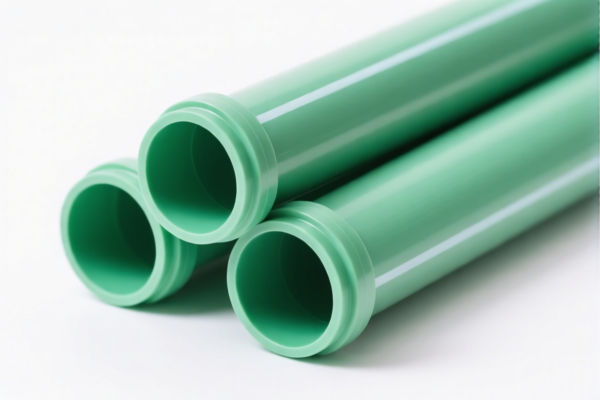
pvc plastic ventilation pipe
CN → US| HS编码 | 关税税率 | 原产国 | 目的国 | 文档 |
|---|---|---|---|---|
| 3917400020 | 40.3% | CN | US | 官方文档 |
| 3917320010 | 38.1% | CN | US | 官方文档 |
| 3917400050 | 40.3% | CN | US | 官方文档 |
| 3917400020 | 40.3% | CN | US | 官方文档 |
| 3926909987 | 22.8% | CN | US | 官方文档 |
| 3926909989 | 22.8% | CN | US | 官方文档 |
| 3917230000 | 38.1% | CN | US | 官方文档 |
商品图片


AI分析
🚰 PVC Plastic Ventilation Pipes & Fittings (PVC Ventilation Systems)
🌐 HS Code Reference & Customs Clearance Guide | 2026 Latest Tariff Analysis | Professional Compliance Strategy
📌 Part I: Product Definition & Classification: Do You Really Understand "PVC Ventilation Pipes"?
PVC (Polyvinyl Chloride) ventilation pipes are non-pressure rated plastic piping systems used for air circulation, exhaust, and drainage (DWV) in residential, commercial, and industrial buildings. In international trade, they are classified based on their material composition, physical form (pipe vs. fitting), and specific application (ventilation vs. electrical conduit).
⚠️ Critical Distinction Point:
- If the product is a straight pipe or elbow primarily for air/ventilation, it falls under Heading 3917 (Plastic pipes, tubes, hoses...).
- If the product is a pipe connector/fitting (e.g., tee, reducer), it may also fall under 3917, but sometimes overlaps with 3926 (Other articles of plastics) if classified strictly as an "accessory" rather than a "pipe part."
- Do not confuse with electrical conduits (3917.29/3917.32) unless specifically designed for wire protection. Ventilation pipes are for AIR.
📦 Part II: HS Code Classification Details (2026 Latest Tariff Authority Comparison)
| HS Code | Product Description | Applicable Scenario | Form/Shape | Total Tax Rate* |
|---|---|---|---|---|
3917.40.00.20 |
PVC Ventilation Pipe | General ventilation ducts, non-pressure rated | Pipe | 40.3% |
3917.32.00.10 |
PVC Ventilation Pipe | Rigid PVC pipes, classified under "Other" | Pipe | 38.1% |
3917.40.00.50 |
PVC Ventilation Tee Fitting | Tee joints for ventilation/DWV systems | Fitting (Tee) | 40.3% |
3917.40.00.20 |
PVC Ventilation Tee Fitting | Tee joints classified as pipe accessories | Fitting | 40.3% |
3926.90.99.87 |
PVC Ventilation Tee Fitting | Classified as "Rigid Pipe/Hose" accessory for wiring (less common for pure air) | Fitting | 22.8% |
3926.90.99.89 |
PVC Ventilation Tee Fitting | Classified as "Other Plastic Articles" (Catch-all) | Fitting | 22.8% |
3917.23.00.00 |
PVC Pipe (General) | Chlorine polymer pipes, strict pipe definition | Pipe | 38.1% |
🔍 Key Reminder:
- Pipes vs. Fittings: While both are PVC, fittings (tees, elbows) often face higher scrutiny. However, in the provided data, some fittings (3917.40.00.50) share the same high tax rate as pipes due to their integral role in the "pipe system."
- 3926 vs. 3917: Classification under3926.90.99.87or.89results in a lower tax rate (22.8%) but requires proving the item is not a "pipe part" under 3917 but rather a "general plastic article" or "electrical conduit accessory." This is risky for pure ventilation pipes.
- Material: All items are Polyvinyl Chloride (PVC).
💰 Part III: 2026 Latest Tariff Rate Breakdown (Including Surtaxes & Policy Add-ons)
✅ Applicable Country: United States (US)
✅ Origin: China (CN)
✅ Effective Date: 2025 November 10 onwards (and subsequent imports)
🎯 1. 3917.40.00.20 — PVC Ventilation Pipe / Fitting (Most Common)
| Item | Content |
|---|---|
| Base Rate | 5.3% (ad valorem) |
| USITC Surtax | +25.0% (Section 301 Duties) |
| IEEPA Surtax | +10.0% (China-specific, under 122 Clause) |
| Total Tax Rate | 40.3% |
| Tax Calculation | CIF Value × 40.3% |
| De Minimis Exemption | ❌ Not Eligible (deny_de_minimis) |
| Legal Basis Path | IEEPA:9903.01.25 → IEEPA:9903.01.24 → USITC:3917.40.00.20 → FOOTNOTE:9903.88.01 |
📌 Explanation:
- 5.3% Base: Standard MFN rate for plastic pipes.
- 25% Section 301: Standard trade war tariff on Chinese plastics.
- 10% IEEPA 122 Clause: Additional penalty/tax for specific Chinese imports under emergency powers.
- Total 40.3%: This is a high-cost item. Importers must account for this in landed cost calculations.
🎯 2. 3917.32.00.10 & 3917.23.00.00 — Other PVC Pipes
| Item | Content |
|---|---|
| Base Rate | 3.1% |
| USITC Surtax | +25.0% |
| IEEPA Surtax | +10.0% |
| Total Tax Rate | 38.1% |
| Tax Calculation | CIF Value × 38.1% |
| De Minimis Exemption | ❌ Not Eligible |
📌 Note:
- Slightly lower than3917.40.00.20due to a lower base rate (3.1% vs 5.3%).
- Still subject to the same 35% in additional taxes (25% + 10%).
🎯 3. 3926.90.99.87 & 3926.90.99.89 — PVC Fittings (Alternative Classification)
| Item | Content |
|---|---|
| Base Rate | 5.3% |
| USITC Surtax | +7.5% (Lower surtax for this subcategory) |
| IEEPA Surtax | +10.0% |
| Total Tax Rate | 22.8% |
| Tax Calculation | CIF Value × 22.8% |
| De Minimis Exemption | ❌ Not Eligible |
| Legal Basis Path | IEEPA:9903.01.25 → USITC:3926.90.99.87/89 |
📌 Warning:
- 22.8% is significantly lower than 40.3%.
- However, misclassification is a major customs violation risk.
-3926is for "Other articles of plastics." If the fitting is clearly a pipe part (e.g., a tee joint for a ventilation system), Customs may argue it belongs in 3917 (pipes/tubes/fittings), not 3926.
- Recommendation: Only use 3926 if the fitting can be justified as a general plastic accessory (e.g., a specialized connector not standard in plumbing/ventilation codes). For standard PVC ventilation tees, 3917 is safer legally, despite higher tax.
🛠️ Part IV: Customs Clearance Practical Advice (Battle-Tested Pitfall Avoidance)
✅ 1. Required Documentation Checklist (No Exceptions)
| Document | Mandatory? | Description |
|---|---|---|
| ✅ Product Specification Sheet | ✔️ | Must specify: Material (PVC/U-PVC), Diameter, Wall Thickness, Pressure Rating (Non-Pressure/DWV), Temperature Range. |
| ✅ Product Photos | ✔️ | Clear images of the pipe/fitting, showing any markings (e.g., "DWV," "Ventilation," "ASTM D2665"). |
| ✅ Commercial Invoice | ✔️ | Must clearly state: "PVC Ventilation Pipe/Fitting," not just "Plastic Pipe." Include HS Code if known. |
| ✅ Packing List | ✔️ | Separate line items for Pipes vs. Fittings if possible. |
| ✅ Certificate of Origin (CO) | ✔️ | Required to prove CN origin (triggers surtaxes). |
| ✅ Third-Party Test Report | ✔️ | ASTM D2665 (DWV) or ASTM D1785 (PVC Material) compliance. |
✅ 2. Declaration Tips (Key Mantra)
🔥 “Specify Material, Define Use, Avoid ‘General Plastic’ Trap!”
| Scenario | Correct Declaration | Error to Avoid |
|---|---|---|
| Standard Ventilation Pipe | 3917.40.00.20 - "PVC Ventilation Pipe, Non-Pressure" |
"Plastic Pipe" (Too vague → Audit) |
| Ventilation Tee Fitting | 3917.40.00.50 - "PVC Ventilation Tee, DWV" |
3926.90.99.89 - "Plastic Fitting" (High risk of reclassification) |
| Electrical Conduit (If Mislabeled) | 3917.32.00.10 |
"Ventilation Pipe" (Wrong use → Penalty) |
| Mixed Container | Split line items for Pipes vs. Fittings | One line for "PVC Items" → Delays |
✅ 3. Special Situations
| Situation | Handling Advice |
|---|---|
| OEM Custom Sizes | Provide drawings. If non-standard, emphasize "Ventilation Use" to stay in 3917. |
| Colored/Uncolored PVC | Both fall under 3917. Color does not change HS code here. |
| With Joints/Gaskets Sold Separately | Declare separately. Gaskets may fall under 4016.93 (Rubber), but often bundled. |
| Used vs. New | New products are subject to these rates. Used PVC pipes may have different restrictions. |
🌍 Part V: Global Market Comparison (2026 Latest)
| Country/Region | Recommended HS Code | Tax Rate (China Origin) | Certification Requirements | Notes |
|---|---|---|---|---|
| 🇺🇸 USA | 3917.40.00.20 |
40.3% | ASTM D2665, UL (if electrical) | High Tax. 3926 classification is risky. |
| 🇨🇳 China | 3917.40.00.20 |
5-6% | GB/T 5836.2 | Low base tax, no surtaxes. |
| 🇪🇺 EU | 3917.29 or 3917.39 |
~0-6.5% (depending on origin) | CE, REACH, RoHS | VAT applies (19-25%). No Section 301. |
| 🇨🇦 Canada | 3917.29 |
~5-10% | CSA, CSA B149 | Lower than US, but complex rules. |
| 🇦🇺 Australia | 3917.29 |
~5% | AS/NZS 1260 | No major surtaxes. |
📌 Conclusion:
- USA is the most expensive market for PVC ventilation pipes due to the 40.3% effective tax rate (Base 5.3% + 35% Surtaxes).
- EU and Asia-Pacific are significantly more cost-effective.
- Do not attempt to misclassify as3926to save 17.5% unless you have strong legal backing, as CBP (U.S. Customs) strictly enforces 3917 for pipe fittings.
📌 Part VI: Common Mistakes & Pitfall Guide (Lessons Learned from Blood and Tears)
❌ Mistake 1: Declaring "PVC Pipe" without specifying "Ventilation" or "DWV"
👉 Consequence: Customs may classify as "Pressure Pipe" (higher duty) or request additional info → Delay.
❌ Mistake 2: Using 3926.90.99.89 for standard Ventilation Tees to save tax
👉 Consequence: CBP reclassifies to 3917.40.00.20, demands back taxes (17.5% difference) + interest + penalties → Financial Loss.
❌ Mistake 3: Ignoring the "122 Clause" (IEEPA 10%)
👉 Consequence: Underpayment of duties. The 10% is automatic for Chinese origin in many plastic categories.
❌ Mistake 4: Bundling Pipes and Fittings into one generic HS Code
👉 Consequence: Inaccurate reporting. Best practice: Separate line items for clarity and audit readiness.
✅ Correct Practice:
“Rigid PVC Ventilation Pipe, 4-inch Diameter, Non-Pressure, ASTM D2665 Compliant, Model ABC”
“PVC DWV Ventilation Tee Fitting, 4-inch, Schedule 40, Model XYZ”
🎯 Part VII: Conclusion: Precision in Classification Saves Money!
🎯 Remember the Mantra:
🔹 “PVC Pipe? 3917 is King! (40.3% Tax)”
🔹 “Fitting? Be Careful with 3926! (Risky for Ventilation)”
🔹 “Never Forget the 10% IEEPA Add-On!”
🔹 “Clear Documentation = Smooth Clearance!”
📌 Pro Tip:
If you are importing large volumes, apply for an Advance Ruling from CBP before shipment. This provides legal certainty on whether your specific fitting should be 3917 or 3926. The cost of a ruling is negligible compared to the risk of 17.5% back taxes.
📣 Immediate Action:
📞 Contact your customs broker with ASTM test reports and detailed product photos.
🚀 Accurate HS Code = Predictable Landed Cost = Competitive Advantage!
✨ Professional Customs Clearance Starts with Accurate Classification!
💼 Every Penny of Tax is Worth Saving if Declared Correctly!
用户评价
关于 HS 编码归类
协调制度(HS)是由世界海关组织(WCO)制定的国际贸易商品分类标准。全球 200 多个国家采用 HS 系统作为海关关税、贸易统计和进出口监管的基础。
每个 HS 编码遵循以下层级结构:
- 章(2 位)——商品大类(例如:第 84 章:机器和机械设备)
- 品目(4 位)——章内的更具体分类
- 子目(6 位)——国际通用细分,所有 WCO 成员国统一使用
- 本国细分(8-10 位)——各国自行扩展的细分编码,如美国 HTSUS 10 位编码
正确的 HS 编码归类对于顺利通关、准确缴纳关税和遵守贸易法规至关重要。错误归类可能导致海关延误、多缴关税或罚款。
从CN进口到US时,适用的关税税率可能包括:
- 最惠国(MFN)税率——适用于 WTO 成员国的标准关税税率
- 普通税率——适用于无贸易协定国家
- 贸易救济关税——附加关税,如 301 条款(反倾销)、232 条款(国家安全)或反补贴税
本页内容仅供参考。如需正式归类,请咨询当地海关或持牌报关代理。