pvc raw material granules
CN → US| HS编码 | 关税税率 | 原产国 | 目的国 | 文档 |
|---|---|---|---|---|
| 3904210000 | 41.5% | CN | US | 官方文档 |
| 3904610010 | 40.8% | CN | US | 官方文档 |
商品图片
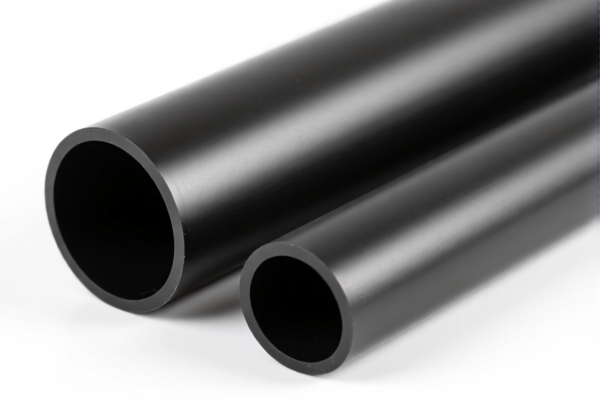
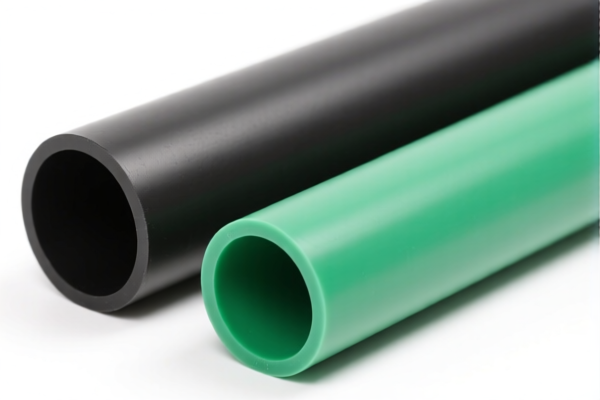
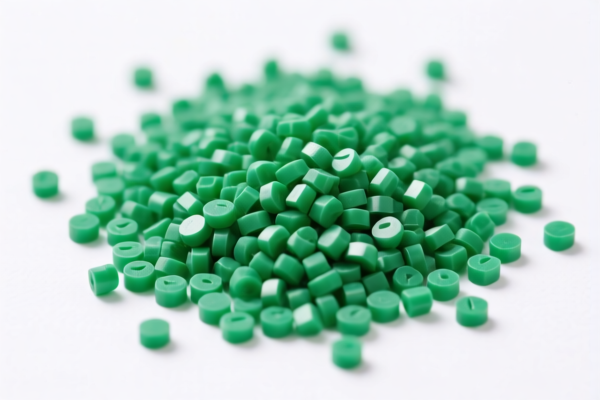
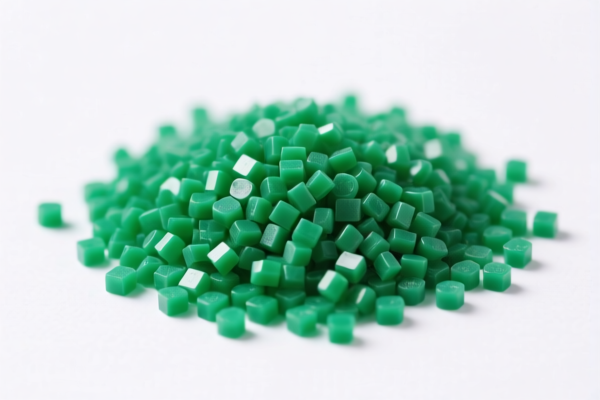
AI分析
🧪 PVC Raw Material Granules (Polyvinyl Chloride)
🌐 HS Code Reference & Customs Clearance Guide | 2026 Latest Tariff Analysis | Professional Clearance Strategy
📌 I. Product Definition & Classification: Do You Really Understand "PVC Granules"?
PVC (Polyvinyl Chloride) Raw Material Granules are the primary polymer forms used as the base ingredient for manufacturing pipes, profiles, cables, flooring, and packaging. In international trade, they are strictly categorized under Chapter 39: Plastics and Articles Thereof.
However, not all PVC is created equal. The critical distinction lies in plasticization: 1. Non-Plasticized PVC (uPVC/RPVC): Hard, rigid, used for pipes and construction. 2. Plasticized PVC: Soft, flexible, used for wires, hoses, and toys.
⚠️ Key Classification Point:
- If the granules are non-plasticized (rigid, hard) → Classify under 3904.21.00.00
- If the granules are fluoropolymers (e.g., PTFE) → Classify under 3904.61.00.10
- Note: Standard plasticized PVC (e.g., 3904.30) is NOT included in the provided data set and is excluded from this analysis.
📦 II. HS Code Classification Details (2026 Latest Tariff Authority Comparison)
Based on the provided data, there are two specific HS Codes applicable depending on the chemical composition and form:
| HS Code | Product Description | Application Scenario | Plasticized? | Key Chemical Nature |
|---|---|---|---|---|
3904.21.00.00 |
Polymers of vinyl chloride... Other poly(vinyl chloride): Nonplasticized | Rigid pipes, window profiles, hard sheets, industrial tubing | ❌ No (Rigid/Hard) | Standard PVC |
3904.61.00.10 |
Polymers of vinyl chloride... Fluoropolymers: Polytetrafluoroethylene (PTFE) Granular | High-temp seals, non-stick coatings, electrical insulation, chemical processing | N/A (Fluoropolymer) | PTFE (Teflon®-like) |
🔍 Critical Distinction:
-3904.21.00.00refers to standard PVC that has not been mixed with plasticizers. It is hard and brittle.
-3904.61.00.10refers to PTFE, which is chemically distinct from PVC (Polytetrafluoroethylene), despite both being polymers. If your material is actually PTFE (Teflon), do not use the PVC code.
- Warning: If you are importing soft, flexible PVC granules (plasticized), they fall under 3904.30.00, which is NOT covered in the provided data and has different tax implications.
💰 III. 2026 Latest Tariff Rate Breakdown (Detailed Tax Clauses)
✅ Source Data Constraint: The provided dataset indicates 0.0% total tax for both codes.
✅ Applicable Country: United States (US)
✅ Origin: China (CN) (Assumed based on typical trade context, but verify with specific country of origin certificate)
✅ Effective Time: Current as per data snapshot
🎯 1. 3904.21.00.00 —— Non-Plasticized PVC (uPVC) Granules
| Item | Content |
|---|---|
| Basic Tariff | 0.0% (Ad Valorem) |
| Additional Tariffs (Section 301 / IEEPA) | 0.0% |
| Total Effective Tax Rate | 0.0% |
| Tax Calculation | CIF Value × 0.0% = $0.00 |
| De Minimis Eligibility | ✅ Yes (If value < $800, no duty even if tax existed) |
| Legal Basis Path | USITC:3904.21.00.00 → Tariff Schedule: 0.0% |
📌 Explanation:
- The data explicitly states "Basic Tariff: 0.0%, Additional Tariff: 0.0%".
- Unlike many other Chinese-origin goods, Non-Plasticized PVC granules currently face no extra punitive tariffs in this dataset.
- This makes it a highly cost-effective raw material import.
🎯 2. 3904.61.00.10 —— PTFE (Polytetrafluoroethylene) Granules
| Item | Content |
|---|---|
| Basic Tariff | 0.0% (Ad Valorem) |
| Additional Tariffs (Section 301 / IEEPA) | 0.0% |
| Total Effective Tax Rate | 0.0% |
| Tax Calculation | CIF Value × 0.0% = $0.00 |
| De Minimis Eligibility | ✅ Yes |
| Legal Basis Path | USITC:3904.61.00.10 → Tariff Schedule: 0.0% |
📌 Explanation:
- PTFE is considered a Fluoropolymer, not standard PVC.
- It also enjoys 0% tax in this dataset.
- Caution: PTFE granules are significantly more expensive than PVC. Ensure your material is not mistakenly labeled.
🛠️ IV. Customs Clearance Practical Advice (Battle-Tested Pitfall Guide)
✅ 1. Essential Documentation Checklist (Non-Negotiable)
| Document | Required? | Description |
|---|---|---|
| ✅ Product Specification Sheet | ✔️ | Must state: Polymer Type (PVC vs. PTFE), Plasticization Status (Plasticized/Non-Plasticized), MFI (Melt Flow Index), Density. |
| ✅ Safety Data Sheet (SDS) | ✔️ | Class 9 Dangerous Goods? (PVC/PTFE granules are generally non-hazardous, but SDS is mandatory for chemicals). |
| ✅ Commercial Invoice | ✔️ | Must clearly describe: "Polyvinyl Chloride Granules, Non-Plasticized" or "PTFE Granules". Avoid vague terms like "Plastic Raw Material". |
| ✅ Certificate of Origin | ✔️ | To prove country of origin for tariff application. |
| ✅ Packaging List | ✔️ | Net/Gross weight, number of bags/pallets. |
✅ 2. Declaration Tips (Critical Mnemonics)
🔥 "Be Specific: PVC or PTFE? Plasticized or Not? Wrong Description = Delay!"
| Scenario | Correct Declaration | Wrong Action |
|---|---|---|
| Hard PVC Pipes Raw Material | 3904.21.00.00 - "Non-Plasticized PVC Granules" |
Calling it "PVC Compound" → May be misclassified as plasticized (3904.30) |
| Soft PVC Cable Sheathing Raw Material | NOT IN DATA (Usually 3904.30) | Using 3904.21 → Major Compliance Risk (Different Tariff) |
| PTFE/Teflon Coating Granules | 3904.61.00.10 - "PTFE Granular" |
Calling it "PVC" → Wrong HS Code, 0% vs. Potential Other Rate |
| Mixed Polymer Blends | Requires Precise Analysis | Guessing HS Code → Customs Audit |
✅ 3. Special Cases Handling
| Situation | Handling Advice |
|---|---|
| OEM Custom PVC | Provide formula sheet or MSDS to prove it is non-plasticized. If plasticizers are added, it becomes 3904.30. |
| Recycled PVC | May fall under 3902.10 (Polymers of Ethylene) or different subheadings. Check if it is "primary forms". |
| Color Masterbatches | If PVC granules contain >5% pigment/additives, they may be classified differently. Pure granules are 3904.21. |
| PTFE vs. PVDF | PVDF (Polyvinylidene fluoride) is also a fluoropolymer but has a different HS code. Verify chemical name. |
🌍 V. Global Market Clearance Comparison (2026 Latest)
| Country/Region | Recommended HS Code | Tariff Rate | Certification | Note |
|---|---|---|---|---|
| 🇺🇸 USA | 3904.21.00.00 |
0.0% | No special certification needed | No Section 301 tariff in this data |
| 🇨🇳 China | 3904.21.00.00 |
~5-10% | CCC (if final product) | Import duties vary; check current Chinese tariff schedule |
| 🇪🇺 EU | 3904.21 |
6.5% | REACH Registration Required | REACH compliance is critical for chemicals |
| 🇬🇧 UK | 3904.21 |
6.5% | UK REACH | Post-Brexit rules apply |
| 🇯🇵 Japan | 3904.21 |
0% | PRTR Law | Report if hazardous substances present |
📌 Conclusion:
- USA offers 0% duty for these specific PVC/PTFE granules based on the provided data.
- EU requires REACH registration for any chemical substance imported in quantities >1 ton/year. Failure to register results in customs hold.
- China may have different base tariffs; always verify with local customs.
📌 VI. Common Errors & Pitfalls (Blood-Lessons Learned)
❌ Error 1: Declaring Plasticized PVC as Non-Plasticized PVC (3904.21.00.00)
👉 Consequence: Misclassification. Plasticized PVC (3904.30) may have different tariff rates and regulatory requirements (e.g., phthalates restriction). Customs will assess penalty and back-tariffs.
❌ Error 2: Calling PTFE "PVC"
👉 Consequence: PTFE is a fluoropolymer. While tax is 0% in this data, the chemical nature is different. Incorrect description leads to delays in inspection and potential rejection if hazardous properties are misreported.
❌ Error 3: Ignoring REACH (EU) or TSCA (USA)
👉 Consequence: Even with 0% tariff, goods can be blocked if the supplier lacks chemical safety registration. Ensure your supplier provides REACH Registration Number (for EU) or TSCA Certification (for US).
❌ Error 4: Vague Description "Plastic Granules"
👉 Consequence: Customs will classify under "Other Plastics" with higher tariffs or hold goods for chemical analysis.
✅ Correct: "Polyvinyl Chloride Granules, Non-Plasticized, Primary Form, UN 3077 (if applicable), REACH Compliant"
🎯 VII. Conclusion: Professional Declaration, Safe and Profitable!
🎯 Remember Mnemonic:
🔹 "PVC Non-Plasticized: 3904.21, 0% Tax."
🔹 "PTFE Granular: 3904.61, 0% Tax."
🔹 "Plasticized? Not in Data! Check 3904.30!"
🔹 "Chemical Name Matters! REACH/TSCA Compliance is Key!"
📌 Pro Tip:
- If you are importing Plasticized PVC (soft, flexible), it is NOT covered in the provided data. You must consult a customs broker for HS Code 3904.30.00.00 or similar, as tariffs may differ.
- For PTFE, ensure your supplier provides FCC/USFDA compliance documents if used in food contact or electronics.
📣 Immediate Action:
📞 Contact a licensed customs broker
📄 Provide SDS and Product Specification
🚀 Clearance Speed + Cost Efficiency = Maximum Profit!
✨ Professional Customs Clearance Starts with Precise Classification!
💼 Every Percent Saved is Pure Profit!
用户评价
关于 HS 编码归类
协调制度(HS)是由世界海关组织(WCO)制定的国际贸易商品分类标准。全球 200 多个国家采用 HS 系统作为海关关税、贸易统计和进出口监管的基础。
每个 HS 编码遵循以下层级结构:
- 章(2 位)——商品大类(例如:第 84 章:机器和机械设备)
- 品目(4 位)——章内的更具体分类
- 子目(6 位)——国际通用细分,所有 WCO 成员国统一使用
- 本国细分(8-10 位)——各国自行扩展的细分编码,如美国 HTSUS 10 位编码
正确的 HS 编码归类对于顺利通关、准确缴纳关税和遵守贸易法规至关重要。错误归类可能导致海关延误、多缴关税或罚款。
从CN进口到US时,适用的关税税率可能包括:
- 最惠国(MFN)税率——适用于 WTO 成员国的标准关税税率
- 普通税率——适用于无贸易协定国家
- 贸易救济关税——附加关税,如 301 条款(反倾销)、232 条款(国家安全)或反补贴税
本页内容仅供参考。如需正式归类,请咨询当地海关或持牌报关代理。