pvc wall tiles
CN → US| HS编码 | 关税税率 | 原产国 | 目的国 | 文档 |
|---|---|---|---|---|
| 5907001500 | 43.0% | CN | US | 官方文档 |
| 3919905040 | 40.8% | CN | US | 官方文档 |
| 3919905060 | 40.8% | CN | US | 官方文档 |
| 5907006000 | 35.0% | CN | US | 官方文档 |
| 4811596000 | 35.0% | CN | US | 官方文档 |
商品图片
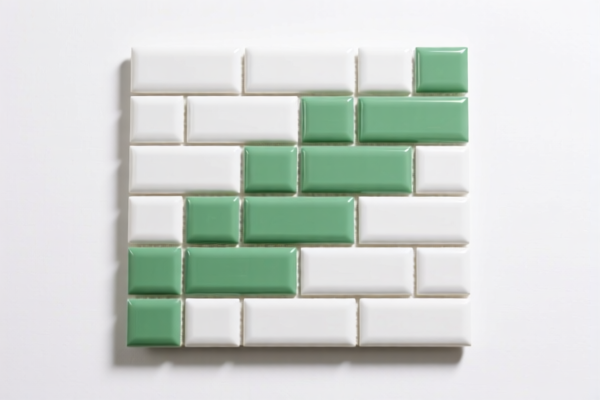
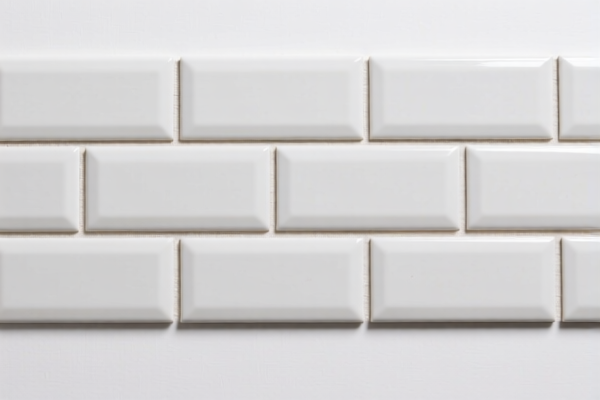
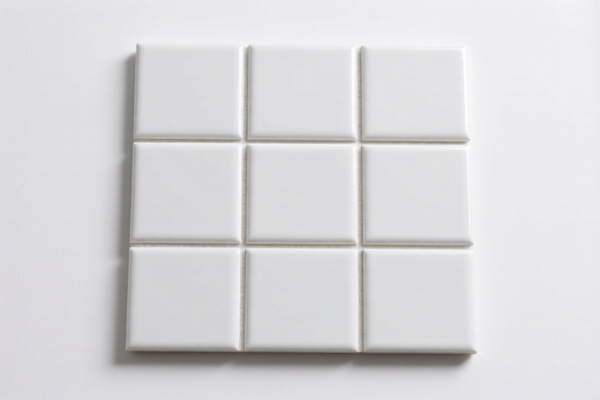
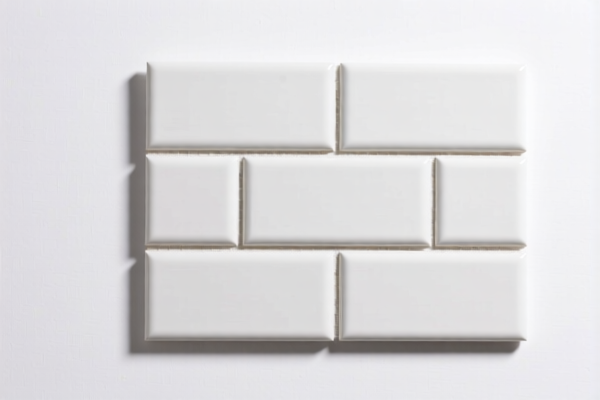
AI分析
🧱 PVC Wall Tiles (Decorative Wall Membranes/Films)
🌐 HS Code Classification & Customs Clearance Guide | 2026 Latest Tariff Analysis | Strategic Compliance Strategy
📌 I. Product Definition & Classification: What Exactly Are "PVC Wall Tiles"?
"PVC Wall Tiles" (often referred to as PVC Wall Films, Wall Membranes, or Self-Adhesive Wall Decals) are decorative building materials primarily used for interior wall finishing. In international trade, their classification depends heavily on the material composition and base structure:
1. Plastic-Based (PVC Coated/Impregnated):
- If the product is essentially a plastic film (PVC) with adhesive backing, or plastic coated onto paper/fabric for decorative purposes.
- Key Characteristic: The primary value and function derive from the plastic (PVC) component.
2. Textile-Based (Impregnated/Covered):
- If the product is a textile fabric (e.g., non-woven backing) impregnated, coated, or covered with PVC to create a wallpaper-like or tile-like effect.
- Key Characteristic: The primary structure is textile, modified with plastic.
⚠️ Critical Distinction Point:
- If the product is a self-adhesive plastic film (even if used for walls) →归类 to Chapter 39 (Plastics).
- If the product is a textile fabric coated/covered with PVC →归类 to Chapter 59 (Impregnated Textile Fabrics).
- If it is paper covered with PVC (less common for "tiles" but possible) →归类 to Chapter 48 (Paper).
📦 II. HS Code Classification Details (2026 Latest Tariff Reference)
Based on the provided data, here are the five possible HS Codes for "PVC Wall Tiles," categorized by their structural basis:
| HS Code | Product Description | Base Material | Key Classification Logic |
|---|---|---|---|
3919.90.50.40 |
Plastic Self-Adhesive Flat Products | PVC (Plastic) | Self-adhesive plastic film, not in rolls or cut to specific shapes for other chapters. |
3919.90.50.60 |
Plastic Self-Adhesive Films | PVC (Plastic) | Specifically classified as self-adhesive films for wall decoration use. |
5907.00.15.00 |
Textile Fabrics Impregnated/Covered | PVC on Textile | Textile fabric (e.g., non-woven) impregnated with PVC to form a "wall tile" or wallpaper. |
5907.00.60.00 |
Textile Fabrics Covered with Plastic | PVC on Textile | Textile fabric covered with a plastic film (PVC) for decorative wall covering. |
4811.59.60.00 |
Paper Covered with Plastic | PVC on Paper | Paper base coated/covered with PVC, formed into a membrane-like sheet for wall use. |
🔍 Key Takeaway:
- Plastic Dominance (3919.90.50.40/3919.90.50.60): If the backing is negligible or purely functional, and the product is essentially a plastic film, it falls under Chapter 39.
- Textile Dominance (5907.00.15.00/5907.00.60.00): If the strength and structure come from the textile backing (e.g., felt, non-woven), it falls under Chapter 59.
- Paper Base (4811.59.60.00): Less common for "tiles" but possible for thin PVC-coated paper wallpapers.
💰 III. 2026 Latest Tariff Rate Breakdown (Including Surcharges & Policy Add-ons)
✅ Applicable Country: United States (US)
✅ Origin: China (CN)
✅ Effective Date: From November 10, 2025 (and subsequent imports)
🎯 1. 3919.90.50.40 & 3919.90.50.60 —— Plastic Self-Adhesive Films (Chapter 39)
| Item | Details |
|---|---|
| Base Tariff | 5.8% (ad valorem) |
| Section 301 Surcharge (25%) | +25% (Under USITC Footnote 9903.88.01 / Trade Act Section 301) |
| IEEPA Surcharge (10%) | +10% (Under International Emergency Economic Powers Act for Chinese Goods) |
| Total Effective Tariff | 40.8% |
| Tax Calculation | CIF Value × 40.8% |
| De Minimis Exemption | ❌ Not Eligible (Deny De Minimis) |
| Legal Basis Path | IEEPA:9903.01.25 → IEEPA:9903.01.24 → USITC:3919.90.50.40/60 → FOOTNOTE:9903.88.01 |
📌 Explanation:
- These codes fall under Section 301 (25% tariff) and IEEPA (10% tariff).
- The base rate of 5.8% is standard for most plastic self-adhesive products.
- Total 40.8% is a high-cost barrier. Importers must factor this into pricing strategies.
🎯 2. 5907.00.15.00 —— Impregnated Textile Fabrics (Chapter 59)
| Item | Details |
|---|---|
| Base Tariff | 8.0% (ad valorem) |
| Section 301 Surcharge (25%) | +25% (Under USITC Footnote 9903.88.01) |
| IEEPA Surcharge (10%) | +10% (Under International Emergency Economic Powers Act) |
| Total Effective Tariff | 43.0% |
| Tax Calculation | CIF Value × 43.0% |
| De Minimis Exemption | ❌ Not Eligible (Deny De Minimis) |
| Legal Basis Path | IEEPA:9903.01.25 → IEEPA:9903.01.24 → USITC:5907.00.15.00 → FOOTNOTE:9903.88.01 |
📌 Explanation:
- This is the highest total tariff (43.0%) among all options.
- The higher base rate (8.0% vs. 5.8%) for textile-impregnated products leads to a higher final tax burden.
- Avoid this classification if possible, unless the product is unequivocally a textile fabric.
🎯 3. 5907.00.60.00 & 4811.59.60.00 —— Covered Textile & Paper (Chapter 59 & 48)
| Item | Details |
|---|---|
| Base Tariff | 0.0% (ad valorem) |
| Section 301 Surcharge (25%) | +25% (Under USITC Footnote 9903.88.01) |
| IEEPA Surcharge (10%) | +10% (Under International Emergency Economic Powers Act) |
| Total Effective Tariff | 35.0% |
| Tax Calculation | CIF Value × 35.0% |
| De Minimis Exemption | ❌ Not Eligible (Deny De Minimis) |
| Legal Basis Path | IEEPA:9903.01.25 → IEEPA:9903.01.24 → USITC:5907.00.60.00 / 4811.59.60.00 → FOOTNOTE:9903.88.01 |
📌 Explanation:
- These codes have a 0% base tariff, making them the most tariff-efficient options.
- However, they are only applicable if the product is strictly a plastic-covered textile (5907.00.60.00) or plastic-covered paper (4811.59.60.00).
- Misclassification (e.g., classifying a plastic film as paper) can lead to severe penalties.
🛠️ IV. Customs Clearance Practical Advice (Pitfall Avoidance Guide)
✅ 1. Preparation Checklist (Essential Documents)
| Document | Required | Purpose |
|---|---|---|
| ✅ Product Specification Sheet | ✔️ | Must detail: Material composition (PVC %, Textile %, Paper %), Thickness, Adhesive Type. |
| ✅ Product Photos (Close-up) | ✔️ | Show texture, backing material, and cross-section to prove base material. |
| ✅ Commercial Invoice | ✔️ | Clearly state: "PVC Wall Membrane" or "Decorative Wall Film," NOT just "Wall Tiles" (which may imply ceramic). |
| ✅ Packing List | ✔️ | List net/gross weight, dimensions, and number of rolls/sheets. |
| ✅ Declaration of Non-Wood Packaging | ✔️ | Ensure no wood pallets (ISPM 15 required if used). |
✅ 2. Classification Strategy & Naming Tips
🔥 "Name Precisely, Classify Accurately, Avoid High Base Rates!"
| Scenario | Recommended HS Code | Why? |
|---|---|---|
| Self-adhesive PVC Film (no fabric backing) | 3919.90.50.40 or 3919.90.50.60 |
Clearly a plastic product. Base tax 5.8%. |
| Non-woven Fabric + PVC Coating | 5907.00.15.00 or 5907.00.60.00 |
Base fabric is textile. Base tax 0-8%. Choose 5907.00.60.00 for lower base tax (0%). |
| Paper + PVC Coating | 4811.59.60.00 |
Base material is paper. Base tax 0%. |
⚠️ Warning:
- Do NOT use "Ceramic Tiles" or "Porcelain Tiles" in descriptions. This will trigger Chapter 69 classifications and severe misdeclaration penalties.
- Do NOT use generic "Wall Decor" without material specification. Customs will inspect and may reclassify to the highest duty rate.
✅ 3. Special Considerations for "Wall Tiles"
| Issue | Solution |
|---|---|
| "Wall Tile" Ambiguity | Always clarify in the invoice: "PVC Decorative Wall Film/Membrane (Not Ceramic)" |
| Adhesive Type | Specify if it's "Pressure-Sensitive Adhesive" (PSA) → Supports 3919 classification. |
| Packaging | If shipped in rolls, it supports 3919 (Plastic Films). If cut into squares/tiles, it may still be 3919 if not more specific. |
| Material Composition | If the textile backing is >50% by weight, 5907 may be argued. If plastic coating dominates, 3919 is stronger. |
🌍 V. Global Market Comparison (2026)
| Country/Region | Recommended HS Code | Total Tariff (China Origin) | Notes |
|---|---|---|---|
| 🇺🇸 USA | 3919.90.50.60 |
40.8% | High tariff due to 301 + IEEPA. |
| 🇨🇳 China | 3919.90.50.60 |
5.8% | No surcharges. |
| 🇪🇺 EU | 3919.10.91 |
6.5% | No Section 301/IEEPA equivalents. |
| 🇬🇧 UK | 3919.10.91 |
6.5% | Post-Brexit rates similar to EU. |
| 🇦🇺 Australia | 3919.10.91 |
5% | No major surcharges. |
📌 Conclusion:
- The US market is the most challenging due to the 40.8% - 43.0% total tariff.
- Importers to the US must optimize classification (e.g., argue for5907.00.60.00or4811.59.60.00if material structure allows) to reduce the base tariff from 5.8%/8.0% to 0%, saving 5.8% - 8.0% on the total cost.
📌 VI. Common Mistakes & Pitfalls (Lessons Learned)
❌ Mistake 1: Classifying PVC Wall Film as 3926.90.9889 (Other Plastic Articles)
👉 Consequence: Higher base tariff, potential misclassification penalty.
👉 Correct: Use specific self-adhesive film codes (3919.90.50.xx).
❌ Mistake 2: Calling the product "Ceramic Wall Tiles"
👉 Consequence: Severe penalty for false declaration. Customs will seize and destroy.
👉 Correct: Use "PVC Decorative Wall Membrane/Film."
❌ Mistake 3: Ignoring IEEPA 10% Surcharge
👉 Consequence: Underpayment of duties, resulting in fines and interest.
👉 Correct: Always include 10% IEEPA + 25% 301 in cost calculations for China-origin PVC goods to the US.
❌ Mistake 4: Misclassifying Textile-Based PVC as Pure Plastic
👉 Consequence: If the product is actually textile-backed, 5907 may be required. If you use 3919, you may face reclassification and back taxes.
👉 Correct: Analyze material composition carefully.
🎯 VII. Conclusion: Strategic Customs Compliance
🎯 Key Strategy for Importers:
1. Analyze Material: Is it plastic film, textile, or paper?
2. Choose Lowest Base Rate: If applicable, argue for 5907.00.60.00 or 4811.59.60.00 (0% base) over 3919 (5.8% base).
3. Prepare Documentation: Ensure invoices and specs clearly describe the material composition.
4. Budget for Tariffs: Assume 35% - 43% total duty for US imports from China.
📌 Pro Tip:
If the PVC film is not self-adhesive and is applied using separate adhesive, it may still fall under3919or3920, but self-adhesive products are explicitly covered under3919. Always specify "Self-Adhesive" in the description if true.
📣 Immediate Action:
📞 Consult with a licensed customs broker for a Pre-Ruling if the material composition is ambiguous.
📄 Ensure your Commercial Invoice explicitly states: "PVC Decorative Wall Film (Non-Ceramic)".
✨ Accurate Classification Saves Money!
💼 Understand the 301/IEEPA Tariffs to Protect Your Margins!
用户评价
关于 HS 编码归类
协调制度(HS)是由世界海关组织(WCO)制定的国际贸易商品分类标准。全球 200 多个国家采用 HS 系统作为海关关税、贸易统计和进出口监管的基础。
每个 HS 编码遵循以下层级结构:
- 章(2 位)——商品大类(例如:第 84 章:机器和机械设备)
- 品目(4 位)——章内的更具体分类
- 子目(6 位)——国际通用细分,所有 WCO 成员国统一使用
- 本国细分(8-10 位)——各国自行扩展的细分编码,如美国 HTSUS 10 位编码
正确的 HS 编码归类对于顺利通关、准确缴纳关税和遵守贸易法规至关重要。错误归类可能导致海关延误、多缴关税或罚款。
从CN进口到US时,适用的关税税率可能包括:
- 最惠国(MFN)税率——适用于 WTO 成员国的标准关税税率
- 普通税率——适用于无贸易协定国家
- 贸易救济关税——附加关税,如 301 条款(反倾销)、232 条款(国家安全)或反补贴税
本页内容仅供参考。如需正式归类,请咨询当地海关或持牌报关代理。