pvc折叠片材
CN → US| HS编码 | 关税税率 | 原产国 | 目的国 | 文档 |
|---|---|---|---|---|
| 3904220000 | 41.5% | CN | US | 官方文档 |
| 3904210000 | 41.5% | CN | US | 官方文档 |
| 3920490000 | 40.8% | CN | US | 官方文档 |
| 3920435000 | 39.2% | CN | US | 官方文档 |
商品图片
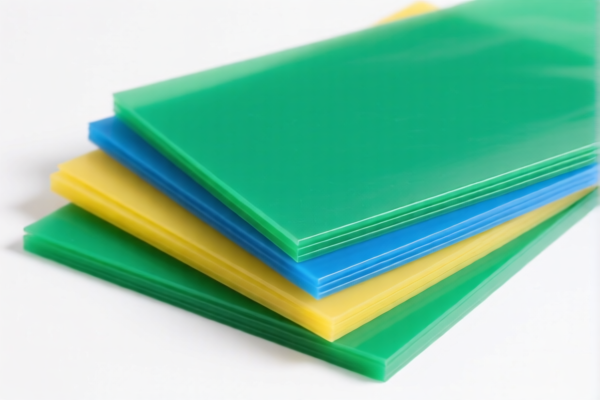
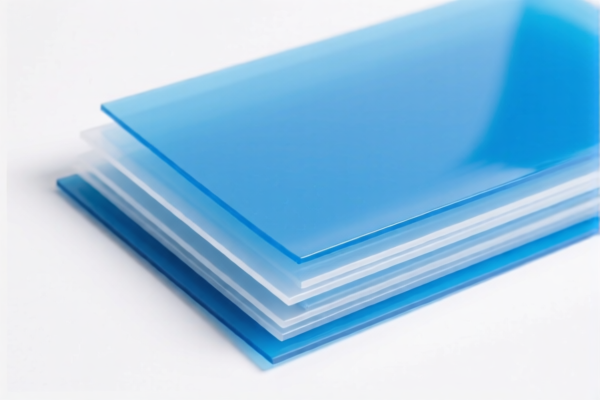
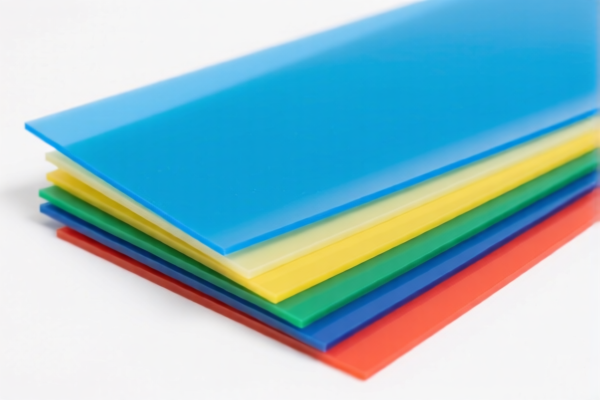
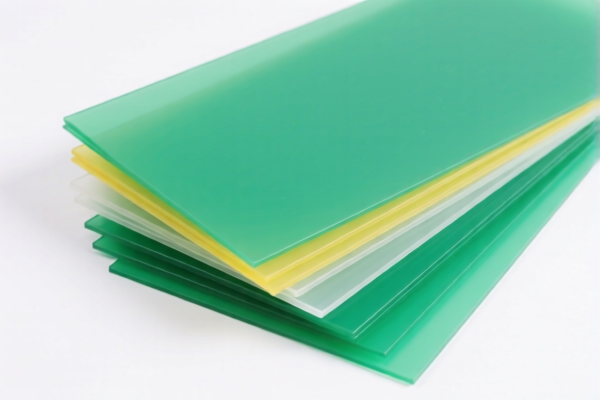
AI分析
🧪 PVC Folding Sheets: The Ultimate Guide to HS Codes, Tariffs & Customs Strategy (2026 Edition)
🌐 HS Code Reference & Customs Clearance Guide | 2026 Tariff Deep Dive | Professional Strategy
📌 Part 1: Product Definition & Classification — Do You Know Your "PVC Folding Sheets"?
PVC Folding Sheets (Polyvinyl Chloride folding sheets) are flexible, foldable plastic materials used primarily for signage, display boards, book covers, protective covers, and industrial laminates. They are characterized by their ability to bend without cracking and often come in rigid or semi-rigid forms.
In international trade, the classification of PVC sheets depends entirely on two critical factors: 1. Additives: Is it plasticized (flexible) or non-plasticized (rigid)? 2. Form: Is it in a primary form (granules, powders, raw polymers) or a semi-finished form (sheets, films, plates)?
⚠️ CRITICAL DISTINCTION POINTS: * Plasticized Sheets (Flexible): If the sheet contains ≥6% plasticizers by weight, it falls under 3920.43. This is the most common category for folding sheets. * Non-Plasticized Sheets (Rigid): If it contains <6% plasticizers or none, it falls under 3920.49 (sheets) or 3904.21 (primary form). * Raw Polymer: If you are shipping the raw pellets/powder, not a sheet, it goes to 3904.21/3904.22.
📦 Part 2: HS Code Classification Details (2026 Authorized Tariff Mapping)
Based on the provided data, here is the precise mapping for PVC Folding Sheets:
| HS Code | Product Description | Scenario Application | Plasticizer Content |
|---|---|---|---|
| 3920.43.50.00 | Other plates, sheets, film... Of polymers of vinyl chloride: Containing by weight not less than 6 percent of plasticizers: Other | PVC Folding Sheets (Plasticized) – Flexible, bendable, used for signage, covers, packaging. | ≥ 6% ✅ |
| 3920.49.00.00 | Other plates, sheets, film... Of polymers of vinyl chloride: Other | Rigid PVC Sheets – Hard, non-flexible, structural panels, or sheets with <6% plasticizers (unspecified). | < 6% ❌ |
| 3904.21.00.00 | Polymers of vinyl chloride...: Other poly(vinyl chloride): Nonplasticized | Raw PVC Resin (Non-plasticized) – Not a sheet yet. Used as raw material for manufacturing sheets. | N/A (Raw Material) |
| 3904.22.00.00 | Polymers of vinyl chloride...: Other poly(vinyl chloride): Plasticized | Raw PVC Resin (Plasticized) – Not a sheet yet. Contains plasticizers but in primary form (pellets). | N/A (Raw Material) |
🔍 Key Reminder: * If you are shipping actual folding sheets, you must distinguish between 3920.43.50.00 (Plasticized) and 3920.49.00.00 (Non-plasticized/Rigid). * DO NOT use 3904 codes (Resin) unless you are shipping the raw polymer pellets. Using 3904 for finished sheets will lead to misdeclaration and fines.
💰 Part 3: 2026 Tariff Rate Analysis (Base + Additional Duties)
✅ Target Market: General Trade (Assuming China Export context based on data) ✅ Product Origin: PVC Polymers ✅ Status: 2026 Active Tariff Rates
🎯 Scenario A: Plasticized PVC Folding Sheets (Most Likely)
HS Code: 3920.43.50.00
| Item | Detail |
|---|---|
| Base Tariff | 4.2% (Ad Valorem) |
| Additional Duty (Add-on) | 25.0% (Specific trade policy surcharge) |
| Total Effective Tax Rate | 29.2% |
| Tax Calculation | CIF Value × 29.2% |
| De Minimis Exemption | ❌ Not Applicable (High-rate product) |
| Legal Basis | Base rate 4.2% + Add-on 25.0% |
📌 Explanation: This category is for flexible PVC sheets used in folding applications. * The 25% Additional Duty is significant and drastically increases the landed cost. * This duty applies specifically to sheets containing ≥6% plasticizers. * Total 29.2% is the final duty payable upon import.
🎯 Scenario B: Non-Plasticized / Other PVC Sheets
HS Codes: 3904.22.00.00, 3904.21.00.00, 3920.49.00.00
| HS Code | Description | Base Tariff | Add-on Duty | Total Tax Rate |
|---|---|---|---|---|
3904.22.00.00 |
Plasticized PVC (Primary Form/Resin) | 0.0% | 0.0% | 0.0% ✅ |
3904.21.00.00 |
Non-plasticized PVC (Primary Form/Resin) | 0.0% | 0.0% | 0.0% ✅ |
3920.49.00.00 |
Other PVC Sheets (Non-plasticized/Rigid) | 0.0% | 0.0% | 0.0% ✅ |
📌 Strategic Insight: * Raw Resin (3904): Tariff-free (0%). * Rigid/Other Sheets (3920.49): Tariff-free (0%). * The Trap: Only Plasticized Sheets (3920.43.50.00) incur the heavy 29.2% tax. * Strategy: If your "folding sheet" can technically be classified as "non-plasticized" (rigid folding board), you might save 29.2% in duties. However, if the product requires plasticizers to be flexible enough to fold, you must use 3920.43.50.00 and accept the tax. Misdeclaring a plasticized sheet as "Other" (3920.49) is customs fraud.
🛠️ Part 4: Customs Clearance Practical Suggestions (Avoiding Pitfalls)
✅ 1. Preparation Checklist (Must-Haves)
| Document | Requirement | Why It Matters |
|---|---|---|
| ✅ Product Spec Sheet | Must explicitly state: "Contains X% Plasticizers" | Crucial to prove if it falls under 3920.43 (≥6%) or 3920.49 (<6%). |
| ✅ Technical Data Sheet (TDS) | Show chemical composition list | Customs needs to verify the plasticizer weight percentage. |
| ✅ Sample Photos | Show flexibility/folding capability | Visual proof that it is a "sheet" (3920) and not "raw resin" (3904). |
| ✅ Commercial Invoice | Clear description: "PVC Folding Sheets, Plasticized" | Mismatch in description vs. HS Code triggers inspection. |
| ✅ Bill of Materials | List of additives | To calculate the exact plasticizer percentage by weight. |
✅ 2. Declaration Strategy (The "Golden Rules")
🔥 Mantra: "Plasticizer % is King!"
| Scenario | Correct Declaration | Risk of Error |
|---|---|---|
| Flexible Folding Sheet (Soft, bends easily) | HS 3920.43.50.00 Desc: "PVC Folding Sheet, Plasticized" |
If declared as 3920.49 (0% tax), Fines + 29.2% Back-duties + 25% Penalty. |
| Rigid PVC Board (Hard, cracks if bent) | HS 3920.49.00.00 Desc: "PVC Sheet, Non-plasticized" |
Safe declaration for rigid materials. |
| Raw PVC Pellets | HS 3904.22.00.00 or 3904.21.00.00 | Do not declare pellets as "Folding Sheets". |
✅ 3. Special Situation Handling
| Situation | Actionable Advice |
|---|---|
| "Folding" but Low Plasticizer? | If you can engineer the product to have <5.9% plasticizers while maintaining foldability, you can shift to 3920.49.00.00 (0% tax). Consult your chemist! |
| Mixed Packaging (Sheet + Accessories) | If the sheet is packed with frames or tools, declare them separately. Do not bundle the high-tax sheet with low-tax accessories to hide value. |
| Customs Audit Trigger | If customs asks for "Plasticizer Percentage", provide a lab test report immediately. Do not guess. |
🌍 Part 5: Global Market Comparison (2026 Overview)
| Region | Recommended HS Code for Folding Sheets | Base Duty | Add-on Duty | Total Duty | Notes |
|---|---|---|---|---|---|
| 🇺🇸 USA | 3920.43.50.00 |
4.2% | 25.0% | 29.2% | High scrutiny on plasticized sheets. |
| 🇪🇺 EU | 3920.43.00 |
~1.7% | 0% | ~1.7% | No Section 301 add-on (usually). |
| 🇨🇳 China | 3920.43.50.00 |
4.2% | 0% | 4.2% | Domestic trade rules may differ; check CBEC. |
| 🇬🇧 UK | 3920.43.00 |
2.5% | 0% | 2.5% | Post-Brexit simplified tariffs. |
| 🇦🇺 AUS | 3920.43.00 |
5.0% | 0% | 5.0% | Standard MFN rates. |
📌 Conclusion: * USA is the most expensive market for Plasticized PVC Sheets (29.2%). * EU/UK/AU offer significantly lower rates (~1.7% - 5.0%). * Raw Resin is almost tax-free globally, but not a "folding sheet".
📌 Part 6: Common Mistakes & Pitfalls (Lessons Learned)
❌ Mistake 1: Declaring "Plasticized Folding Sheet" as 3920.49.00.00 (0% tax)
👉 Consequence: Customs inspection reveals plasticizer content >6%. You face 29.2% back-payment + 25% surcharge + 10% penalty. Fix: Be honest. If it folds, it likely has plasticizers.
❌ Mistake 2: Calling it "Vinyl Resin" instead of "PVC Sheet"
👉 Consequence: If you ship a finished sheet but declare it as raw resin (3904), you bypass the correct duty but face fraud accusations because the physical form is wrong. Fix: Match the physical form to the HS Code chapter.
❌ Mistake 3: Ignoring the "6% Threshold"
👉 Consequence: A sheet with 5.9% plasticizer falls into 3920.49 (0% tax). A sheet with 6.0% falls into 3920.43 (29.2% tax). 0.1% difference matters! Fix: Precision chemical analysis is required.
🎯 Part 7: Conclusion: Smart Classification, Lower Costs
🎯 Remember the Strategy:
🔹 "Flexible = Plasticized = 29.2% Duty (USA)" 🔹 "Rigid = Non-plasticized = 0% Duty" 🔹 "Raw Resin = 0% Duty"
🔹 "HS Code determines your profit margin! A 29.2% tax difference can destroy your deal!"
📌 Pro Tip: If you are exporting Plasticized PVC Folding Sheets to the US:
🚀 Optimize: Can you reduce plasticizer content to <6% without losing flexibility? 🚀 Document: Keep a Certificate of Analysis (CoA) showing exact plasticizer % on every shipment. 🚀 Pre-Ruling: Apply for a Binding Tariff Information (BTI) or US HTS binding ruling before shipping to confirm the 6% threshold.
📣 Take Action Now:
📞 Contact your Customs Broker: Provide the TDS with plasticizer %. 📝 Label Correctly: "PVC Folding Sheet, Plasticized, 3920.43.50.00". 🚀 Cost Control: Calculate the 29.2% impact on your FOB price immediately.
✨ Precision in Classification is the Key to Profit! 💼 Don't let a 0.1% plasticizer mistake cost you thousands!
用户评价
关于 HS 编码归类
协调制度(HS)是由世界海关组织(WCO)制定的国际贸易商品分类标准。全球 200 多个国家采用 HS 系统作为海关关税、贸易统计和进出口监管的基础。
每个 HS 编码遵循以下层级结构:
- 章(2 位)——商品大类(例如:第 84 章:机器和机械设备)
- 品目(4 位)——章内的更具体分类
- 子目(6 位)——国际通用细分,所有 WCO 成员国统一使用
- 本国细分(8-10 位)——各国自行扩展的细分编码,如美国 HTSUS 10 位编码
正确的 HS 编码归类对于顺利通关、准确缴纳关税和遵守贸易法规至关重要。错误归类可能导致海关延误、多缴关税或罚款。
从CN进口到US时,适用的关税税率可能包括:
- 最惠国(MFN)税率——适用于 WTO 成员国的标准关税税率
- 普通税率——适用于无贸易协定国家
- 贸易救济关税——附加关税,如 301 条款(反倾销)、232 条款(国家安全)或反补贴税
本页内容仅供参考。如需正式归类,请咨询当地海关或持牌报关代理。