raw bovine hides
CN → US| HS编码 | 关税税率 | 原产国 | 目的国 | 文档 |
|---|---|---|---|---|
| 4301900000 | 10.0% | CN | US | 官方文档 |
| 4301800202 | 17.5% | CN | US | 官方文档 |
| 4103901190 | 17.5% | CN | US | 官方文档 |
| 4103901130 | 17.5% | CN | US | 官方文档 |
商品图片
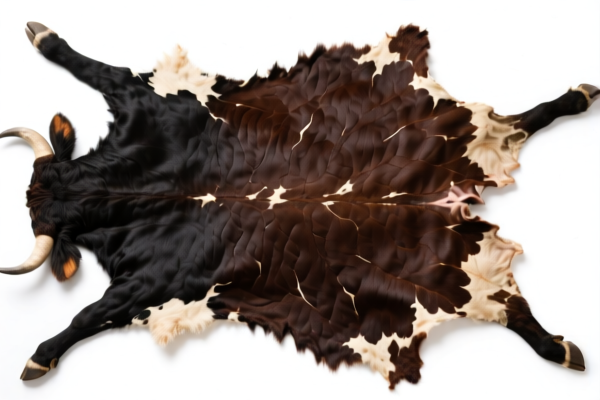
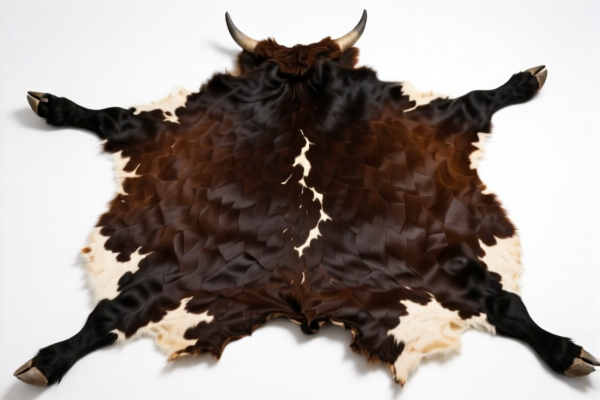
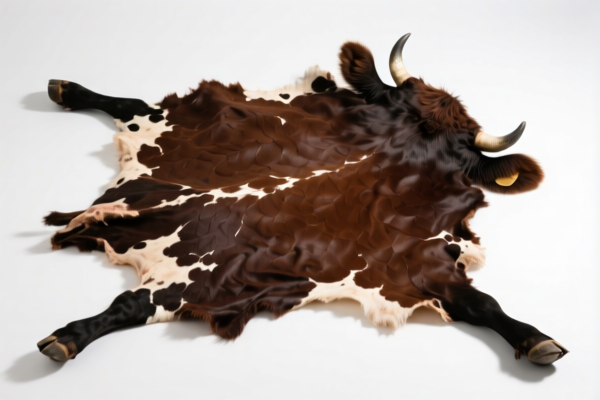
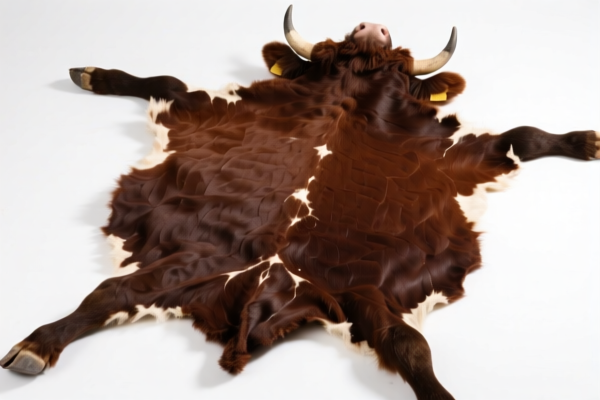
AI分析
🐄 Raw Bovine Hides (Unprocessed Cattle Skins)
🌐 HS Code Reference & Customs Clearance Guide | 2026 Latest Tariff Resolution | Professional Entry Strategy
📌 I. Product Definition & Classification: Do You Really Understand "Raw Bovine Hides"?
Raw bovine hides refer to the skins of cattle (cows, bulls, steers, calves) that have been removed from the carcass, cleaned of flesh and fat, but have not undergone any preservation process such as salting, pickling, or tanning. In international trade, these are classified strictly as "raw hides" (Chapter 41), distinct from tanned leather (Chapter 41/43) or fur skins (Chapter 43).
Key Distinction:
- If the hide is fresh, salted, or pickled but not tanned → Chapter 41 (Raw Hides)
- If the hide is salted, dried, or preserved for transport but not tanned → Chapter 41 (Raw Hides)
- If the hide has undergone chemical tanning (vegetable, chrome, etc.) → Chapter 41 (Tanned Leather)
- If the hide is kept in a fur state with hair on, primarily for apparel → Chapter 43 (Fur Skins)
⚠️ Critical Point for Customs:
Raw bovine hides are not considered "fur skins" (Chapter 43) unless they are specifically prepared as fur pelts (hair-on, preserved as such for fashion). Most commercial raw bovine hides (salted/cured) fall under Chapter 41.
📦 II. HS Code Classification Details (2026 Latest Tariff Authority Match)
Based on the provided data for "Raw Bovine Hides", here are the matched HS Codes, tax rates, and legal justifications:
| HS Code | Product Description | Applicability & Logic | Total Tax Rate |
|---|---|---|---|
4103.90.11.90 |
Other raw hides (excluding deer, goat, etc.), unsold, raw | Matches material: "Bovine hides" fall under "other raw hides" (non-sheep/goat/deer). Matches form: "Raw" (un-tanned). | 17.5% |
4103.90.11.30 |
Other raw hides (residual/bottom category) | Matches material: "Bovine hides" fit "other raw hides." Matches form: "Raw" (un-tanned). Uses fallback logic for general raw hides. | 17.5% |
🔍 Important Note from Data:
The provided dataset does not include the specific 8-digit subheadings for tanned leather (e.g., 4104.41) or fur (4301.90), but focuses on raw, un-tanned bovine hides. Therefore, the classification strictly falls under Chapter 41, specifically subheading 4103.90 ("Other raw hides of bovine animals").
💰 III. 2026 Latest Tariff Rate Breakdown (Including Surtaxes & Policy Add-ons)
✅ Applicable Country: United States (US)
✅ Origin: China (CN)
✅ Effective Time: November 10, 2025 onwards (for subsequent imports)
🎯 1. 4103.90.11.90 – Other Raw Bovine Hides (Un-tanned, Un-preserved or Salted)
| Item | Detail |
|---|---|
| Base Tariff | 0.0% (ad valorem) |
| Section 301 Surcharge | 7.5% (from USITC Footnote) |
| IEEPA Surcharge (Section 122/301-like) | 10.0% (Specific to Chinese origin goods under current executive orders) |
| Total Effective Tax Rate | 17.5% |
| Tax Calculation | CIF Value × 17.5% |
| De Minimis Exemption | ❌ Not Eligible (Deny de minimis for Chapter 41 items from China) |
| Legal Authority Path | IEEPA:9903.01.25 → USITC:4103.90.11.90 → FOOTNOTE:301 surcharge |
📌 Explanation:
- Base Tariff: 0% for raw hides under normal trade relations.
- Section 301 Surtax: 7.5% applies to most Chinese manufactured and semi-manufactured goods, including raw agricultural/animal products.
- IEEPA 10% Surcharge: An additional 10% is applied to goods from China under the International Emergency Economic Powers Act, specifically targeting certain raw materials and intermediate goods.
- Total: 0% + 7.5% + 10% = 17.5%. This is a high tariff rate for raw materials, significantly impacting profit margins.
🎯 2. 4103.90.11.30 – Other Raw Bovine Hides (Fallback Category)
| Item | Detail |
|---|---|
| Base Tariff | 0.0% |
| Section 301 Surcharge | 7.5% |
| IEEPA Surcharge | 10.0% |
| Total Effective Tax Rate | 17.5% |
| Tax Calculation | CIF Value × 17.5% |
| De Minimis Exemption | ❌ Not Eligible |
| Legal Authority Path | IEEPA:9903.01.24 → USITC:4103.90.11.30 |
📌 Note:
- This code is used as a "catch-all" for raw bovine hides that do not fit more specific subheadings.
- The tax structure is identical to4103.90.11.90.
- Warning: Misclassifying raw hides as "fur" (Chapter 43) may trigger different tax rules, but the provided data confirms that raw bovine hides are treated under Chapter 41 with a 17.5% total tax.
🛠️ IV. Customs Clearance Operational Advice (Practical Pitfall Guide)
✅ 1. Required Documentation Checklist (All Mandatory)
| Document | Required? | Notes |
|---|---|---|
| ✅ Commercial Invoice | ✔️ | Must specify: "Raw Bovine Hides," quantity, weight, value. |
| ✅ Packing List | ✔️ | Include net/gross weight, number of hides, packaging type. |
| ✅ Bill of Lading/Air Waybill | ✔️ | Standard shipping document. |
| ✅ Certificate of Origin | ✔️ | Proves Chinese origin; may trigger IEEPA/301 taxes. |
| ✅ USDA Import Permit | ✔️ | Critical! Raw animal products require USDA APHIS approval. |
| ✅ Veterinary Health Certificate | ✔️ | Issued by Chinese authorities, confirming no foot-and-mouth disease (FMD) or other contagious diseases. |
| ✅ Salting/Curing Declaration | ✔️ | Specify if hides are salted, wet-salted, or fresh. |
✅ 2. Declaration Tips (Key Rules)
🔥 "Declare Raw, Not Tanned; Salted is Safe, Fresh is Risky!"
| Scenario | Correct Declaration | Incorrect Practice |
|---|---|---|
| Salted Bovine Hides | 4103.90.11.90 or 4103.90.11.30 |
Declare as "Leather" → 20%+ tax + penalty |
| Fresh (Wet-Salted) Hides | 4103.90.11.90 |
Declare as "Finished Leather" → Rejected by USDA |
| Tanned Bovine Leather | 4104.41 (Not in current data) |
Declare as "Raw Hides" → Under-declaration of tax |
| Fur Hides (Hair-on, for fashion) | 4301.90 (Not applicable for bovine) |
Declare as "Raw Bovine Hides" → Wrong Chapter |
📌 Important:
- Raw bovine hides must be clearly described as "Raw" or "Un-tanned."
- If the hides are tanned, they fall under different HS codes (e.g.,4104.41) with different tax rates (not covered in this specific dataset but typically higher base rates).
- USDA Approval is mandatory. Without it, shipments will be destroyed or returned.
✅ 3. Special Cases
| Situation | Handling Advice |
|---|---|
| OEM Custom Hides | Provide buyer’s spec sheet to prove they are raw, not finished goods. |
| Mixed Shipments (Raw + Tanned) | Separate declarations. Raw hides go to 4103, tanned leather to 4104. Mixing leads to audit risks. |
| Sample Shipments | Even samples require USDA permits if over a certain weight. Declare as "Samples for Testing, Raw Bovine Hides." |
| Transshipment via Third Country | If re-exported from Vietnam/Mexico, provide proof of substantial transformation. If not, origin remains China → 17.5% tax applies. |
🌍 V. Global Market Clearance Comparison (2026 Latest)
| Country/Region | Recommended HS Code | Tariff Rate | Certification Required | Notes |
|---|---|---|---|---|
| 🇺🇸 USA | 4103.90.11.90 |
17.5% | USDA + FDA (if applicable) | High tariff due to IEEPA/301. |
| 🇨🇳 China | 4103.90.11.90 |
0% | None (for import) | No surtaxes. |
| 🇪🇺 EU | 4103.90.11 |
0% - 2% | REACH (if chemicals used) | No surtaxes. |
| 🇦🇺 Australia | 4103.90.11 |
5% | Biosecurity Approval | Moderate tariff. |
| 🇯🇵 Japan | 4103.90.11 |
0% - 5% | Veterinary Certificate | Low tariff. |
📌 Conclusion:
- The US has the highest effective tariff (17.5%) for raw bovine hides from China due to trade policies.
- EU, Japan, Australia have significantly lower rates, making them more cost-effective destinations for raw hides.
- USDA Compliance is the biggest bottleneck in the US market.
📌 VI. Common Mistakes & Pitfall Guide (Lessons Learned)
❌ Mistake 1: Declaring "Tanned Leather" as "Raw Hides" to avoid higher taxes.
👉 Consequence: Customs inspection reveals tanning process → Penalties + Back Taxes.
❌ Mistake 2: Failing to get USDA approval.
👉 Consequence: Shipment destroyed at port of entry. Costly and time-consuming.
❌ Mistake 3: Using "Fur" (Chapter 43) for raw bovine hides.
👉 Consequence: Wrong classification. Bovine hides are rarely classified as "fur" unless specifically prepared as such. This leads to customs hold for clarification.
❌ Mistake 4: Not specifying "Salted" or "Cured" on invoice.
👉 Consequence: USDA may reject fresh hides due to disease risk. Always specify preservation method.
✅ Correct Approach:
"Raw Bovine Hides, Wet-Salted, 100 Hides, Net Weight 500kg, Origin: China, USDA Permit #12345, For Tanning Only"
🎯 VII. Conclusion: Precise Classification, Cost Efficiency, Smooth Clearance
🎯 Remember the Rules:
🔹 "Raw is Chapter 41, Tanned is Chapter 41 Too, But Different Codes!"
🔹 "USDA Permit is Non-Negotiable for Raw Animal Products!"
🔹 "17.5% Tax in US, 0% in EU – Plan Your Supply Chain Accordingly!"
📌 Pro Tip:
If your raw hides are destined for the US, ensure you have all USDA documents ready before shipping. For EU/Japan/Australia, focus on quality certification (REACH, etc.).
Consider pre-clearance consultations with customs brokers to avoid delays.
📣 Immediate Action:
📞 Contact a licensed customs broker + Obtain USDA Permit + Verify HS Code with Supplier
🚀 Ensure smooth clearance, avoid destruction, maximize profit!
✨ Professional Clearance Starts with Accurate Classification!
💼 Every Percentage Point of Tax Matters!
用户评价
关于 HS 编码归类
协调制度(HS)是由世界海关组织(WCO)制定的国际贸易商品分类标准。全球 200 多个国家采用 HS 系统作为海关关税、贸易统计和进出口监管的基础。
每个 HS 编码遵循以下层级结构:
- 章(2 位)——商品大类(例如:第 84 章:机器和机械设备)
- 品目(4 位)——章内的更具体分类
- 子目(6 位)——国际通用细分,所有 WCO 成员国统一使用
- 本国细分(8-10 位)——各国自行扩展的细分编码,如美国 HTSUS 10 位编码
正确的 HS 编码归类对于顺利通关、准确缴纳关税和遵守贸易法规至关重要。错误归类可能导致海关延误、多缴关税或罚款。
从CN进口到US时,适用的关税税率可能包括:
- 最惠国(MFN)税率——适用于 WTO 成员国的标准关税税率
- 普通税率——适用于无贸易协定国家
- 贸易救济关税——附加关税,如 301 条款(反倾销)、232 条款(国家安全)或反补贴税
本页内容仅供参考。如需正式归类,请咨询当地海关或持牌报关代理。