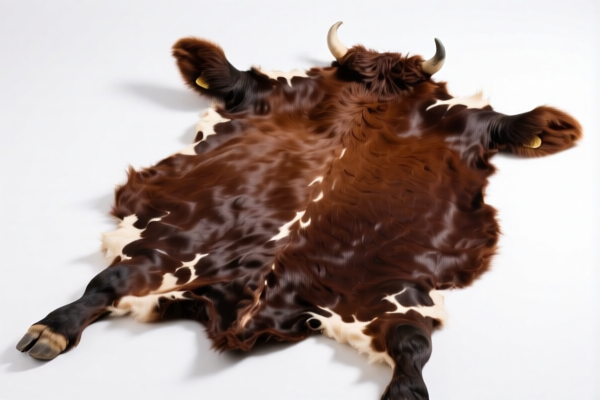
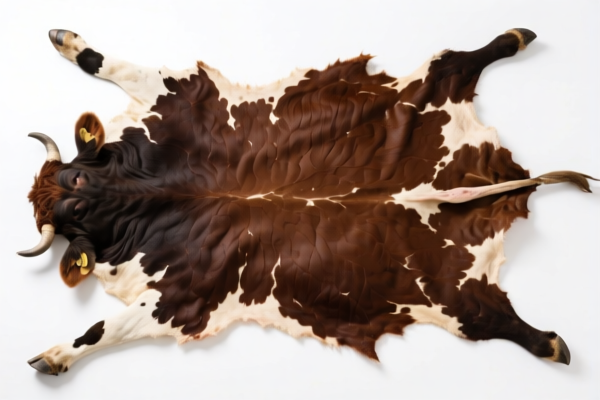
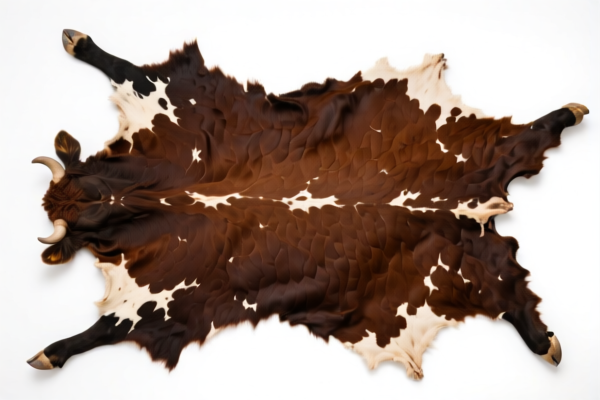
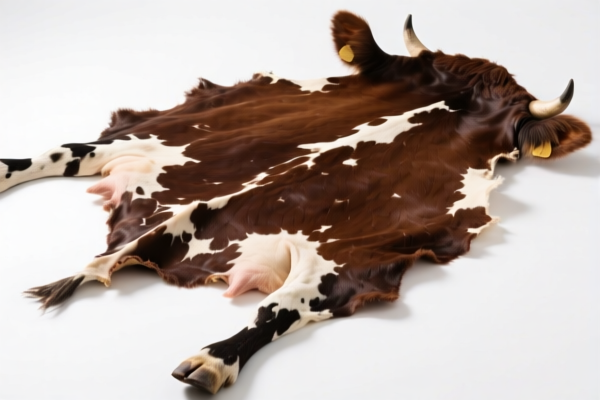
raw cowhide for leather making
CN → US| HS编码 | 关税税率 | 原产国 | 目的国 | 文档 |
|---|---|---|---|---|
| 4101501010 | 17.5% | CN | US | 官方文档 |
| 4101901030 | 17.5% | CN | US | 官方文档 |
商品图片
AI分析
🐄 Raw Cowhide for Leather Making
🌐 HS Code Reference & Customs Clearance Guide | 2026 Updated Tariff Analysis | Professional Import Strategy
📌 One: Product Definition & Classification – What Exactly Is "Raw Cowhide"?
Raw cowhide refers to untanned, unparchment-dressed, and unprocessed hides/skins of bovine animals (including cattle and buffalo), preserved only through basic methods such as fresh, salted, dried, limed, pickled, or otherwise preserved, but never tanned, split, or further prepared.
In international trade, these are classified based on: - Weight (especially exceeding 16 kg) - Cut type (whole hides, butts, bends, bellies) - Whether pretanned or not
⚠️ Key Distinction: - If the hide is not tanned, not split, and not pretreated → classified under 4101.50.10.10 or 4101.90.10.30 - If tanned, split, or chemically treated → NOT covered here; may fall under different HS codes (e.g., 4102–4107)
📦 Two: HS Code Classification Details (2026 Official Tariff Breakdown)
| HS Code | Product Description | Applicable Scenario | Weight / Cut Type | Pretanned? |
|---|---|---|---|---|
4101.50.10.10 |
Raw hides and skins of bovine animals (including buffalo), whole, weighing over 16 kg, not pretanned | Large cattle hides used in industrial leather production (e.g., automotive, footwear, upholstery) | >16 kg | ❌ No |
4101.90.10.30 |
Raw hides and skins of bovine animals (including buffalo), other types (e.g., butts, bends, bellies), not pretanned | Smaller or irregular cuts, often from lower-grade cattle or secondary parts | ≤16 kg or non-whole | ❌ No |
🔍 Critical Note: - "Whole hides" = entire hide without cutting (e.g., full cow belly or back) - "Other, including butts, bends and bellies" = partial or trimmed sections - "Not pretanned" = no chemical pre-treatment (e.g., no chrome or vegetable pre-tanning)
💰 Three: 2026 Updated Tariff Rates (Including Additional Duties & Policy Triggers)
✅ Applicable Country: United States (US)
✅ Origin: China (CN)
✅ Effective Date: November 10, 2025 (including future imports)
🎯 1. 4101.50.10.10 — Whole Raw Cowhides (>16 kg), Not Pretanned
| Item | Details |
|---|---|
| Base Duty Rate | 0.0% (ad valorem) |
| USITC Additional Duty | +7.5% (under Section 301 of the Trade Act) |
| IEEPA Additional Duty | +7.5% (under International Emergency Economic Powers Act) |
| Total Effective Duty | 15.0% |
| Tax Calculation | CIF Value × 15.0% |
| De Minimis Threshold | ❌ Not applicable (denied de minimis) |
| Legal Basis Path | IEEPA:9903.01.25 → USITC:4101.50.10.10 → FOOTNOTE:9903.88.01 |
📌 Explanation: - The 7.5% USITC duty comes from Section 301 Tariffs targeting Chinese goods. - The 7.5% IEEPA duty is an emergency economic measure applied to imports from China. - Total: 15.0%, which is double the standard rate and must be factored into pricing.
🎯 2. 4101.90.10.30 — Other Raw Cowhides (Butts, Bends, Bellies), Not Pretanned
| Item | Details |
|---|---|
| Base Duty Rate | 0.0% |
| USITC Additional Duty | +7.5% |
| IEEPA Additional Duty | +7.5% |
| Total Effective Duty | 15.0% |
| Tax Calculation | CIF Value × 15.0% |
| De Minimis Threshold | ❌ Not applicable |
| Legal Basis Path | IEEPA:9903.01.25 → USITC:4101.90.10.30 → FOOTNOTE:9903.88.01 |
📌 Important Note: - Even smaller or irregular cuts (e.g., butts, bends, bellies) are subject to the same 15% total duty. - This applies regardless of quality, origin, or intended use — as long as they are raw, not pretanned, and not tanned.
🛠️ Four: Customs Clearance Best Practices (Pro Tips to Avoid Penalties)
✅ 1. Required Documentation (Must-Have Checklist)
| Document | Required? | Purpose |
|---|---|---|
| ✅ Commercial Invoice | ✔️ | Clearly state "Raw Cowhide, Whole, >16 kg, Not Pretanned" |
| ✅ Packing List | ✔️ | Show weight, quantity, and cut type (whole vs. partial) |
| ✅ Bill of Lading / Air Waybill | ✔️ | Prove shipment origin and logistics |
| ✅ Certificate of Origin (CO) | ✔️ | Prove country of manufacture; critical for tariff eligibility |
| ✅ Product Photos (with markings) | ✔️ | Show hide condition, size, and labeling |
| ✅ Pre-shipment Inspection Report | ✔️ | Optional but recommended for high-value shipments |
| ✅ HS Code Pre-Ruling (if uncertain) | ✔️ | Request from U.S. Customs (CBP) for binding classification |
✅ 2.申报技巧(Key Rules to Remember)
🔥 “Whole vs. Partial, Weight Matters, No Pretanning = 15%!”
| Scenario | Correct HS Code | Wrong Practice | Risk |
|---|---|---|---|
| Whole cowhide >16 kg | 4101.50.10.10 |
Mislabel as "other" | Higher risk of audit |
| Butts/bellies (smaller pieces) | 4101.90.10.30 |
Claim as "whole" | Misclassification, penalties |
| Pretanned or split hide | ❌ Not eligible | 申报为 raw hide | Severe penalties + seizure |
| Hides from Vietnam/Mexico | Check origin | Assume China origin | May miss IEEPA/USITC exemption |
✅ 3. Special Cases & Solutions
| Situation | Recommended Action |
|---|---|
| Hides from non-China countries (e.g., Vietnam, Brazil, India) | Apply for IEEPA/USITC exemption → 0% additional duty |
| Hides with minor liming/pickling | Confirm no pretanning → still eligible for 15% total duty |
| Mixed shipment (whole + partial) | Declare separately by weight and cut type |
| Bulk shipment with multiple lots | Provide lot-by-lot breakdown to avoid misclassification |
🌍 Five: Global Market Comparison (2026 Update)
| Country/Region | Recommended HS Code | Tariff Rate | Certification Required | Notes |
|---|---|---|---|---|
| 🇺🇸 United States | 4101.50.10.10 / 4101.90.10.30 |
15.0% (China origin) | None (but CO required) | High risk if origin not verified |
| 🇨🇳 China | 4101.50.10.10 / 4101.90.10.30 |
0% | None | Domestic trade only |
| 🇪🇺 European Union | 4101.50.10.10 / 4101.90.10.30 |
0% (if origin compliant) | CE, REACH | No additional duties |
| 🇦🇺 Australia | 4101.50.10.10 |
5% | RCM, Export Certificate | No IEEPA/USITC |
| 🇯🇵 Japan | 4101.50.10.10 |
0% | PSE | No extra tariffs |
📌 Insight:
- Only the U.S. applies the 15% combined duty on raw cowhides from China. - Vietnam, Brazil, India, and Mexico may qualify for tariff exemptions if origin is proven.
📌 Six: Common Mistakes & How to Avoid Them (Real-World Pitfalls)
❌ Mistake 1: Misclassifying "whole hides" as "butts/bellies"
👉 Result: Under-reporting weight → higher per-unit duty → audit risk
❌ Mistake 2: Declaring pretanned or split hides as raw
👉 Result: Seizure, fines, re-export — up to 100% of value
❌ Mistake 3: Not providing photos or origin proof
👉 Result: Customs delays, mandatory inspection, increased costs
❌ Mistake 4: Using generic terms like "raw hide" without specifying weight or cut
👉 Result: Incorrect HS code → penalties, retroactive duties
✅ Best Practice Example:
"Raw Cowhide, Whole, >16 kg, Not Pretanned, Cattle, Origin: Brazil, CIF Value: $12,500, CO Attached"
🎯 Seven: Final Verdict – Get It Right the First Time!
🎯 Remember the Golden Rule:
🔹 "Whole >16kg → 4101.50.10.10"
🔹 "Butts/Bellies → 4101.90.10.30"
🔹 "No Pretanning = 15% Total Duty (US)"
🔹 "Origin Matters – Vietnam ≠ China!"
📌 Pro Tip:
✅ Apply for a Pre-Ruling (Advance Ruling) from U.S. Customs (CBP) before shipment — binding classification with zero risk of audit.
✅ Use a licensed customs broker experienced in agricultural raw materials and Section 301/IEEPA compliance.
📣 Take Action Now:
📞 Contact a certified customs broker + Submit product photos + Request HS Code pre-ruling
🚀 Avoid delays, penalties, and costly rejections — get your raw cowhide cleared smoothly!
✨ Smart Importing Starts with Accurate Classification!
💼 Your profit margin depends on getting the HS Code — and the tax — right.
用户评价
关于 HS 编码归类
协调制度(HS)是由世界海关组织(WCO)制定的国际贸易商品分类标准。全球 200 多个国家采用 HS 系统作为海关关税、贸易统计和进出口监管的基础。
每个 HS 编码遵循以下层级结构:
- 章(2 位)——商品大类(例如:第 84 章:机器和机械设备)
- 品目(4 位)——章内的更具体分类
- 子目(6 位)——国际通用细分,所有 WCO 成员国统一使用
- 本国细分(8-10 位)——各国自行扩展的细分编码,如美国 HTSUS 10 位编码
正确的 HS 编码归类对于顺利通关、准确缴纳关税和遵守贸易法规至关重要。错误归类可能导致海关延误、多缴关税或罚款。
从CN进口到US时,适用的关税税率可能包括:
- 最惠国(MFN)税率——适用于 WTO 成员国的标准关税税率
- 普通税率——适用于无贸易协定国家
- 贸易救济关税——附加关税,如 301 条款(反倾销)、232 条款(国家安全)或反补贴税
本页内容仅供参考。如需正式归类,请咨询当地海关或持牌报关代理。