raw seal furskins
CN → US商品图片
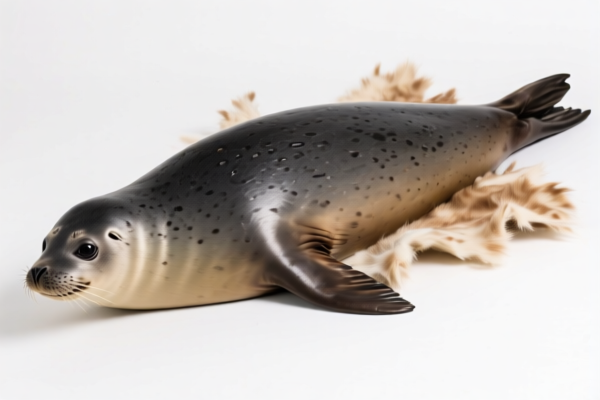
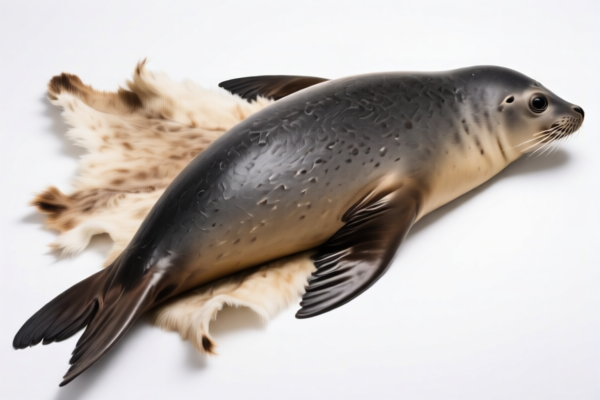
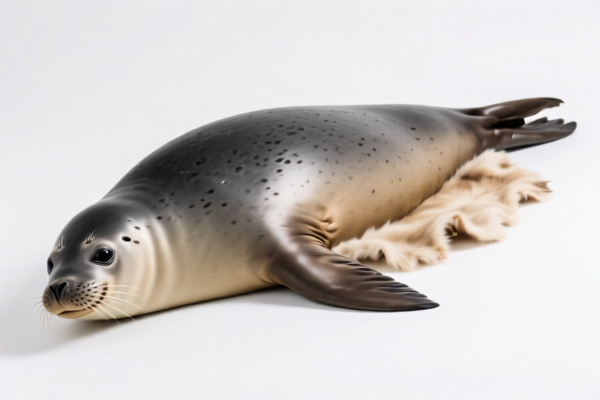
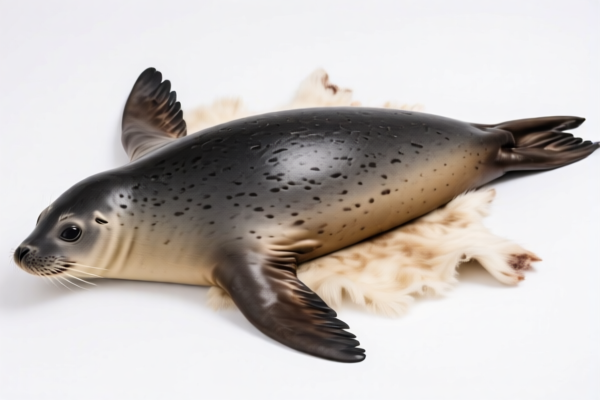
AI分析
🦭 Raw Seal Furskins (Animal Skin, Not Tanned)
🌐 HS Code Reference & Customs Clearance Guide | 2026 Latest Tariff Analysis | Professional Trade Compliance Strategy
📌 I. Product Definition & Classification: What Are "Raw Seal Furskins"?
Raw Seal Furskins refer to the pelts of seals that have been removed from the animal but have not yet undergone tanning, preservation, or further processing. They are essentially in their "raw state," often salted, dried, or frozen to prevent decay during transit.
In international trade, these goods fall under Chapter 43 of the Harmonized System (HS), which covers "Furskins and artificial fur; manufactured articles of furskin or artificial fur."
⚠️ Key Distinction:
- Raw/Untanned → Classified under 4301 (Raw furskins, including heads, paws, and other pieces).
- Tanned/Dressed → Classified under 4302 (Tanned or dressed furskins).
- Artificial Fur → Classified under 4303/4304.Crucial Note: Importing seal products is highly regulated due to ethical and conservation concerns. Many jurisdictions (e.g., EU, USA, Canada, Russia) have bans or strict quotas on seal hunting and trade. Compliance with wildlife protection laws (CITES, US MMPA, etc.) is as important as HS classification.
📦 II. HS Code Classification Details (2026 Latest Tariff Concordance)
| HS Code | Product Description | Applicable Scenario | Key Characteristics |
|---|---|---|---|
| 4301.10.00 | Raw furskins of mink, whole, with or without head, tail, or paws | Mink pelts (often grouped in broad "seal/mink" categories in trade data, but technically distinct) | Whole skin, raw |
| 4301.20.00 | Raw furskins of fox, whole, with or without head, tail, or paws | Fox pelts | Whole skin, raw |
| 4301.30.00 | Raw furskins of lamb, whole, with or without head, tail, or paws | Lamb pelts | Whole skin, raw |
| 4301.60.00 | Raw furskins of bear, whole, with or without head, tail, or paws | Bear pelts | Whole skin, raw |
| 4301.80 | Other raw furskins (including seal, cat, dog, etc.) | Seal, cat, dog, squirrel, etc. | This is the primary code for seal furskins |
| 4301.80.10 | Raw furskins of cat and dog | Cat/Dog pelts | Specific sub-category |
| 4301.80.90 | Other raw furskins (Includes Seal) | Seal furskins (Raw) | Primary HS Code for Raw Seal Furskins |
| 4302.10 | Tanned or dressed furskins (whole, unworked) | If tanned, do not use 4301 | Not applicable for raw skins |
🔍 Primary HS Code for Raw Seal Furskins:
4301.80.90(Other raw furskins, not elsewhere specified).
Note: Some countries may have more specific sub-codes for seal under 4301.80. Check local tariff schedules.
💰 III. 2026 Latest Tariff Rates & Import Restrictions (Focus on Major Markets)
✅ Important: Seal product trade is prohibited or heavily restricted in many countries. Tariffs are often secondary to import bans.
🇪🇺 European Union (EU)
- HS Code:
4301.80.90 - Import Status: 🚫 BAN on placing seal products on the market (Regulation (EC) No 1007/2009), with limited exceptions (Indigenous communities, marine resource management).
- Tariff: N/A (Prohibited)
- Certification: Requires proof of exemption (e.g., ICAM certification for Inuit communities).
🇺🇸 United States
- HS Code:
4301.80.90 - Import Status: 🚫 PROHIBITED under the Marine Mammal Protection Act (MMPA) and Animal Welfare Act, unless imported for scientific, educational, or commercial purposes under strict permits (e.g., from Canada with US-Fish & Wildlife Service permits).
- Tariff: N/A (Prohibited)
- Certification: Required USFWS Permit + Canadian Export License + ICAM Certification.
🇨🇦 Canada
- HS Code:
4301.80.90 - Export Status: ✅ PERMITTED under regulated commercial sealing (for Inuit and commercial harvesters).
- Tariff: 0% (for exports to non-ban countries)
- Certification: ICAM (International Council for Animal Protection in Ottawa) certification is mandatory for export to most markets (even where not banned, buyers demand it).
🇷🇺 Russia
- HS Code:
4301.80.90 - Import/Export Status: ✅ Permitted
- Tariff: Varies (typically 5-10% for imports, 0% for exports)
- Certification: Standard customs declaration + veterinary certificate.
🇨🇳 China
- HS Code:
4301.80.90 - Import Status: ⚠️ Restricted. Import of wild animal skins requires CITES permits and wildlife import licenses.
- Tariff: 5-10% (varies by origin and treaty status)
- Certification: CITES Certificate + Wildlife Import Permit.
🛠️ IV. Customs Clearance Practical Advice (Avoiding Seizures & Penalties)
✅ 1. Mandatory Documentation Checklist
| Document | Requirement | Notes |
|---|---|---|
| ICAM Certification | ✅ Mandatory for EU/US exports from Canada | Ensures humane treatment; no certification = seizure |
| CITES Permit | ✅ If species is listed (e.g., some seal species) | Verify species under CITES Appendices |
| Veterinary Health Certificate | ✅ Required by most countries | Proves disease-free (e.g., Brucellosis, Rabies) |
| Import Permit | ✅ For US, EU, China, etc. | Must be obtained before shipment |
| Commercial Invoice | ✅ Detailed description | Must state "Raw Seal Furskins," not "leather" or "fur" |
| Packing List | ✅ | Weight, dimensions, number of pelts |
| Bill of Lading/Air Waybill | ✅ | Standard shipping document |
📌 Critical: Do NOT mislabel as "leather," "skin," or "fur product" if it is raw. Misdeclaration leads to seizure, fines, and criminal charges.
✅ 2. Clearance Strategy & Tips
🔥 "Permit First, Ship Second, ICAM Always!"
| Scenario | Action | Risk if Ignored |
|---|---|---|
| Export from Canada to EU/US | Secure ICAM certificate + Import Permit | 100% Seizure at border |
| Export to Russia/China | Obtain CITES + Import License | Delay or rejection |
| Domestic Trade (Canada) | Standard commercial invoice | No restrictions |
| Mislabeling as "Leather" | Correct to "Raw Furskin" | Criminal fraud charges |
✅ 3. Species-Specific Considerations
- Grey Seal / Harbor Seal: Often subject to stricter bans than commercial harp seal.
- Harps Seal (Harems): Most commonly traded; ICAM certification is widely accepted.
- Other Species: May fall under CITES Appendix I or II, requiring additional permits.
📌 Check CITES Status:
- Some seal species are not CITES-listed, but national laws (like MMPA in the US) still ban them.
- Always verify local wildlife laws, not just CITES.
🌍 V. Global Market Overview for Seal Furskins (2026)
| Country/Region | Import Status | Key Requirement | Notes |
|---|---|---|---|
| 🇪🇺 EU | 🚫 Ban (mostly) | ICAM + Exemption Proof | Only Inuit marine resource exception |
| 🇺🇸 USA | 🚫 Prohibited | USFWS Permit + ICAM | MMPA ban is strict |
| 🇨🇦 Canada | ✅ Export Permitted | ICAM Certification | Largest exporter |
| 🇷🇺 Russia | ✅ Permitted | Standard Customs | No major ban |
| 🇨🇳 China | ⚠️ Restricted | CITES + Wildlife Permit | Limited import for decorative/art |
| 🇰🇷 South Korea | ⚠️ Restricted | CITES + Import License | Small market |
| 🇯🇵 Japan | ⚠️ Restricted | CITES + Import License | Niche market |
📌 Conclusion:
- Seal fur trade is shrinking due to global animal welfare campaigns.
- Canada is the primary legal exporter; EU and US are major banned markets.
- Russia and China are the only significant open markets for raw seal furskins, but with strict documentation.
📌 VI. Common Mistakes & Pitfalls (Learn from Others' Failures)
❌ Mistake 1: Shipping without ICAM Certification to EU/US
👉 Result: Shipment seized at border; penalties up to $100,000+
❌ Mistake 2: Misdeclaring as "Leather" or "Fur Product"
👉 Result: Criminal charges for wildlife trafficking; permanent ban from importing
❌ Mistake 3: Ignoring CITES Requirements
👉 Result: Goods held at customs for months; eventual return or destruction
❌ Mistake 4: Assuming All Seals Are the Same
👉 Result: Different species have different bans; e.g., Harp seal vs. Grey seal
✅ Correct Approach:
"Raw Seal Furskins, Grade A, Salt-Cured, ICAM Certified, Batch #12345, Weight 500kg, HS Code 4301.80.90"
🎯 VII. Conclusion: Navigate the Ban, Stay Compliant, Protect Your Business
🎯 Remember:
🔹 "No Permit, No Ship; No ICAM, No EU/US; No CITES, No China."
🔹 "Seal fur is not just a commodity—it's a legal minefield."
🔹 "Classify correctly, document thoroughly, and consult a customs broker specialized in wildlife products."
📌 Pro Tip:
- Hire a customs broker with experience in wildlife products.
- Apply for import permits weeks in advance.
- Keep records of all certifications for at least 5 years.
📣 Immediate Action:
📞 Contact your customs broker + Verify species status + Apply for ICAM/Import Permits
🚀 Ensure your seal furskins clear customs smoothly, legally, and without delay.
✨ Compliance is Key to Global Trade!
💼 Protect your brand by staying ahead of regulations.
用户评价
关于 HS 编码归类
协调制度(HS)是由世界海关组织(WCO)制定的国际贸易商品分类标准。全球 200 多个国家采用 HS 系统作为海关关税、贸易统计和进出口监管的基础。
每个 HS 编码遵循以下层级结构:
- 章(2 位)——商品大类(例如:第 84 章:机器和机械设备)
- 品目(4 位)——章内的更具体分类
- 子目(6 位)——国际通用细分,所有 WCO 成员国统一使用
- 本国细分(8-10 位)——各国自行扩展的细分编码,如美国 HTSUS 10 位编码
正确的 HS 编码归类对于顺利通关、准确缴纳关税和遵守贸易法规至关重要。错误归类可能导致海关延误、多缴关税或罚款。
从CN进口到US时,适用的关税税率可能包括:
- 最惠国(MFN)税率——适用于 WTO 成员国的标准关税税率
- 普通税率——适用于无贸易协定国家
- 贸易救济关税——附加关税,如 301 条款(反倾销)、232 条款(国家安全)或反补贴税
本页内容仅供参考。如需正式归类,请咨询当地海关或持牌报关代理。